Ethan Brooks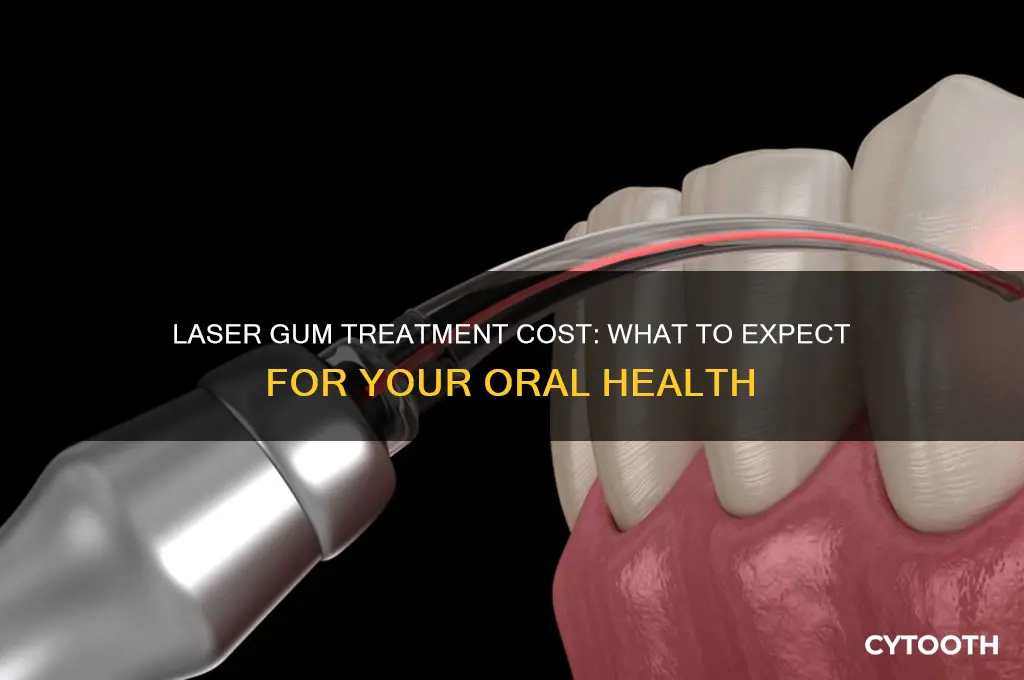
Laser gum treatment, also known as laser gum surgery or laser periodontal therapy, is a modern dental procedure used to treat gum disease, reshape gum tissue, or address other oral health issues. The cost of this procedure can vary widely depending on several factors, including the severity of the condition, the extent of the treatment needed, the dentist’s expertise, and the geographic location of the dental clinic. On average, patients can expect to pay anywhere from $500 to $10,000 per session, with more complex cases requiring multiple sessions. Insurance coverage may offset some of the costs, but it’s essential to consult with your dentist and insurance provider to understand the specific expenses involved.
What You'll Learn

Factors Affecting Laser Gum Treatment Cost
The cost of laser gum treatment, also known as laser gum contouring or gum reshaping, varies widely based on several key factors. Understanding these can help you anticipate expenses and make informed decisions. One of the most significant determinants is the extent of the procedure. Minor gum reshaping for cosmetic purposes, such as correcting a "gummy smile," typically costs less than extensive treatment for gum disease or tissue regeneration. For instance, a simple cosmetic procedure might range from $100 to $300 per tooth, while comprehensive periodontal therapy can soar to $3,000 or more per quadrant of the mouth.
Geographic location plays a pivotal role in pricing. Urban areas with higher living costs, such as New York or Los Angeles, often charge more for dental procedures compared to rural or less affluent regions. Additionally, the dentist’s expertise and reputation influence costs. A highly experienced periodontist or cosmetic dentist may command higher fees than a general dentist with less specialized training. For example, a renowned specialist might charge $500 per tooth for gum contouring, while a less established practitioner could offer the same service for $200.
The type of laser technology used also affects the price. Advanced lasers, such as the diode or erbium lasers, offer precision and faster healing times but come at a premium. Clinics using older or less sophisticated equipment may offer lower rates but with potentially less optimal results. Patients should inquire about the technology being used and weigh the benefits against the cost. For instance, a clinic using a state-of-the-art laser might charge $400 per tooth, while one using a basic model could charge $250.
Insurance coverage is another critical factor. While cosmetic gum reshaping is rarely covered, treatments for periodontal disease or functional issues may be partially reimbursed. Patients should verify their insurance policies and obtain pre-authorization to avoid unexpected out-of-pocket expenses. For example, a procedure costing $2,000 might be reduced to $500 with insurance coverage, depending on the plan’s terms.
Finally, additional procedures can inflate the overall cost. If gum reshaping is combined with other treatments, such as teeth whitening, veneers, or bone grafting, the total expense increases significantly. Patients should request a detailed breakdown of costs to understand what each component entails. For instance, adding teeth whitening to a $600 gum contouring procedure could raise the total to $1,000 or more. By considering these factors, individuals can better navigate the financial aspects of laser gum treatment and plan accordingly.
Understanding the Timeline: How Quickly Periodontal Disease Develops
You may want to see also
Average Price Range for Gum Lasering
The cost of gum lasering, also known as laser gum contouring or gum reshaping, typically ranges from $200 to $3,000 per arch, depending on the complexity of the procedure and geographic location. This price disparity reflects the varying degrees of gum tissue removal or reshaping required, with minor cosmetic adjustments falling on the lower end and extensive reshaping for functional or aesthetic purposes commanding higher fees. For instance, a simple procedure to correct a "gummy smile" might cost around $500 to $1,000, while addressing gum recession or uneven gum lines could push the price closer to $3,000.
Geography plays a significant role in pricing, with urban areas and regions with higher living costs generally charging more. For example, a patient in New York City might pay upwards of $2,500 per arch, whereas the same procedure in a smaller city could cost around $1,200. Additionally, the expertise and reputation of the periodontist or cosmetic dentist performing the procedure can influence the price. Highly experienced professionals often charge a premium for their services, but their skill can ensure better outcomes and reduce the need for revisions.
Insurance coverage is another critical factor to consider. While gum lasering is often categorized as a cosmetic procedure, it may be partially covered if deemed medically necessary, such as in cases of gum disease or functional issues. Patients should consult their insurance provider to understand their policy’s specifics, as out-of-pocket expenses can vary widely. For those without coverage, many dental offices offer financing plans or payment options to make the procedure more affordable.
When evaluating costs, it’s essential to consider the long-term benefits of gum lasering. Beyond aesthetic improvements, the procedure can enhance oral health by reducing the risk of gum disease and making oral hygiene easier. For example, reshaping overgrown gum tissue can expose more of the tooth surface, simplifying brushing and flossing. Patients should weigh these advantages against the upfront cost, as the investment can lead to fewer dental issues and expenses in the future.
To ensure the best value, patients should seek consultations with multiple providers to compare pricing and services. During these consultations, ask about the technology used, as advanced laser systems can offer quicker recovery times and more precise results. Additionally, inquire about post-procedure care and potential follow-up visits, as these can add to the overall cost. By taking a proactive approach, individuals can make an informed decision that aligns with their budget and goals.
Effective Ways to Treat and Prevent Black Gums Naturally
You may want to see also
Insurance Coverage for Laser Gum Procedures
Laser gum procedures, often sought for cosmetic or periodontal health reasons, can vary widely in cost, typically ranging from $1,000 to $6,000 per arch, depending on the complexity and geographic location. However, one critical factor that can significantly influence out-of-pocket expenses is insurance coverage. Not all dental insurance plans treat laser gum procedures equally, and understanding the nuances can save patients from unexpected financial burdens. Most standard dental insurance policies categorize gum procedures under periodontal care, but the use of laser technology may be classified as a cosmetic enhancement, which is often excluded from coverage. Patients must scrutinize their policy details or consult with their insurance provider to determine if the procedure is partially or fully covered.
Analyzing insurance coverage for laser gum procedures requires a two-pronged approach. First, verify if the procedure is deemed medically necessary. For instance, if the laser treatment is recommended to address gum disease (periodontitis) rather than solely for aesthetic purposes, insurance is more likely to provide coverage. Second, check for specific exclusions or limitations in the policy. Some plans may cover traditional gum surgery but not laser-assisted methods, citing higher costs or lack of medical necessity. Patients should also inquire about annual maximums and waiting periods, as these can further impact the financial feasibility of the procedure.
Persuasively, patients should advocate for themselves by gathering documentation from their dentist or periodontist to support their case. A detailed treatment plan outlining the medical necessity of the laser procedure can be submitted to the insurance company for pre-authorization. This proactive step can clarify coverage expectations before the procedure and prevent disputes over claims later. Additionally, patients with flexible spending accounts (FSAs) or health savings accounts (HSAs) can use these funds to offset costs, even if insurance coverage is limited. Combining these strategies can make laser gum procedures more accessible and affordable.
Comparatively, insurance coverage for laser gum procedures often pales in comparison to that of traditional gum surgery. While traditional methods like gum grafting or flap surgery are more frequently covered, laser procedures are still gaining recognition in the insurance landscape. However, as laser technology becomes more mainstream and its benefits—such as reduced recovery time and minimal discomfort—are increasingly acknowledged, coverage policies may evolve. Patients in this gray area should explore alternative financing options, such as payment plans offered by dental offices or third-party healthcare financing companies like CareCredit, to bridge the gap between insurance coverage and total cost.
Descriptively, navigating insurance coverage for laser gum procedures can feel like deciphering a complex puzzle. Each policy has its own set of rules, exceptions, and fine print that can make the process daunting. For example, some plans may cover up to 50% of the procedure cost if it’s deemed medically necessary, while others may deny coverage altogether. Practical tips include requesting an itemized cost breakdown from the dental provider and comparing it against the insurance policy’s coverage limits. Patients should also keep detailed records of all communications with their insurance company, including claim numbers and representative names, to streamline any appeals or disputes. By taking a methodical approach, patients can maximize their insurance benefits and minimize financial surprises.
Effective Ways to Remove Old Gum from Your Carpet Easily
You may want to see also
Cost Comparison: Laser vs. Traditional Gum Surgery
Laser gum surgery, also known as laser-assisted periodontal therapy, typically costs between $1,000 and $5,000 per quadrant of the mouth, depending on the severity of the condition and the dentist's expertise. In contrast, traditional gum surgery, or flap surgery, ranges from $2,000 to $6,000 per quadrant. At first glance, laser surgery might appear more affordable, but the total cost can escalate if multiple sessions are required. Understanding these price ranges is the first step in comparing the two methods.
From an analytical perspective, the cost difference between laser and traditional gum surgery often reflects the technology and precision involved. Laser surgery uses focused light energy to remove diseased tissue, reducing bleeding and recovery time. This advanced technique can justify higher upfront costs, especially for patients seeking minimally invasive options. Traditional surgery, while more affordable in some cases, involves cutting and suturing gum tissue, which may lead to longer recovery periods and additional post-operative care expenses. Weighing these factors helps patients determine which method aligns with their budget and health priorities.
For those considering laser gum surgery, it’s instructive to note that insurance coverage varies widely. Many dental insurance plans categorize laser surgery as a cosmetic procedure, limiting coverage to 50% or less of the total cost. Traditional surgery, however, is often covered at a higher rate since it’s considered a standard treatment for periodontal disease. Patients should verify their insurance benefits and explore financing options, such as payment plans or healthcare credit cards, to manage out-of-pocket expenses effectively.
A comparative analysis reveals that while laser surgery may offer quicker recovery and less discomfort, its long-term cost-effectiveness depends on individual needs. For instance, a patient with mild to moderate gum disease might benefit more from laser treatment due to its precision and reduced risk of complications. Conversely, traditional surgery could be more suitable for severe cases where extensive tissue removal is necessary, despite the higher initial cost. Consulting with a periodontist to assess the extent of gum damage is crucial in making an informed decision.
Finally, practical tips can help patients optimize their spending. Scheduling a consultation with multiple providers allows for price comparisons and ensures transparency in cost breakdowns. Additionally, inquiring about package deals for treating all four quadrants of the mouth at once can sometimes reduce overall expenses. While cost is a significant factor, prioritizing the long-term health benefits of each procedure ensures that the chosen method delivers both financial and therapeutic value.
Understanding Gum Disease: Timelines, Causes, and Prevention Tips
You may want to see also
Additional Expenses in Gum Laser Treatment
The cost of gum laser treatment often extends beyond the procedure itself. While the average price ranges from $100 to $500 per tooth, depending on the complexity and location, additional expenses can quickly add up. These hidden costs are crucial to consider when budgeting for this dental intervention.
Pre-Treatment Consultations and Diagnostics: Before the laser procedure, a thorough examination is essential. This may involve X-rays, dental impressions, or 3D scans to assess the gum health and determine the treatment plan. These diagnostic tests can cost anywhere from $50 to $300, depending on the dental practice and the extent of the required imaging. For instance, a full-mouth X-ray series might be necessary to evaluate the overall oral health, especially in patients with a history of gum disease.
Anesthesia and Sedation: Laser gum treatment is typically performed under local anesthesia to ensure patient comfort. However, for more extensive procedures or anxious patients, sedation options like nitrous oxide (laughing gas) or oral sedatives may be recommended. These additional measures can significantly impact the overall cost. Sedation dentistry can add $200 to $500 to the total expense, depending on the type and duration of sedation required. It's important to discuss these options with your dentist to understand the associated costs and benefits.
Post-Treatment Care and Medications: After the laser procedure, proper aftercare is vital for optimal healing. This may include prescription medications such as antibiotics to prevent infection, especially in patients with compromised immune systems or extensive gum treatment. Pain management medications and special mouthwashes can also be prescribed. These medications can range from $10 to $50, depending on the type and dosage. Additionally, follow-up appointments for check-ups and adjustments might be necessary, incurring further costs.
Potential Complications and Revision Procedures: While rare, complications such as gum recession or infection can occur after laser treatment. Addressing these issues may require additional procedures, which can be costly. For instance, if gum grafting is needed to correct recession, it could add several hundred dollars to the initial treatment cost. It's essential to choose an experienced dental professional to minimize the risk of complications and ensure proper aftercare instructions are followed.
Understanding these additional expenses is crucial for patients considering gum laser treatment. By being aware of potential costs beyond the procedure itself, individuals can make informed decisions and plan their dental care budget accordingly. It's always advisable to consult with a dental professional to receive a personalized treatment plan and cost estimate.
Achieve Healthy Pink Gums: Simple Tips for Gum Care and Color
You may want to see also
Frequently asked questions
The cost of gum laser treatment for cosmetic purposes typically ranges from $500 to $3,000 per session, depending on the extent of the procedure and the geographic location of the dental practice.
Insurance coverage for gum laser treatment varies. If the procedure is deemed medically necessary (e.g., for gum disease), insurance may cover a portion of the cost. However, cosmetic procedures are often not covered and are considered an out-of-pocket expense.
Yes, additional costs may include consultation fees, post-treatment medications, and follow-up visits. Some patients may also require multiple sessions, which can increase the overall cost. Always discuss all potential expenses with your dentist beforehand.