Logan Hayes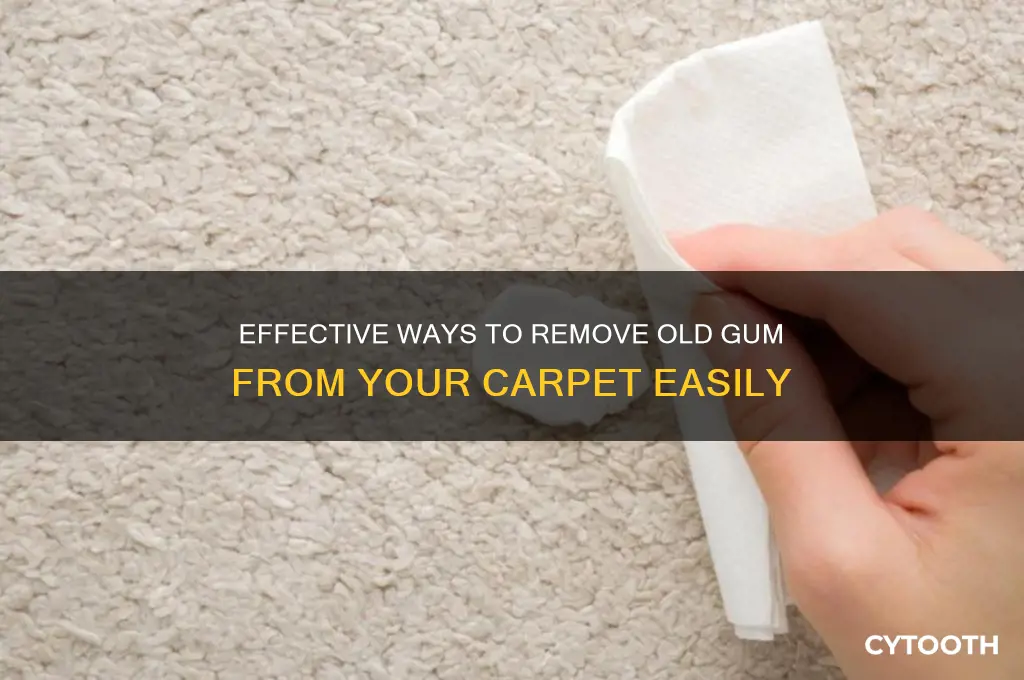
Removing old gum from carpet can be a frustrating task, but with the right approach, it’s entirely manageable. The key is to act carefully to avoid damaging the carpet fibers. Start by freezing the gum with an ice pack or aerosol freezing spray to harden it, making it easier to scrape off with a blunt knife or spoon. If residue remains, apply a small amount of rubbing alcohol or gum removal solvent to a cloth and gently blot the area, avoiding excessive rubbing to prevent spreading the residue. For stubborn cases, a mixture of vinegar and warm water can help break down the gum, followed by thorough rinsing and blotting with a clean towel. Always test any cleaning solution on a small, hidden area of the carpet first to ensure it doesn’t cause discoloration. With patience and the right technique, you can restore your carpet to its original condition.
| Characteristics | Values |
|---|---|
| Method 1: Freezing | Use ice or frozen items (e.g., ice pack, bag of frozen veggies) to harden the gum. Once frozen, scrape off with a dull knife or spoon. |
| Method 2: Peanut Butter | Apply a small amount of peanut butter (oily type works best) to the gum. Let it sit for a few minutes, then scrape off the gum and peanut butter residue. |
| Method 3: Vinegar and Warm Water | Mix equal parts white vinegar and warm water. Soak a cloth in the solution, place it over the gum, and let it sit for 15-30 minutes. Scrape off the softened gum. |
| Method 4: Rubbing Alcohol | Apply rubbing alcohol directly to the gum using a cloth or cotton ball. Let it sit for a few minutes, then scrape off the gum. |
| Method 5: Commercial Gum Removers | Use products specifically designed for gum removal, following the manufacturer’s instructions. |
| Method 6: Steam Cleaning | Use a steam cleaner to soften the gum, then scrape it off carefully. |
| Method 7: Hair Dryer | Apply heat with a hair dryer to soften the gum, then scrape it off. Be cautious not to overheat the carpet fibers. |
| Post-Removal Cleaning | Vacuum the area and clean any residue with a carpet cleaner or mild detergent solution. |
| Precaution | Always test any method on a small, inconspicuous area of the carpet first to avoid damage. |
| Effectiveness | Freezing and peanut butter methods are most commonly recommended for old gum removal. |
What You'll Learn

Freeze the gum with ice
Freezing gum with ice is a tried-and-true method for removing it from carpet fibers, leveraging the science of temperature change to make the sticky substance brittle and easier to handle. When gum is exposed to cold temperatures, its polymers harden, reducing its adhesiveness and allowing it to be chipped away without leaving residue. This technique is particularly effective for old gum, which has likely hardened over time, making it more responsive to freezing. Unlike chemical solvents or scraping, freezing is gentle on carpet fibers, minimizing the risk of damage or discoloration.
To execute this method, start by wrapping a few ice cubes in a thin plastic bag or cloth to prevent water from seeping into the carpet. Press the ice directly onto the gum for 10–15 minutes, ensuring the cold penetrates deeply. The gum will become stiff and less pliable, making it easier to remove. Once frozen, use a butter knife or spatula to gently pry the gum from the carpet, working slowly to avoid tearing the fibers. For stubborn remnants, repeat the freezing process until the gum is fully dislodged.
While freezing is effective, it’s not without its limitations. Very thick or deeply embedded gum may require multiple freezing cycles, and the method works best on synthetic carpets rather than natural fibers like wool, which can become brittle when exposed to extreme cold. Additionally, avoid using metal tools with excessive force, as they can damage the carpet’s backing or surface. Always test the method on a small, inconspicuous area first to ensure compatibility.
Compared to other removal techniques, freezing stands out for its simplicity and safety. It avoids the use of harsh chemicals or heat, which can melt gum further into the carpet or cause permanent stains. It’s also cost-effective, requiring only household items like ice and a blunt tool. For those seeking an eco-friendly solution, freezing is a clear winner, as it leaves no chemical residue and uses minimal resources.
In practice, freezing gum with ice is a patient process that rewards careful execution. After removing the bulk of the gum, use a mild detergent solution and a clean cloth to wipe away any remaining residue. For best results, act quickly once the gum is frozen, as it can soften rapidly at room temperature. With its combination of effectiveness and gentleness, this method is a go-to solution for anyone facing the challenge of old gum in carpet.
Effective Ways to Remove Gum from Leather Car Seats Easily
You may want to see also
Use peanut butter to remove
Peanut butter, a household staple, doubles as a surprisingly effective tool for removing old gum from carpet. Its oily texture and sticky consistency work together to break down the gum’s adhesive properties, making it easier to lift away. Unlike harsh chemicals or sharp tools, peanut butter is safe for most carpet fibers and leaves no residue when cleaned properly. This method is particularly useful for stubborn gum that has hardened over time, as the oils penetrate and soften the gum for removal.
To use peanut butter for gum removal, start by scraping off as much of the gum as possible with a butter knife or spoon. Apply a generous amount of creamy peanut butter (avoid crunchy, as it may scratch fibers) directly onto the remaining gum. Press it firmly into the gum, ensuring it adheres. Let it sit for 5–10 minutes to allow the oils to work. Using a clean cloth or spatula, gently lift the gum and peanut butter mixture from the carpet. Follow up by wiping the area with a damp cloth to remove any oily residue, then blot dry with a towel.
While peanut butter is effective, it’s not without its cautions. Avoid using this method on carpets with natural fibers like wool or silk, as the oils may cause discoloration. Test a small, inconspicuous area first to ensure compatibility. Additionally, excessive peanut butter can leave an oily stain if not cleaned thoroughly. For best results, use a mild detergent solution (1 teaspoon detergent per cup of water) to spot-clean the area afterward. This ensures no greasy residue remains.
Comparatively, peanut butter stands out as a cost-effective and non-toxic alternative to commercial gum removers, which often contain harsh chemicals. It’s especially appealing for households with children or pets, as it poses no health risks. However, for large gum stains or deeply embedded gum, professional cleaning may still be necessary. Peanut butter is best suited for small, localized gum remnants where precision and safety are priorities. Its simplicity and accessibility make it a go-to solution for quick fixes.
In practice, the success of this method depends on patience and technique. Rushing the process may leave gum fragments behind, while over-applying peanut butter can create additional mess. For older, drier gum, consider warming the peanut butter slightly (not hot) to enhance its softening effect. Always work gently to avoid damaging carpet fibers. With the right approach, peanut butter transforms a frustrating task into a manageable—and surprisingly satisfying—solution.
Effective Ways to Treat and Prevent Black Gums Naturally
You may want to see also
Apply vinegar and warm water
Vinegar, a household staple, can be a powerful ally in the battle against stubborn gum stains on carpets. Its acidic nature breaks down the gum's sticky polymers, making it easier to remove. When combined with warm water, vinegar becomes an effective, natural solution that’s both safe for most carpets and environmentally friendly. This method is particularly useful for older gum stains that have hardened and adhered deeply to the fibers.
To apply this technique, start by mixing equal parts white vinegar and warm water in a spray bottle. The warmth of the water enhances the vinegar’s ability to dissolve the gum, so ensure it’s warm but not hot to avoid damaging the carpet. Lightly spray the solution onto the gum stain, allowing it to penetrate for 5–10 minutes. Avoid oversaturating the area, as excessive moisture can seep into the carpet padding and cause mold. After waiting, use a butter knife or spatula to gently lift the softened gum from the carpet fibers, working from the edges inward to prevent spreading.
While vinegar is effective, it’s important to test this method on a small, inconspicuous area of the carpet first, especially for delicate or dyed materials. Vinegar’s acidity can sometimes affect colorfastness, so this precaution ensures your carpet remains unharmed. Additionally, for particularly old or stubborn stains, you may need to repeat the process or combine it with other methods, such as freezing the gum with ice or using a commercial adhesive remover.
The beauty of the vinegar and warm water approach lies in its simplicity and accessibility. Unlike chemical-based solutions, it’s safe for households with children or pets and leaves no harmful residues. However, it’s not a one-size-fits-all solution—fresh gum stains, for instance, may respond better to freezing methods. For older, more entrenched gum, though, this natural remedy often strikes the right balance between effectiveness and gentleness, making it a go-to option for many homeowners.
Scrape with a butter knife
A butter knife, with its dull edge and flat surface, becomes an unlikely hero in the battle against old gum embedded in carpet fibers. The key lies in its ability to apply controlled pressure without damaging the carpet’s delicate structure. Unlike sharper tools, a butter knife’s edge is wide enough to distribute force evenly, minimizing the risk of tearing or fraying the material. This method is particularly effective for dried gum, which has hardened and lost its sticky pliability, making it easier to dislodge in chunks rather than smearing it further into the carpet.
To execute this technique, start by holding the butter knife at a low angle, nearly parallel to the carpet surface. Position the knife directly under the edge of the gum, then gently but firmly slide it forward, lifting the gum as you go. Think of it as prying rather than scraping—the goal is to separate the gum from the fibers, not to chop or dig into the carpet. For larger pieces of gum, work gradually around the edges, breaking it into smaller sections before attempting to remove the entire mass. Patience is crucial; rushing increases the likelihood of leaving residue or damaging the carpet.
One common mistake is applying too much force, which can push the gum deeper into the carpet or leave behind a gummy film. To avoid this, pair the scraping action with a secondary tool, such as a credit card or spatula, to simultaneously lift the gum as it detaches. Additionally, if the gum is still slightly sticky, freeze it first using an ice pack or aerosol freezing spray. This hardens the gum further, making it less likely to smear and more responsive to the butter knife’s edge. Always test the knife on a small, inconspicuous area of the carpet to ensure it doesn’t cause discoloration or texture changes.
While the butter knife method is straightforward, it’s not foolproof for every scenario. Deeply embedded gum or high-pile carpets may require additional steps, such as using a solvent like peanut butter or vinegar to break down residual stickiness after scraping. However, for surface-level gum removal, the butter knife offers a simple, no-cost solution that leverages household items. Its effectiveness lies in its simplicity: a gentle, precise action that respects the carpet’s integrity while tackling the problem at its source.
Try using rubbing alcohol
Rubbing alcohol, a household staple, can be a surprisingly effective solution for removing old gum from carpet fibers. Its chemical properties make it a powerful solvent, capable of breaking down the sticky polymers in gum, allowing for easier removal. This method is particularly useful for dried or hardened gum that has been embedded in the carpet for an extended period.
The Science Behind It: Isopropyl alcohol, commonly known as rubbing alcohol, is a polar solvent with a unique ability to dissolve both polar and non-polar substances. When applied to gum, it penetrates the sticky matrix, weakening the bonds between the polymers. This process, known as solvation, effectively softens the gum, making it less adhesive and more pliable. As a result, the gum can be gently lifted from the carpet without causing damage to the fibers.
Application Technique: To utilize rubbing alcohol for gum removal, follow these steps:
- Prepare the Area: Ensure the carpet is free from loose debris and dirt. Blot the area with a clean cloth to remove any surface-level particles.
- Apply Alcohol: Pour a small amount of rubbing alcohol (approximately 1-2 tablespoons) directly onto the gum. Allow it to sit for 5-10 minutes, giving the solvent time to penetrate and loosen the gum.
- Scrape and Blot: Using a plastic scraper or a butter knife, gently scrape the softened gum from the carpet. Work slowly and carefully to avoid pushing the gum further into the fibers. Blot the area with a clean cloth to absorb any remaining alcohol and gum residue.
- Rinse and Dry: Rinse the treated area with a mild detergent solution to remove any alcohol residue. Blot dry with a clean towel, ensuring the carpet is thoroughly dried to prevent moisture-related damage.
Cautions and Considerations: While rubbing alcohol is generally safe for most carpets, it's essential to exercise caution. Always test a small, inconspicuous area of the carpet for colorfastness before applying alcohol to the affected area. Avoid using excessive amounts of alcohol, as it may cause discoloration or damage to certain carpet materials. Additionally, ensure proper ventilation during the process, as rubbing alcohol fumes can be irritating.
In comparison to other gum removal methods, such as using peanut butter or vinegar, rubbing alcohol offers a more targeted and scientifically-backed approach. Its effectiveness lies in its ability to chemically break down the gum, rather than merely lubricating or dissolving it. This method is particularly advantageous for older, more stubborn gum stains, providing a practical and accessible solution for homeowners. By understanding the science behind rubbing alcohol's solvent properties, individuals can confidently tackle gum removal with precision and success.
Frequently asked questions
The best method is to freeze the gum using ice or a can of compressed air to harden it, then scrape it off gently with a butter knife or spatula.
Yes, applying a small amount of peanut butter to the gum can help break down its stickiness. Let it sit for a few minutes, then scrape off the gum and clean the area with a carpet cleaner.
After removing the gum, use a mixture of warm water and mild dish soap to clean the area. Blot with a clean cloth until the residue is gone, then let it air dry.
For lingering stains, apply a mixture of one part white vinegar and one part water, let it sit for 10 minutes, then blot with a clean cloth. Repeat as needed until the stain is gone.