Matthew Grant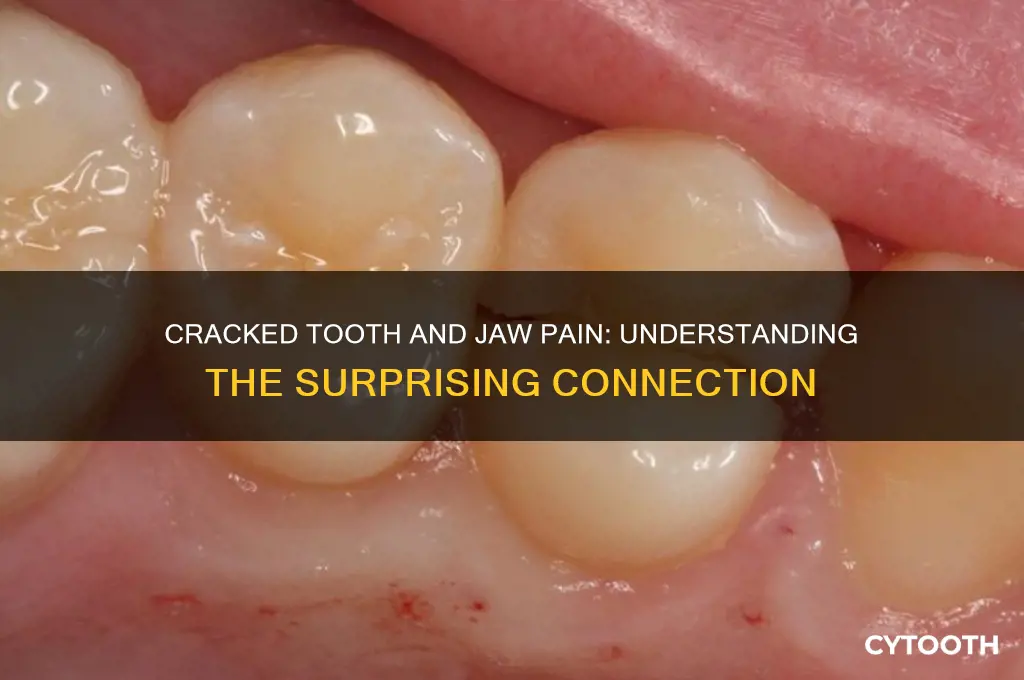
A cracked tooth can indeed cause jaw pain, as the discomfort often extends beyond the affected tooth itself. When a tooth is cracked, it can irritate the surrounding nerves and tissues, leading to inflammation and pain that may radiate to the jaw. Additionally, the act of chewing or applying pressure on the cracked tooth can strain the jaw muscles and temporomandibular joint (TMJ), exacerbating the pain. Over time, untreated cracks can worsen, potentially causing infection or further damage, which may intensify jaw discomfort. Recognizing the connection between a cracked tooth and jaw pain is crucial for seeking timely dental care to prevent complications and alleviate symptoms.
| Characteristics | Values |
|---|---|
| Can a cracked tooth cause jaw pain? | Yes |
| Mechanism | Inflammation and infection from the cracked tooth can irritate surrounding nerves and tissues, radiating pain to the jaw. |
| Type of crack | Deeper cracks (reaching the pulp) are more likely to cause jaw pain than superficial cracks. |
| Location of crack | Cracks near the root or close to nerves are more likely to cause referred pain to the jaw. |
| Symptoms | Jaw pain, tooth sensitivity, difficulty chewing, swelling, headache, earache. |
| Diagnosis | Dental examination, X-rays, transillumination, dye staining. |
| Treatment | Root canal therapy, dental crown, extraction (in severe cases). |
| Prevention | Avoid chewing hard foods, wear a mouthguard if grinding teeth, maintain good oral hygiene. |
| Complications | Untreated cracked teeth can lead to abscesses, bone loss, and systemic infection. |
What You'll Learn

Cracked Tooth Syndrome Symptoms
A cracked tooth can indeed cause jaw pain, often as part of a condition known as Cracked Tooth Syndrome (CTS). This condition arises when a tooth has a fracture that extends from the chewing surface toward the root, but the tooth is not yet separated into distinct segments. The pain associated with CTS can be intermittent and difficult to pinpoint, making it a challenging diagnosis for both patients and dentists. Understanding the symptoms of CTS is crucial for timely intervention and prevention of further complications.
One of the hallmark symptoms of CTS is pain upon chewing or releasing biting pressure, a phenomenon known as fracture-induced pain. This occurs because the fracture causes the tooth to flex slightly, irritating the pulp (the inner part of the tooth containing nerves and blood vessels). Patients often describe the pain as sharp and sudden, worsening when biting down on hard or chewy foods. For example, eating an apple or chewing gum might trigger discomfort. Unlike a cavity or gum infection, the pain from CTS is not constant; it comes and goes, making it easy to dismiss or misattribute to other causes like sinus issues or temporomandibular joint (TMJ) disorders.
Another symptom of CTS is temperature sensitivity, particularly to cold. The fractured tooth allows cold stimuli to reach the pulp more easily, causing a brief but intense pain. This sensitivity may not be present immediately after the fracture occurs but can develop over time as the crack deepens. Interestingly, heat sensitivity is less common with CTS, which can help differentiate it from other dental issues like pulpitis or exposed dentin. Patients may notice this symptom when drinking cold water or eating ice cream, prompting them to avoid such foods to prevent discomfort.
Referred pain is another critical aspect of CTS, often leading to confusion about the source of the problem. Because the trigeminal nerve (responsible for facial sensation) is interconnected, pain from a cracked tooth can radiate to the jaw, ear, or even the head. This referred pain can mimic symptoms of TMJ disorders, sinus infections, or migraines, complicating diagnosis. For instance, a patient might complain of jaw pain or headaches without realizing the issue stems from a cracked tooth. Dentists often use a bite stick or dental dye to identify the fractured tooth, as the crack may be invisible to the naked eye or on X-rays.
To manage CTS effectively, early detection is key. Practical tips include avoiding hard or sticky foods that can exacerbate the fracture, using desensitizing toothpaste to manage temperature sensitivity, and maintaining regular dental check-ups. If symptoms persist, a dentist may recommend a crown to stabilize the tooth or, in severe cases, a root canal to remove the irritated pulp. Ignoring CTS can lead to more serious complications, such as infection or tooth loss, underscoring the importance of addressing symptoms promptly. By recognizing the unique symptoms of CTS, patients can seek appropriate care and prevent further discomfort or damage.
Can a Bad Tooth Cause Throat Pain? Exploring the Connection
You may want to see also
Referred Pain Mechanisms
A cracked tooth can indeed cause jaw pain, but the connection isn’t always straightforward. Referred pain mechanisms play a significant role in this phenomenon, where discomfort from one area is perceived in another. For instance, a fractured tooth can trigger inflammation in the periodontal ligament, which shares nerve pathways with the temporomandibular joint (TMJ). This overlap in neural signaling can lead the brain to misinterpret the source of pain, attributing it to the jaw rather than the tooth itself. Understanding this process is crucial for accurate diagnosis and treatment.
To illustrate, imagine a scenario where a patient complains of persistent jaw pain without any apparent TMJ issues. Upon examination, a subtle crack in a molar is discovered. The inflammation caused by the cracked tooth irritates nearby nerves, which then transmit signals to the brain. Because these nerves also innervate the jaw, the brain localizes the pain there, creating a misleading symptom. This example highlights how referred pain can complicate diagnosis, emphasizing the need for a comprehensive dental and neurological assessment.
Clinicians often employ specific techniques to differentiate between primary and referred pain. One method involves applying targeted anesthesia to the suspected tooth. If the jaw pain subsides after numbing the tooth, it strongly suggests the pain is referred. Additionally, imaging tools like dental X-rays or cone-beam computed tomography (CBCT) can reveal hidden cracks or fractures that might not be visible during a visual exam. Patients should be aware that early detection of a cracked tooth can prevent prolonged discomfort and more invasive treatments.
From a preventive standpoint, understanding referred pain mechanisms underscores the importance of regular dental check-ups. Minor cracks or wear can often be addressed before they escalate into significant issues. Patients should also be mindful of behaviors that increase the risk of tooth fractures, such as chewing hard foods, grinding teeth, or using teeth as tools. Wearing a nightguard can mitigate damage from bruxism, a common contributor to cracked teeth and subsequent jaw pain.
In conclusion, referred pain mechanisms provide a critical framework for understanding how a cracked tooth can cause jaw pain. By recognizing the neural connections between dental structures and the jaw, healthcare providers can more accurately diagnose and treat the underlying issue. Patients, too, benefit from this knowledge, as it encourages proactive dental care and awareness of potential risk factors. Addressing the root cause—whether a cracked tooth or another condition—is essential for alleviating pain and restoring oral health.
Jaw Muscle Strain Link
A cracked tooth can indeed trigger jaw pain, but the connection isn’t always direct. The jaw muscles, or muscles of mastication, are intricately linked to dental health. When a tooth is cracked, the altered bite mechanics force these muscles to compensate, often leading to strain. This strain manifests as pain, stiffness, or even clicking in the jaw joint, a condition commonly associated with temporomandibular joint (TMJ) disorders. Understanding this link is crucial for anyone experiencing persistent jaw discomfort alongside dental issues.
Consider the mechanics: the masseter, temporalis, and pterygoid muscles work in harmony to facilitate chewing, speaking, and swallowing. A cracked tooth disrupts this balance, causing uneven pressure distribution. Over time, this imbalance overworks the muscles, leading to micro-tears or inflammation. For instance, a person with a cracked molar might unconsciously favor the opposite side while chewing, placing excessive strain on the jaw muscles on that side. This compensatory behavior is a primary culprit behind the jaw pain many experience.
To alleviate this strain, start with bite adjustments. Over-the-counter anti-inflammatory medications like ibuprofen (200–400 mg every 6–8 hours) can reduce muscle inflammation temporarily. However, the root cause—the cracked tooth—must be addressed by a dentist. In the interim, avoid hard or chewy foods that exacerbate muscle tension. Applying a warm compress to the jaw for 15–20 minutes, three times daily, can relax the muscles and provide relief. For severe cases, a dentist might recommend a night guard to prevent clenching or grinding, which often accompanies dental issues.
Comparatively, jaw muscle strain from a cracked tooth differs from typical TMJ disorders caused by stress or injury. While stress-induced clenching affects the entire jaw system, tooth-related strain is localized and directly tied to bite mechanics. This distinction is vital for accurate diagnosis and treatment. For example, a patient with a cracked incisor might experience pain primarily in the anterior temporalis muscle, whereas stress-related TMJ pain is often more diffuse. Recognizing this specificity can guide targeted interventions, such as focused muscle therapy or dental restoration.
In conclusion, the jaw muscle strain link in cracked tooth cases is a clear example of how dental health impacts broader bodily systems. Addressing the issue requires a two-pronged approach: immediate relief for muscle strain and definitive treatment for the cracked tooth. Ignoring this connection can lead to chronic TMJ issues, making early intervention essential. By understanding this relationship, individuals can take proactive steps to restore both dental and jaw health, ensuring long-term comfort and functionality.
Nerve Irritation Risks
A cracked tooth can indeed cause jaw pain, and one of the primary mechanisms behind this discomfort is nerve irritation. The dental pulp, a soft tissue inside the tooth containing nerves and blood vessels, is particularly vulnerable when a tooth is cracked. Even a hairline fracture can expose this sensitive area to external stimuli, leading to inflammation and pain that radiates to the jaw. This occurs because the trigeminal nerve, responsible for facial sensation, is closely connected to the dental nerves, amplifying discomfort beyond the tooth itself.
Consider the scenario of a cracked molar. When chewing, pressure is exerted on the fractured area, irritating the exposed pulp. Over time, this repeated stress can cause the inflammation to spread to surrounding tissues, including the temporomandibular joint (TMJ), which connects the jaw to the skull. The result? Persistent jaw pain, often misattributed to TMJ disorder rather than the underlying dental issue. This misdiagnosis can delay proper treatment, allowing the condition to worsen.
To mitigate nerve irritation risks, early intervention is crucial. If you suspect a cracked tooth, avoid chewing on the affected side and schedule a dental appointment immediately. Over-the-counter anti-inflammatory medications like ibuprofen (200–400 mg every 6 hours) can provide temporary relief, but they do not address the root cause. A dentist may recommend a root canal to remove the inflamed pulp or, in severe cases, extraction to prevent further nerve damage. Ignoring the issue can lead to abscess formation, which not only intensifies pain but also poses systemic health risks.
Comparatively, nerve irritation from a cracked tooth differs from other dental pain sources, such as cavities or gum disease. While cavities erode enamel gradually, cracks create immediate pathways for bacteria and stimuli to reach the pulp. Similarly, gum disease affects the tissues surrounding the tooth, whereas a crack directly compromises the tooth’s internal structure. Understanding this distinction is key to recognizing the urgency of treatment. For instance, a cracked tooth may not exhibit visible decay but can still cause severe, radiating pain due to nerve exposure.
Practically, preventive measures can reduce the risk of cracks and subsequent nerve irritation. Avoid biting hard objects like ice or pens, and wear a mouthguard if you grind your teeth at night. Regular dental check-ups can identify weak spots before they fracture. If you experience sudden, sharp pain while chewing or sensitivity to temperature changes, these are red flags for a potential crack. Addressing these symptoms promptly can prevent the cascade of nerve irritation and jaw pain, preserving both oral health and quality of life.
TMJ Disorder Connection
A cracked tooth can indeed cause jaw pain, but the connection often extends beyond the tooth itself to involve the temporomandibular joint (TMJ). This joint, located just in front of the ear, acts as a hinge connecting the jawbone to the skull. When a cracked tooth disrupts the natural alignment of the bite, it can place uneven pressure on the TMJ, leading to inflammation, discomfort, and dysfunction. This interplay highlights how dental issues can cascade into broader musculoskeletal problems.
Consider the mechanics: a cracked tooth alters how the upper and lower teeth meet, a condition known as malocclusion. Over time, this misalignment forces the jaw muscles to compensate, straining the TMJ. Symptoms such as clicking or popping sounds, difficulty opening the mouth, and radiating pain around the jawline often emerge. For instance, a patient with a cracked molar might initially report tooth sensitivity but later develop persistent jaw soreness, especially when chewing or yawning. This progression underscores the importance of addressing dental fractures promptly to prevent TMJ complications.
To mitigate TMJ-related jaw pain from a cracked tooth, a multifaceted approach is essential. First, the tooth itself must be treated—whether through a filling, crown, or extraction—to restore proper bite alignment. Simultaneously, managing TMJ symptoms can involve applying warm compresses to the jaw area for 15–20 minutes, three times daily, to reduce inflammation. Over-the-counter anti-inflammatory medications like ibuprofen (400–600 mg every 6–8 hours) can also alleviate pain and swelling. For chronic cases, a dentist or physical therapist may recommend jaw exercises to strengthen muscles and improve joint mobility.
Interestingly, lifestyle adjustments play a pivotal role in TMJ management. Avoiding hard or chewy foods, such as nuts or gum, reduces strain on the jaw. Stress management techniques, including mindfulness or progressive muscle relaxation, can prevent teeth clenching or grinding (bruxism), a common TMJ aggravator. Night guards, custom-fitted by a dentist, offer additional protection during sleep. These measures, combined with timely dental intervention, create a holistic strategy to address both the cracked tooth and its TMJ repercussions.
In summary, the TMJ disorder connection in cracked tooth-induced jaw pain illustrates the intricate relationship between dental health and joint function. By recognizing this link and adopting targeted interventions, individuals can alleviate discomfort and prevent long-term complications. Whether through immediate dental repair, anti-inflammatory practices, or lifestyle modifications, addressing both the tooth and the TMJ ensures comprehensive relief and restores oral and jaw harmony.
Frequently asked questions
Yes, a cracked tooth can cause jaw pain due to inflammation, infection, or strain on the surrounding muscles and joints as you chew or clench.
A cracked tooth can irritate the pulp (nerve) inside the tooth, causing inflammation that spreads to the jawbone and surrounding tissues, resulting in pain.
Jaw pain from a cracked tooth can be immediate if the crack is severe or gradual if the damage worsens over time, leading to chronic discomfort.
Visit a dentist immediately for an evaluation. They can diagnose the issue, treat the cracked tooth, and alleviate jaw pain through appropriate dental procedures.