Hailey Morgan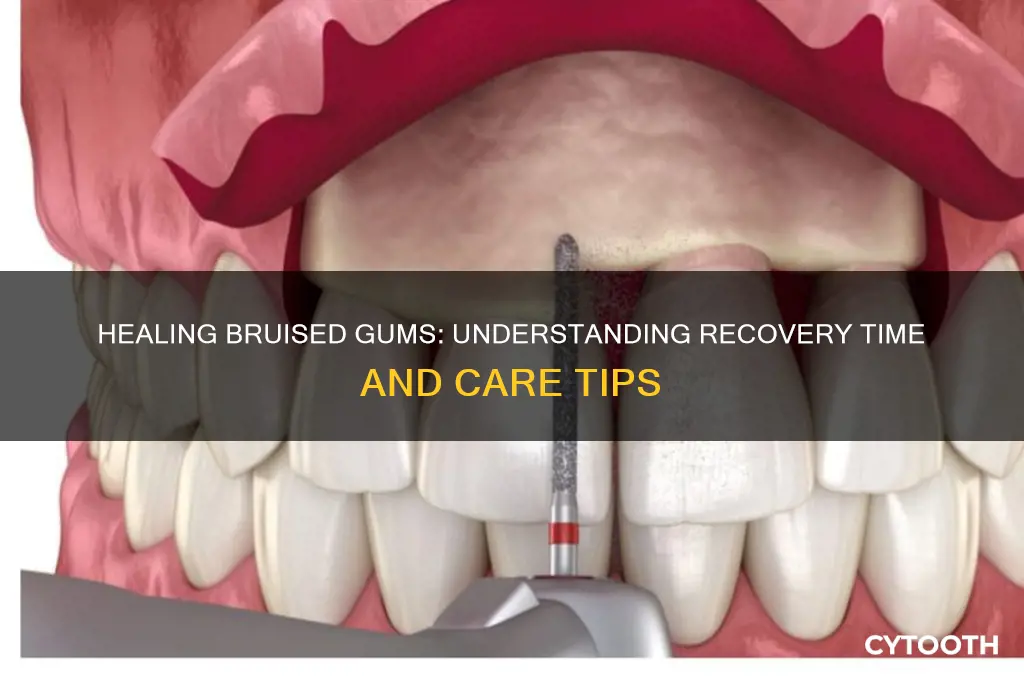
Bruised gums, often caused by injury, dental procedures, or aggressive brushing, can be uncomfortable and concerning, but they typically heal within a relatively short timeframe. The healing process generally takes about 1 to 2 weeks, depending on the severity of the bruise and individual factors such as overall oral health and immune response. Minor bruises may resolve within a few days, while more significant injuries might require closer to two weeks. Proper care, including gentle oral hygiene, avoiding irritants like hot or spicy foods, and using saltwater rinses, can expedite healing and reduce discomfort. If symptoms persist or worsen, consulting a dentist is advisable to rule out underlying issues.
| Characteristics | Values |
|---|---|
| Healing Time (Mild Bruise) | 3 to 7 days |
| Healing Time (Severe Bruise) | 1 to 2 weeks or longer |
| Factors Affecting Healing | Overall health, age, nutrition, smoking, oral hygiene, severity of injury |
| Common Symptoms | Swelling, pain, tenderness, discoloration (red, blue, or purple) |
| Treatment Options | Cold compress, saltwater rinse, soft diet, over-the-counter pain relief, avoiding irritants |
| When to See a Dentist | Persistent pain, excessive bleeding, signs of infection, or no improvement after 2 weeks |
| Prevention Tips | Use a soft-bristled toothbrush, avoid aggressive brushing, wear a mouthguard during sports |
What You'll Learn
- Factors Affecting Healing Time: Oral hygiene, gum health, injury severity, and overall health impact healing duration
- Mild Bruise Recovery: Minor gum bruises typically heal within 3 to 7 days with proper care
- Severe Bruise Healing: Deeper injuries may take 1 to 2 weeks or longer to fully recover
- Speeding Up Healing: Rinsing with salt water, avoiding irritants, and gentle care aid quicker recovery
- When to See a Dentist: Persistent pain, swelling, or signs of infection require professional dental evaluation?

Factors Affecting Healing Time: Oral hygiene, gum health, injury severity, and overall health impact healing duration
Bruised gums, though often minor, can be surprisingly uncomfortable and their healing time varies widely. Understanding the factors that influence this process is key to managing expectations and promoting faster recovery. Let's delve into the specifics of how oral hygiene, gum health, injury severity, and overall health play pivotal roles in determining how long it takes for bruised gums to heal.
Oral Hygiene: The Foundation of Healing
Maintaining impeccable oral hygiene is non-negotiable when dealing with bruised gums. Plaque and bacteria can exacerbate inflammation and delay healing. Brush gently twice daily with a soft-bristled toothbrush, avoiding direct pressure on the affected area. Floss carefully to remove debris without irritating the bruise. Rinsing with a warm saltwater solution (1/2 teaspoon of salt in 8 ounces of water) twice daily can reduce swelling and kill bacteria. Avoid alcohol-based mouthwashes, as they can sting and dry out tissues. Consistent hygiene not only speeds recovery but also prevents secondary infections that could prolong healing.
Gum Health: A Pre-existing Condition
The baseline health of your gums significantly impacts healing time. If you already have gingivitis or periodontal disease, your gums are more vulnerable to injury and slower to recover. Healthy gums typically heal within 1–2 weeks, but compromised gums may take 3–4 weeks or longer. Regular dental check-ups and addressing underlying gum issues are essential. For example, if you’re over 40 and notice persistent gum sensitivity, consult a dentist to rule out age-related gum recession, which can complicate healing.
Injury Severity: From Minor to Major
The extent of the injury dictates the healing timeline. A minor bruise from biting too hard might resolve in 3–5 days, while a more severe injury, such as trauma from a fall or orthodontic appliance, could take 2–3 weeks. Deep tissue damage or bleeding under the gum line may require professional intervention. For instance, if you experience persistent pain or notice a dark, blood-filled blister (hematoma), seek dental care immediately. Applying a cold compress for 15–20 minutes within the first 24 hours can reduce swelling and expedite healing for milder cases.
Overall Health: The Silent Influencer
Your body’s ability to heal is closely tied to your overall health. Conditions like diabetes, autoimmune disorders, or nutritional deficiencies (e.g., vitamin C or K) can impair blood clotting and tissue repair, extending healing time. Smokers, for example, often experience delayed healing due to reduced blood flow and oxygen delivery to tissues. Similarly, stress and poor sleep weaken the immune system, hindering recovery. Practical steps include eating a balanced diet rich in antioxidants, staying hydrated, and managing chronic conditions with medication as prescribed. If you’re over 65 or have a compromised immune system, expect healing to take longer and monitor symptoms closely.
By addressing these factors—oral hygiene, gum health, injury severity, and overall health—you can significantly influence how quickly bruised gums heal. While minor cases often resolve on their own, understanding these variables empowers you to take proactive steps and seek timely care when needed. Healing is a holistic process, and every small action counts.
Receding Gums or Paranoia: Understanding Your Gum Health Concerns
You may want to see also
Mild Bruise Recovery: Minor gum bruises typically heal within 3 to 7 days with proper care
A minor gum bruise, often caused by accidental bites, dental procedures, or aggressive brushing, is a common yet uncomfortable issue. The good news is that with proper care, these bruises typically resolve within 3 to 7 days. This timeframe hinges on the body’s natural healing process, which accelerates when inflammation is managed and the affected area is protected from further irritation. For instance, avoiding hard or crunchy foods and opting for softer alternatives like yogurt or mashed vegetables can prevent additional trauma to the bruised gum tissue.
Steps to Expedite Healing:
- Rinse with Saltwater: Dissolve ½ teaspoon of salt in 8 ounces of warm water and gently swish for 30 seconds, twice daily. This reduces inflammation and kills bacteria.
- Apply Cold Compresses: Use an ice pack wrapped in a cloth for 10–15 minutes at a time to minimize swelling during the first 24–48 hours.
- Maintain Oral Hygiene: Brush gently with a soft-bristled toothbrush, avoiding the bruised area, and floss carefully to prevent infection.
- Avoid Irritants: Steer clear of tobacco, alcohol-based mouthwashes, and extremely hot or cold foods and beverages.
Cautions to Consider: While minor gum bruises usually heal quickly, persistent pain, swelling, or signs of infection (e.g., pus, fever) warrant immediate dental attention. Children and older adults may require extra vigilance due to thinner gum tissue and slower healing rates. Additionally, individuals on blood thinners should monitor bruising closely, as these medications can prolong healing times.
Comparative Perspective: Unlike bruises on the skin, gum bruises heal in a moist environment, which can both aid and complicate recovery. While saliva contains enzymes that promote healing, it also introduces bacteria, making cleanliness critical. In contrast, skin bruises benefit from air exposure but heal at a similar pace when inflammation is managed effectively.
Practical Takeaway: Minor gum bruises are a temporary inconvenience that responds well to simple, consistent care. By following these steps and being mindful of potential complications, most individuals can expect a full recovery within a week. Patience and gentle treatment are key—your gums will thank you.
Numbing Gums for Deep Dental Cleaning: What to Expect at the Dentist
You may want to see also
Severe Bruise Healing: Deeper injuries may take 1 to 2 weeks or longer to fully recover
Bruised gums, especially those resulting from deeper injuries, demand patience and care. Unlike superficial bruises, which may resolve within days, severe gum injuries can take 1 to 2 weeks or longer to fully heal. This extended timeline is due to the gum tissue’s limited blood supply and the complexity of oral healing, which involves constant exposure to moisture, food particles, and bacteria. Understanding this process is crucial for managing expectations and ensuring proper care.
Steps to Promote Healing: Begin by rinsing your mouth gently with warm saltwater (1/2 teaspoon of salt in 8 ounces of water) after meals to reduce inflammation and prevent infection. Avoid hot, spicy, or acidic foods that can irritate the injured area. Opt for soft, cool foods like yogurt or mashed vegetables to minimize discomfort. If swelling persists, apply a cold compress to the outside of your cheek for 10–15 minutes at a time, but no more than 20 minutes per hour. Over-the-counter pain relievers like ibuprofen (200–400 mg every 4–6 hours) can help manage pain, but consult a dentist if symptoms worsen.
Cautions to Consider: Deeper gum injuries may involve damage to underlying bone or tooth structures, which complicates healing. If you notice persistent bleeding, pus, or a foul taste, seek immediate dental attention, as these could indicate infection. Avoid aggressive brushing or flossing around the injured area to prevent further trauma. Additionally, refrain from smoking or using tobacco products, as they impair blood flow and delay tissue repair.
Comparative Perspective: While a minor gum bruise might heal within 3–5 days, severe injuries resemble the healing timeline of a deep muscle bruise, which can take weeks. The oral environment’s unique challenges—constant movement, microbial exposure, and limited rest—make gum healing particularly slow. Unlike skin bruises, which are visible and remind us to be cautious, gum injuries are often hidden, increasing the risk of re-injury. Vigilance and consistent care are key to avoiding complications.
Practical Tips for Faster Recovery: Maintain impeccable oral hygiene, but be gentle around the injured site. Use a soft-bristled toothbrush and alcohol-free mouthwash to avoid irritation. Stay hydrated to keep the mouth moist, which aids tissue repair. If the injury was caused by dental work or trauma, follow your dentist’s post-care instructions meticulously. For children or elderly individuals, monitor healing closely, as their immune responses may be slower, extending recovery time.
Effective Ways to Heal Gum Cuts: Tips for Quick Recovery
You may want to see also
Speeding Up Healing: Rinsing with salt water, avoiding irritants, and gentle care aid quicker recovery
Bruised gums, often caused by injury, dental procedures, or aggressive brushing, typically heal within 1-2 weeks with proper care. However, this timeline can be accelerated by adopting specific, targeted practices that reduce inflammation and promote tissue repair. Among the most effective methods are rinsing with salt water, avoiding irritants, and practicing gentle oral care—each playing a distinct role in speeding recovery.
Salt water rinses are a cornerstone of gum healing due to their natural antiseptic and anti-inflammatory properties. Dissolve ½ teaspoon of table salt in 8 ounces of warm water, ensuring the solution is neither too hot nor too cold. Swish this mixture around your mouth for 30 seconds, focusing on the affected area, and repeat 2-3 times daily after meals. This practice helps reduce swelling, removes debris, and prevents infection, creating an optimal environment for healing. For children over 6, supervise rinsing to ensure they don’t swallow the solution, as excessive salt intake can be harmful.
Avoiding irritants is equally critical to prevent further damage and allow gums to recover. Steer clear of hard, crunchy, or spicy foods that can aggravate sensitive tissues. Opt for soft, cool foods like yogurt, mashed potatoes, or smoothies, which are less likely to cause discomfort. Additionally, refrain from smoking or using tobacco products, as these impair blood flow and delay healing. Alcohol-based mouthwashes should also be avoided, as they can dry out and sting bruised gums. Instead, choose alcohol-free alternatives or stick to salt water rinses.
Gentle care is the final pillar in expediting gum recovery. Use a soft-bristled toothbrush and brush with light, circular motions, avoiding direct pressure on the bruised area. Floss carefully, using a waxed or glide floss to minimize gum irritation. If flossing causes pain, consider using a water flosser on a low setting. Over-the-counter oral gels containing benzocaine can provide temporary pain relief, but use sparingly and follow dosage instructions, especially for children or individuals with allergies.
By combining these practices—salt water rinses, irritant avoidance, and gentle care—you create a synergistic approach that significantly reduces healing time. While individual recovery may vary based on factors like overall health and the severity of the bruise, consistent adherence to these methods can often cut healing time in half. Patience and diligence are key, as rushing the process or neglecting these steps can lead to prolonged discomfort or complications. With the right care, bruised gums can heal swiftly, restoring oral health and comfort.
Dentures In or Out: Which Speeds Up Gum Healing?
You may want to see also
When to See a Dentist: Persistent pain, swelling, or signs of infection require professional dental evaluation
Bruised gums, often caused by trauma, aggressive brushing, or dental procedures, typically heal within 1 to 2 weeks with proper care. However, persistent pain, swelling, or signs of infection are red flags that demand immediate attention. These symptoms may indicate an underlying issue, such as an abscess, periodontal disease, or a more severe infection, which can worsen without professional intervention. Ignoring these warning signs can lead to complications, including tooth loss or systemic health problems.
Steps to Identify When to Seek Help:
- Monitor Pain Duration: If pain persists beyond 3 days or intensifies despite over-the-counter pain relievers (e.g., ibuprofen 200–400 mg every 6 hours), consult a dentist.
- Check for Swelling: Swelling that doesn’t subside within 48 hours or spreads to the face or neck warrants urgent evaluation.
- Look for Infection Signs: Symptoms like pus, fever, foul taste, or swollen lymph nodes suggest infection and require immediate dental care.
Cautions: Avoid self-diagnosis or relying solely on home remedies, such as saltwater rinses or clove oil, for severe symptoms. While these can provide temporary relief, they do not address the root cause of infection or persistent issues. Delaying professional treatment can allow bacteria to spread, potentially leading to sepsis in extreme cases.
Practical Tips for Immediate Care:
- Rinse with warm saltwater (1/2 teaspoon salt in 8 oz water) 2–3 times daily to reduce inflammation.
- Apply a cold compress for 15–20 minutes to minimize swelling in the first 24 hours.
- Avoid irritants like hot foods, alcohol-based mouthwashes, or hard toothbrushes until symptoms improve.
Can You Chew Gum with Braces? Orthodontic Tips and Advice
You may want to see also
Frequently asked questions
Bruised gums usually take 3 to 7 days to heal, depending on the severity and care taken.
Rinse with warm salt water, avoid irritating foods, maintain good oral hygiene, and apply a cold compress to reduce swelling.
Yes, mild to moderate pain is common, but it should gradually decrease within a few days. If pain persists or worsens, consult a dentist.
Yes, but use a soft-bristled toothbrush and be gentle around the affected area to avoid further irritation.
See a dentist if the bruising doesn't improve after a week, if there’s severe pain, or if you notice signs of infection like pus or fever.