Hailey Morgan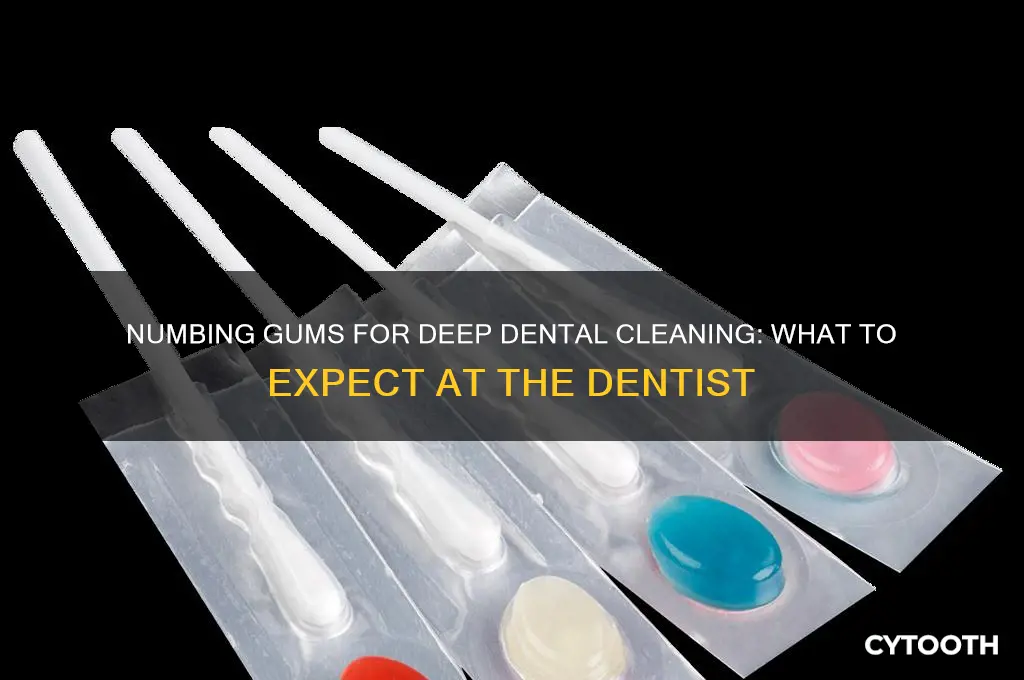
When undergoing a deep cleaning procedure at the dentist, also known as scaling and root planing, the gums are typically numbed using a local anesthetic to ensure patient comfort. The dentist or dental hygienist will first assess the area to be treated and choose the appropriate anesthetic, often lidocaine or a similar medication. The anesthetic is administered through a small injection near the treatment site, which may cause a brief pinching sensation. Once injected, the anesthetic blocks nerve signals in the gums, effectively numbing the area and preventing pain during the cleaning process. This allows the dental professional to thoroughly remove plaque, tartar, and bacteria from below the gumline without causing discomfort to the patient. The numbing effect usually lasts for the duration of the procedure, wearing off gradually afterward.
| Characteristics | Values |
|---|---|
| Method of Numbing | Local anesthesia administered via injection or topical application. |
| Type of Anesthesia | Lidocaine, articaine, or other local anesthetics. |
| Injection Technique | Infiltration or block injections near the treatment area. |
| Topical Anesthetics | Gels, creams, or sprays (e.g., benzocaine) applied directly to the gums. |
| Duration of Numbing | Typically lasts 30 minutes to 2 hours, depending on the anesthetic used. |
| Pain During Injection | Minimal discomfort; numbing agents may be pre-applied to reduce pain. |
| Purpose | To ensure patient comfort during scaling and root planing (deep cleaning). |
| Common Side Effects | Temporary numbness, tingling, or swelling in the treated area. |
| Alternative Methods | Laser-assisted anesthesia or nitrous oxide (laughing gas) for anxious patients. |
| Post-Procedure Care | Avoid eating or drinking until numbness wears off to prevent injury. |
| Effectiveness | Highly effective in numbing gums and surrounding tissues. |
What You'll Learn
- Topical Anesthetics: Gels or creams applied directly to gums for surface numbing before deep cleaning
- Local Injections: Lidocaine or similar injected near gums to block pain during scaling
- Numbing Mouth Rinses: Prescription rinses containing anesthetics to desensitize gum tissues pre-procedure
- Laser-Assisted Anesthesia: Low-level lasers used to numb gums without needles or discomfort
- Nitrous Oxide (Laughing Gas): Inhaled sedative to relax patients and reduce gum sensitivity

Topical Anesthetics: Gels or creams applied directly to gums for surface numbing before deep cleaning
Topical anesthetics, such as gels or creams, offer a minimally invasive solution for numbing the gums before deep cleaning procedures. These products contain active ingredients like lidocaine or benzocaine, which temporarily block nerve signals in the treated area, reducing pain and discomfort. Typically applied directly to the gum tissue using a cotton swab or syringe, they take effect within 20–30 minutes, providing sufficient numbing for procedures like scaling and root planing. This method is particularly useful for patients with mild to moderate sensitivity or those anxious about injections.
The application process is straightforward but requires precision. Dentists or hygienists first isolate the area to be treated, often using a dental dam or cotton rolls to keep the site dry. A thin layer of the gel or cream is then applied to the gums, ensuring even coverage. Patients are usually instructed to avoid eating, drinking, or touching the area until the procedure begins to prevent accidental removal of the anesthetic. Dosage varies depending on the product, but a typical application ranges from 0.5 to 1 gram of gel or cream per quadrant of the mouth. For children or elderly patients, lower concentrations may be used to minimize potential side effects.
One of the key advantages of topical anesthetics is their non-invasiveness compared to injections. They are ideal for patients with needle phobia or those undergoing minor procedures that don’t require deep anesthesia. However, their effectiveness is limited to surface-level numbing, making them unsuitable for extensive or deep dental work. Additionally, some patients may experience temporary side effects, such as tissue irritation or altered taste sensation, though these are generally mild and short-lived.
Practical tips for maximizing the effectiveness of topical anesthetics include ensuring the gums are clean and dry before application, as moisture can dilute the product. Patients should also communicate any allergies or sensitivities to the dentist beforehand, as some formulations contain preservatives or flavorings that could cause reactions. For best results, the anesthetic should be applied in a controlled dental setting, where professionals can monitor its effects and adjust as needed. While not a replacement for traditional anesthesia in all cases, topical gels and creams provide a valuable, patient-friendly option for surface numbing during deep cleaning procedures.
Can You Chew Gum with Braces? Orthodontic Tips and Advice
You may want to see also
Local Injections: Lidocaine or similar injected near gums to block pain during scaling
Local anesthesia, typically administered through injections of lidocaine or similar agents, is a cornerstone of pain management during deep dental cleanings, particularly for procedures like scaling and root planing. The process begins with the dentist identifying the specific area requiring treatment and selecting the appropriate anesthetic based on factors such as the patient’s medical history, the extent of the procedure, and the desired duration of numbness. Lidocaine, a fast-acting and widely used local anesthetic, is often the first choice due to its effectiveness in blocking nerve signals and its relatively short onset time, usually within 2–3 minutes after injection. The dosage is carefully calibrated, typically ranging from 1.8 to 3.6 mL of a 2% lidocaine solution, to ensure sufficient numbness without causing excessive tissue discomfort or systemic side effects.
The injection technique is critical to patient comfort and the success of the anesthesia. Dentists often use a slow, steady approach, inserting the needle at a 45-degree angle into the periodontal ligament space or directly into the gum tissue. This method, known as an intraligamentary or intracrevicular injection, delivers the anesthetic close to the nerve endings, maximizing its effectiveness while minimizing pain during administration. Patients may feel a brief pinch or pressure, but the discomfort is transient and far outweighed by the benefit of a pain-free procedure. For particularly anxious patients, topical numbing agents like benzocaine gel can be applied beforehand to reduce the sensation of the needle prick.
One of the key advantages of lidocaine injections is their ability to provide targeted numbness, allowing the dentist to work on specific quadrants of the mouth without affecting the entire oral cavity. This precision is particularly useful during deep cleanings, where only certain areas may require intensive scaling. However, it’s important to note that lidocaine’s effects typically last 30 minutes to an hour, depending on the formulation used. For longer procedures, the dentist may administer additional doses or opt for a longer-acting anesthetic like articaine. Patients should be aware that numbness may persist for several hours post-procedure, affecting speech, eating, and drinking, so planning accordingly is advisable.
Despite its widespread use, lidocaine injections are not suitable for everyone. Patients with certain medical conditions, such as heart arrhythmias or allergies to amide-type anesthetics, may require alternative options. Additionally, pregnant or elderly patients may need adjusted dosages or different anesthetics to ensure safety. Dentists will always conduct a thorough review of the patient’s medical history and discuss potential risks before proceeding. For those who experience anxiety about injections, techniques like distraction or the use of a dental wand (a computer-controlled local anesthetic delivery system) can make the process more tolerable.
In practice, lidocaine injections are a reliable and efficient method for numbing gums during deep cleanings, enabling patients to undergo necessary procedures without discomfort. While the idea of an injection may be daunting, the temporary nature of the discomfort and the significant benefits of pain-free treatment make it a valuable tool in dental care. Patients can enhance their experience by communicating openly with their dentist about any concerns, ensuring a tailored approach that prioritizes both comfort and efficacy. With proper administration and patient education, local injections remain a gold standard in managing pain during scaling and other periodontal procedures.
Dentures In or Out: Which Speeds Up Gum Healing?
You may want to see also
Numbing Mouth Rinses: Prescription rinses containing anesthetics to desensitize gum tissues pre-procedure
Prescription mouth rinses containing local anesthetics offer a non-invasive method to desensitize gum tissues before deep cleaning procedures. These rinses typically include active ingredients like lidocaine or benzocaine, which temporarily block nerve signals in the gums, reducing pain and discomfort. Patients are instructed to swish the rinse around their mouth for 30 to 60 seconds, allowing the anesthetic to penetrate the mucous membranes. This method is particularly useful for individuals with mild to moderate sensitivity or those who experience anxiety about injections.
The effectiveness of numbing mouth rinses depends on proper application and adherence to dosage guidelines. For instance, a 2% lidocaine solution is commonly prescribed, with patients advised to use 15–20 mL of the rinse. It’s crucial to avoid swallowing the solution, as ingesting anesthetics can lead to side effects like numbness in the throat or upset stomach. Dentists often recommend using the rinse 10–15 minutes before the procedure to ensure optimal numbing. This approach is especially beneficial for children or patients with needle phobia, as it minimizes the need for traditional injections.
While numbing mouth rinses are convenient, they are not a one-size-fits-all solution. Their efficacy varies based on factors like the depth of gum pockets and individual sensitivity levels. For deep periodontal pockets or extensive procedures, a combination of rinses and local anesthesia may be necessary. Additionally, patients with certain medical conditions, such as liver disease or allergies to anesthetics, should consult their dentist before use. Despite these limitations, rinses remain a valuable tool for enhancing patient comfort during deep cleanings.
Practical tips can maximize the benefits of numbing mouth rinses. Patients should avoid eating or drinking for at least 30 minutes before use to ensure the gums are clean and receptive to the anesthetic. After rinsing, spitting out the solution thoroughly and gently drying the mouth with a tissue can prevent dilution. Dentists may also provide a topical gel or foam to complement the rinse, ensuring comprehensive numbing. When used correctly, these rinses can significantly improve the deep cleaning experience, making it more tolerable and less stressful for patients.
Receding Gums or Paranoia: Understanding Your Gum Health Concerns
You may want to see also
Laser-Assisted Anesthesia: Low-level lasers used to numb gums without needles or discomfort
Traditional gum numbing for deep cleanings relies heavily on injections, a source of anxiety for many patients. Laser-assisted anesthesia offers a needle-free alternative, utilizing low-level lasers to desensitize gum tissue. This method, often referred to as "cold laser" or "soft tissue laser" anesthesia, targets specific nerve endings without causing damage to surrounding tissues. The laser's energy interacts with cells, temporarily blocking pain signals and creating a numbing effect.
Typically, a dentist will use a handheld laser device emitting a low-intensity beam. The wavelength and power settings are crucial; common wavelengths range from 635 to 980 nanometers, with power levels typically below 1 watt. The laser is gently applied to the gum tissue for a few seconds per area, with the entire process taking just a few minutes. This targeted approach minimizes discomfort and allows for a more precise numbing effect compared to traditional injections.
While laser-assisted anesthesia is gaining popularity, it's important to note that it may not be suitable for all patients or procedures. Deep cleanings involving extensive gum disease or complex root planing might still require supplemental anesthesia. However, for milder cases and patients with needle phobia, laser anesthesia can be a game-changer. Its non-invasive nature and minimal side effects make it an attractive option for those seeking a more comfortable dental experience.
As with any new technology, patient education is key. Dentists should clearly explain the procedure, its benefits, and any potential limitations. Patients should be informed that while laser anesthesia is generally painless, they may experience a slight tingling or warming sensation during the process.
The future of laser-assisted anesthesia looks promising. Ongoing research aims to refine laser parameters and expand its applications in dentistry. As technology advances and more dentists adopt this technique, needle-free gum numbing could become the standard for deep cleanings, offering a more patient-friendly and anxiety-reducing approach to oral care.
Nitrous Oxide (Laughing Gas): Inhaled sedative to relax patients and reduce gum sensitivity
Nitrous oxide, commonly known as laughing gas, is a versatile inhaled sedative that dentists use to help patients relax during procedures like deep cleaning. Administered through a mask placed over the nose, it induces a calm, euphoric state within minutes, allowing patients to remain awake and responsive while reducing anxiety. The gas is typically mixed with oxygen, and the dentist adjusts the concentration to achieve the desired level of sedation, usually ranging from 30% to 50% nitrous oxide. This method is particularly effective for patients with mild to moderate dental anxiety or those who struggle with sensitivity during gum treatments.
One of the key advantages of nitrous oxide is its ability to reduce gum sensitivity during deep cleaning procedures. By altering the perception of pain and discomfort, it allows the dentist to perform scaling and root planing with minimal distress to the patient. Unlike local anesthetics, which numb specific areas, nitrous oxide provides a systemic effect, ensuring the patient remains relaxed throughout the entire process. This is especially beneficial for patients with sensitive gums or those undergoing extensive cleaning, as it minimizes the need for multiple injections of local anesthesia.
For optimal results, the dentist monitors the patient’s response to nitrous oxide closely, adjusting the dosage as needed. The effects wear off quickly once the gas is discontinued, allowing patients to resume normal activities shortly after the procedure. This makes it a convenient option for individuals who need to return to work or other commitments immediately. However, it’s important to note that nitrous oxide may not be suitable for everyone, including pregnant women, individuals with respiratory conditions, or those with a history of substance abuse. Always inform your dentist of any medical conditions or concerns before opting for this sedation method.
Practical tips for patients considering nitrous oxide include arriving well-rested and avoiding heavy meals beforehand to reduce the risk of nausea. Breathing deeply and evenly through the nose during administration enhances the gas’s effectiveness. After the procedure, patients should avoid driving for at least 15–30 minutes, as residual effects may impair coordination. When used appropriately, nitrous oxide offers a safe, effective way to enhance comfort during deep cleaning, making it a valuable tool in modern dental care.
Frequently asked questions
The dentist or hygienist typically uses a local anesthetic, administered via injection, to numb the gums and surrounding tissues before performing a deep cleaning (scaling and root planing). This ensures the patient remains comfortable during the procedure.
The initial injection of the anesthetic may cause a brief pinch or stinging sensation, but it is generally minimal. Once the area is numb, the deep cleaning procedure should be painless.
The numbing effect from the local anesthetic usually lasts for 1 to 3 hours, depending on the type and amount used. Patients should avoid eating or drinking until the numbness wears off to prevent accidental injury to the gums or cheeks.