Matthew Grant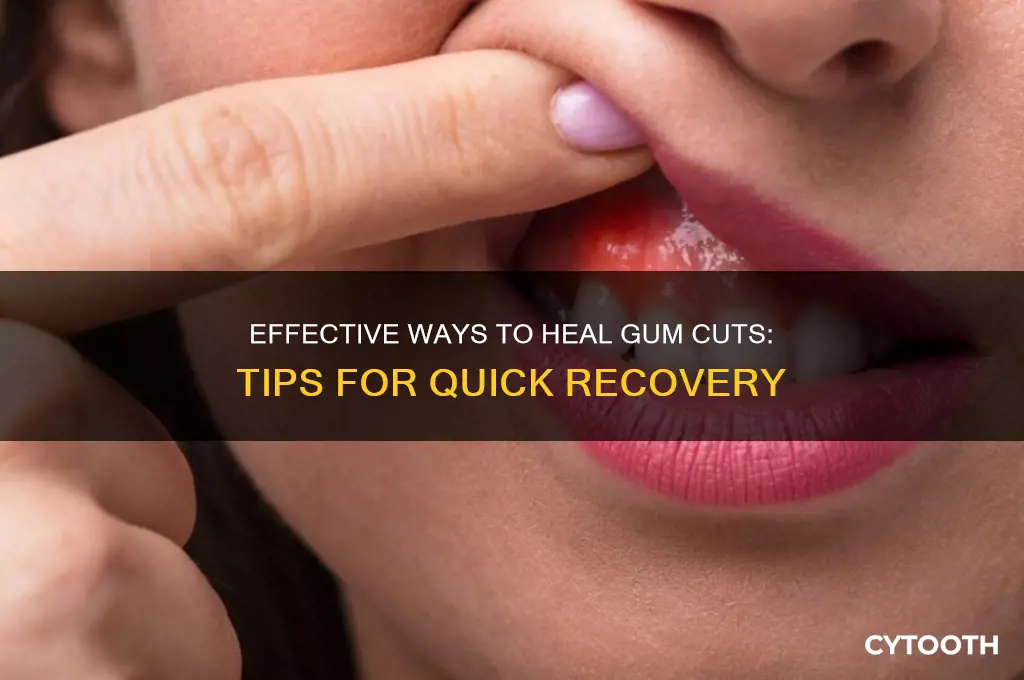
Healing a cut on your gums requires prompt and gentle care to prevent infection and promote quick recovery. Start by rinsing your mouth with warm saltwater to clean the area and reduce inflammation. Avoid irritating the wound by sticking to soft foods and refraining from smoking or using tobacco products. Over-the-counter antiseptic mouthwashes or gels can help disinfect the area, while applying a cold compress externally can reduce swelling. If the cut is deep, persists, or shows signs of infection like redness, pus, or fever, consult a dentist immediately for professional treatment. Maintaining good oral hygiene and being mindful of the injured area will aid in the healing process.
| Characteristics | Values |
|---|---|
| Rinse with Saltwater | Mix 1/2 teaspoon of salt in 8 ounces of warm water; rinse gently 2-3 times daily. |
| Avoid Irritants | Stay away from hot, spicy, or acidic foods and beverages. |
| Soft Diet | Consume soft, cool foods like yogurt, mashed potatoes, or smoothies. |
| Maintain Oral Hygiene | Brush gently with a soft-bristled toothbrush and avoid the injured area. |
| Use Dental Wax or Gel | Apply orthodontic wax or benzocaine gel to reduce discomfort. |
| Cold Compress | Apply a cold compress outside the mouth to reduce swelling. |
| Avoid Alcohol-Based Mouthwashes | Use alcohol-free mouthwashes to prevent stinging or irritation. |
| Keep Hydrated | Drink plenty of water to aid healing and prevent dry mouth. |
| Avoid Smoking or Tobacco | Tobacco products can delay healing and increase infection risk. |
| Monitor for Infection | Watch for signs like pus, increased pain, or fever; seek medical attention if present. |
| Time for Healing | Minor cuts typically heal within 7-10 days with proper care. |
| Professional Consultation | Visit a dentist if the cut doesn't heal, worsens, or causes severe pain. |
What You'll Learn
- Clean the area gently with warm salt water to reduce bacteria and soothe irritation
- Apply a cold compress to minimize swelling and numb the affected gum tissue
- Avoid irritants like spicy foods, alcohol, or tobacco to prevent further gum damage
- Use a soft-bristled toothbrush and gentle flossing to prevent additional injury
- Monitor for infection; seek a dentist if redness, pus, or pain persists

Clean the area gently with warm salt water to reduce bacteria and soothe irritation
A simple yet effective remedy for a cut on your gums is to rinse your mouth with warm salt water. This age-old practice has stood the test of time due to its dual benefits: reducing bacterial growth and alleviating discomfort. The process is straightforward: dissolve half a teaspoon of table salt in a glass of warm water, ensuring it’s not too hot to avoid further irritation. Gently swish the solution around your mouth for 30 seconds, focusing on the affected area, and then spit it out. Repeating this 2–3 times daily can significantly speed up healing by keeping the wound clean and minimizing infection risk.
From a scientific perspective, salt water works as a natural antiseptic because sodium chloride disrupts bacterial cell membranes, reducing their ability to thrive. Additionally, the osmotic effect draws out excess fluid from inflamed tissues, reducing swelling and pain. This method is particularly useful for cuts caused by sharp food, dental work, or accidental brushing injuries. Unlike chemical mouthwashes, salt water is gentle enough for daily use and safe for all age groups, including children over the age of 5, making it a versatile home remedy.
While the technique is simple, there are nuances to maximize its effectiveness. For instance, avoid using excessively salty water, as it can dry out oral tissues and delay healing. Similarly, ensure the water is warm, not hot, to prevent thermal damage to sensitive gums. If the cut is deep or accompanied by severe pain, persistent bleeding, or signs of infection (like pus or fever), consult a dentist immediately—salt water rinses are not a substitute for professional care in such cases.
Incorporating this practice into your oral care routine is practical and cost-effective. Keep a small container of salt near your sink for quick access, and consider using a measuring spoon to maintain consistency in the salt-to-water ratio. For added convenience, pre-mix salt packets can be stored for travel or busy mornings. By making this a habit, you not only address current injuries but also promote overall gum health, reducing the likelihood of future issues.
Ultimately, the beauty of warm salt water rinses lies in their simplicity and accessibility. They require no special equipment, are affordable, and can be prepared in seconds. While modern medicine offers advanced treatments, this traditional approach remains a cornerstone of oral wound care. Its effectiveness is rooted in biology, not marketing, making it a reliable go-to solution for anyone dealing with a gum injury. Pair it with good oral hygiene practices, and you’ll create an optimal environment for healing.
Dentures In or Out: Which Speeds Up Gum Healing?
You may want to see also
Apply a cold compress to minimize swelling and numb the affected gum tissue
A cut on the gums can be uncomfortable and prone to irritation, especially with every meal or drink. Applying a cold compress is a simple yet effective way to address the immediate discomfort. The cold temperature constricts blood vessels, reducing blood flow to the area, which in turn minimizes swelling and numbs the affected tissue. This method is particularly useful within the first 48 hours of injury, when inflammation is most likely to occur.
To apply a cold compress, wrap a few ice cubes or a frozen gel pack in a thin cloth to prevent direct contact with the skin. Hold the compress against the outside of your cheek, near the injured gum, for 10–15 minutes at a time. Repeat this process every 1–2 hours as needed, ensuring you allow the skin to return to its normal temperature between applications. For children or individuals with sensitive skin, limit application to 5–10 minutes to avoid frostbite or discomfort.
While a cold compress is generally safe, it’s important to monitor for signs of excessive cold exposure, such as numbness or skin discoloration. If the cut on your gums is deep, bleeding heavily, or accompanied by severe pain, a cold compress alone may not suffice—seek professional dental care promptly. Additionally, avoid applying ice directly to the gums or inside the mouth, as this can cause tissue damage or increase sensitivity.
The effectiveness of a cold compress lies in its ability to provide quick relief without the need for medication. It’s a practical, accessible solution for minor gum injuries, especially in situations where immediate dental care isn’t available. Pairing this method with gentle oral hygiene practices, such as rinsing with warm salt water, can further promote healing and reduce the risk of infection.
In summary, a cold compress is a straightforward, evidence-based approach to managing gum injuries. By reducing swelling and numbing the area, it offers immediate comfort while supporting the body’s natural healing process. Keep this technique in your first-aid toolkit for minor oral injuries, but always prioritize professional care for more serious concerns.
Can You Chew Gum with Braces? Orthodontic Tips and Advice
You may want to see also
Avoid irritants like spicy foods, alcohol, or tobacco to prevent further gum damage
Cuts on the gums, whether from injury, dental work, or accidental biting, are not only painful but also vulnerable to irritation and infection. What you consume in the aftermath plays a pivotal role in either accelerating healing or exacerbating the damage. Spicy foods, alcohol, and tobacco are common culprits that can prolong discomfort and hinder recovery. These irritants can inflame sensitive gum tissue, delay healing, and even introduce harmful bacteria, turning a minor cut into a major issue.
Consider the mechanics of irritation: spicy foods contain capsaicin, which can cause a burning sensation and increase blood flow to the area, potentially worsening inflammation. Alcohol, even in mouthwash form, can dry out tissues and disrupt the natural healing process. Tobacco, whether smoked or chewed, introduces toxins and reduces blood flow to the gums, starving the area of essential nutrients needed for repair. Each of these substances acts as a roadblock to recovery, making avoidance a critical step in healing a gum cut.
To minimize discomfort and promote healing, adopt a temporary dietary shift. For at least 48–72 hours post-injury, steer clear of spicy dishes like hot peppers, curries, or buffalo wings. Opt instead for bland, soft foods such as yogurt, mashed potatoes, or steamed vegetables. If you’re a regular alcohol consumer, abstain during this period, as even a single drink can irritate the wound. For tobacco users, this is a prime opportunity to pause the habit—even a short break can significantly improve gum health and overall healing.
Practical tips can make this adjustment easier. Keep a cooler stocked with soothing, cold foods like applesauce or smoothies, which can numb the area and reduce inflammation. Use a straw when drinking to bypass the injured area, minimizing contact with irritants. If you’re craving flavor without the heat, experiment with mild herbs like dill or parsley to season meals. For tobacco users, consider nicotine replacement therapies like patches or gum (used away from the injured area) to manage cravings without compromising healing.
The takeaway is clear: avoiding irritants isn’t just about comfort—it’s about creating an optimal environment for your gums to heal. By temporarily eliminating spicy foods, alcohol, and tobacco, you reduce the risk of infection, inflammation, and prolonged pain. This simple yet impactful change can transform a slow, uncomfortable recovery into a swift return to oral health. Think of it as giving your gums the peace they need to mend, one mindful choice at a time.
Numbing Gums for Deep Dental Cleaning: What to Expect at the Dentist
You may want to see also
Use a soft-bristled toothbrush and gentle flossing to prevent additional injury
A cut on your gums can be a painful and sensitive issue, often caused by aggressive brushing, flossing, or even a sharp food item. To prevent further injury and promote healing, it's essential to adopt a gentle oral care routine. One of the most effective ways to do this is by using a soft-bristled toothbrush. These toothbrushes are designed to clean your teeth and gums without causing additional irritation or damage. When selecting a toothbrush, look for one with the American Dental Association (ADA) seal of approval, ensuring it meets the necessary standards for safety and effectiveness.
Instructively, here’s how to properly use a soft-bristled toothbrush: hold the brush at a 45-degree angle to your gums and use short, gentle strokes. Avoid sawing back-and-forth motions, which can exacerbate gum injuries. Brush for at least two minutes, twice a day, paying extra attention to the area around the cut. For children under 12, supervise brushing to ensure they use the correct technique and don’t apply excessive pressure. Pair this with a fluoride toothpaste to strengthen enamel and reduce sensitivity around the injured area.
Flossing is another critical component of gum care, but it must be done delicately to avoid worsening a cut. Traditional string floss can sometimes be too harsh for sensitive gums, especially when they’re injured. Instead, consider using a water flosser or waxed floss, which glides more smoothly between teeth. For a cut on the gums, gently guide the floss into the space between teeth, curving it around each tooth in a “C” shape. Avoid snapping or forcing the floss, as this can cause further trauma. If bleeding occurs, ease off the pressure and allow the area to rest.
Comparatively, while a soft-bristled toothbrush and gentle flossing are essential, they are not the only measures to consider. However, they form the foundation of a healing-focused oral care routine. For instance, using a saltwater rinse (1/2 teaspoon of salt in 8 ounces of warm water) can complement these practices by reducing inflammation and killing bacteria. Yet, the mechanical action of brushing and flossing remains irreplaceable for removing debris and preventing infection around the cut.
Descriptively, imagine your gums as a delicate garden that needs careful tending after a storm. A soft-bristled toothbrush acts like a gentle rake, clearing away debris without disturbing the soil. Flossing, when done softly, is like carefully pruning overgrown branches—necessary but requiring a light touch. By treating your gums with this level of care, you create an environment where healing can flourish. Over time, the cut will mend, and your gums will regain their strength and resilience, provided you maintain this thoughtful approach to oral hygiene.
Receding Gums or Paranoia: Understanding Your Gum Health Concerns
You may want to see also
Monitor for infection; seek a dentist if redness, pus, or pain persists
A cut on your gums, while often minor, can become a gateway for infection if not properly monitored. The mouth is a breeding ground for bacteria, and any break in the gum tissue provides an opportunity for these microorganisms to infiltrate and cause trouble. Vigilance is key; observe the area closely for signs of infection, such as persistent redness, pus, or worsening pain. These symptoms indicate that your body’s natural defenses may be overwhelmed and professional intervention is necessary.
Infection in a gum wound typically manifests within 24 to 48 hours, though it can take longer depending on the severity of the cut and your immune response. Redness that spreads beyond the immediate area, pus discharge, or throbbing pain that intensifies rather than subsides are red flags. Swelling, fever, or a foul taste in the mouth may also accompany infection. If you notice any of these symptoms, avoid self-diagnosis and over-the-counter remedies; instead, schedule an appointment with a dentist promptly. Delaying care can lead to complications such as abscess formation or systemic infection.
For adults and older children, rinsing with warm salt water (1/2 teaspoon of salt in 8 ounces of water) every 2–3 hours can help reduce bacterial load and promote healing, but this is not a substitute for professional treatment if infection is suspected. Young children should avoid salt water rinses due to the risk of ingestion. Over-the-counter antiseptic mouthwashes containing chlorhexidine (0.12% concentration) may be used under a dentist’s guidance, but these are not suitable for long-term use. Applying topical antibiotics or using hydrogen peroxide without professional advice can disrupt the oral microbiome and worsen the condition.
Comparing a gum cut to other oral injuries, such as a bitten cheek or lip, highlights the unique risks of gum wounds. Unlike the cheek’s resilient mucosal tissue, gums have a richer blood supply and are more susceptible to bacterial invasion. While a bitten cheek may heal within days without intervention, a gum cut requires careful monitoring due to its proximity to the periodontal environment. This distinction underscores the importance of treating gum injuries with heightened caution.
In conclusion, monitoring a gum cut for infection is a critical step in ensuring proper healing. Recognize the signs—redness, pus, or persistent pain—and act swiftly by consulting a dentist. Home remedies can support initial care but are no replacement for professional assessment. By staying alert and seeking timely intervention, you can prevent minor injuries from escalating into major oral health issues.
Frequently asked questions
Rinse your mouth with warm saltwater several times a day, avoid irritating foods, and apply a cold compress to reduce swelling. Keep the area clean and avoid touching it with your tongue or fingers.
While hydrogen peroxide can disinfect, it’s too harsh for gum tissue and may delay healing. Stick to warm saltwater rinses or a mild antiseptic mouthwash recommended by your dentist.
Yes, but be gentle. Use a soft-bristled toothbrush and avoid the injured area. Brushing helps prevent infection, but be careful not to irritate the cut further.
If the cut doesn’t heal within a week, shows signs of infection (redness, pus, or pain), or is deep and bleeding heavily, consult a dentist immediately for professional treatment.