Hailey Morgan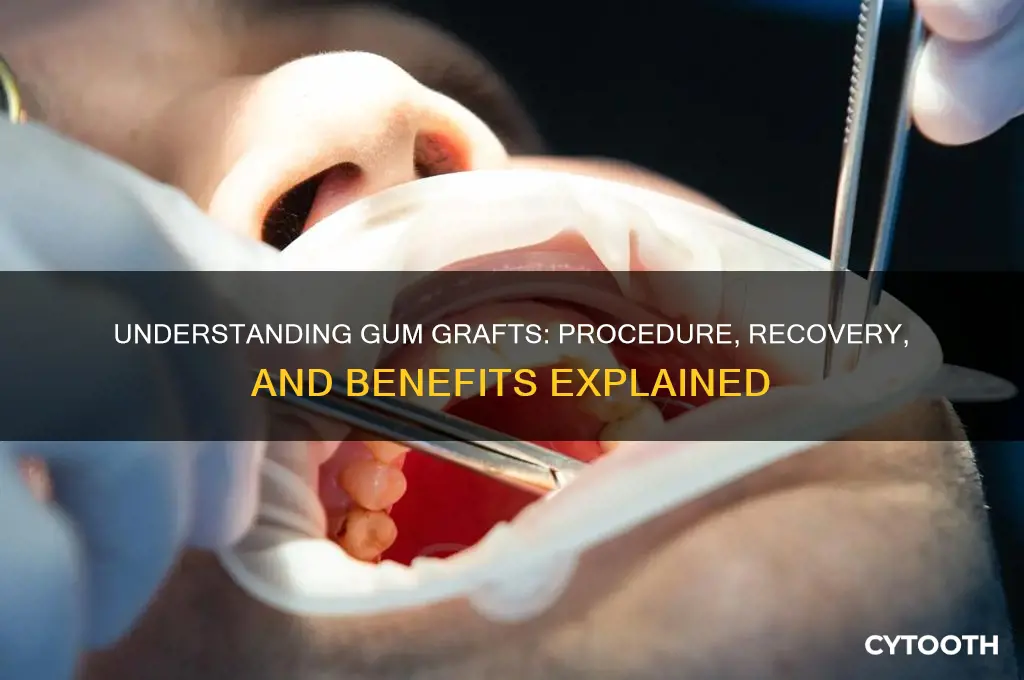
Gum grafts are a surgical procedure designed to restore receding gums by taking tissue from one area of the mouth, typically the palate, and attaching it to the affected site. This process helps cover exposed tooth roots, reduce sensitivity, and improve the overall health and appearance of the gums. The grafted tissue integrates with the existing gum tissue over time, providing a stable and protective barrier. There are several types of gum grafts, including connective tissue grafts, free gingival grafts, and pedicle grafts, each tailored to specific needs. The procedure is performed under local anesthesia, and recovery typically involves mild discomfort and specific oral care instructions to ensure successful healing. Gum grafts are a common and effective solution for gum recession, promoting long-term oral health and preventing further dental issues.
| Characteristics | Values |
|---|---|
| Purpose | To restore receded gums, cover exposed roots, and improve oral health. |
| Types of Grafts | Connective tissue grafts, free gingival grafts, pedicle grafts, allografts. |
| Procedure Time | Typically 1-2 hours per graft, depending on complexity. |
| Anesthesia | Local anesthesia is used to numb the area. |
| Donor Site | Often the palate (roof of the mouth) for autografts. |
| Recovery Time | 1-2 weeks for initial healing; full recovery may take several weeks. |
| Post-Procedure Care | Soft diet, pain management, and avoiding the graft site for healing. |
| Success Rate | High, with success rates typically above 90%. |
| Complications | Infection, bleeding, graft failure, or donor site discomfort. |
| Cost | Varies widely, typically $600-$3,000 per graft, depending on location. |
| Long-Term Results | Permanent solution if proper oral hygiene is maintained. |
| Alternative Treatments | Non-surgical options like deep cleaning or orthodontic treatment (limited effectiveness). |
What You'll Learn
- Gum Graft Types: Overview of common types like connective tissue, free gingival, and pedicle grafts
- Procedure Steps: Detailed steps from anesthesia to suturing during the gum graft surgery
- Recovery Process: Post-surgery care, healing timeline, and expected discomfort management
- Purpose of Grafts: Addressing gum recession, root sensitivity, and improving oral health
- Success Factors: Key factors ensuring graft success, including oral hygiene and follow-up care

Gum Graft Types: Overview of common types like connective tissue, free gingival, and pedicle grafts
Gum recession, often caused by periodontal disease, aggressive brushing, or genetic factors, exposes tooth roots and can lead to sensitivity, decay, and aesthetic concerns. Gum grafts address this issue by relocating healthy gum tissue to the affected area, but not all grafts are created equal. The choice of technique depends on the severity of recession, the patient’s oral anatomy, and the surgeon’s expertise. Among the most common types are connective tissue grafts, free gingival grafts, and pedicle grafts, each with distinct advantages and limitations.
Connective tissue grafts are the gold standard for treating single or multiple areas of gum recession. The procedure begins with a small incision in the palate to access the underlying connective tissue, which is then carefully extracted while leaving the outer layer intact. This tissue is sutured to the recessed area, promoting new gum growth and covering exposed roots. Patients typically experience moderate post-operative discomfort in the donor site, managed with pain relievers like ibuprofen (600 mg every 6 hours as needed). The success rate is high, often exceeding 90%, making it ideal for patients with adequate palatal tissue thickness. However, it’s less suitable for those with thin or sensitive palates, as harvesting tissue can cause prolonged soreness.
In contrast, free gingival grafts involve removing a small piece of tissue from the palate, including the epithelium, and suturing it directly to the recessed area. This method is particularly effective for patients with insufficient connective tissue or deep gum pockets. While it provides robust coverage, the donor site heals more slowly and may leave a visible scar. Additionally, the graft lacks blood vessels initially, relying on the recipient site for nutrient supply, which can increase the risk of partial failure. Dentists often recommend this technique for smokers or patients with poor oral hygiene, as it’s more resilient to infection.
Pedicle grafts, on the other hand, utilize tissue from adjacent areas, eliminating the need for a second surgical site. The most common variant, the lateral pedicle graft, involves rotating nearby gum tissue to cover the recession. This approach preserves blood supply, ensuring faster healing and higher predictability. However, it’s limited to areas with sufficient neighboring tissue, making it unsuitable for widespread recession. Patients benefit from reduced post-operative pain and quicker recovery, typically resuming normal activities within 3–5 days. Despite its advantages, pedicle grafts require precise planning to avoid tension on the graft, which can compromise blood flow and lead to failure.
Choosing the right gum graft type requires a thorough evaluation of the patient’s oral health, recession pattern, and lifestyle factors. Connective tissue grafts offer versatility and high success rates but may cause donor site discomfort. Free gingival grafts provide robust coverage for challenging cases but carry a higher risk of complications. Pedicle grafts excel in localized recession but are limited by tissue availability. Regardless of the technique, proper aftercare—including a soft diet, meticulous oral hygiene, and avoiding smoking—is critical for optimal outcomes. Consulting a periodontist ensures a tailored approach, restoring both function and aesthetics to the smile.
Does Laser Gum Surgery Hurt? Pain, Recovery, and What to Expect
You may want to see also
Procedure Steps: Detailed steps from anesthesia to suturing during the gum graft surgery
Gum graft surgery begins with anesthesia to ensure patient comfort. Local anesthesia, typically lidocaine or articaine with epinephrine, is administered to numb the affected area. The dosage varies based on the patient’s age, weight, and medical history, but a common concentration is 2% lidocaine. For anxious patients, nitrous oxide (laughing gas) or oral sedatives like diazepam (5–10 mg) may be offered. The goal is to eliminate pain while maintaining patient awareness, unless general anesthesia is required for complex cases.
Once anesthesia takes effect, the surgeon prepares the graft site and donor area. For a connective tissue graft, a small flap is created in the palate to extract tissue. In contrast, a free gingival graft involves directly excising a thin layer of tissue. The recipient site, often an area of gum recession, is cleaned and shaped to accommodate the graft. Precision is critical here, as the graft must fit seamlessly to ensure proper blood supply and integration. This step often takes 15–20 minutes, depending on the graft type and extent of recession.
Placement of the graft follows a meticulous process. The harvested tissue is secured to the recipient site using sutures, typically non-resorbable 5-0 or 6-0 nylon or silk. For pedicle grafts, the tissue is partially cut and repositioned over the recessed area, maintaining its blood supply. The surgeon ensures the graft is stable and covers the exposed root completely. This stage requires steady hands and attention to detail, as improper placement can lead to graft failure or uneven healing.
Suturing is the final and most delicate step. Sutures are placed at strategic intervals to hold the graft firmly in place without causing tension or discomfort. Patients may receive post-operative instructions to avoid disturbing the sutures, such as sticking to a soft diet for 1–2 weeks. Resorbable sutures may be used in some cases to eliminate the need for removal. The entire procedure typically lasts 30–90 minutes, depending on the number of teeth involved and the graft technique employed.
Post-operative care is crucial for successful healing. Patients are prescribed analgesics like ibuprofen (600 mg every 6 hours) or acetaminophen (500–1000 mg every 4–6 hours) for pain management. Chlorhexidine mouthwash (0.12%) is often recommended to reduce bacterial load and prevent infection. Avoiding vigorous brushing and flossing near the graft site for 2–3 weeks is essential. Follow-up appointments are scheduled at 1 week and 1 month to monitor healing and remove sutures if necessary. Adherence to these guidelines significantly improves graft survival and long-term outcomes.
Aging and Gum Recession: Understanding Natural Changes in Oral Health
You may want to see also
Recovery Process: Post-surgery care, healing timeline, and expected discomfort management
Post-gum graft surgery, the first 24–48 hours are critical for minimizing swelling and promoting healing. Apply an ice pack to the affected area for 20 minutes on, then 20 minutes off, during the first day. Avoid strenuous activity and keep your head elevated, even while sleeping, to reduce swelling. Your dentist may prescribe a mild pain reliever like ibuprofen (600 mg every 6 hours, as needed) or acetaminophen (500–1000 mg every 4–6 hours) to manage discomfort. Stick to a soft, cool diet—think yogurt, smoothies, and mashed potatoes—and avoid hot, spicy, or crunchy foods that could irritate the surgical site.
Healing progresses in stages, with the first week being the most sensitive. By day 3–5, swelling and bruising should subside, though the graft site may still feel tender. Sutures, if used, typically dissolve on their own within 1–2 weeks, but your dentist will monitor this during follow-up appointments. During this phase, oral hygiene is crucial but must be gentle. Use a soft-bristled toothbrush and avoid brushing directly over the graft site. Rinse with a warm saltwater solution (1/2 teaspoon of salt in 8 ounces of water) after meals to keep the area clean without disrupting healing.
Discomfort management evolves as healing progresses. After the first week, any lingering pain should be minimal and manageable with over-the-counter pain relievers. However, if pain worsens or persists, contact your dentist immediately, as this could indicate infection or graft failure. Patients often report a "tight" sensation as the gums heal, which is normal and typically resolves by week 3–4. Avoid tobacco products and alcohol during this period, as they can delay healing and compromise the graft’s success.
By week 4–6, most patients experience significant improvement, with the graft fully integrated into the surrounding tissue. At this stage, you can gradually resume normal brushing and flossing routines, though still with care around the graft site. Full healing and stabilization of the graft may take up to 6 months, during which regular dental check-ups are essential to monitor progress. While the recovery process requires patience and diligence, following these guidelines ensures optimal healing and long-term success of the gum graft.
Are Healthy Gums Pink? Uncovering the Truth About Gum Color
You may want to see also
Purpose of Grafts: Addressing gum recession, root sensitivity, and improving oral health
Gum recession is more than a cosmetic concern; it’s a progressive condition that exposes tooth roots, leading to sensitivity, decay, and potential tooth loss. Gum grafts serve as a targeted intervention to counteract this process by relocating healthy gum tissue from one area of the mouth (often the palate) to the receded site. This procedure not only restores the gumline but also creates a protective barrier around vulnerable roots. For individuals experiencing discomfort from hot, cold, or sweet stimuli, this can mean immediate relief and long-term preservation of tooth structure.
Root sensitivity, a common consequence of gum recession, occurs when dentin—the layer beneath enamel—becomes exposed. Gum grafts directly address this issue by covering the exposed root surface, reducing nerve stimulation and eliminating pain. Patients often report a dramatic decrease in sensitivity within weeks of the procedure. For those who’ve avoided ice cream or hot coffee due to discomfort, this restoration of oral comfort is life-changing. It’s a functional improvement that enhances both dietary freedom and overall quality of life.
Beyond symptom management, gum grafts play a critical role in improving oral health by preventing further deterioration. Exposed roots are more susceptible to plaque buildup, cavities, and periodontal disease. By reinforcing the gumline, grafts reduce the risk of infection and decay, making daily oral hygiene more effective. Dentists often recommend this procedure for patients with advanced recession or those at high risk of complications. It’s a proactive measure that safeguards against more invasive—and costly—treatments down the line.
Not all gum grafts are created equal; techniques vary based on the extent of recession and patient needs. The connective tissue graft, for instance, involves harvesting tissue from the palate and suturing it to the receded area, ideal for localized recession. Alternatively, a free gingival graft uses a small strip of tissue to cover exposed roots, often for patients with thin gums. Each method is tailored to maximize coverage and ensure natural-looking results. Post-procedure care is crucial: patients are advised to avoid hard or crunchy foods for 1–2 weeks, rinse with saltwater, and maintain gentle brushing to promote healing.
While gum grafts are highly effective, they’re not a standalone solution. Patients must commit to rigorous oral hygiene and regular dental check-ups to prevent recurrence. For those with aggressive periodontal disease, additional treatments like scaling and root planing may be necessary. The ultimate goal is not just to repair damage but to establish a foundation for lasting oral health. By addressing gum recession and its complications, gum grafts offer a transformative solution that combines functionality, comfort, and aesthetics.
Gum Grafts: Understanding Their Necessity for Oral Health and Smile Aesthetics
You may want to see also
Success Factors: Key factors ensuring graft success, including oral hygiene and follow-up care
Gum graft success hinges on more than the surgical procedure itself. While the graft’s integration with existing tissue is critical, patient adherence to post-operative care and oral hygiene practices plays an equally vital role. Research shows that patients who maintain meticulous oral hygiene and follow their dentist’s instructions closely have significantly higher graft survival rates, often exceeding 95%. This underscores the importance of viewing gum grafting as a partnership between the clinician and the patient, where both parties contribute to the ultimate outcome.
Consider the analogy of a garden: the graft is the new plant, but its survival depends on the soil (oral environment) and the gardener’s care. Poor oral hygiene is akin to neglecting watering or weeding—it creates an environment hostile to growth. Plaque buildup, for instance, can introduce bacteria that compromise the graft site, leading to infection or rejection. To prevent this, patients must adopt a rigorous oral care routine, including gentle brushing with a soft-bristled toothbrush, antimicrobial mouthwash (e.g., 0.12% chlorhexidine gluconate, used twice daily for two weeks post-surgery), and avoiding flossing around the graft site until fully healed (typically 2–3 weeks).
Follow-up care is another cornerstone of graft success. Regular check-ins with the periodontist allow for early detection of complications, such as graft recession or infection. For example, a study in the *Journal of Periodontology* found that patients who attended follow-up appointments at 1, 3, and 6 months post-surgery had a 20% lower risk of graft failure compared to those who skipped visits. During these appointments, the dentist can assess healing progress, remove any sutures if necessary, and provide tailored advice for ongoing care. Patients over 50 or those with systemic conditions like diabetes may require more frequent monitoring due to slower healing times.
Finally, lifestyle adjustments can tip the scales in favor of graft success. Smoking, for instance, impairs blood flow to the gums, significantly increasing the risk of graft failure. Patients are strongly advised to quit smoking for at least 2 weeks before and 4 weeks after the procedure. Similarly, a diet rich in vitamins C and D, which promote tissue repair and immune function, can enhance healing. Practical tips include incorporating foods like citrus fruits, leafy greens, and fortified dairy products into daily meals. By combining these factors—oral hygiene, follow-up care, and lifestyle modifications—patients can maximize the chances of a successful and lasting gum graft.
Are Purple Gums Normal? Understanding Gum Color and Oral Health
You may want to see also
Frequently asked questions
A gum graft is a surgical procedure where tissue from another part of your mouth (or a donor source) is used to cover exposed tooth roots caused by receding gums. It is needed to protect the roots from decay, reduce sensitivity, and improve the appearance of your smile.
During a gum graft, the periodontist numbs the area and removes a small piece of tissue from the roof of your mouth or uses donor tissue. This tissue is then stitched over the exposed root area. The procedure typically takes about an hour, depending on the extent of the graft.
Recovery usually takes about 1–2 weeks. You may experience swelling, discomfort, and bleeding initially. A soft diet is recommended, and pain medication may be prescribed. Avoid brushing the graft site for a few days, and follow your dentist’s post-operative care instructions carefully.
Gum grafts are considered a permanent solution to cover exposed roots and restore gum tissue. However, proper oral hygiene and regular dental check-ups are essential to prevent further gum recession. With good care, the results of a gum graft can last a lifetime.