Ethan Brooks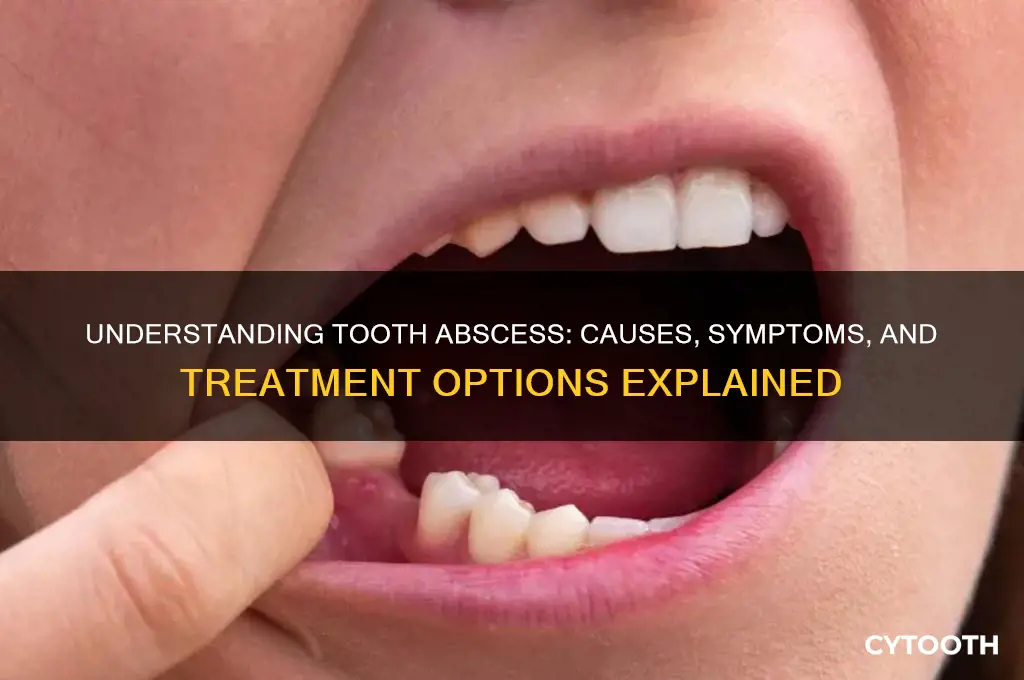
A tooth abscess is a painful infection that occurs when bacteria invade the innermost part of the tooth, known as the pulp, or the surrounding gums and bone. Typically caused by severe tooth decay, gum disease, or a cracked tooth, the infection leads to a buildup of pus, resulting in swelling, throbbing pain, and sometimes fever or bad breath. If left untreated, a tooth abscess can spread to other parts of the body, posing serious health risks, making prompt dental care essential to alleviate symptoms and prevent complications.
| Characteristics | Values |
|---|---|
| Definition | A tooth abscess is a pus-filled infection that forms within the teeth, gums, or bone due to bacterial invasion. |
| Causes | Tooth decay, gum disease, cracked teeth, or dental procedures. |
| Types | Periapical (affects tooth root), Periodontal (affects gum tissue). |
| Symptoms | Severe toothache, sensitivity to hot/cold, fever, swollen face/gums, bad breath, foul taste, swollen lymph nodes. |
| Complications | Spread of infection to jaw, neck, or brain (e.g., Ludwig's angina, sepsis, brain abscess). |
| Diagnosis | Dental exam, X-rays, or CT scans. |
| Treatment | Drainage of abscess, root canal, tooth extraction, antibiotics, pain relief. |
| Prevention | Good oral hygiene, regular dental check-ups, prompt treatment of cavities. |
| Risk Factors | Poor oral hygiene, high sugar diet, dry mouth, weakened immune system. |
| Prognosis | Generally good with early treatment; complications if left untreated. |
What You'll Learn
- Causes: Bacterial infection from tooth decay, gum disease, or injury leads to abscess formation
- Symptoms: Severe toothache, swelling, fever, bad breath, and sensitivity to pressure or temperature
- Types: Periapical (root tip) or periodontal (gum) abscess, each affecting different tooth areas
- Diagnosis: Dentists use X-rays, exams, and symptoms to identify the abscess location and severity
- Treatment: Drainage, antibiotics, root canal, or extraction to remove infection and relieve pain

Causes: Bacterial infection from tooth decay, gum disease, or injury leads to abscess formation
A tooth abscess is a painful condition that arises when bacteria invade the inner sanctum of your tooth, triggering a localized infection. This bacterial infiltration is the cornerstone of abscess formation, and it can stem from three primary culprits: tooth decay, gum disease, or injury. Understanding these causes is crucial for prevention and early intervention.
Tooth Decay: A Gateway for Bacteria
Imagine a tiny cavity, seemingly harmless at first, gradually deepening into a full-blown decay. As the decay progresses, it creates a pathway for bacteria to penetrate the tooth's protective layers, reaching the sensitive pulp chamber. This pulp, housing nerves and blood vessels, becomes inflamed and infected, leading to the formation of a pus-filled pocket – the abscess. Regular dental check-ups and prompt treatment of cavities are essential to prevent this scenario. For instance, a study published in the Journal of Dental Research highlights that individuals who visit the dentist biannually have a 40% lower risk of developing advanced tooth decay.
Gum Disease: A Silent Invader
Periodontal disease, often silent in its early stages, can wreak havoc on your oral health. As bacteria accumulate along the gum line, they cause inflammation and infection, gradually destroying the supporting structures of the teeth. This process, known as periodontitis, can lead to the formation of abscesses in the gum tissue. The American Dental Association recommends daily brushing and flossing, along with regular professional cleanings, to combat gum disease. Interestingly, a 2020 study revealed that individuals who flossed daily had a 30% lower incidence of gum-related abscesses compared to non-flossers.
Injury: A Direct Path to Infection
Trauma to the teeth, whether from a sports injury, accident, or even a simple fall, can create an entry point for bacteria. A cracked or fractured tooth exposes the inner layers, making it susceptible to infection. In such cases, immediate dental attention is crucial. Dentists may recommend a root canal treatment to remove the infected pulp and save the tooth. According to the International Association of Dental Traumatology, prompt treatment within 24 hours of a dental injury significantly improves the chances of successful recovery.
Preventive Measures and Treatment Options
To minimize the risk of tooth abscesses, adopt a comprehensive oral care routine. Brush twice daily with fluoride toothpaste, floss regularly, and use an antiseptic mouthwash. For those with a history of dental issues, consider incorporating a prescription-strength mouth rinse containing chlorhexidine, which has been shown to reduce plaque and gingivitis by up to 50%. Additionally, maintain a balanced diet, limiting sugary and acidic foods that contribute to tooth decay. If an abscess does develop, seek professional care promptly. Treatment may involve draining the abscess, root canal therapy, or in severe cases, tooth extraction. Early intervention not only alleviates pain but also prevents potential complications, such as the spread of infection to other parts of the body.
Effective Treatments for Tooth Abscess: What Dentists Do to Relieve Pain
You may want to see also
Symptoms: Severe toothache, swelling, fever, bad breath, and sensitivity to pressure or temperature
A tooth abscess is a painful and potentially serious condition that demands immediate attention. Among its most alarming symptoms is a severe toothache, often described as throbbing or sharp, which can radiate to the jaw, ear, or neck. This pain is not merely discomfort—it’s a distress signal from your body, indicating an infection has taken hold at the tooth’s root or gum line. Ignoring it can lead to complications, including bone loss or systemic infection, making prompt dental intervention critical.
Swelling is another telltale sign, often visible as a red, tender bump on the gum near the affected tooth. This occurs as the body’s immune system responds to the infection, causing fluid buildup. If left untreated, the swelling can spread to the face or neck, complicating breathing or swallowing. Applying a cold compress can temporarily reduce inflammation, but this is a stopgap measure—professional treatment is non-negotiable.
Fever and bad breath accompany the infection as it progresses. A low-grade fever (typically 100–102°F) signals your body is fighting the bacterial invasion, while foul-tasting or smelling discharge, coupled with halitosis, indicates pus formation. Rinsing with warm salt water (1/2 teaspoon salt in 8 ounces of water) may alleviate discomfort, but it won’t address the root cause. These symptoms are red flags that the infection is advancing, requiring urgent dental care.
Sensitivity to pressure or temperature is a symptom that often precedes the others, serving as an early warning. If chewing or sipping hot/cold beverages becomes agonizing, the tooth’s nerve is likely compromised. Over-the-counter pain relievers like ibuprofen (200–400 mg every 4–6 hours) can manage pain temporarily, but they do not cure the abscess. Avoiding hard foods and extreme temperatures can prevent exacerbating the issue, but only a dentist can resolve the underlying problem.
In children or older adults, these symptoms may manifest differently or be harder to detect. For instance, a child might refuse to eat due to pain, while an elderly person may exhibit fatigue or confusion if the infection becomes systemic. Caregivers should monitor for facial swelling, refusal to chew, or unexplained fever in these age groups. The takeaway is clear: tooth abscess symptoms are not passive complaints—they are urgent calls to action. Delaying treatment risks not just tooth loss, but broader health consequences.
Identifying Tooth Abscess Symptoms: Visual Signs and What to Look For
You may want to see also
Types: Periapical (root tip) or periodontal (gum) abscess, each affecting different tooth areas
Tooth abscesses, though often lumped together, are not a one-size-fits-all condition. They primarily manifest in two distinct types: periapical and periodontal, each targeting a specific area of the tooth and its surrounding structures. Understanding these differences is crucial for accurate diagnosis and effective treatment.
Periapical Abscess: The Root of the Problem
Imagine a bacterial invasion at the very tip of your tooth's root. This is the essence of a periapical abscess. It originates from an untreated cavity or injury that allows bacteria to penetrate the inner sanctum of the tooth, the pulp chamber. Here, the bacteria multiply, triggering an inflammatory response that leads to pus accumulation at the root tip. This pressure can cause excruciating pain, swelling, and even fever.
Think of it as a localized infection deep within the tooth's foundation, demanding immediate attention. Left untreated, the infection can spread to surrounding bone and tissues, potentially leading to tooth loss or even systemic complications.
Periodontal Abscess: A Gum-Related Crisis
Unlike its periapical counterpart, a periodontal abscess takes hold in the gum tissue surrounding the tooth. This type often arises from gum disease, where bacteria accumulate in the pocket between the gum and tooth, leading to infection and pus formation.
The pain associated with a periodontal abscess is typically more localized to the gum area, often accompanied by redness, swelling, and a bad taste in the mouth. While less likely to directly threaten the tooth's viability, a periodontal abscess can still lead to bone loss and gum recession if left untreated.
Distinguishing Features: A Comparative Glance
While both types share common symptoms like pain and swelling, their origins and treatment approaches differ. Periapical abscesses often require root canal treatment to remove the infected pulp and seal the root canal, followed by a crown to protect the weakened tooth. Periodontal abscesses, on the other hand, may be managed with deep cleaning procedures like scaling and root planing to remove bacterial buildup and promote gum healing. In severe cases, surgical intervention may be necessary to drain the abscess and address underlying bone damage.
Takeaway: Knowledge is Power
Recognizing the distinct characteristics of periapical and periodontal abscesses empowers individuals to seek timely dental care. Early intervention is crucial to prevent complications and preserve oral health. Remember, any persistent toothache or gum swelling warrants a visit to the dentist for a thorough examination and appropriate treatment.
Understanding Tooth Abscess Pain: Symptoms, Sensations, and Relief Tips
You may want to see also
Diagnosis: Dentists use X-rays, exams, and symptoms to identify the abscess location and severity
A tooth abscess is a painful infection at the root of a tooth or between the gum and a tooth, often caused by severe tooth decay, gum disease, or a cracked tooth. Identifying its location and severity is crucial for effective treatment, and dentists employ a combination of tools and methods to achieve this. X-rays are the cornerstone of diagnosis, providing a clear image of the tooth’s internal structure and surrounding bone. These images reveal signs of infection, such as bone loss or a dark spot at the tooth’s tip, which indicate the abscess’s presence and extent. Without this visual evidence, treatment could be misdirected or incomplete.
Beyond X-rays, a thorough clinical exam is essential. Dentists probe the affected area to assess tenderness, swelling, and the presence of a draining fistula—a small channel through which pus exits. They also check for mobility in the tooth, as an abscess can weaken its supporting structures. Patient-reported symptoms, such as throbbing pain, fever, or a foul taste in the mouth, further guide the diagnosis. For instance, persistent pain that worsens when lying down often suggests a periapical abscess (at the tooth’s root), while swelling in the gums may indicate a periodontal abscess. Combining these findings helps dentists pinpoint the abscess’s location and determine its severity.
The diagnostic process is not one-size-fits-all. For children or anxious patients, dentists may use digital X-rays, which emit up to 80% less radiation than traditional films, making them safer for repeated use. In complex cases, a 3D cone-beam CT scan might be necessary to visualize the infection’s spread in the jawbone. Additionally, dentists consider the patient’s medical history, such as diabetes or immunocompromised status, which can influence the abscess’s progression and treatment approach. This tailored approach ensures accurate diagnosis and minimizes the risk of complications.
While X-rays and exams are primary tools, patient awareness plays a critical role. Recognizing early symptoms—like mild gum redness or sensitivity to temperature—can prompt timely dental visits, preventing the abscess from worsening. Ignoring these signs often leads to more severe pain, systemic infection, or even tooth loss. Dentists emphasize that self-diagnosis is risky; for example, a pimple-like bump on the gum (a draining abscess) may seem minor but requires professional intervention to address the underlying infection. Early detection through professional diagnosis is key to preserving oral health and avoiding invasive treatments.
In conclusion, diagnosing a tooth abscess requires a multi-faceted approach that combines technology, clinical expertise, and patient input. X-rays provide critical visual evidence, while exams and symptom analysis refine the diagnosis. By understanding this process, patients can better appreciate the importance of seeking prompt dental care and cooperating with diagnostic procedures. Accurate identification of the abscess’s location and severity ensures targeted treatment, relieving pain and preventing long-term damage.
Tea Bag Remedy: Soothing Abscessed Tooth Pain Naturally at Home
You may want to see also
Treatment: Drainage, antibiotics, root canal, or extraction to remove infection and relieve pain
A tooth abscess is a painful infection at the root of a tooth or between the gum and a tooth, often caused by severe tooth decay, gum disease, or a cracked tooth. Left untreated, it can lead to serious complications, including the spread of infection to other parts of the body. Treatment focuses on eliminating the infection, relieving pain, and preventing recurrence. The approach depends on the severity and location of the abscess, with options including drainage, antibiotics, root canal therapy, or extraction.
Drainage is often the first step in treating a tooth abscess, as it provides immediate relief by removing pus and reducing pressure. This procedure is typically performed by a dentist or oral surgeon, who will make a small incision in the abscess to allow the pus to drain. Local anesthesia is used to minimize discomfort during the process. After drainage, the area is thoroughly cleaned to remove any remaining bacteria. While drainage is effective in alleviating symptoms, it does not address the underlying cause of the infection. Patients may still require additional treatment, such as antibiotics or a root canal, to prevent the abscess from returning.
Antibiotics play a crucial role in controlling the infection, especially when it has spread beyond the localized area. Commonly prescribed antibiotics include amoxicillin (500 mg every 8 hours for adults) or clindamycin (300 mg every 6 hours) for those allergic to penicillin. It’s essential to complete the full course of antibiotics, even if symptoms improve, to ensure the infection is fully eradicated. However, antibiotics alone are not a cure for a tooth abscess; they are typically used in conjunction with other treatments like drainage or root canal therapy. Patients should also be aware of potential side effects, such as gastrointestinal upset or allergic reactions, and report any adverse symptoms to their healthcare provider.
Root canal therapy is the preferred treatment for saving a tooth affected by an abscess, particularly when the infection has reached the pulp (the innermost part of the tooth). During a root canal, the dentist removes the infected pulp, cleans and disinfects the root canals, and seals them to prevent further infection. This procedure is performed under local anesthesia and typically requires one to two visits. While it may sound daunting, modern techniques and anesthesia make root canals relatively comfortable. Afterward, a crown is often placed to restore the tooth’s strength and function. Root canal therapy has a high success rate, allowing patients to retain their natural tooth and avoid extraction.
Extraction is considered a last resort, reserved for cases where the tooth is severely damaged or the infection cannot be managed through other means. This involves removing the entire tooth, which can be done under local or general anesthesia depending on the complexity of the case. While extraction provides immediate relief from pain and eliminates the source of infection, it leaves a gap that may require replacement with a dental implant, bridge, or partial denture to maintain oral function and aesthetics. Patients should discuss the pros and cons of extraction with their dentist, as well as post-extraction care, such as avoiding hot liquids and strenuous activity for the first 24 hours to promote proper healing.
In summary, the treatment of a tooth abscess requires a tailored approach based on the infection’s severity and the patient’s overall oral health. Drainage offers quick symptom relief, antibiotics control the spread of infection, root canal therapy saves the affected tooth, and extraction is a final option when preservation is not possible. Prompt treatment is essential to prevent complications and ensure the best possible outcome. Patients should consult a dental professional for an accurate diagnosis and personalized treatment plan.
Identifying a Dog Tooth Abscess: Symptoms and Visual Signs
You may want to see also
Frequently asked questions
A tooth abscess is a painful infection at the root of a tooth or between the gum and a tooth, often caused by severe tooth decay, gum disease, or a cracked tooth.
Symptoms include severe, persistent toothache, sensitivity to hot or cold, fever, swollen face or cheek, tender or swollen lymph nodes, and a foul taste or bad breath.
Treatment typically involves draining the abscess, antibiotics to fight infection, root canal therapy to save the tooth, or tooth extraction if the tooth is too damaged.
No, a tooth abscess will not heal without treatment. Ignoring it can lead to serious complications, including the spread of infection to other parts of the body.
Prevention includes maintaining good oral hygiene (brushing twice daily, flossing), regular dental check-ups, treating tooth decay or gum disease promptly, and avoiding sugary foods and drinks.