Logan Hayes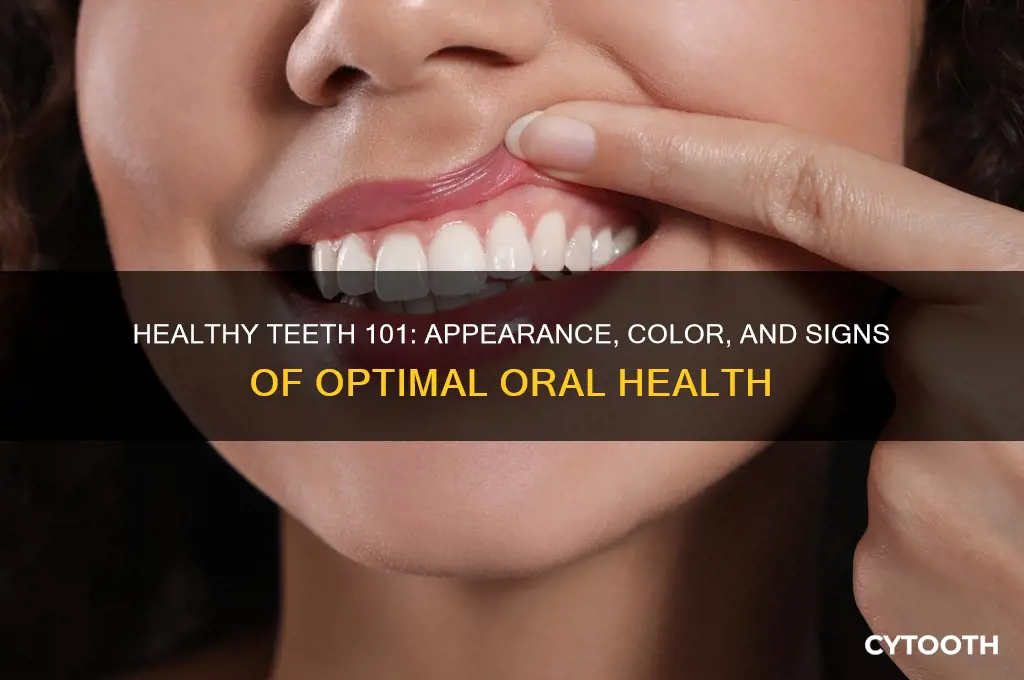
Healthy teeth are characterized by a bright, natural white color with slight variations in shade, free from stains or discoloration. They appear smooth and evenly aligned, with no visible chips, cracks, or gaps between them. The gums surrounding the teeth are firm, pink, and snugly fit around each tooth without bleeding when brushed or flossed. Healthy teeth also have no signs of decay, such as cavities or dark spots, and the enamel appears intact and glossy. Additionally, there is no persistent bad breath or discomfort, indicating good oral hygiene and overall dental health.
| Characteristics | Values |
|---|---|
| Color | Natural off-white to light yellow, consistent across all teeth |
| Shape | Aligned, evenly spaced, and proportional to jaw size |
| Texture | Smooth and free from cracks, chips, or rough spots |
| Gum Line | Pink, firm, and snug around each tooth without swelling or bleeding |
| Alignment | Straight with no overcrowding or gaps (minor imperfections may be normal) |
| Enamel | Intact, shiny, and reflective with no visible wear or erosion |
| Bite | Proper occlusion (teeth fit together comfortably when biting) |
| Absence of Decay | No visible cavities, dark spots, or holes |
| Fresh Breath | No persistent bad breath (halitosis) |
| Sensitivity | Minimal to no sensitivity to hot, cold, or sweet foods/drinks |
What You'll Learn
- Color and Shade: Healthy teeth are naturally light yellow or white, not overly bright
- Smooth Surfaces: Enamel should feel smooth, without pits, chips, or rough patches
- Gums and Tissue: Pink, firm gums that don’t bleed or recede indicate good oral health
- Alignment and Spacing: Straight teeth with minimal gaps reduce plaque buildup and decay risk
- No Sensitivity: Healthy teeth don’t react painfully to hot, cold, or sweet stimuli

Color and Shade: Healthy teeth are naturally light yellow or white, not overly bright
Healthy teeth are not the stark white often portrayed in media. This overly bright shade, while aesthetically appealing in advertisements, is not a natural or healthy state. The enamel, the outer layer of your teeth, has a slightly translucent quality, allowing the dentin beneath to show through. Dentin is naturally yellowish, which is why healthy teeth appear as a soft, light yellow or off-white.
Imagine holding a pearl up to the light. Its luster isn’t a flat, blinding white but a subtle, warm glow. Similarly, healthy teeth reflect light with a gentle sheen, not a harsh glare. This natural hue is a sign of strong enamel and good oral health. Overly white teeth, often achieved through aggressive whitening treatments, can indicate enamel erosion or artificial alterations, both of which compromise tooth integrity.
If you’re concerned about the color of your teeth, avoid over-the-counter whitening kits that promise dramatic results. These products often contain high concentrations of hydrogen peroxide (up to 35%), which can strip enamel and cause sensitivity. Instead, opt for professional whitening treatments, where dentists use controlled dosages (typically 15-20% hydrogen peroxide) and protective measures to minimize damage. For daily maintenance, use a toothpaste with mild whitening agents like baking soda or hydrated silica, and limit staining foods like coffee, tea, and red wine.
Comparing tooth shades to everyday objects can help set realistic expectations. A healthy tooth color resembles the inside of a banana peel or the creamy hue of a chamomile tea. If your teeth are closer to the brightness of a sheet of printer paper, it’s a red flag. Embrace the natural warmth of your teeth—it’s a sign they’re functioning as they should. Remember, the goal isn’t to achieve a Hollywood smile but to maintain a healthy, functional one.
Natural Ways to Strengthen Teeth and Gums for Optimal Oral Health
You may want to see also
Smooth Surfaces: Enamel should feel smooth, without pits, chips, or rough patches
Run your tongue over your teeth. Ideally, they should feel as smooth as a freshly glazed ceramic tile, without any pits, chips, or rough patches. This tactile smoothness is a hallmark of healthy enamel, the protective outer layer of your teeth. Enamel is the hardest substance in the human body, designed to withstand years of chewing, biting, and grinding. When it’s intact, it creates a seamless surface that resists plaque buildup and decay. If your teeth feel uneven or rough, it could signal enamel erosion, cavities, or wear from habits like teeth grinding or aggressive brushing.
Consider this analogy: enamel is like the paint on a car. When it’s smooth and intact, it protects the underlying structure from damage. But if the paint chips or peels, rust and deterioration follow. Similarly, pitted or rough enamel exposes the softer dentin beneath, increasing sensitivity and the risk of cavities. Factors like acidic foods, poor oral hygiene, and dry mouth accelerate enamel erosion, making regular maintenance crucial. A smooth enamel surface isn’t just about aesthetics—it’s a functional barrier that preserves dental health.
To maintain this smoothness, adopt a proactive care routine. Brush twice daily with a soft-bristled toothbrush and fluoride toothpaste, using gentle circular motions to avoid enamel abrasion. Limit acidic beverages like soda, citrus juices, and wine, and when you do consume them, rinse your mouth with water afterward to neutralize acids. Incorporate a fluoride mouthwash into your routine to strengthen enamel and remineralize minor damage. For those prone to teeth grinding, a custom night guard can prevent wear and tear.
Here’s a practical tip: after brushing, run your tongue over your teeth again. If you notice persistent roughness, schedule a dental checkup. Early intervention, such as fluoride treatments or dental sealants, can restore smoothness and prevent further damage. Remember, smooth enamel isn’t just a sign of healthy teeth—it’s a defense mechanism that keeps your smile strong and resilient. Treat it with care, and it will serve you well for years to come.
Coronavirus and Oral Health: Exploring Its Impact on Teeth and Gums
You may want to see also
Gums and Tissue: Pink, firm gums that don’t bleed or recede indicate good oral health
Healthy gums are the unsung heroes of a radiant smile, often overlooked but crucial for overall oral health. Imagine a coral pink canvas, firm to the touch, snugly embracing each tooth like a tailored suit. This is the ideal gum tissue—a sign of a thriving oral ecosystem. When you run your tongue along your gums or brush your teeth, they should feel smooth and resilient, not puffy or tender. Bleeding gums, often dismissed as a minor nuisance, are actually an early warning sign of inflammation or gingivitis. Similarly, receding gums, which expose the tooth’s root, can lead to sensitivity and decay. Healthy gums don’t just support your teeth; they protect them, acting as a barrier against bacteria and infection.
To maintain this pink, firm foundation, consider your gums’ daily care routine. Brushing twice a day with a soft-bristled toothbrush and fluoride toothpaste is essential, but technique matters. Hold the brush at a 45-degree angle to the gum line and use gentle, circular motions to avoid irritation. Flossing isn’t optional—it’s a non-negotiable step to remove plaque and food particles between teeth where brushes can’t reach. For added protection, incorporate an antimicrobial mouthwash into your routine, especially if you’re prone to gum issues. Pro tip: If you notice bleeding during brushing or flossing, don’t stop—this is precisely when your gums need the most attention.
Comparing healthy gums to unhealthy ones highlights the importance of vigilance. Healthy gums are stippled, resembling the texture of an orange peel, while inflamed gums appear shiny, red, and swollen. Receding gums, on the other hand, create pockets where bacteria thrive, leading to more serious issues like periodontitis. Age can play a role too—older adults are more susceptible to gum recession due to years of wear and tear. However, with proper care, gum health can be preserved at any age. For instance, children should start flossing as soon as two teeth touch, establishing habits that protect their gums for a lifetime.
Persuasive as it may sound, the link between gum health and systemic well-being cannot be overstated. Research shows that gum disease is associated with conditions like heart disease, diabetes, and even pregnancy complications. By prioritizing gum health, you’re not just safeguarding your smile but also contributing to your overall health. A simple self-check can be enlightening: gently press your gums with a clean finger—if they’re firm and don’t bleed, you’re on the right track. If not, it’s time to reassess your oral care routine and consult a dentist.
In conclusion, healthy gums are the cornerstone of a healthy mouth. Their pink, firm appearance isn’t just aesthetically pleasing—it’s a testament to your commitment to oral hygiene. By brushing correctly, flossing daily, and staying mindful of changes, you can ensure your gums remain a robust foundation for your teeth. Remember, gum health isn’t just about avoiding problems; it’s about actively nurturing a vital part of your body. Your gums are talking—listen to them, and they’ll thank you with years of strength and stability.
Can Receding Gums Regrow? Debunking Myths and Exploring Solutions
You may want to see also
Alignment and Spacing: Straight teeth with minimal gaps reduce plaque buildup and decay risk
Straight teeth aren’t just about aesthetics—they’re a cornerstone of oral health. When teeth align properly, there are fewer nooks and crannies where plaque can accumulate. Plaque, a sticky film of bacteria, thrives in hard-to-reach spaces, such as between crooked teeth or in gaps. Over time, this buildup leads to decay, gum disease, and even tooth loss. For instance, a study published in the *Journal of Clinical Orthodontics* found that misaligned teeth can increase the risk of cavities by up to 50% due to difficulty in cleaning these areas effectively.
Consider the mechanics of brushing and flossing. Straight teeth allow bristles and floss to glide smoothly along surfaces, removing debris efficiently. In contrast, crowded or spaced teeth create obstacles, leaving behind remnants that foster bacterial growth. Orthodontic treatments like braces or clear aligners aren’t merely cosmetic—they’re preventive measures. For adults, Invisalign or traditional braces can correct alignment issues, while children as young as 7 may benefit from early orthodontic intervention to guide jaw and tooth development.
Spacing matters just as much as alignment. Gaps between teeth, known as diastema, can trap food particles and plaque, increasing decay risk. While some gaps are genetic or result from gum disease, others can be closed through orthodontic treatment or veneers. Conversely, overcrowding forces teeth to tilt or rotate, creating hidden pockets where plaque thrives. A 2019 study in *Orthodontics & Craniofacial Research* highlighted that patients with moderate to severe crowding had twice the plaque accumulation compared to those with straight teeth.
Practical steps can mitigate risks before or during orthodontic treatment. For children, encourage proper brushing twice daily with a soft-bristled toothbrush and fluoride toothpaste, along with daily flossing or interdental brushes for tight spaces. Adults should consider adding a water flosser to their routine, especially if gaps or crowding are present. Regular dental check-ups every six months are crucial for monitoring alignment and addressing early signs of decay.
The takeaway? Straight teeth with minimal gaps aren’t just a smile upgrade—they’re a health investment. By reducing plaque buildup, proper alignment lowers the risk of decay, gum disease, and costly dental procedures down the line. Whether through orthodontic treatment or diligent oral care, prioritizing alignment and spacing is a proactive step toward lifelong dental health.
Safeguard Your Gums: Effective Tips for At-Home Teeth Whitening
You may want to see also
No Sensitivity: Healthy teeth don’t react painfully to hot, cold, or sweet stimuli
Healthy teeth are more than just a bright smile; they’re a sign of robust oral health. One key indicator is their ability to withstand everyday stimuli without discomfort. Imagine sipping a hot coffee, biting into an ice cream cone, or enjoying a piece of dark chocolate—healthy teeth remain unfazed. This absence of sensitivity to temperature or sweetness is a silent testament to strong enamel, healthy gums, and intact nerves. When teeth react painfully to such stimuli, it often signals underlying issues like enamel erosion, gum recession, or cavities. Thus, sensitivity, or the lack thereof, serves as a practical diagnostic tool for assessing dental health.
To maintain this resilience, consider your daily habits. Brushing twice a day with a fluoride toothpaste is non-negotiable, as fluoride strengthens enamel and protects against acid attacks. However, avoid overzealous brushing—use a soft-bristled toothbrush and gentle circular motions to prevent enamel wear and gum damage. For those already experiencing sensitivity, desensitizing toothpastes containing potassium nitrate or strontium chloride can help by blocking nerve signals. Use these products consistently for at least two weeks to notice a difference. If sensitivity persists, consult a dentist, as it may indicate a more serious issue like a cracked tooth or nerve exposure.
Comparatively, sensitive teeth often result from lifestyle choices. Frequent consumption of acidic foods and drinks (think citrus fruits, soda, or wine) weakens enamel over time, making teeth more reactive. Similarly, grinding teeth, especially during sleep, wears down enamel and exposes the sensitive dentin layer beneath. To mitigate these risks, limit acidic intake, use a straw to minimize contact with teeth, and wear a night guard if grinding is an issue. Additionally, stay hydrated—saliva neutralizes acids and protects enamel, so drinking water throughout the day is a simple yet effective strategy.
Finally, regular dental check-ups are crucial for catching sensitivity triggers early. Dentists can identify issues like receding gums, worn enamel, or early-stage cavities before they escalate. Professional treatments like fluoride varnishes, dental sealants, or gum grafts can address specific causes of sensitivity. For instance, a fluoride varnish applied during a cleaning can remineralize enamel and reduce sensitivity within days. By combining proactive care with professional guidance, you can ensure your teeth remain pain-free in the face of hot, cold, or sweet challenges—a clear sign of their health and vitality.
Prevent Gum Overgrowth: Effective Tips to Save Your Teeth
You may want to see also
Frequently asked questions
Healthy teeth are typically a light shade of off-white or pale yellow. They should not be stark white, as this can indicate enamel erosion or excessive bleaching.
Healthy gums are firm, pink, and fit snugly around the teeth. They should not be swollen, red, bleeding, or receding.
Healthy teeth have a smooth, shiny surface free from pits, cracks, or rough patches. The enamel should feel even and intact.
Yes, healthy teeth are generally well-aligned and evenly spaced. Minor gaps or crowding can be normal, but significant misalignment may require orthodontic attention.
Healthy teeth should feel solid and firmly rooted in the gums. There should be no sensitivity to hot, cold, or pressure unless recently treated by a dentist.