Matthew Grant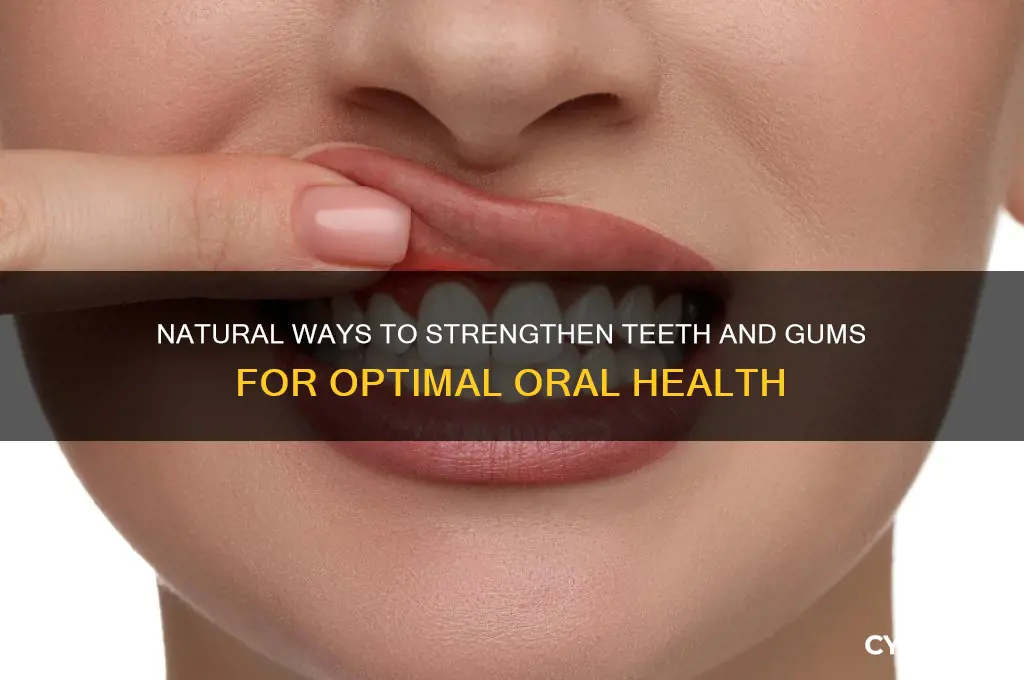
Strengthening your teeth and gums naturally involves adopting a holistic approach to oral health that focuses on nutrition, hygiene, and lifestyle habits. A diet rich in essential nutrients like calcium, vitamin D, vitamin C, and phosphorus supports enamel and gum tissue, while reducing sugar and acidic foods helps prevent decay. Regular brushing with fluoride toothpaste, flossing, and using antimicrobial mouthwash are fundamental practices to remove plaque and bacteria. Additionally, incorporating natural remedies such as oil pulling with coconut oil, chewing sugar-free gum with xylitol, and using herbal rinses like green tea or aloe vera can enhance oral health. Staying hydrated, avoiding tobacco, and managing stress also play crucial roles in maintaining strong teeth and gums, ensuring a healthy smile without relying solely on artificial interventions.
| Characteristics | Values |
|---|---|
| Dietary Habits | Consume calcium-rich foods (dairy, leafy greens), vitamin C (citrus, berries), and phosphorus (nuts, seeds). Avoid sugary and acidic foods. |
| Oral Hygiene | Brush twice daily with fluoride toothpaste, floss daily, and use an antimicrobial mouthwash. |
| Hydration | Drink plenty of water to maintain saliva production, which helps neutralize acids and protect teeth. |
| Oil Pulling | Swish coconut or sesame oil in the mouth for 10–15 minutes daily to reduce bacteria and plaque. |
| Herbal Remedies | Use neem, peppermint, or clove oil for their antimicrobial and anti-inflammatory properties. |
| Lifestyle Changes | Avoid smoking and limit alcohol consumption to prevent gum disease and tooth decay. |
| Chewing Sugar-Free Gum | Chew sugar-free gum with xylitol to stimulate saliva production and reduce plaque. |
| Natural Toothpaste Alternatives | Use baking soda or activated charcoal for gentle teeth whitening and cleaning. |
| Regular Dental Check-ups | Visit the dentist every 6 months for cleanings and early detection of oral health issues. |
| Stress Management | Practice stress-reducing activities like yoga or meditation, as stress can worsen gum health. |
| Vitamin D Intake | Get adequate sunlight or take vitamin D supplements to support calcium absorption and bone health. |
| Avoiding Teeth Grinding | Use a mouthguard at night if you grind your teeth to prevent enamel wear. |
| Probiotics | Consume probiotic-rich foods (yogurt, kefir) or supplements to promote a healthy oral microbiome. |
| Green Tea Consumption | Drink green tea for its antioxidant and anti-inflammatory benefits, which can reduce gum inflammation. |
| Avoiding Over-Brushing | Use a soft-bristled toothbrush and avoid aggressive brushing to prevent enamel erosion and gum recession. |
What You'll Learn
- Brush Twice Daily: Use fluoride toothpaste, soft bristles, gentle circular motions, twice daily for two minutes
- Floss Daily: Clean between teeth and gums to remove plaque and prevent gum disease
- Eat Teeth-Friendly Foods: Crunchy fruits, veggies, dairy, and leafy greens strengthen teeth and gums naturally
- Limit Sugar and Acid: Reduce sugary, acidic foods and drinks to prevent enamel erosion
- Oil Pulling: Swish coconut or sesame oil for 10-15 minutes to reduce bacteria

Brush Twice Daily: Use fluoride toothpaste, soft bristles, gentle circular motions, twice daily for two minutes
Brushing your teeth twice daily is the cornerstone of oral health, but it’s not just about the act itself—it’s about doing it right. Start by choosing a fluoride toothpaste, which remineralizes enamel and strengthens teeth against decay. Pair it with a soft-bristled toothbrush to avoid damaging gums or enamel. The technique matters too: use gentle circular motions, not aggressive scrubbing, to effectively remove plaque without causing harm. Time yourself—two minutes per session ensures thorough cleaning. This simple, consistent routine is your first line of defense in naturally strengthening teeth and gums.
Consider the mechanics of brushing: improper technique can lead to receding gums or enamel wear. For instance, hard bristles or horizontal scrubbing can strip away protective layers, leaving teeth vulnerable. Soft bristles, on the other hand, conform to the contours of your teeth and gums, providing a thorough clean without irritation. For children under 12, use a pea-sized amount of fluoride toothpaste; adults can use a full brush-length strip. Tilt the brush at a 45-degree angle to clean the gum line, where plaque buildup often begins. This method not only prevents gum disease but also promotes healthier, stronger teeth.
The science behind fluoride is compelling. It integrates into the enamel structure, making it more resistant to acid attacks from bacteria. Studies show that regular fluoride use reduces cavities by up to 25%. However, overdoing it can lead to fluorosis, a cosmetic issue causing white streaks on teeth. Stick to recommended amounts and avoid swallowing toothpaste. For added protection, consider a fluoride mouthwash after brushing, especially if you’re prone to cavities. This dual approach maximizes fluoride’s benefits while minimizing risks.
Consistency is key, but so is adaptability. If you experience sensitivity or bleeding gums, adjust your technique or switch to an even softer brush. Electric toothbrushes with built-in timers can ensure you hit the two-minute mark without guesswork. For those with braces or dental work, angled brushes or interdental cleaners may be necessary. The goal is to make brushing effective and sustainable, tailored to your specific needs. By mastering this daily ritual, you’re not just cleaning—you’re actively fortifying your teeth and gums against time and wear.
Teeth Grinding and Gum Recession: Uncovering the Surprising Connection
You may want to see also
Floss Daily: Clean between teeth and gums to remove plaque and prevent gum disease
Plaque buildup between teeth is a silent saboteur, hardening into tartar that irritates gums and leads to gingivitis. Flossing daily disrupts this process, physically removing plaque before it calcifies and causes inflammation. Think of it as weeding your garden – neglect it, and the weeds (plaque) take over, choking the healthy plants (gums).
Flossing isn’t just about fresh breath or avoiding that awkward "something in my teeth" moment. It’s a preventative measure against gum disease, which can progress to periodontitis, a serious infection that damages the bone supporting your teeth. Daily flossing takes mere minutes but yields long-term benefits, reducing the risk of tooth loss and systemic health issues linked to gum disease, like heart disease and diabetes.
The technique matters. Wrap 18 inches of floss around your middle fingers, leaving a 1-2 inch section taut between your hands. Gently guide the floss between teeth in a back-and-forth motion, forming a "C" shape around each tooth. Slide it up and down against the tooth surface, reaching slightly below the gum line. Avoid snapping the floss, which can injure gums. For tight spaces, try waxed floss or a floss threader. Children can begin flossing as soon as two teeth touch, using child-friendly floss picks or supervised flossing with regular floss.
Consistency is key. Make flossing part of your nightly routine, pairing it with brushing for a complete clean. Keep floss readily available – in your bathroom, bedside table, or even your purse – to eliminate excuses. If traditional floss feels cumbersome, explore alternatives like water flossers, which use a targeted stream of water to dislodge plaque, or interdental brushes, small angled brushes designed for tight spaces. Remember, healthy gums are pale pink, firm, and don't bleed when flossed. If you notice persistent bleeding, redness, or swelling, consult your dentist – these could be signs of gum disease requiring professional intervention.
Teeth Clenching and Gum Recession: Uncovering the Hidden Connection
You may want to see also
Eat Teeth-Friendly Foods: Crunchy fruits, veggies, dairy, and leafy greens strengthen teeth and gums naturally
Crunchy fruits and vegetables act as nature’s toothbrush, scrubbing plaque and stimulating gums with every bite. Apples, carrots, and celery, for instance, require vigorous chewing, which increases saliva production. Saliva neutralizes acids and remineralizes enamel, making teeth more resistant to decay. Incorporate one to two servings of these foods daily, especially as snacks between meals, to maximize their cleaning effect. Think of them as edible dental hygiene tools that also deliver essential vitamins and fiber.
Dairy products like cheese, yogurt, and milk are rich in calcium and phosphorus, minerals critical for rebuilding tooth enamel. Cheese, in particular, is a standout choice due to its low acidity and high calcium content. A small cube of cheese after a meal can help buffer acids and protect teeth. For those who are lactose intolerant, fortified plant-based alternatives like almond or soy milk can provide similar benefits. Aim for two to three servings of dairy or its substitutes daily to support long-term dental health.
Leafy greens such as kale, spinach, and Swiss chard are packed with vitamins and minerals that strengthen teeth and gums. Vitamin K, abundant in these greens, helps bind calcium to bones and teeth, while folic acid in spinach can treat gum disease. Incorporate a handful of leafy greens into salads, smoothies, or sautéed dishes daily. Their versatility makes them easy to add to any meal, ensuring consistent intake of these dental powerhouses.
Combining these teeth-friendly foods creates a synergistic effect, addressing multiple aspects of oral health. For example, pair a crunchy apple with a slice of cheese for a snack that cleans teeth, neutralizes acids, and provides calcium. Or blend spinach into a yogurt smoothie for a double dose of enamel-strengthening nutrients. The key is consistency—make these foods a regular part of your diet to see lasting benefits. By eating strategically, you can turn every meal into an opportunity to fortify your teeth and gums naturally.
Effective Ways to Reduce Gum Swelling from Wisdom Teeth
You may want to see also
Limit Sugar and Acid: Reduce sugary, acidic foods and drinks to prevent enamel erosion
Sugar and acid are the dynamic duo of dental destruction, silently eroding your enamel with every sip and bite. Enamel, the protective outer layer of your teeth, doesn’t regenerate. Once it’s gone, it’s gone. Sugary foods and drinks feed harmful bacteria in your mouth, producing acids that attack enamel. Acidic beverages like soda, citrus juices, and even some teas directly soften and wear down this vital shield. The result? Sensitivity, cavities, and a weakened foundation for your gums.
Consider this: a single can of soda contains around 39 grams of sugar, far exceeding the daily limit recommended by the American Heart Association (25g for women, 36g for men). Pair that with its high acidity (pH levels as low as 2.5, comparable to vinegar), and you’ve got a recipe for rapid enamel erosion. Even seemingly healthy choices like smoothies or flavored yogurts can be sugar bombs in disguise. For children, whose enamel is still developing, the stakes are even higher. Limiting their sugar intake isn’t just about preventing cavities—it’s about safeguarding their dental health for decades to come.
To combat this, start by reading labels. Ingredients like sucrose, fructose, and high-fructose corn syrup are red flags. Opt for water or unsweetened beverages instead of soda or juice. If you crave something tangy, dilute citrus juices with water and drink through a straw to minimize contact with teeth. After consuming acidic foods or drinks, wait at least 30 minutes before brushing—brushing immediately can further damage softened enamel. Instead, rinse your mouth with water or chew sugar-free gum to stimulate saliva production, your mouth’s natural defense against acid.
Here’s a practical tip: keep a food diary for a week to track your sugar and acid intake. You’ll likely uncover hidden sources, like salad dressings or energy bars. Gradually replace these with enamel-friendly alternatives, such as herbal teas, fresh vegetables, or nuts. For kids, swap sugary snacks with cheese, which neutralizes acids and provides calcium for stronger teeth. Remember, moderation is key—you don’t need to eliminate treats entirely, just be mindful of frequency and portion size.
The takeaway? Protecting your enamel isn’t about deprivation—it’s about making informed choices. By reducing sugar and acid, you’re not just preserving your smile; you’re investing in long-term oral health. Stronger enamel means healthier gums, fewer cavities, and a lower risk of tooth loss. Start small, stay consistent, and your teeth will thank you.
Can Extracting Teeth Cure Gum Disease? Understanding the Connection
You may want to see also
Oil Pulling: Swish coconut or sesame oil for 10-15 minutes to reduce bacteria
Oil pulling, an ancient Ayurvedic practice, involves swishing a tablespoon of coconut or sesame oil in your mouth for 10–15 minutes to reduce harmful bacteria and promote oral health. Unlike modern mouthwashes that often contain alcohol or chemicals, oil pulling uses natural substances to draw out toxins and plaque, leaving your teeth and gums stronger and healthier. This method is particularly effective because oils like coconut and sesame have antimicrobial properties, targeting bacteria responsible for cavities and gum disease.
To begin, choose either organic coconut oil or sesame oil—both are rich in lauric acid and sesamol, respectively, which combat bacteria and inflammation. Start by placing one tablespoon of oil in your mouth first thing in the morning, before eating or drinking. Swish the oil vigorously but gently, ensuring it reaches all corners of your mouth. Avoid gargling or swallowing the oil, as it will accumulate toxins during the process. After 10–15 minutes, spit the oil into a trash bin (not the sink, as it can clog pipes) and rinse your mouth with warm water. Follow with your regular brushing routine for optimal results.
While oil pulling is generally safe for adults, it’s essential to approach it with caution. Pregnant women, children under 5, and individuals with sensitive gag reflexes should avoid this practice. Additionally, oil pulling is not a replacement for brushing or flossing but a complementary technique. Consistency is key—aim to incorporate it into your daily routine for at least 2–3 weeks to notice improvements in gum health, reduced plaque buildup, and fresher breath.
Comparatively, oil pulling stands out as a cost-effective and chemical-free alternative to commercial oral care products. Unlike fluoride-based treatments, it addresses the root cause of oral issues by eliminating bacteria rather than merely masking symptoms. Its simplicity and reliance on natural ingredients make it accessible to anyone seeking to strengthen their teeth and gums without harsh interventions. By dedicating just 15 minutes a day, you can harness the power of this ancient practice for a healthier, brighter smile.
Natural Remedies to Close Gaps Between Teeth and Gums Effectively
You may want to see also
Frequently asked questions
Natural methods include maintaining a balanced diet rich in vitamins and minerals (like calcium, vitamin D, and vitamin C), reducing sugar intake, practicing good oral hygiene (brushing twice daily and flossing), and using natural remedies like oil pulling with coconut oil or rinsing with saltwater.
Yes, foods like leafy greens, dairy products, nuts, and crunchy fruits and vegetables (e.g., apples and carrots) can strengthen teeth and gums by providing essential nutrients and stimulating saliva production, which helps neutralize acids and protect enamel.
Oil pulling, typically done with coconut oil, involves swishing oil in the mouth for 10–15 minutes to reduce harmful bacteria, plaque, and inflammation. This practice can improve gum health, whiten teeth, and strengthen oral tissues when done consistently alongside regular oral care.