Hailey Morgan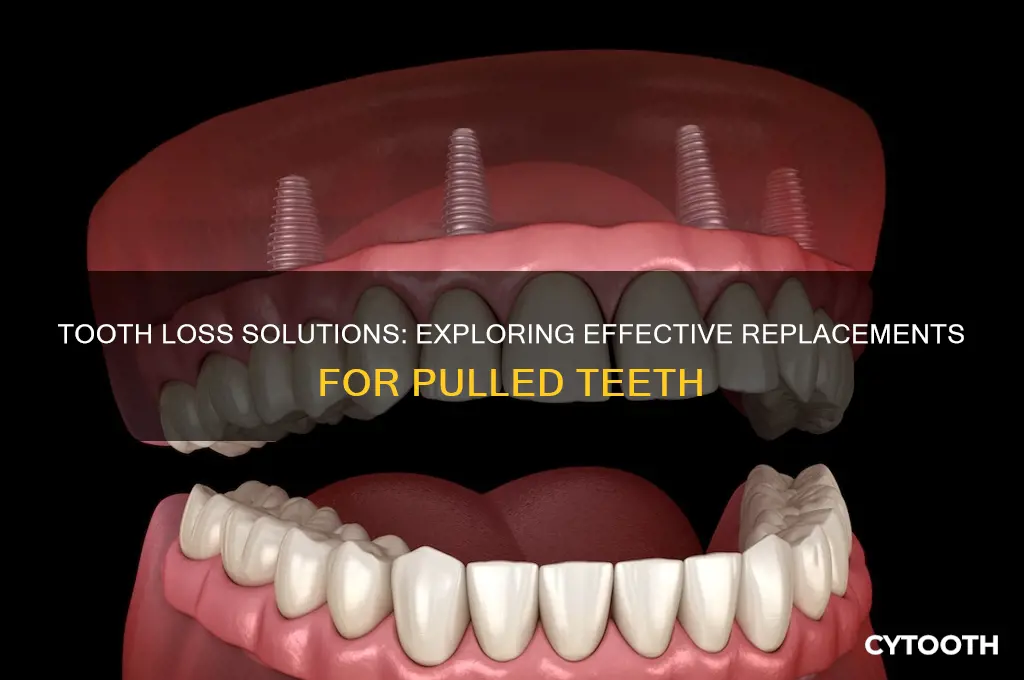
When a tooth is extracted due to decay, injury, or other dental issues, it’s essential to consider replacement options to maintain oral health, function, and aesthetics. Common alternatives include dental implants, which are durable and mimic natural teeth; bridges, which anchor to adjacent teeth to fill the gap; and dentures, either partial or full, which are removable and cost-effective. Each option has its advantages and considerations, depending on factors like budget, oral health, and personal preference. Consulting a dentist is crucial to determine the best solution for restoring both the appearance and functionality of the missing tooth.
What You'll Learn
- Dental Implants: Titanium posts surgically placed into jawbone, acting as artificial tooth roots for permanent replacement
- Dental Bridges: Fixed prosthetics anchored to adjacent teeth, filling gaps left by missing teeth
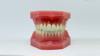
- Partial Dentures: Removable appliances replacing one or more teeth, supported by gums and remaining teeth
- All-on-4 Implants: Full-arch restoration using four implants to support a fixed bridge or denture
- Bone Grafting: Procedure to rebuild jawbone, ensuring sufficient bone for implant placement post-extraction

Dental Implants: Titanium posts surgically placed into jawbone, acting as artificial tooth roots for permanent replacement
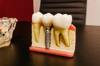
Dental implants stand out as the gold standard for replacing a pulled tooth, offering a permanent solution that mimics the natural tooth structure. Unlike dentures or bridges, which sit on the gum’s surface or rely on adjacent teeth for support, implants are titanium posts surgically embedded into the jawbone. This design not only provides stability but also prevents bone loss, a common issue after tooth extraction. The process begins with a thorough evaluation of bone density and oral health, ensuring the jaw can support the implant. Once placed, the titanium post undergoes osseointegration, where it fuses with the bone over 3–6 months, creating a solid foundation for the artificial crown.
From a practical standpoint, dental implants require a multi-step process that demands patience but delivers long-term benefits. After the initial surgery to place the titanium post, patients must follow strict post-operative care, including avoiding hard foods and maintaining impeccable oral hygiene. The second phase involves attaching an abutment to the implant, followed by the placement of a custom-made crown. While the timeline can span several months, the result is a replacement tooth that looks, feels, and functions like a natural one. For those with compromised bone density, a bone graft may be necessary before implant placement, adding time but ensuring success.
One of the most compelling advantages of dental implants is their ability to preserve facial structure and prevent the sunken appearance often associated with tooth loss. By stimulating the jawbone like a natural tooth root, implants halt bone resorption, maintaining the integrity of the facial contours. This is particularly important for front teeth replacements, where aesthetics play a critical role. Additionally, implants do not require altering adjacent teeth, unlike bridges, making them a conservative option for oral health. Their success rate is impressive, with studies showing over 95% survival after 10 years, provided proper care is maintained.
Cost and accessibility remain considerations for dental implants, as they are typically more expensive than other tooth replacement options. However, their durability and the avoidance of long-term issues like bone loss often justify the investment. Insurance coverage varies, so patients should consult their providers to understand potential out-of-pocket expenses. For those seeking a permanent, hassle-free solution, dental implants offer unparalleled functionality and aesthetics, making them the closest thing to regaining a natural tooth. With proper care, they can last a lifetime, ensuring a confident smile and uncompromised oral health.
Post-Extraction Diet: Soft, Nutritious Foods to Eat After a Tooth Extraction
You may want to see also
Dental Bridges: Fixed prosthetics anchored to adjacent teeth, filling gaps left by missing teeth
Dental bridges are a time-tested solution for replacing missing teeth, offering both functional and aesthetic benefits. Unlike removable dentures, bridges are fixed prosthetics that rely on adjacent teeth for support, creating a stable and natural-looking restoration. This method involves preparing the neighboring teeth (known as abutments) to receive crowns, which then anchor the replacement tooth (pontic) in place. The result is a seamless integration that mimics the appearance and function of a natural tooth, preventing issues like shifting teeth or bite misalignment.
The process of getting a dental bridge typically requires two or more visits to the dentist. During the first appointment, the abutment teeth are reshaped, and impressions are taken to create a custom-fitted bridge. A temporary bridge may be placed while the permanent one is fabricated in a dental lab. At the second visit, the temporary bridge is removed, and the permanent one is cemented into place. With proper care, including regular brushing, flossing (using a bridge threader), and dental check-ups, a dental bridge can last 10–15 years or more.
One of the key advantages of dental bridges is their versatility. They can replace a single missing tooth or multiple teeth in a row, depending on the location and condition of the abutment teeth. Traditional bridges are the most common type, but there are also cantilever bridges (anchored on one side only) and Maryland bridges (bonded to the back of adjacent teeth), each suited to specific cases. However, it’s important to note that bridges require altering healthy teeth, which may not be ideal for everyone. Patients with compromised abutment teeth or those seeking a non-invasive option might need to explore alternatives like implants.
While dental bridges are a reliable solution, they do come with considerations. The cost can vary widely, typically ranging from $500 to $1,200 per pontic, depending on materials (porcelain, metal, or a combination) and location. Additionally, the longevity of a bridge depends on oral hygiene and habits like avoiding hard foods that could damage the restoration. For those with good oral health and a commitment to maintenance, dental bridges offer a durable and aesthetically pleasing way to restore a complete smile after tooth loss.
How to Safely Remove Rotten Material from a Tooth at Home
You may want to see also
Partial Dentures: Removable appliances replacing one or more teeth, supported by gums and remaining teeth
Partial dentures are a versatile solution for those who have lost one or more teeth but still retain some natural teeth. These removable appliances are custom-designed to fit seamlessly into the gaps left by extracted teeth, restoring both function and aesthetics. Unlike fixed bridges, partial dentures do not require altering adjacent healthy teeth, making them a conservative option. They are supported by the gums and remaining teeth, often incorporating metal or plastic clasps that discreetly anchor the appliance in place. This design ensures stability while allowing for easy removal for cleaning and maintenance.
The process of getting partial dentures begins with a dental consultation, where impressions of the mouth are taken to create a precise mold. The appliance is then crafted to match the shape, size, and color of the patient’s natural teeth, ensuring a natural appearance. Patients are typically advised to wear the dentures as directed, starting with a few hours a day and gradually increasing wear time to allow the gums and tissues to adjust. Proper care is essential; daily cleaning with a soft brush and denture cleaner helps prevent plaque buildup and maintains oral hygiene.
One of the key advantages of partial dentures is their affordability compared to other tooth replacement options like implants or bridges. They are particularly suitable for patients who are not candidates for surgery or prefer a non-invasive solution. However, they do require periodic adjustments as the shape of the gums and jawbone changes over time. Dentists recommend regular check-ups to ensure the fit remains comfortable and functional. For those with multiple missing teeth, partial dentures can also help prevent the remaining teeth from shifting, which could lead to bite misalignment or further tooth loss.
While partial dentures offer numerous benefits, they may take some time to get used to. Initial discomfort, difficulty speaking, or a feeling of bulkiness in the mouth are common but usually subside within a few weeks. Patients are encouraged to practice speaking and eating with the dentures in place to expedite adaptation. Soft foods are recommended during the initial adjustment period, gradually progressing to harder textures as comfort allows. With proper care and patience, partial dentures can provide a reliable, long-term solution for replacing pulled teeth, enhancing both oral health and confidence.
Soft and Soothing Foods to Eat After a Tooth Extraction
You may want to see also
All-on-4 Implants: Full-arch restoration using four implants to support a fixed bridge or denture
The All-on-4 implant technique is a revolutionary approach to full-arch restoration, offering a permanent solution for those facing extensive tooth loss. This method strategically utilizes four dental implants to support an entire arch of replacement teeth, whether a fixed bridge or a denture. By angling the rear implants, All-on-4 maximizes the use of available bone, often eliminating the need for bone grafting – a common prerequisite for traditional implant procedures.
This technique boasts several advantages. Firstly, it provides immediate functionality. Patients can often leave the procedure with a provisional set of teeth, allowing them to eat, speak, and smile with confidence from day one. Secondly, the All-on-4 system is highly stable. The strategic implant placement distributes chewing forces evenly, ensuring a secure and comfortable fit. Lastly, this method promotes long-term oral health. By stimulating the jawbone like natural teeth, implants prevent bone loss, a common consequence of tooth loss.
While All-on-4 offers significant benefits, it's crucial to understand the process and considerations. The procedure typically involves a thorough consultation, including 3D imaging to assess bone structure and plan implant placement. The surgery itself is performed under anesthesia, ensuring patient comfort. Following the procedure, a period of healing is necessary for the implants to integrate with the jawbone. During this time, patients adhere to a soft food diet and follow strict oral hygiene instructions.
Regular check-ups are essential to monitor healing and ensure the long-term success of the All-on-4 system. With proper care, these implants can last a lifetime, providing a durable and natural-looking solution for full-arch tooth replacement.
For individuals seeking a permanent, aesthetically pleasing, and functional solution to extensive tooth loss, All-on-4 implants present a compelling option. Consulting with a qualified dental implant specialist is the first step towards determining if this innovative technique is the right choice for restoring a confident smile and optimal oral health.
Post-Extraction Care: What to Take After a Tooth Extraction
You may want to see also
Bone Grafting: Procedure to rebuild jawbone, ensuring sufficient bone for implant placement post-extraction
After a tooth extraction, the jawbone in that area begins to deteriorate due to lack of stimulation, a process called resorption. This natural occurrence can compromise the structural integrity of the jaw, making it insufficient to support a dental implant—a common and effective replacement for a pulled tooth. Bone grafting emerges as a critical procedure to counteract this issue, rebuilding the jawbone to ensure a stable foundation for implant placement.
The bone grafting procedure involves transplanting bone tissue to the affected area, either from another part of the patient’s body (autograft), a donor (allograft), or using synthetic materials. The graft acts as a scaffold, stimulating new bone growth and integrating with the existing jawbone over time. This process typically takes 3–6 months, depending on the extent of bone loss and the patient’s healing capacity. During this period, the graft fuses with the natural bone, creating a robust structure capable of supporting a dental implant.
Patients considering bone grafting should be aware of the steps involved. First, a thorough evaluation, including X-rays or CT scans, determines the extent of bone loss. The procedure itself is performed under local anesthesia, with sedation options available for anxious patients. Post-operatively, pain management is crucial; over-the-counter medications like ibuprofen (600–800 mg every 6–8 hours) or prescribed analgesics may be recommended. Swelling and bruising are common but can be minimized by applying ice packs for 20 minutes at a time during the first 48 hours. A soft diet is advised for 1–2 weeks to avoid pressure on the graft site.
While bone grafting is highly successful, it’s not without risks. Infection, graft rejection, and nerve damage are rare but possible complications. Patients with conditions like diabetes or those who smoke are at higher risk, as these factors can impair healing. Smoking, in particular, should be avoided for at least 2 weeks pre- and post-procedure, as it restricts blood flow and delays recovery. Regular follow-ups with the dentist or oral surgeon are essential to monitor healing and ensure the graft is integrating properly.
For those seeking a long-term solution to replace a pulled tooth, bone grafting followed by dental implant placement offers a durable and natural-looking outcome. It’s an investment in both oral health and aesthetics, restoring function and confidence. While the process requires patience, the results—a stable, permanent tooth replacement—are well worth the effort. Practical tips include maintaining excellent oral hygiene, avoiding hard or chewy foods during recovery, and adhering strictly to post-operative instructions to maximize success.
Soft Foods to Eat After Wisdom Tooth Removal: A Healing Guide
You may want to see also
Frequently asked questions
Common options include dental implants, bridges, and dentures, depending on your oral health, budget, and personal preference.
Dental implants are often considered the best long-term solution as they mimic natural teeth in function and appearance, but they require sufficient bone density and a longer healing process.
Leaving a gap can lead to shifting teeth, bite issues, and bone loss over time, so it’s generally recommended to replace the tooth with one of the available options.