Hailey Morgan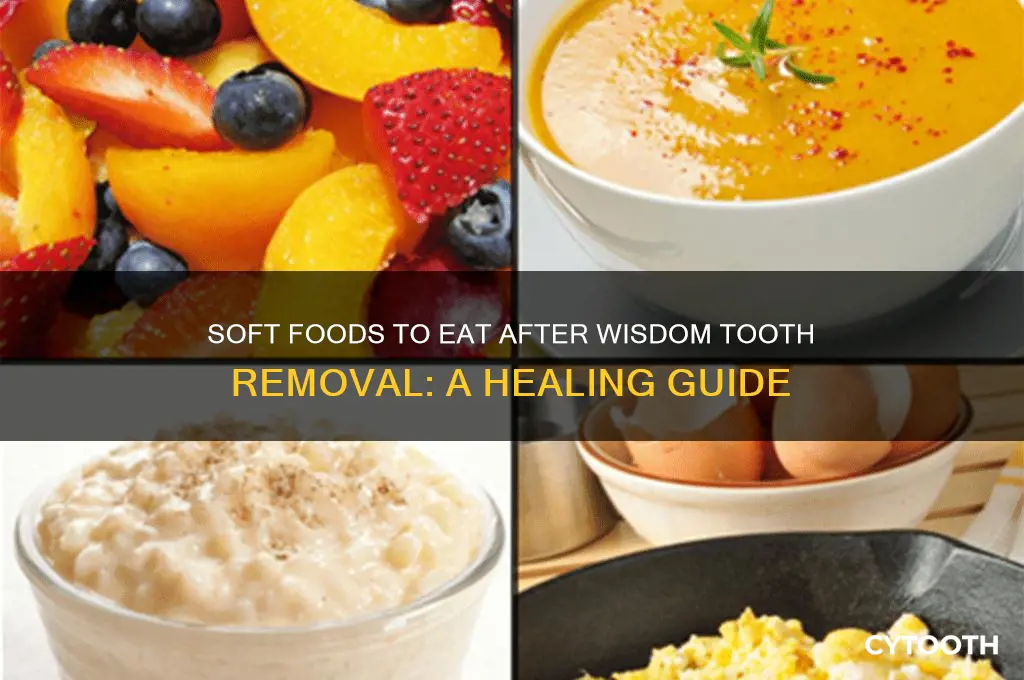
After having your wisdom teeth removed, it’s crucial to choose soft, easy-to-chew foods that won’t irritate the extraction site or disrupt the healing process. Ideal options include yogurt, mashed potatoes, smoothies, oatmeal, and well-cooked soups. Avoid hard, crunchy, spicy, or hot foods, as well as anything that requires excessive chewing, such as nuts, chips, or popcorn. Staying hydrated with water is essential, but avoid using straws, as the suction can dislodge blood clots and delay healing. Following these dietary guidelines will help ensure a smooth and comfortable recovery.
| Characteristics | Values |
|---|---|
| Soft Foods | Yogurt, mashed potatoes, oatmeal, smoothies, applesauce, pudding |
| Cool Foods | Ice cream, frozen yogurt, cold soups (e.g., gazpacho) |
| Protein Sources | Scrambled eggs, tofu, soft-cooked beans, protein shakes |
| Hydration | Water, herbal tea, clear broths (avoid hot liquids initially) |
| Avoid Hard/Crunchy Foods | Chips, nuts, popcorn, raw vegetables, tough meats |
| Avoid Spicy/Acidic Foods | Hot sauce, citrus fruits, tomato-based sauces |
| Avoid Alcohol/Caffeine | Alcohol, coffee, soda (can interfere with healing and medications) |
| Avoid Straws | Using straws can dislodge blood clots and delay healing |
| Chewing Side | Chew on the opposite side of the extraction site to avoid irritation |
| Gradual Progression | Slowly reintroduce semi-soft foods as healing progresses (e.g., pasta) |
| Oral Hygiene | Gently rinse with warm salt water after eating to keep the area clean |
| Follow Dentist's Instructions | Adhere to specific dietary restrictions or recommendations from your dentist |
What You'll Learn

Soft Foods to Eat
After wisdom tooth extraction, your diet becomes a delicate balance of nourishment and recovery. Soft foods are your allies during this time, offering sustenance without aggravating the surgical site. The key is to choose options that require minimal chewing, are easy to swallow, and are rich in nutrients to aid healing. Think of it as a temporary culinary shift, where smoothness and gentleness reign supreme.
Pureed Delights: Embrace the blender as your culinary companion. Pureed soups, from creamy broccoli to velvety tomato, provide comfort and essential vitamins. For a protein boost, blend cooked lentils or tofu into a silky smooth consistency. Even fruits like bananas, mangoes, or cooked apples can be transformed into delectable purees, ensuring you don't miss out on natural sweetness and fiber.
The Oatmeal Advantage: This breakfast staple is a post-extraction hero. Its soft, porridge-like texture is gentle on tender gums. Opt for plain oatmeal and customize with safe toppings like mashed bananas, a drizzle of honey, or a splash of almond milk. Avoid crunchy mix-ins like nuts or granola, which can irritate the extraction site. For added protein, stir in a spoonful of nut butter, ensuring it's well incorporated for easy consumption.
Dairy's Dual Role: Soft dairy products like yogurt and pudding are excellent choices, but navigate this category with caution. Choose plain, unsweetened yogurt to avoid sugar's inflammatory effects. For a savory twist, blend yogurt with cooked, pureed vegetables like carrots or spinach. Pudding, whether store-bought or homemade, offers a soothing texture, but be mindful of sugar content. Consider making your own with milk, cornstarch, and a touch of vanilla for a healthier option.
Hydration and Beyond: While not a food, hydration is crucial for recovery. Water should be your primary drink, but you can also incorporate nutrient-rich liquids. Bone broth, for instance, provides collagen and amino acids that support tissue repair. For a sweet treat, blend frozen fruits into a smooth 'nice cream,' ensuring it's free of seeds or chunks. Remember, the goal is to maintain a balanced diet, even in liquid or soft form, to promote optimal healing.
In the realm of post-extraction eating, creativity and adaptability are essential. By focusing on soft, nutrient-dense foods, you can ensure your body receives the fuel it needs to heal while avoiding discomfort. This temporary dietary adjustment is a small price to pay for a smooth recovery, allowing you to return to your regular eating habits sooner.
Post-Extraction Diet: Soft, Nutritious Foods to Eat After a Tooth Extraction
You may want to see also
Foods to Avoid Post-Surgery
After wisdom tooth extraction, your mouth is a delicate ecosystem, vulnerable to irritation and infection. Certain foods can exacerbate discomfort, delay healing, or even dislodge blood clots, leading to a painful condition called dry socket. Understanding which foods to avoid is as crucial as knowing what to eat.
Crunchy Culprits and Their Consequences
Crunchy foods like chips, nuts, or raw vegetables are the arch-nemeses of post-surgery recovery. Their hard texture requires vigorous chewing, which can disturb the surgical site and reopen wounds. For instance, a single almond fragment lodged in the extraction socket can cause inflammation or infection. Opt for softer alternatives like mashed potatoes or yogurt instead.
Spicy and Acidic Saboteurs
Spicy foods, such as hot sauce or chili peppers, and acidic items like citrus fruits or vinegar-based dressings, can irritate the sensitive tissues in your mouth. A study in the *Journal of Oral and Maxillofacial Surgery* highlights that acidic foods can slow healing by disrupting the pH balance in the oral cavity. Stick to mild, neutral-flavored foods for the first 48–72 hours post-surgery.
Temperature Extremes: A Double-Edged Danger
Hot foods and beverages, like soup or coffee, can dissolve blood clots essential for healing, while cold items like ice cream or smoothies can cause muscle spasms in the jaw. A practical tip: wait until foods and drinks reach room temperature before consuming. This simple precaution minimizes the risk of complications and ensures a smoother recovery.
Tough and Chewy Threats
Tough meats, gummy candies, and chewy breads require excessive jaw movement and can pull at the surgical site. For example, tearing into a steak or gnawing on a bagel can dislodge stitches or clots. Instead, choose tender proteins like scrambled eggs or pureed soups, which provide nutrition without strain.
By avoiding these problematic foods, you’ll protect your surgical site, reduce pain, and promote faster healing. Remember, the first few days post-surgery are critical—prioritize gentle, nourishing options to give your mouth the care it needs.
Healing Diet Tips
After wisdom tooth extraction, your mouth needs gentle care, and your diet plays a pivotal role in recovery. Soft, nutrient-rich foods are your allies, while hard, crunchy, or spicy items can irritate the surgical site. Think of your post-extraction diet as a temporary shift toward soothing, easy-to-chew meals that promote healing without compromising on nutrition.
Step 1: Prioritize Cold and Lukewarm Foods
In the first 24–48 hours, cold foods like smoothies, yogurt, and mashed potatoes can reduce swelling and numb the area, providing comfort. Avoid extreme temperatures, as hot foods can increase bleeding and discomfort. Gradually introduce lukewarm options like broth or pureed soups as your mouth heals. Pro tip: Use a spoon instead of a straw to avoid dislodging blood clots, which are crucial for proper healing.
Caution: Avoid These Foods at All Costs
Crunchy snacks like chips, nuts, or popcorn can scratch the extraction site, while spicy or acidic foods (think hot sauce or citrus) can cause pain and inflammation. Sticky foods like caramel or gum pose a risk of sticking to the wound. Even if you’re craving these, wait at least a week before reintroducing them. Your recovery timeline depends on it.
Nutrient-Dense Choices for Faster Healing
Incorporate foods rich in vitamins A, C, and D, as well as protein and zinc, to support tissue repair. Blended soups with carrots or sweet potatoes, Greek yogurt with honey, or scrambled eggs are excellent choices. For hydration, opt for coconut water or herbal tea, which provide electrolytes and antioxidants without irritating the mouth. Aim for 3–4 small, nutrient-packed meals daily to keep your energy up.
Long-Term Takeaway: Gradual Transition
As the days progress, slowly reintroduce semi-soft foods like steamed vegetables, soft-cooked grains, and tender meats. By day 5–7, most people can tolerate a wider variety, but listen to your body. If chewing still causes discomfort, stick to softer options. Remember, patience is key—rushing back to your regular diet can prolong recovery or lead to complications like dry socket.
Safe Snack Ideas
After wisdom tooth extraction, your diet should prioritize soft, nutrient-rich foods that minimize chewing and reduce irritation. Think of this phase as a temporary shift to gentler options that promote healing without compromising taste. Yogurt, for instance, is a stellar choice. Its creamy texture requires minimal jaw movement, and probiotic-rich varieties support gut health, which is crucial when your body is recovering. Opt for plain or lightly sweetened versions to avoid sugar-induced inflammation. Pair it with a drizzle of honey for added flavor and antimicrobial benefits.
Smoothies are another powerhouse option, blending convenience with nutrition. Combine soft fruits like bananas, mangoes, or avocados with a liquid base such as almond milk or coconut water. Add a scoop of protein powder or a handful of spinach for an extra nutrient boost. The key is to blend until the mixture is silky smooth—no chunks allowed. Sip slowly through a straw, avoiding direct contact with the extraction site. This method ensures you stay nourished while keeping the surgical area undisturbed.
For those craving something savory, mashed sweet potatoes are a game-changer. Their naturally soft texture and rich flavor make them a satisfying meal. Boil or steam the potatoes until tender, then mash with a fork or blender, adding a pat of butter or a splash of olive oil for creaminess. Season lightly with salt, pepper, or a pinch of cinnamon for warmth. This dish is not only easy to prepare but also packed with vitamins A and C, which aid in tissue repair.
Lastly, consider chilled soups like gazpacho or cucumber dill. These cold options provide relief from post-surgery discomfort while delivering hydration and nutrients. Gazpacho, made from blended tomatoes, bell peppers, and cucumbers, offers a refreshing tang, while cucumber dill soup is soothing and mild. Both can be prepared in advance and stored in the fridge, making them convenient for quick meals. Just ensure they’re well-blended and served cold to maximize comfort and safety.
By focusing on these safe snack ideas, you can navigate the post-extraction period with ease, ensuring your body gets the nourishment it needs without aggravating the healing process. Each option is designed to be gentle, flavorful, and practical, turning a dietary limitation into an opportunity for creative, healthful eating.
Hydration Recommendations After Extraction
Staying hydrated is crucial after a wisdom tooth extraction, but not all fluids are created equal. Avoid hot beverages like tea or coffee for the first 24 hours, as heat can dissolve the blood clot and delay healing. Instead, opt for room-temperature or slightly cool water. Aim for at least 8–10 glasses (64–80 ounces) daily, sipping slowly to avoid dislodging the clot. Hydration supports saliva production, which naturally cleanses the mouth and aids recovery.
While water is the gold standard, some fluids can hinder healing. Steer clear of carbonated drinks, alcohol, and acidic juices like orange or grapefruit juice, as they can irritate the extraction site and slow recovery. Herbal teas without caffeine, such as chamomile, can be soothing once the initial 24-hour window has passed. For those struggling to meet hydration goals, electrolyte-rich drinks like coconut water or diluted sports drinks can help, but avoid those with added sugars or artificial flavors.
Children and older adults require special attention post-extraction. Kids may need encouragement to drink enough water, so offer small sips frequently and use fun straws or cups to make hydration more engaging. For older adults, dehydration risks are higher, so monitor fluid intake closely and consider setting reminders. Both groups should avoid using straws for the first few days, as suction can disrupt the healing process.
Practical tips can make hydration easier during recovery. Keep a water bottle nearby at all times, and set alarms as reminders to drink. If plain water feels monotonous, add a slice of cucumber or a few mint leaves for mild flavor without acidity. For those with nausea or reduced appetite, small sips of clear broths or watered-down fruit juices can provide both hydration and gentle nutrition. Consistency is key—regular, steady hydration will significantly support the healing process.
Frequently asked questions
No, it’s best to avoid solid foods for the first 24 hours. Stick to soft, cool, or lukewarm foods to prevent irritation and promote healing.
Safe options include yogurt, mashed potatoes, smoothies, applesauce, oatmeal, and well-cooked soups without chunks. Avoid hot, spicy, or crunchy foods.
Most people can gradually reintroduce solid foods after 3–4 days, but it depends on healing progress. Avoid hard, chewy, or sticky foods for at least a week.
Avoid hot beverages for the first 24–48 hours, as they can dissolve blood clots and delay healing. Stick to lukewarm or cold drinks during this time.