Olivia Bennett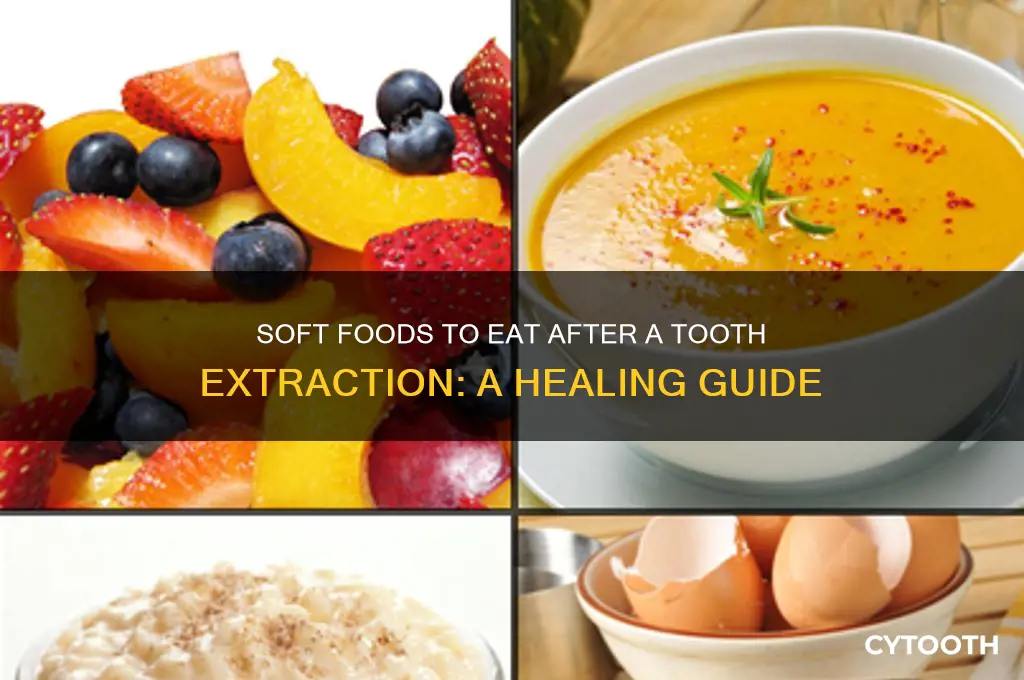
After getting a tooth pulled, it’s crucial to choose soft, easy-to-chew foods that won’t irritate the extraction site or disrupt the healing process. Opt for items like yogurt, mashed potatoes, smoothies, scrambled eggs, or warm (not hot) soups. Avoid crunchy, spicy, or hard foods, as well as anything that requires vigorous chewing or sucking, such as chips, nuts, or straws, which could dislodge the blood clot and lead to complications like dry socket. Staying hydrated with water is essential, but be mindful of extreme temperatures. Following these dietary guidelines will help ensure a smooth and speedy recovery.
| Characteristics | Values |
|---|---|
| Soft Foods | Yogurt, mashed potatoes, applesauce, oatmeal, smoothies, scrambled eggs. |
| Cool Temperature | Avoid hot foods; opt for room temperature or cold foods to reduce swelling. |
| No Chewing Required | Pudding, gelatin (Jello), soups (blended or strained), protein shakes. |
| Avoid Spicy or Acidic Foods | No hot sauce, citrus fruits, tomatoes, or vinegar-based dressings. |
| No Crunchy or Hard Foods | Avoid chips, nuts, popcorn, raw vegetables, or tough meats. |
| Hydration | Drink water, but avoid using straws to prevent dry socket. |
| Small Bites | Eat in small, manageable portions to avoid pressure on the extraction site. |
| Gentle on Gums | Soft-cooked pasta, bananas, avocados, or well-cooked vegetables. |
| Avoid Alcohol and Tobacco | Both can delay healing and increase the risk of complications. |
| Gradual Progression | Slowly reintroduce semi-soft foods as healing progresses (e.g., soft fish or tofu). |
What You'll Learn

Soft Foods to Eat
After a tooth extraction, your mouth needs time to heal, and choosing the right foods is crucial to avoid irritation and promote recovery. Soft foods are your best allies during this period, as they require minimal chewing and reduce the risk of disturbing the extraction site. Here’s a focused guide to navigating your post-extraction diet with ease.
Analytical Approach: Why Soft Foods Matter
Soft foods serve a dual purpose: they minimize physical stress on the extraction site and reduce the risk of infection by avoiding debris that could get lodged in the socket. Foods like mashed potatoes, yogurt, and smoothies are ideal because they are easy to consume and nutrient-rich. For instance, mashed sweet potatoes provide vitamins A and C, which aid in tissue repair, while Greek yogurt offers protein and probiotics to support overall healing. Avoiding crunchy, chewy, or spicy foods is essential, as they can disrupt the blood clot forming in the socket, leading to a painful condition called dry socket.
Instructive Steps: How to Prepare Soft Meals
Preparing soft meals doesn’t have to be complicated. Start by blending or pureeing ingredients to achieve a smooth consistency. For example, blend cooked vegetables like carrots or broccoli with a bit of broth for a nourishing soup. Use a food processor to make applesauce or pudding, ensuring no lumps remain. If you’re short on time, opt for pre-made options like oatmeal, scrambled eggs, or protein shakes. Remember to keep meals lukewarm or cool to avoid temperature sensitivity in the affected area. Aim for small, frequent meals to maintain energy levels without overtaxing your jaw.
Comparative Analysis: Best vs. Worst Soft Food Choices
Not all soft foods are created equal. While ice cream might seem like a comforting choice, its high sugar content can hinder healing and increase the risk of infection. Instead, opt for sugar-free gelatin or frozen yogurt. Similarly, while bread might appear soft, it can leave crumbs that irritate the extraction site. Choose moist, well-cooked grains like rice or quinoa instead. Avocados and bananas are excellent choices due to their creamy texture and high nutrient content, whereas nuts or seeds, even when ground, should be avoided as they can still pose a risk.
Descriptive Tips: Enhancing Flavor Without Compromise
Eating soft foods doesn’t mean sacrificing taste. Incorporate herbs, mild spices, and broths to add flavor without irritation. For instance, a dash of turmeric in mashed cauliflower not only enhances taste but also provides anti-inflammatory benefits. Use mild, low-sodium broths as a base for soups or stews to keep dishes flavorful yet gentle on the mouth. For sweet options, blend ripe bananas with a splash of vanilla extract for a naturally sweetened treat. Avoid acidic ingredients like citrus or tomatoes, as they can cause discomfort.
Practical Takeaway: Planning Your Post-Extraction Diet
To ensure a smooth recovery, plan your meals in advance. Stock up on soft food staples like yogurt, eggs, and canned beans before your procedure. Prepare and freeze meals like smoothies or pureed soups for convenience. Stay hydrated with water or herbal tea, avoiding straws to prevent suction that could dislodge the blood clot. Gradually reintroduce firmer foods as your dentist advises, typically after 3–5 days. By prioritizing soft, nutrient-dense options, you’ll support healing and minimize discomfort during this critical period.
Foods to Avoid Post-Extraction
After a tooth extraction, your mouth is in a delicate state, and certain foods can hinder healing or cause complications. Understanding which foods to avoid is crucial for a smooth recovery. Let's delve into the specifics.
The Culprits: Hard, Crunchy, and Chewy Foods
Imagine biting into a crisp apple or a crunchy chip—seems harmless, right? Not post-extraction. Hard and crunchy foods can dislodge blood clots, leading to a painful condition called dry socket. Similarly, chewy foods like gum or steak require vigorous jaw movement, which can irritate the extraction site. Even popcorn, with its sharp hulls, poses a risk of getting lodged in the socket. The rule of thumb? If it requires significant chewing or risks fragmenting, it’s best avoided for at least 72 hours, or until your dentist gives the green light.
Spicy and Acidic Foods: A Double-Edged Sword
While a spicy curry or a tangy citrus fruit might tempt your taste buds, they can wreak havoc on a healing extraction site. Spicy foods increase blood flow to the area, potentially causing discomfort or bleeding. Acidic foods, like tomatoes or vinegar-based dressings, can irritate exposed nerves and slow healing. For the first 48 hours, stick to mild, neutral-flavored foods. If you’re craving flavor, opt for herbs like parsley or dill instead of reaching for hot sauce or lemon juice.
Hot Beverages and Soups: Timing is Key
A steaming cup of coffee or a bowl of hot soup might seem soothing, but extreme temperatures can disrupt blood clot formation. Wait until your meal or drink cools to room temperature before consuming. This applies to both hot and cold items—yes, even ice cream straight from the freezer can cause sensitivity or pain. Aim for lukewarm foods and beverages for the first 24–48 hours to minimize risk.
Alcohol and Tobacco: The Non-Negotiables
Here’s a hard truth: alcohol and tobacco are recovery saboteurs. Alcohol can interfere with blood clotting and increase bleeding risk, while smoking introduces harmful chemicals and reduces oxygen flow to the extraction site. If you’re a smoker, avoid tobacco for at least 72 hours—ideally, use this as an opportunity to quit. Alcohol should be off-limits for at least 24 hours, or as long as you’re taking pain medications. Both habits significantly delay healing and increase the likelihood of complications.
Practical Tips for a Smooth Recovery
To navigate post-extraction eating, plan ahead. Stock up on soft, nutrient-rich foods like yogurt, mashed potatoes, and smoothies. Use a spoon or straw to minimize contact with the extraction site. Stay hydrated with water, but avoid vigorous rinsing or using a straw for the first 24 hours. Finally, listen to your body—if a food causes pain or discomfort, it’s a sign to stop. By avoiding these problematic foods and following your dentist’s guidance, you’ll set the stage for a quicker, more comfortable recovery.
Healing-Friendly Meal Ideas
After a tooth extraction, your mouth needs gentle care, and this extends to your diet. The first 24 hours are crucial, and a liquid diet is your best friend. Think smoothies, but not just any kind—opt for nutrient-dense blends that are easy to consume and packed with vitamins to aid healing. A simple yet effective recipe includes a banana for potassium, a handful of spinach for iron and vitamins A and C, a scoop of protein powder (whey or plant-based), and a splash of almond milk. Blend until smooth, ensuring there are no chunks that could irritate the extraction site. This meal provides essential nutrients without requiring any chewing, making it ideal for the initial recovery phase.
As you progress beyond the first day, soft foods become your allies. Mashed potatoes are a classic choice, but elevate them by adding roasted garlic for its anti-inflammatory properties and a dollop of Greek yogurt for extra protein and probiotics. Another excellent option is oatmeal, but avoid adding crunchy toppings like nuts or granola. Instead, sweeten it with mashed ripe bananas or a drizzle of honey, and consider stirring in a tablespoon of peanut butter for healthy fats and additional protein. These meals are not only soothing but also help maintain your energy levels without straining your healing gums.
Hydration is key, but not all fluids are created equal. Avoid hot beverages like tea or coffee for the first few days, as they can dissolve blood clots and delay healing. Instead, opt for room-temperature or slightly cool drinks. Herbal teas like chamomile or ginger can be particularly beneficial due to their anti-inflammatory and soothing properties. For a more substantial option, try bone broth, which is rich in collagen and amino acids that support tissue repair. Sip it slowly, allowing it to coat your mouth gently without disturbing the extraction site.
Finally, as you approach the end of the first week, you can gradually reintroduce slightly firmer foods, but always prioritize those that are easy to chew and won’t leave residue in your mouth. Scrambled eggs are an excellent choice, as they are soft, high in protein, and can be seasoned lightly with salt and pepper. Pair them with steamed vegetables like carrots or zucchini, which are tender when cooked and provide additional nutrients. Remember, the goal is to nourish your body while protecting the extraction site, so avoid spicy, acidic, or crunchy foods until your dentist gives you the green light.
Safe Snacks After Surgery
After a tooth extraction, your mouth needs gentle care, and choosing the right snacks is crucial for a smooth recovery. The key is to opt for soft, cool, and nutrient-rich foods that minimize irritation and promote healing. Think of your post-surgery diet as a temporary shift towards soothing, easy-to-eat options that support your body’s natural healing process.
Analytical Approach:
Soft-textured foods are essential because they reduce the risk of disturbing the surgical site. Cold items, like smoothies or yogurt, help reduce swelling and numb the area, providing immediate relief. Nutrient-dense choices, such as mashed avocado or protein shakes, ensure your body gets the vitamins and minerals needed for tissue repair. Avoiding crunchy, spicy, or hot foods prevents irritation and potential complications like dry socket, a painful condition where the blood clot at the extraction site dislodges.
Instructive Steps:
Start with cold or room-temperature options for the first 24 hours. Blend fruits like bananas or berries into a smoothie, or opt for chilled applesauce. After the initial phase, introduce slightly warmer, soft foods like oatmeal or scrambled eggs. Always use a spoon to place food on the opposite side of the extraction site to avoid pressure. Stay hydrated with water or electrolyte drinks, but avoid using straws, as the suction can dislodge the blood clot.
Comparative Insight:
While mashed potatoes and yogurt are excellent choices, their benefits differ. Mashed potatoes provide carbohydrates for energy and are easy to chew, but they lack protein. Yogurt, on the other hand, offers protein and probiotics, which aid digestion and immune function. Pairing these two creates a balanced snack that supports both energy and recovery.
Practical Tips:
Prepare snacks in advance to avoid stress post-surgery. For example, pre-blend smoothies and store them in the fridge, or cook a batch of soft-cooked vegetables like carrots or sweet potatoes. Keep a cooler with ice packs handy if you’re on the go. For children or older adults, consider adding flavor to bland foods with a sprinkle of cinnamon or a drizzle of honey to encourage eating without compromising safety.
By focusing on soft, cool, and nutrient-rich snacks, you can ensure a comfortable and efficient recovery after a tooth extraction. These choices not only prevent complications but also provide the energy and nutrients your body needs to heal.
Hydration Tips Post-Procedure
Staying hydrated after a tooth extraction is crucial for healing, but it’s not as simple as chugging water. The method and timing of hydration matter just as much as the quantity. For the first 24 hours, avoid using straws or creating suction in your mouth, as this can dislodge the blood clot forming in the extraction site, leading to a painful condition called dry socket. Instead, take small sips of water directly from a cup, ensuring the liquid doesn’t slosh around aggressively. Room-temperature or slightly cool water is ideal; avoid ice-cold drinks, which can cause discomfort or cramping in sensitive tissues.
Electrolyte balance plays a subtle but significant role in post-procedure hydration. After a tooth extraction, your body may lose fluids and minerals due to reduced food intake or minor swelling. Incorporating electrolyte-rich drinks like coconut water or oral rehydration solutions (such as Pedialyte) can help maintain fluid balance without overwhelming your system. Aim for 8–12 ounces every 2–3 hours, especially if you’re struggling to eat solid foods. Avoid sports drinks high in sugar, as they can irritate the extraction site and increase the risk of infection.
Herbal teas offer a dual benefit: hydration and soothing properties. Chamomile, peppermint, or ginger tea (served lukewarm) can calm inflammation and provide gentle hydration. Steer clear of hot beverages, which can disrupt clotting, and skip teas with caffeine or alcohol, as these can dehydrate you further. For added comfort, hold the tea in your mouth near the extraction site for a few seconds before swallowing—this can help reduce localized swelling and discomfort. Just ensure the tea is cool enough to avoid burns.
Monitoring urine color is a practical way to gauge hydration levels post-procedure. Aim for a pale yellow hue, similar to lemonade, which indicates adequate fluid intake. Dark yellow or amber urine suggests dehydration, signaling the need to increase water or electrolyte consumption. Keep a water bottle nearby and set reminders to drink regularly, especially if pain medications or swelling make you forget. Remember, hydration isn’t just about water—it’s about consistent, mindful fluid intake to support your body’s recovery process.
Frequently asked questions
No, it’s best to avoid solid foods for at least 24 hours after a tooth extraction. Stick to soft, cool foods like yogurt, applesauce, or mashed potatoes to prevent irritation or damage to the extraction site.
Avoid hot foods and beverages for the first 24–48 hours, as they can increase bleeding and discomfort. Wait until the extraction site has started to heal before reintroducing hot items into your diet.
No, crunchy or hard foods like chips, nuts, or raw vegetables should be avoided for at least a week. They can dislodge the blood clot at the extraction site, leading to a painful condition called dry socket.
No, avoid using straws for at least 24–48 hours after a tooth extraction. The suction created by a straw can dislodge the blood clot and delay healing. Opt for sipping gently from a cup instead.