Matthew Grant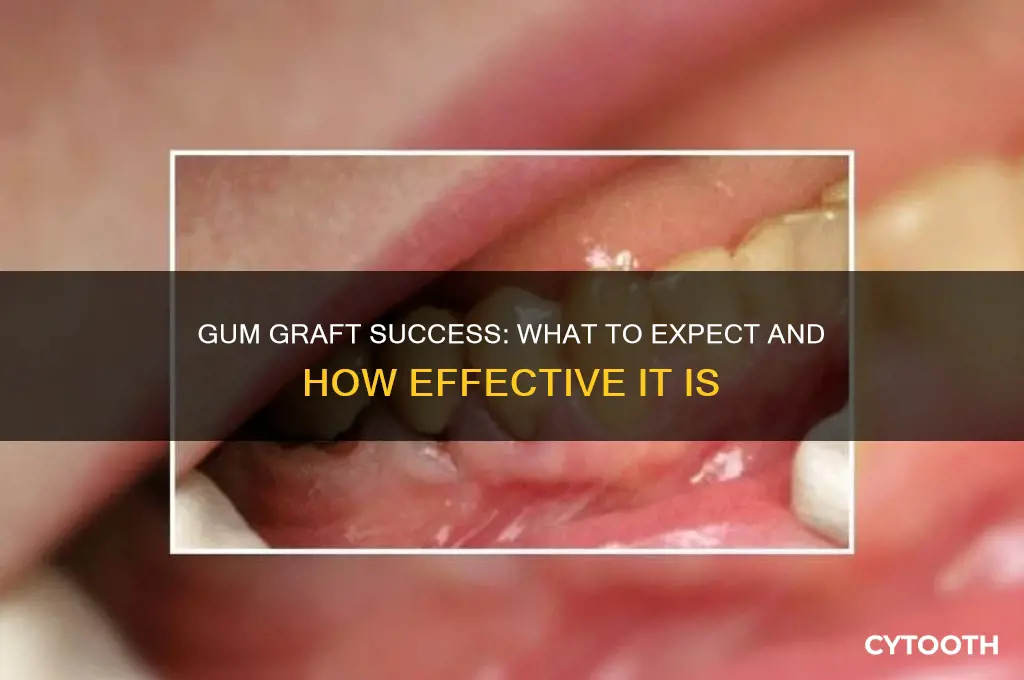
Gum grafts are a common dental procedure aimed at treating gum recession, a condition where the gum tissue pulls away from the tooth, exposing the root and potentially leading to sensitivity, decay, or tooth loss. The success of gum grafts is generally high, with studies indicating success rates ranging from 85% to 95%, depending on the technique used and patient compliance. Factors contributing to success include the surgeon's expertise, the patient's oral hygiene practices, and the overall health of the gums and teeth. While most patients experience improved gum coverage, reduced sensitivity, and enhanced aesthetic appearance, complications such as infection, graft failure, or temporary discomfort are rare but possible. Long-term success often depends on maintaining good oral care and regular dental check-ups to prevent further recession.
What You'll Learn
- Survival Rates: High success rates, typically 90-95%, with proper care and patient compliance
- Healing Time: Usually 1-2 weeks for initial healing, full recovery in 3-6 months
- Factors Affecting Success: Oral hygiene, smoking, and overall health significantly impact graft outcomes
- Types of Grafts: Connective tissue, free gingival, and pedicle grafts vary in success rates
- Long-Term Results: Successful grafts can last a lifetime with proper maintenance and care

Survival Rates: High success rates, typically 90-95%, with proper care and patient compliance
Gum graft survival rates are remarkably high, typically ranging from 90% to 95% when patients follow post-operative care instructions diligently. This success hinges on factors like proper oral hygiene, avoiding irritants such as tobacco, and adhering to dietary restrictions during healing. For instance, patients are often advised to consume soft foods for the first week and avoid brushing the graft site directly for at least 10 days. Compliance with these guidelines significantly reduces the risk of graft failure, ensuring the procedure’s long-term effectiveness in treating gum recession.
Analyzing the data, the 90-95% success rate is not arbitrary but a testament to the procedure’s refinement over decades. Studies show that younger patients (under 40) tend to heal faster due to better blood supply and tissue elasticity, though success rates remain high across all age groups. Additionally, the type of graft material matters: connective tissue grafts, the most common type, boast slightly higher success rates compared to free gingival grafts. Understanding these nuances helps both dentists and patients set realistic expectations and tailor post-operative care for optimal outcomes.
To maximize survival rates, patients must commit to a structured post-operative routine. This includes rinsing with a prescribed chlorhexidine mouthwash twice daily for two weeks to prevent infection, taking prescribed antibiotics as directed, and attending follow-up appointments to monitor healing. A common mistake is resuming normal oral care too soon; patients should use a soft-bristled toothbrush and avoid flossing near the graft site for at least three weeks. These steps, though seemingly minor, are critical in ensuring the graft integrates successfully with existing tissue.
Comparatively, gum graft success rates outpace those of many other dental procedures, such as dental implants (90-95% vs. 95-98% for implants) or root canals (85-95%). However, unlike implants, gum grafts rely heavily on patient behavior post-procedure. For example, smoking reduces success rates by up to 20%, as it impairs blood flow and delays healing. This highlights the procedure’s unique dependency on patient compliance, making education and motivation key components of pre-operative consultations.
In conclusion, the high survival rates of gum grafts are achievable but not automatic. Patients must view themselves as active participants in the healing process, following specific instructions to ensure success. Dentists play a crucial role in setting clear expectations and providing detailed aftercare plans. With proper care, gum grafts not only halt recession but also restore both function and aesthetics, making them a reliable solution for gum-related issues.
Gum Contouring Cost Guide: What to Expect for Your Smile Makeover
You may want to see also
Healing Time: Usually 1-2 weeks for initial healing, full recovery in 3-6 months
The first two weeks after a gum graft are critical for initial healing. During this phase, the body focuses on reducing inflammation and stabilizing the grafted tissue. Patients are typically advised to avoid strenuous activities, stick to a soft diet, and maintain meticulous oral hygiene, though vigorous brushing or flossing around the graft site is discouraged. Swelling and discomfort are common but can be managed with over-the-counter pain relievers like ibuprofen (600 mg every 6 hours, as needed) and cold compresses applied for 15–20 minutes at a time. Following post-operative instructions closely during this period significantly reduces the risk of complications, such as graft failure or infection, setting the stage for a smoother long-term recovery.
By the 3- to 6-month mark, the gum graft reaches full maturity, with the tissue integrating seamlessly into the surrounding area. This phase is marked by the regeneration of collagen fibers and the restoration of blood supply to the graft. Patients often notice improved gum contour and reduced sensitivity, particularly if the procedure addressed recession around exposed roots. However, this stage requires patience, as rushing back to normal oral care routines too soon can compromise results. Dentists typically recommend using a soft-bristled toothbrush and avoiding abrasive toothpastes until given the all-clear, usually around the 3-month post-op visit.
Comparing gum graft recovery to other oral surgeries highlights its relatively straightforward healing trajectory. Unlike dental implants, which may require 3–6 months for osseointegration, or extractions, which can take weeks for the socket to close, gum grafts focus on soft tissue repair, a process the body is highly efficient at managing. However, unlike procedures like fillings or crowns, which offer immediate functional restoration, gum grafts demand a period of adjustment and care. This distinction underscores the importance of patient compliance during recovery, as the success of the graft hinges on both biological healing and behavioral adherence to post-operative guidelines.
For those considering a gum graft, understanding the two-tiered healing process—initial stabilization followed by long-term maturation—is key to setting realistic expectations. While the first 1–2 weeks may involve discomfort and dietary restrictions, the 3- to 6-month period is about gradual improvement and tissue strengthening. Practical tips for this phase include using an antimicrobial mouthwash (e.g., 0.12% chlorhexidine gluconate) to reduce plaque buildup and attending all follow-up appointments to monitor progress. By embracing both the short-term challenges and long-term benefits, patients can ensure their gum graft not only heals successfully but also provides lasting oral health improvements.
Does Laser Gum Surgery Hurt? Pain, Recovery, and What to Expect
You may want to see also
Factors Affecting Success: Oral hygiene, smoking, and overall health significantly impact graft outcomes
Gum graft success hinges on more than just the procedure itself. Three critical factors—oral hygiene, smoking, and overall health—play a decisive role in determining outcomes. Neglecting these areas can undermine even the most skillfully executed graft, while diligent attention can significantly enhance both short-term healing and long-term stability.
Consider oral hygiene the foundation of graft success. Plaque and bacteria are the arch-nemeses of healing tissues. Inadequate brushing and flossing create an environment ripe for infection, which can lead to graft failure. Patients must commit to a rigorous routine: brushing twice daily with a soft-bristled toothbrush, flossing gently around the graft site, and using an antimicrobial mouthwash as recommended by their dentist. For the first two weeks post-surgery, avoid aggressive brushing near the graft and rinse with a saline solution (1/2 teaspoon of salt in 8 ounces of warm water) after meals to keep the area clean.
Smoking is a non-negotiable no-go for gum graft patients. Nicotine constricts blood vessels, reducing oxygen and nutrient delivery to the graft site, while tar and other toxins impair tissue regeneration. Studies show smokers have a 2-3 times higher risk of graft failure compared to non-smokers. Quitting smoking entirely, ideally 4-6 weeks before and after the procedure, is the only way to mitigate this risk. Nicotine replacement therapies or prescription medications like varenicline can aid cessation, but consult your doctor for a tailored plan.
Overall health is the silent partner in graft success. Chronic conditions like diabetes, autoimmune disorders, and cardiovascular disease can impair healing by compromising the body’s ability to fight infection and regenerate tissue. Patients with these conditions must work closely with their healthcare providers to optimize management before and after surgery. For example, diabetics should aim for a hemoglobin A1c level below 7% to ensure adequate healing. Additionally, a balanced diet rich in vitamins C and D, zinc, and protein supports tissue repair. Avoid anti-inflammatory medications like ibuprofen for at least a week pre- and post-surgery, as they can interfere with blood clotting and healing.
In essence, gum graft success is a collaborative effort between the surgeon and the patient. By prioritizing oral hygiene, eliminating smoking, and addressing overall health, patients can dramatically improve their chances of a successful outcome. These factors are not mere suggestions—they are the pillars upon which the longevity and stability of the graft depend.
Are Healthy Gums Pink? Uncovering the Truth About Gum Color
You may want to see also
Types of Grafts: Connective tissue, free gingival, and pedicle grafts vary in success rates
Gum graft success hinges on selecting the right technique for the patient’s specific needs. Connective tissue grafts, free gingival grafts, and pedicle grafts each address gum recession differently, with success rates influenced by factors like donor site availability, defect size, and patient compliance. Understanding these variations is critical for both clinicians and patients aiming for optimal outcomes.
Connective tissue grafts, the gold standard for treating single or multiple recessions, boast success rates exceeding 90%. This technique involves harvesting subepithelial tissue from the palate, which is then sutured over the recessed area. A 2018 study in the *Journal of Periodontology* found that connective tissue grafts achieved root coverage of 88–95% in Miller Class I and II recessions. Postoperative care is paramount: patients should avoid brushing the graft site for two weeks and adhere to a soft diet for 7–10 days. Chlorhexidine mouthwash (0.12%) twice daily reduces infection risk, while NSAIDs (e.g., ibuprofen 600 mg every 6 hours) manage pain and swelling.
In contrast, free gingival grafts are more niche, primarily used for increasing keratinized tissue in areas with inadequate width. Success rates range from 75–85%, lower than connective tissue grafts due to the graft’s inability to provide root coverage. This technique involves harvesting epithelial and connective tissue from the palate, making it less predictable for recession treatment. However, it remains valuable for patients with mucogingival problems, such as insufficient attached gingiva. Postoperative instructions include avoiding trauma to the site for three weeks and using a saltwater rinse (1 tsp salt in 8 oz warm water) four times daily to promote healing.
Pedicle grafts, such as the laterally positioned flap, utilize adjacent tissue to cover recession defects, eliminating the need for a second surgical site. Success rates vary widely (70–90%) depending on the graft’s vascular supply and the defect’s dimensions. While this technique avoids donor site morbidity, it is limited to patients with adequate adjacent tissue. A 2020 systematic review in *Clinical Oral Investigations* highlighted that pedicle grafts achieve 80–85% root coverage in Miller Class I recessions but are less effective for deeper defects. Patients must refrain from smoking and maintain meticulous oral hygiene, as compromised blood flow can jeopardize graft survival.
Selecting the appropriate graft type requires a nuanced understanding of each technique’s strengths and limitations. For instance, while connective tissue grafts offer superior root coverage, they may not be suitable for patients with limited palatal tissue. Conversely, pedicle grafts provide a less invasive option but are constrained by anatomical factors. Clinicians must weigh these considerations alongside patient preferences, defect characteristics, and long-term goals to maximize success. By tailoring the approach to individual needs, gum graft procedures can reliably restore function, aesthetics, and periodontal health.
How Quickly Do Gums Heal After Injury or Dental Work?
You may want to see also
Long-Term Results: Successful grafts can last a lifetime with proper maintenance and care
Gum graft success isn't a fleeting victory; it's a long-term commitment. While the procedure boasts impressive initial results, the true measure of success lies in its longevity. Think of it like planting a tree: the graft is the sapling, but consistent care determines if it grows into a sturdy oak or withers away.
With proper maintenance, a successful gum graft can last a lifetime, seamlessly integrating with your natural gum tissue and providing lasting protection against recession and its consequences.
This longevity hinges on a two-pronged approach: diligent oral hygiene and regular dental checkups. Brushing twice daily with a soft-bristled toothbrush and fluoride toothpaste is paramount, focusing on gentle, circular motions to avoid irritating the graft site. Flossing daily, using a water flosser or interdental brushes if needed, removes plaque and debris from areas your toothbrush can't reach. Think of these practices as the daily watering and fertilizing that nurture your "grafted tree."
Regular dental visits, ideally every six months or as recommended by your dentist, are crucial for professional cleaning and monitoring. Your dentist can detect early signs of complications, such as infection or graft rejection, and intervene promptly, ensuring the long-term health of your graft.
Beyond these fundamentals, lifestyle choices play a significant role. Avoiding tobacco products is essential, as smoking impairs blood flow and hinders healing, increasing the risk of graft failure. A balanced diet rich in vitamins and minerals, particularly vitamin C for collagen production, supports tissue health and overall oral well-being.
While gum grafts offer a remarkable solution to gum recession, their success isn't automatic. It's a partnership between the patient and the procedure. By embracing a proactive approach to oral care and making informed lifestyle choices, you can ensure your gum graft thrives, providing a lifetime of healthy smiles. Remember, the key to long-term success lies in consistent care and a commitment to nurturing your oral health.
Are Red Gums Normal? Understanding Gum Health and When to Worry
You may want to see also
Frequently asked questions
Gum grafts have a high success rate, typically ranging from 85% to 95%, depending on the patient’s oral health, the surgeon’s expertise, and post-operative care.
Success depends on factors like oral hygiene, smoking habits, underlying health conditions (e.g., diabetes), the graft technique used, and adherence to post-surgery instructions.
Initial healing takes about 1-2 weeks, but complete healing and stabilization of the graft can take 3-6 months, depending on the individual and graft type.
Potential risks include infection, bleeding, graft failure, or temporary discomfort. However, these are rare when performed by an experienced surgeon and with proper aftercare.
Yes, gum grafts not only restore gum tissue to protect exposed roots but also enhance the aesthetic appearance of the smile by covering receded areas.