Matthew Grant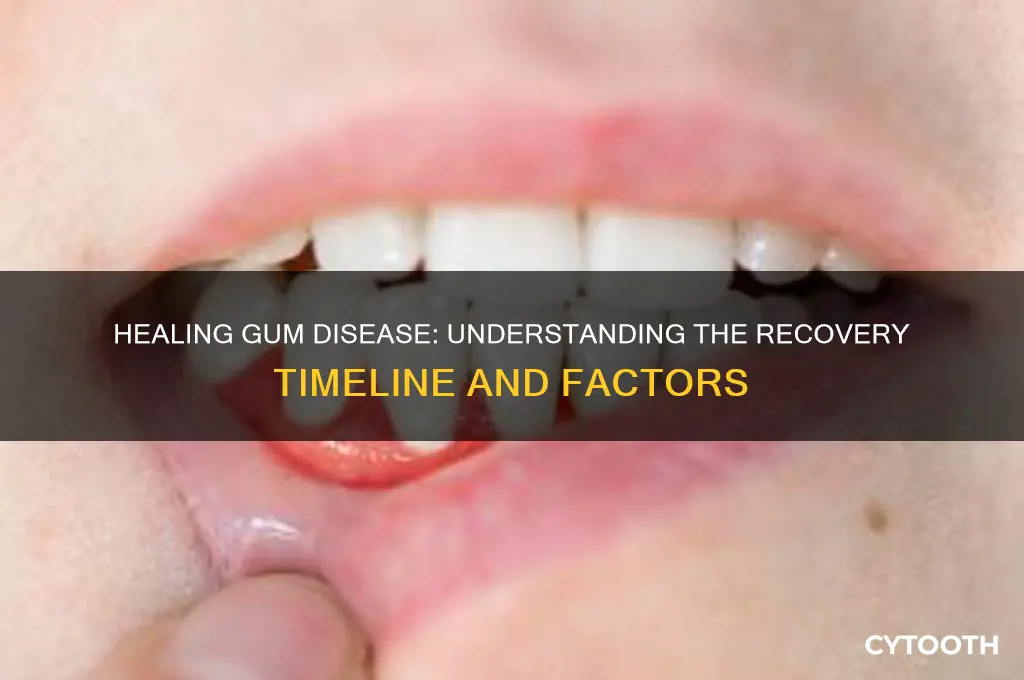
Gum disease, or periodontal disease, is a common oral health issue that ranges from mild gingivitis to severe periodontitis, and the healing time varies significantly depending on its stage and the individual’s overall health and treatment adherence. Mild cases of gingivitis can often improve within 10 to 14 days with proper oral hygiene, including regular brushing, flossing, and professional dental cleanings. However, more advanced stages, such as periodontitis, may require several months to heal, involving deep cleaning procedures like scaling and root planing, antibiotics, or even surgical interventions. Factors like smoking, diabetes, and poor nutrition can slow healing, emphasizing the importance of lifestyle changes and consistent dental care for optimal recovery.
| Characteristics | Values |
|---|---|
| Mild Gingivitis (Early Stage) | 1-2 weeks with proper oral hygiene and professional cleaning |
| Moderate Gingivitis | 2-4 weeks with improved oral care and dental intervention |
| Advanced Periodontitis | Several months to a year, often requiring deep cleaning and surgery |
| Healing with Non-Surgical Treatment | 3-6 months for significant improvement, depending on severity |
| Healing with Surgical Treatment | 3-9 months, including recovery time from procedures like flap surgery |
| Maintenance Phase | Ongoing; regular check-ups and excellent oral hygiene are essential |
| Factors Affecting Healing Time | Smoking, diabetes, poor oral hygiene, and genetic predisposition |
| Reversibility | Early stages (gingivitis) are reversible; advanced stages are manageable but not fully reversible |
| Symptom Improvement | Reduced bleeding, swelling, and bad breath within 1-2 weeks of treatment |
| Bone Regeneration | Slow process; may take 6-12 months or longer in severe cases |
What You'll Learn

Early Gingivitis Healing Time
Gingivitis, the earliest stage of gum disease, is reversible with prompt and proper care. The healing time for early gingivitis typically ranges from 1 to 2 weeks with consistent oral hygiene practices. This timeframe assumes daily brushing twice a day with fluoride toothpaste, flossing, and possibly incorporating an antimicrobial mouthwash. For example, a 0.12% chlorhexidine rinse, used twice daily for 30 seconds, can significantly reduce plaque and inflammation during this period. However, healing may take longer if contributing factors like smoking, poor diet, or diabetes are not addressed.
Consider the healing process as a series of steps. First, remove plaque buildup through mechanical means—brushing and flossing. Next, reduce bacterial activity with antimicrobial agents. Finally, allow the gums time to regenerate. For instance, a patient who begins rigorous oral care after a gingivitis diagnosis often notices reduced bleeding gums within 3 to 5 days, with full healing evident by the end of the second week. Age plays a role here: younger adults (18–35) may heal faster due to higher cellular turnover, while older adults (50+) might require closer to 3 weeks.
A comparative analysis highlights the importance of early intervention. Untreated gingivitis progresses to periodontitis, a more severe condition requiring professional treatment and taking months to manage. In contrast, early gingivitis is manageable at home, saving time, money, and discomfort. For example, a study in the *Journal of Clinical Periodontology* found that 85% of participants with mild gingivitis achieved complete healing within 14 days through improved oral hygiene alone. This underscores the critical window of opportunity in the early stages.
Practical tips can accelerate healing. Incorporate a soft-bristled toothbrush to avoid gum irritation, and use a water flosser if traditional floss is difficult to manage. Dietary adjustments, such as reducing sugar intake and increasing vitamin C (found in citrus fruits or supplements of 500–1000 mg daily), can support gum health. Avoid smoking or vaping, as these impair blood flow and delay tissue repair. Regular check-ins with a dentist during this period ensure progress and catch any complications early.
In conclusion, early gingivitis healing is swift but requires discipline. By following a structured oral care routine, addressing lifestyle factors, and leveraging antimicrobial aids, most individuals can restore gum health within 10 to 14 days. This not only prevents progression to more serious gum disease but also reinforces the importance of proactive dental care. Remember, the clock starts ticking with the first brushstroke—make it count.
Can Periodontal Disease Spread? Understanding Risks and Prevention Methods
You may want to see also
Advanced Periodontitis Recovery Duration
Advanced periodontitis, the most severe form of gum disease, demands a comprehensive and patient approach to healing. Unlike milder stages, recovery here isn’t measured in weeks but in months to years, depending on the extent of damage and patient compliance. Bone and tissue loss, hallmark features of this stage, require regenerative procedures like bone grafting or guided tissue regeneration, which alone can take 3–6 months to show initial signs of improvement. Even with successful surgery, full stabilization and functional recovery may extend beyond a year, emphasizing the chronic nature of this condition.
Consider the analogy of rebuilding a crumbling foundation: just as structural repairs take time, so does restoring periodontal health. Post-surgical care is critical, involving meticulous oral hygiene, regular scaling and root planing, and possibly antibiotic therapy (e.g., 500 mg of metronidazole twice daily for 7 days, as prescribed). Patients must also address modifiable risk factors—smoking cessation, glycemic control for diabetics, and stress management—to prevent relapse. Without these measures, even advanced treatments may fail, prolonging recovery indefinitely.
A comparative perspective highlights the stark contrast between early-stage gingivitis and advanced periodontitis. While gingivitis often resolves within 10–14 days with improved brushing and flossing, periodontitis recovery is a marathon, not a sprint. For instance, a 45-year-old patient with severe bone loss might undergo flap surgery, followed by 4–6 months of healing before noticeable pocket depth reduction. Even then, maintenance therapy every 3 months becomes a lifelong commitment, underscoring the irreversible nature of advanced disease.
Practically, patients should expect a phased recovery: the first 2–3 months focus on reducing inflammation and infection, followed by 6–12 months of tissue and bone regeneration. During this period, dietary modifications—soft, nutrient-rich foods to avoid irritating surgical sites—and tools like interdental brushes or water flossers become essential. Progress is monitored through clinical measurements (e.g., probing depths, bone levels via X-rays), with adjustments made as needed. The takeaway? Advanced periodontitis recovery is a structured, long-term process requiring patience, discipline, and partnership with a periodontal specialist.
Can Gum Disease Be Fatal? Uncovering the Serious Health Risks
You may want to see also
Professional Treatment Impact on Healing
Professional treatment significantly accelerates the healing process for gum disease, often reducing recovery time from months to weeks. Unlike home remedies, which may only manage symptoms, professional interventions target the root cause of the disease. For instance, a deep cleaning procedure known as scaling and root planing removes plaque and tartar below the gumline, allowing inflamed tissues to heal. This treatment, typically performed by a dental hygienist or periodontist, can show improvement within 1–2 weeks, with full recovery depending on the disease’s severity.
The impact of professional treatment extends beyond immediate symptom relief. Antibiotics, such as doxycycline (prescribed at 100 mg twice daily for 7 days) or topical gels like chlorhexidine, are often used to eliminate bacterial infections that contribute to gum disease. These medications, when combined with mechanical cleaning, create a synergistic effect, reducing inflammation and promoting tissue regeneration. Patients over 40, who are more prone to periodontal issues, often see faster results with this combined approach compared to younger individuals with milder cases.
A critical aspect of professional treatment is its ability to prevent complications that prolong healing. Advanced gum disease can lead to tooth loss or systemic health issues like cardiovascular disease. Procedures like laser therapy or surgical interventions, such as flap surgery, address deep pockets of infection that home care cannot reach. For example, laser therapy reduces healing time by minimizing tissue damage and promoting faster regeneration, often with less post-treatment discomfort.
However, the success of professional treatment relies heavily on patient compliance. After initial procedures, dentists recommend follow-up visits every 3–4 months to monitor progress and perform maintenance cleanings. Patients must also adhere to a strict oral hygiene routine, including brushing twice daily with a soft-bristled toothbrush and flossing or using interdental brushes. Practical tips, such as using antimicrobial mouthwash and avoiding smoking, further enhance healing. Without these measures, even the most advanced treatments may fail to yield lasting results.
In summary, professional treatment is a game-changer in gum disease healing, offering targeted solutions that home care alone cannot provide. From deep cleanings to surgical interventions, these methods address the disease at its source, reducing recovery time and preventing long-term damage. Yet, their effectiveness hinges on patient commitment to post-treatment care. For those seeking a swift and sustainable recovery, professional intervention is not just beneficial—it’s essential.
Zyn's Impact on Oral Health: Exploring the Link to Gum Disease
You may want to see also
Home Care Role in Recovery
The healing timeline for gum disease varies widely, influenced by its severity, individual health, and consistency of care. While professional treatment is essential, home care plays a pivotal role in accelerating recovery and preventing recurrence. Without diligent daily habits, even the most advanced clinical interventions fall short.
Analytical Perspective:
Gum disease, or periodontal disease, progresses in stages—from gingivitis to advanced periodontitis. Research shows that early-stage gingivitis can reverse within 10 to 14 days with rigorous home care, including twice-daily brushing with a soft-bristled toothbrush and fluoride toothpaste, flossing, and antimicrobial mouthwash. However, moderate to severe cases require 3–6 months of combined professional and home care to see significant improvement. The key lies in disrupting plaque biofilm consistently, as bacteria regenerate every 24–72 hours.
Instructive Steps:
Effective home care involves a structured routine. Brush for at least two minutes, focusing on the gum line at a 45-degree angle. Floss daily, ensuring you curve the floss around each tooth in a “C” shape to remove subgingival debris. Incorporate a 0.12% chlorhexidine mouthwash (as recommended by your dentist) for 30 seconds twice daily to reduce bacterial load. For those with orthodontic appliances or implants, interdental brushes or water flossers can enhance cleaning. Avoid aggressive brushing, as it can damage gums, and replace your toothbrush every 3 months or sooner if bristles fray.
Comparative Insight:
Home care is not one-size-fits-all. For instance, individuals with diabetes or smokers often experience slower healing due to compromised blood flow and immune response. In such cases, adding a 1.5% hydrogen peroxide rinse (diluted 50/50 with water) can aid in reducing inflammation. Conversely, healthy adults without risk factors may see faster results by simply maintaining a low-sugar diet and staying hydrated, as saliva acts as a natural cleanser.
Persuasive Argument:
Skipping home care undermines professional efforts. Scaling and root planing, common in-office treatments, remove tartar and smooth tooth roots but cannot prevent plaque reaccumulation. Without daily removal of plaque, bacteria recolonize within hours, reversing progress. Studies show that patients who adhere to home care routines reduce their risk of disease progression by 50–70%. It’s not just about healing—it’s about sustaining oral health long-term.
Practical Tips:
Incorporate small changes for big impact. Set a timer for brushing to ensure full coverage. Keep floss or interdental tools visible as a reminder. For children or older adults, consider electric toothbrushes with pressure sensors to prevent overbrushing. Track progress by noting gum bleeding frequency—a reduction over weeks indicates improvement. Finally, schedule bi-annual dental check-ups to monitor healing and adjust your home care plan as needed.
Home care is not optional—it’s the foundation of gum disease recovery. By committing to a tailored, consistent routine, you control the timeline and outcome of your healing journey.
Reversing Gum Disease: Understanding the Timeline for Healthy Gums
You may want to see also
Factors Affecting Gum Disease Healing Time
The severity of gum disease is a critical determinant in how long it takes to heal. Early-stage gingivitis, characterized by red, swollen gums that bleed easily, can often be reversed within 10 to 14 days with diligent oral hygiene. This includes brushing twice daily with a fluoride toothpaste, flossing daily, and using an antiseptic mouthwash. However, advanced periodontitis, where the gum tissue pulls away from the teeth and forms pockets that become infected, may require months of professional treatment and ongoing maintenance. Deep cleaning procedures like scaling and root planing, coupled with antibiotic therapy, are typically necessary to manage this stage effectively.
Another significant factor is the individual’s overall health and lifestyle choices. Smoking, for instance, impairs blood flow to the gums, slows healing, and increases the risk of infection. Studies show that smokers are up to six times more likely to develop gum disease compared to non-smokers. Similarly, conditions like diabetes, which affect the body’s ability to fight infection, can prolong healing times. Diabetics with uncontrolled blood sugar levels often experience more severe and persistent gum issues. Maintaining a balanced diet rich in vitamins C and D, along with regular exercise, can support the immune system and expedite recovery.
Compliance with treatment plans plays a pivotal role in healing timelines. Patients who follow their dentist’s recommendations—such as attending follow-up appointments, using prescribed medications like chlorhexidine mouthwash (0.12% concentration, twice daily), and avoiding harmful habits—tend to see faster and more sustained improvements. Conversely, neglecting post-treatment care or skipping appointments can lead to recurrence or worsening of the condition. For example, after a deep cleaning, it’s essential to rinse with warm salt water for the first 24–48 hours to reduce inflammation and avoid hard or crunchy foods that could irritate the gums.
Genetics and age also influence how quickly gum disease heals. Some individuals are genetically predisposed to more aggressive forms of periodontal disease, which may require more intensive and prolonged treatment. Older adults, particularly those over 65, often experience slower healing due to reduced tissue regeneration and potential medication side effects. For this age group, gentle oral care tools like soft-bristled toothbrushes and water flossers can be more effective and less damaging to sensitive gums. Tailoring treatment to these factors ensures a more personalized and successful approach to healing.
Can Gum Disease Be Cured? Understanding Treatment and Prevention Options
You may want to see also
Frequently asked questions
Mild gum disease (gingivitis) can often heal within 1-2 weeks with proper oral hygiene, including regular brushing, flossing, and professional dental cleaning.
Moderate to severe gum disease (periodontitis) may take several weeks to months to heal, depending on the severity and treatment methods, such as deep cleaning (scaling and root planing) or surgery.
Gingivitis can heal completely with proper care, but periodontitis is a chronic condition that requires ongoing maintenance to manage and prevent further damage.
A healthy lifestyle, including a balanced diet, avoiding smoking, and managing stress, can significantly speed up the healing process and improve overall gum health.
Professional dental care, such as regular cleanings and treatments, is essential for healing gum disease, as it removes plaque and tartar buildup that cannot be addressed by home care alone.