Samantha Blake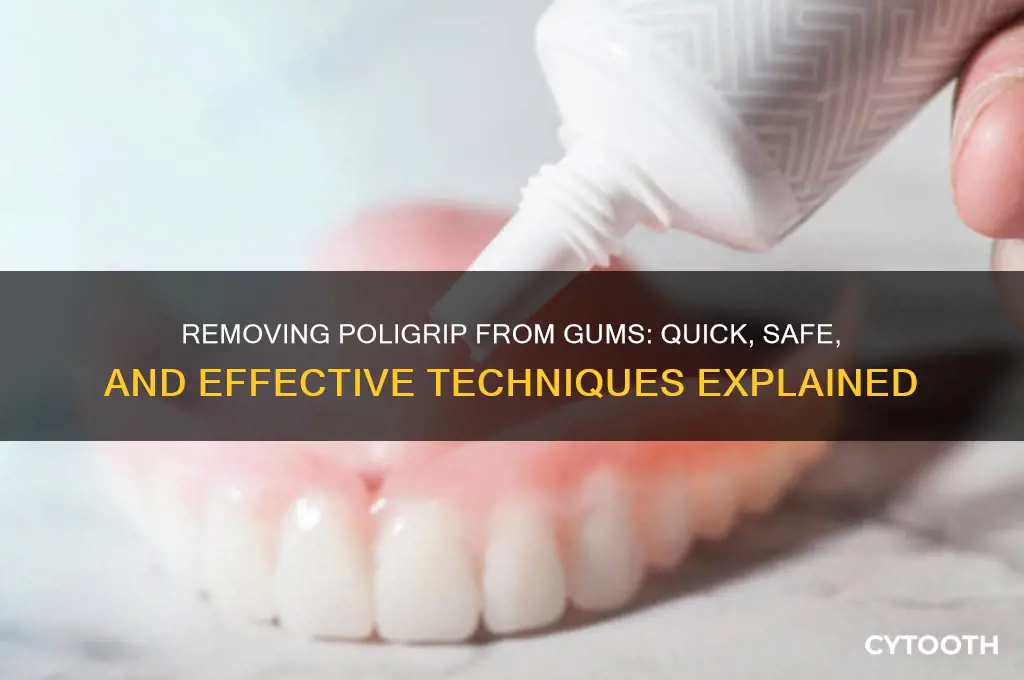
Dealing with adhesive residue from products like Poligrip on your gums can be uncomfortable and frustrating. Poligrip, a popular denture adhesive, is designed to provide a strong hold but can sometimes leave behind a sticky residue that clings to gum tissue. Removing it requires a gentle yet effective approach to avoid irritation or damage to the gums. Common methods include rinsing with warm salt water, using a soft-bristled toothbrush, or applying a small amount of oil, such as coconut or olive oil, to help dissolve the adhesive. It’s essential to clean the area thoroughly and avoid harsh chemicals or excessive scrubbing, as gums are sensitive and prone to inflammation. If residue persists or causes discomfort, consulting a dentist is recommended for professional advice or assistance.
| Characteristics | Values |
|---|---|
| Product Name | Poligrip (Denture Adhesive) |
| Removal Method | Warm water or denture adhesive remover wipes |
| Recommended Technique | Gently massage gums and dentures to loosen adhesive |
| Cleaning Frequency | Daily after denture removal |
| Oral Hygiene Tip | Brush gums and palate gently with a soft toothbrush |
| Avoid | Abrasive cleaners or excessive force |
| Residue Prevention | Use minimal adhesive and apply as directed |
| Alternative Solutions | Oil-based products (e.g., coconut oil) to dissolve adhesive |
| Professional Advice | Consult a dentist if adhesive persists or causes irritation |
| Common Mistakes | Overusing adhesive, not cleaning gums properly |
| Time for Removal | Varies; typically a few minutes with proper technique |
| Safety Precaution | Ensure hands and dentures are clean before handling |
| Storage Tip | Store dentures in water overnight to prevent adhesive buildup |
What You'll Learn
- Warm Water Rinse: Gently rinse gums with warm water to loosen and dissolve Poligrip residue
- Soft Brushing Technique: Use a soft toothbrush to carefully remove adhesive from gum surfaces
- Oil Application: Apply coconut or olive oil to gums to break down adhesive naturally
- Denture Cleanser Use: Soak dentures in denture cleaner to remove Poligrip before reinsertion
- Professional Cleaning: Consult a dentist for thorough removal and gum health assessment

Warm Water Rinse: Gently rinse gums with warm water to loosen and dissolve Poligrip residue
Warm water acts as a gentle solvent, capable of breaking down the adhesive properties of Poligrip without irritating sensitive gum tissue. Unlike harsh chemicals or abrasive scrubbing, warm water works by softening the residue, allowing it to detach naturally from the gums. This method is particularly effective because Poligrip’s primary ingredient, polyvinyl acetate, becomes less adhesive when exposed to moisture and warmth. For best results, use water heated to approximately 40–45°C (104–113°F)—hot enough to dissolve the adhesive but cool enough to avoid burns.
To perform a warm water rinse, start by filling a small cup with the heated water. Lean over a sink and gently swish the water around your mouth, focusing on the areas where Poligrip residue is present. Hold the water in your mouth for 20–30 seconds, allowing it to penetrate the adhesive. Spit out the water and repeat the process 2–3 times. For stubborn residue, use a clean finger or a soft, damp cloth to gently rub the gums in circular motions while rinsing. This combination of warmth, moisture, and mild agitation accelerates the removal process.
While warm water is effective, it’s important to avoid overdoing it. Prolonged exposure to warm water or excessive rinsing can dry out the gums, leading to discomfort or irritation. Limit each rinse session to 1–2 minutes and avoid using water hotter than 45°C to prevent thermal damage. Additionally, if you wear dentures, remove them before rinsing to ensure direct access to the gums. This method is safe for all age groups, including seniors, but those with sensitive gums or pre-existing oral conditions should consult a dentist before trying it.
The simplicity of the warm water rinse makes it a go-to solution for immediate relief. It’s especially useful for individuals who experience discomfort from Poligrip residue but lack access to specialized cleaning products. Pairing this method with regular oral hygiene practices, such as brushing with a soft-bristled toothbrush and using mild, alcohol-free mouthwash, can prevent residue buildup in the future. For persistent issues, however, consider exploring alternative removal techniques or adjusting your denture adhesive application habits.
Effective Tips to Safely Remove Polident from Your Gums
You may want to see also
Soft Brushing Technique: Use a soft toothbrush to carefully remove adhesive from gum surfaces
Removing Poligrip adhesive from your gums requires a gentle yet effective approach, and the soft brushing technique is a cornerstone of this process. The key lies in selecting the right tool: a soft-bristled toothbrush. Unlike medium or hard bristles, which can irritate sensitive gum tissue, soft bristles provide the necessary abrasion without causing harm. This method is particularly useful for daily maintenance, ensuring that adhesive residue is consistently removed without compromising oral health.
Begin by rinsing your mouth with warm water to loosen the adhesive. Next, dampen the soft toothbrush and gently brush the gum surfaces in circular motions. Focus on areas where adhesive tends to accumulate, such as along the gum line and around denture edges. Avoid applying excessive pressure, as this can damage gums or cause discomfort. For stubborn residue, repeat the process, but maintain a light touch to prevent irritation.
A practical tip is to pair this technique with a mild, non-abrasive toothpaste or a specialized denture cleanser. These products can enhance the removal process without introducing harsh chemicals that might disrupt the oral microbiome. For individuals with particularly sensitive gums, consider using a child’s toothbrush, which often has even softer bristles and a smaller head for better maneuverability.
While the soft brushing technique is effective, it’s important to monitor your gums for signs of irritation, such as redness, swelling, or bleeding. If these symptoms occur, reduce the frequency of brushing or consult a dentist for personalized advice. Consistency is key; incorporating this technique into your daily oral care routine can prevent adhesive buildup and maintain gum health over time.
In comparison to harsher methods like scrubbing with abrasive materials or using alcohol-based solvents, the soft brushing technique stands out for its safety and accessibility. It’s a simple, cost-effective solution that aligns with dental hygiene best practices. By prioritizing gentleness and regularity, this approach ensures that Poligrip adhesive is removed efficiently while preserving the integrity of your gums.
Effective Ways to Remove Chewing Gum from Leather Surfaces
You may want to see also
Oil Application: Apply coconut or olive oil to gums to break down adhesive naturally
Coconut and olive oils, rich in natural fats, can effectively dissolve the adhesive properties of Poligrip, offering a gentle yet powerful solution for removing denture cream residue from gums. These oils work by penetrating the adhesive’s molecular structure, breaking it down without harsh chemicals or abrasive scrubbing. Unlike alcohol-based removers, which can dry out oral tissues, oils provide a moisturizing effect, reducing irritation for sensitive gums. This method aligns with a growing preference for natural, at-home remedies in oral care, particularly among older adults who may seek alternatives to commercial products.
To apply this method, start by rinsing your mouth with warm water to loosen surface adhesive. Dip a clean cotton swab or your fingertip into a small amount of coconut or olive oil—approximately ¼ teaspoon—and gently massage it onto the affected gum area. Allow the oil to sit for 3–5 minutes, giving it time to dissolve the adhesive. For stubborn residue, repeat the process, ensuring not to overuse the oil to avoid overwhelming the gums. This technique is particularly useful for individuals aged 50 and older, who may experience reduced saliva production, making adhesive removal more challenging.
While both coconut and olive oils are effective, coconut oil has the added benefit of lauric acid, a compound with antimicrobial properties that can help maintain oral hygiene. However, olive oil’s milder taste may be preferable for those sensitive to coconut’s distinct flavor. Regardless of choice, ensure the oil is organic and unrefined to avoid additives that could irritate gums. For best results, follow up with a gentle saltwater rinse to remove any remaining oil or adhesive particles, leaving the gums clean and soothed.
A practical tip for daily users of denture adhesives is to incorporate oil application into your nighttime routine. After removing dentures, apply the oil to your gums, allowing it to work while you sleep. By morning, residue will be significantly reduced, simplifying your denture care regimen. This proactive approach not only ensures cleaner gums but also minimizes the risk of adhesive buildup over time, promoting better oral health. With its simplicity and natural efficacy, oil application stands out as a reliable method for managing Poligrip residue.
Quick Tips to Remove Chewing Gum from Your Retainer Easily
You may want to see also
Denture Cleanser Use: Soak dentures in denture cleaner to remove Poligrip before reinsertion
Removing Poligrip residue from your gums can be a delicate task, especially when dealing with dentures. One effective method is to utilize denture cleansers, which are specifically designed to tackle adhesive remnants and ensure a thorough clean. This process not only helps in removing the sticky residue but also contributes to maintaining excellent oral hygiene.
The Soaking Solution: Denture cleansers come in various forms, including tablets, powders, and liquids. The most common and convenient option is the effervescent tablet. To remove Poligrip, simply follow these steps: dissolve one denture cleaning tablet in a glass of warm water, as per the manufacturer's instructions, typically around 150-200 ml of water. Then, place your dentures in the solution and let them soak for the recommended time, usually 15-30 minutes. This process allows the cleaner to penetrate and loosen the adhesive, making it easier to remove.
Mechanical Action: After soaking, a gentle mechanical action is required to dislodge the softened Poligrip. Use a soft-bristled toothbrush or a denture brush to carefully brush the dentures, paying extra attention to the areas where the adhesive was applied. This step ensures that all traces of the adhesive are removed, leaving your dentures clean and ready for reinsertion. It is crucial to be gentle during this process to avoid damaging the dentures or your gums.
Rinsing and Reinsertion: Once the cleaning and brushing are complete, rinse the dentures thoroughly with clean water to remove any remaining cleanser and adhesive particles. This step is essential to prevent any irritation to your gums. After rinsing, you can reinsert your dentures, ensuring a comfortable fit without the hassle of leftover adhesive. Regular use of denture cleansers not only aids in adhesive removal but also helps prevent plaque buildup and maintains the overall health of your mouth.
This method is particularly useful for denture wearers who rely on adhesives like Poligrip for a secure fit. By incorporating denture cleansers into your oral care routine, you can effectively manage adhesive residue, promoting better oral hygiene and a more comfortable denture-wearing experience. Remember, always follow the instructions provided by the denture cleanser manufacturer for optimal results and safety.
Effective Ways to Remove Old Gum from Your Carpet Easily
You may want to see also
Professional Cleaning: Consult a dentist for thorough removal and gum health assessment
Poligrip residue on gums can lead to irritation, inflammation, or even infection if not properly addressed. While home remedies may offer temporary relief, they often fail to remove deeply embedded adhesive particles or assess underlying gum health issues. This is where professional cleaning by a dentist becomes essential. Dentists possess the tools, expertise, and environment to ensure thorough removal while evaluating the overall condition of your gums, addressing potential complications before they escalate.
The process begins with a gentle yet effective cleaning using specialized instruments designed to dislodge adhesive remnants without damaging delicate gum tissue. Ultrasonic scalers, for instance, employ high-frequency vibrations to break down stubborn particles, while manual tools allow for precise targeting of hard-to-reach areas. Unlike abrasive home methods, these techniques minimize discomfort and reduce the risk of gum recession or abrasion. Following removal, dentists can apply soothing agents like chlorhexidine rinses (0.12% concentration for adults, used twice daily for 30 seconds) to alleviate inflammation and prevent bacterial growth.
Beyond cleaning, a dental consultation provides a critical opportunity for gum health assessment. Dentists can identify early signs of denture-related stomatitis, a common condition caused by prolonged adhesive use, characterized by redness, swelling, or ulceration. They may also detect periodontal issues exacerbated by adhesive buildup, such as gingivitis or periodontitis. For patients over 65, this step is particularly vital, as age-related gum sensitivity and reduced saliva production can increase susceptibility to adhesive-related complications. Based on their findings, dentists can recommend tailored solutions, from denture adjustments to alternative adhesive products with milder formulations.
While professional cleaning may seem like an added step, it serves as a proactive measure to safeguard oral health. Attempting to manage adhesive residue independently can lead to incomplete removal, prolonged discomfort, or unintended damage. By consulting a dentist, patients not only ensure a thorough cleaning but also gain insights into maintaining optimal gum health. Practical tips, such as daily denture hygiene routines and regular dental check-ups every six months, can further prevent future issues. Ultimately, this approach combines immediate relief with long-term prevention, making it the most effective strategy for managing Poligrip residue and its associated challenges.
Effective Ways to Remove Black Lines on Gums: A Comprehensive Guide
You may want to see also
Frequently asked questions
Rinse your mouth thoroughly with warm water, then gently brush your gums with a soft-bristled toothbrush to remove any residue. You can also use a damp cloth or gauze to wipe away excess adhesive.
Yes, you can use a small amount of mild, non-abrasive toothpaste to gently clean your gums and remove Poligrip residue. Avoid harsh scrubbing to prevent irritation.
Soak a clean cloth in warm water and hold it against the affected area to soften the adhesive. Then, gently rub the area with the cloth or a soft toothbrush. If the issue persists, consult your dentist for further guidance.