Olivia Bennett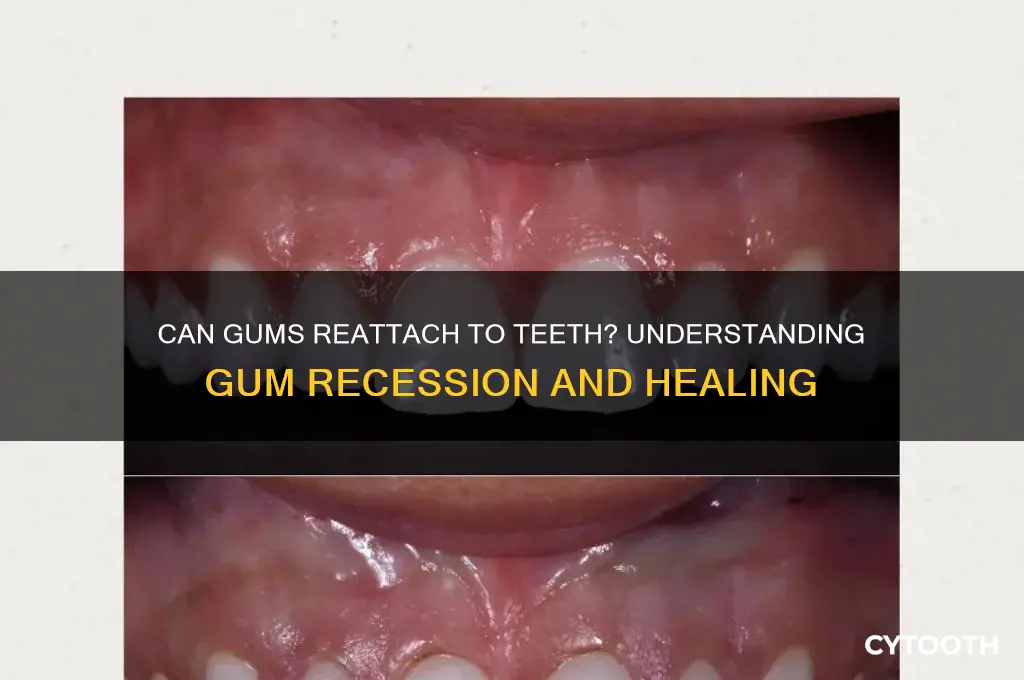
Many individuals wonder if gums can reattach to teeth after experiencing gum recession or periodontal disease. Gum recession occurs when the gum tissue pulls away from the tooth, exposing the root and potentially leading to sensitivity, decay, and even tooth loss. While gums cannot naturally reattach to teeth on their own, certain dental procedures, such as deep cleaning (scaling and root planing), gum graft surgery, or guided tissue regeneration, can help restore gum tissue and promote reattachment. Early intervention is crucial, as it increases the chances of successful treatment and prevents further damage to the teeth and gums. Maintaining good oral hygiene, regular dental check-ups, and addressing risk factors like smoking or grinding can also support gum health and minimize the need for extensive procedures.
| Characteristics | Values |
|---|---|
| Can gums reattach to teeth naturally? | No, gums cannot reattach to teeth on their own once they have receded. |
| Professional treatments available | Yes, treatments like gum grafting, deep cleaning (scaling and root planing), and laser therapy can help. |
| Role of oral hygiene | Proper oral hygiene (brushing, flossing, regular dental check-ups) is crucial to prevent further gum recession and support treatment success. |
| Reversibility of gum recession | Early stages of gum recession may be slowed or managed, but reattachment without intervention is not possible. |
| Success rate of treatments | High success rates with professional treatments, especially when addressed early. |
| Timeframe for results | Varies; gum grafting may show results in a few weeks, while other treatments may take months. |
| Prevention methods | Avoiding aggressive brushing, quitting smoking, and managing conditions like bruxism (teeth grinding) can prevent gum recession. |
| Long-term maintenance | Ongoing care and regular dental visits are essential to maintain results and prevent recurrence. |
| Cost of treatments | Varies widely depending on the procedure, location, and severity of the condition. |
| Pain and recovery | Minimal pain with most treatments; recovery time depends on the procedure, typically a few days to weeks. |
What You'll Learn

Causes of Gum Recession
Gum recession, the gradual loss of gum tissue along the tooth line, is a common yet often overlooked dental issue. One of the primary culprits is poor oral hygiene. When plaque and tartar build up along the gum line, they create a breeding ground for bacteria, leading to gum inflammation (gingivitis) and, eventually, periodontitis. This inflammatory process destroys the gum tissue and the bone that supports the teeth, causing the gums to pull away. Brushing twice daily with a soft-bristled toothbrush and flossing daily are essential, but overzealous brushing can also contribute to recession. Use gentle, circular motions and avoid sawing back-and-forth, which can wear down gums over time.
Another significant cause of gum recession is hormonal changes, particularly in women. Fluctuations in estrogen and progesterone levels during puberty, pregnancy, and menopause can make gums more sensitive and susceptible to recession. For instance, pregnant women often experience "pregnancy gingivitis," where gums become swollen, red, and prone to bleeding. While hormonal changes are natural, maintaining diligent oral care during these periods can mitigate their impact. Using an antimicrobial mouthwash and scheduling regular dental check-ups can help manage gum health during hormonal shifts.
Bruxism, or teeth grinding, is a less obvious but equally damaging cause of gum recession. The excessive force exerted on teeth during grinding can lead to gum tissue erosion and bone loss. Many people grind their teeth unconsciously, especially during sleep, making it a silent contributor to oral health issues. If you suspect bruxism, look for signs like jaw soreness, headaches, or flattened teeth. A dentist can provide a custom night guard to protect your teeth and gums while addressing the underlying stress or misalignment that may be causing the grinding.
Lastly, genetic factors play a role in gum recession, as some individuals are naturally more predisposed to gum disease. Studies suggest that up to 30% of the population may be genetically susceptible to periodontitis, regardless of oral hygiene habits. If gum recession runs in your family, proactive measures are crucial. This includes regular dental cleanings every six months, using prescription-strength fluoride toothpaste, and considering periodontal maintenance therapy to monitor and manage gum health. While genetics can’t be changed, early intervention can prevent severe recession and tooth loss.
Understanding these causes empowers individuals to take targeted action against gum recession. Whether through improved hygiene, hormonal management, bruxism treatment, or genetic awareness, addressing the root cause is key to preserving gum health and answering the question of whether gums can reattach to teeth. While gums cannot naturally reattach, early prevention and professional treatments like gum grafting can restore gum tissue and protect teeth from further damage.
Why Are My Gums Detaching? Causes and Solutions Explained
You may want to see also
Natural Healing Possibilities
Gum recession, a common dental issue, often leaves individuals wondering if their gums can naturally reattach to teeth. While advanced cases may require surgical intervention, early-stage recession can benefit from natural healing methods that promote gum health and potentially encourage reattachment. These methods focus on reducing inflammation, improving blood flow, and strengthening gum tissue.
One effective natural approach involves oil pulling, an ancient practice with modern advocates. Swishing organic coconut oil or sesame oil in the mouth for 10–15 minutes daily can reduce harmful bacteria and plaque buildup. The lauric acid in coconut oil, in particular, has antimicrobial properties that combat gingivitis, a precursor to gum recession. For best results, perform oil pulling first thing in the morning on an empty stomach, followed by thorough brushing and flossing.
Nutritional interventions also play a critical role in natural gum healing. Vitamin C, essential for collagen production, strengthens gum tissue and aids in reattachment. Adults should aim for 75–90 mg daily, through foods like bell peppers, oranges, or supplements. Coenzyme Q10, a compound that reduces inflammation and promotes cell growth, can be taken in doses of 100–200 mg daily, particularly for those with gum disease. Always consult a healthcare provider before starting supplements.
Herbal remedies offer another avenue for natural healing. Aloe vera gel, known for its soothing properties, can be applied directly to the gums to reduce inflammation and stimulate tissue repair. Alternatively, rinsing with a diluted green tea solution provides antioxidants like catechins, which inhibit bacterial growth and support gum health. For a more targeted approach, use a soft toothbrush to gently massage organic turmeric paste onto the gums; its anti-inflammatory compound, curcumin, aids in healing.
While these natural methods can support gum reattachment, consistency and early intervention are key. Pair these practices with excellent oral hygiene and regular dental checkups to monitor progress. Natural healing is a gradual process, but with dedication, it can yield significant improvements in gum health and potentially reverse minor recession.
Coronavirus and Oral Health: Exploring Its Impact on Teeth and Gums
You may want to see also
Professional Treatment Options
Gum recession, a common dental issue, often leaves patients wondering if their gums can reattach to teeth. While natural reattachment is unlikely, professional treatments can effectively restore gum tissue and improve oral health. These interventions range from minimally invasive procedures to surgical techniques, each tailored to the severity of the condition.
Scaling and Root Planing: The Foundation of Non-Surgical Care
For mild to moderate gum recession caused by periodontal disease, scaling and root planing is the first line of defense. This deep-cleaning procedure involves removing plaque and tartar from below the gumline and smoothing the tooth root to discourage bacterial buildup. Typically performed in one or two sessions, it may cause temporary sensitivity but is essential for halting disease progression. Maintenance visits every three to four months are crucial to monitor healing and prevent recurrence.
Gum Grafting: Surgical Precision for Advanced Cases
When recession is severe, gum grafting becomes necessary to regenerate lost tissue. The most common technique, connective tissue grafting, involves harvesting tissue from the palate and suturing it to the receded area. Alternatively, pedicle grafts use adjacent gum tissue, while grafting with donor tissue or synthetic materials offers options for those lacking sufficient donor sites. Post-operative care includes a soft diet for one to two weeks, pain management with prescribed medications, and meticulous oral hygiene to ensure successful integration.
Laser-Assisted Procedures: A Less Invasive Alternative
Laser therapy offers a minimally invasive approach to gum restoration, reducing bleeding, swelling, and recovery time compared to traditional surgery. The laser removes diseased tissue and encourages gum reattachment by stimulating the growth of new cells. While not suitable for all cases, it’s particularly effective for early-stage recession and patients seeking quicker healing. Multiple sessions may be required, depending on the extent of the recession.
Guided Tissue Regeneration: Rebuilding from the Roots
For recession accompanied by bone loss, guided tissue regeneration (GTR) combines surgical intervention with biocompatible membranes or tissue-stimulating proteins. These materials are placed between the gum and tooth to prevent unwanted tissue growth, allowing bone and gum tissue to regenerate. Often paired with bone grafts, GTR is a complex but highly effective solution for advanced periodontal damage. Recovery takes several weeks, during which patients must avoid strenuous activity and follow strict oral care protocols.
Maintenance and Long-Term Success
Regardless of the treatment chosen, long-term success hinges on diligent aftercare and lifestyle adjustments. Regular dental check-ups, proper brushing techniques (using a soft-bristled toothbrush at a 45-degree angle), and avoiding tobacco are critical. For those prone to recession, custom-fitted night guards can prevent bruxism-related damage. While gums may not reattach on their own, professional interventions can restore function, aesthetics, and oral health, ensuring a lasting solution to gum recession.
Natural Ways to Strengthen Teeth and Gums for Optimal Oral Health
You may want to see also
Preventing Further Detachment
Gum recession is a gradual process, often unnoticed until it reaches an advanced stage. Preventing further detachment requires a proactive approach, starting with understanding the underlying causes. Poor oral hygiene, aggressive brushing, hormonal changes, and genetic predisposition are common culprits. Addressing these factors directly can halt progression and create an environment conducive to gum health. For instance, switching to a soft-bristled toothbrush and adopting the Bass brushing technique—a 45-degree angle, gentle pressure, and short strokes—can significantly reduce mechanical damage to gum tissue.
Consider the role of professional intervention in preventing further detachment. Regular dental check-ups, ideally every six months, allow for early detection of gum issues. Scaling and root planing, a deep-cleaning procedure, removes plaque and tartar buildup below the gumline, smoothing the root surface to discourage bacterial recolonization. For those with advanced recession, periodontal surgery may be recommended. Techniques like the pinhole surgical technique or gum grafting can restore gum tissue and protect exposed roots, though these are last resorts when prevention fails.
Lifestyle modifications play a pivotal role in maintaining gum integrity. Smoking, for example, impairs blood flow to the gums, delaying healing and exacerbating recession. Quitting smoking, coupled with a balanced diet rich in vitamins C and D, can strengthen gum tissue and improve overall oral health. Vitamin C, found in citrus fruits and leafy greens, supports collagen production, while vitamin D, abundant in fatty fish and fortified dairy, enhances calcium absorption, crucial for bone and gum support.
Finally, home care strategies can reinforce professional treatments. Antimicrobial mouthwashes containing chlorhexidine (0.12% concentration, used twice daily for two weeks) can reduce plaque and gingivitis when used as an adjunct to brushing and flossing. However, long-term use is not recommended due to potential side effects like staining. Alternatively, natural remedies like oil pulling with coconut oil or using aloe vera gel may offer anti-inflammatory benefits, though scientific evidence is limited. Consistency in these practices is key—small, daily efforts compound over time to prevent further detachment and preserve the gum-tooth connection.
Safeguard Your Gums: Effective Tips for At-Home Teeth Whitening
You may want to see also
Signs of Reattachment Success
Gum reattachment, a critical aspect of periodontal health, hinges on recognizing early signs of success. One of the first indicators is reduced gum pocket depth, typically measured by a dentist using a probe. A decrease from 5mm to 3mm or less within 3–6 months of treatment suggests that gums are reattaching to teeth. This measurement is a quantifiable metric that patients and dentists alike can track to monitor progress. For instance, consistent pocket depth reduction after scaling and root planing or surgical intervention signals that the body is healing and reestablishing the gum-to-tooth bond.
Another observable sign is the cessation of gum bleeding during brushing or flossing. Healthy gums should not bleed easily, and if they do, it often indicates inflammation or detachment. Patients who notice their gums no longer bleed after 4–6 weeks of improved oral hygiene and professional care are likely experiencing reattachment. This change is not just a symptom of reduced inflammation but also a sign that the gums are firming up against the tooth surface, a critical step in the reattachment process.
Visually, the appearance of gums can provide clues to reattachment success. Healthy, reattaching gums typically regain a firm, stippled texture and a pink hue, as opposed to the swollen, red, or shiny appearance of detached gums. Patients may also notice that their teeth appear longer as the gums recede less, a positive sign that the gumline is stabilizing. For example, a patient with previously receding gums might observe that their tooth roots are less exposed, indicating that the gums are moving back into place.
Finally, a reduction in tooth sensitivity can signal successful reattachment. When gums detach, tooth roots become exposed, leading to discomfort when consuming hot, cold, or sweet substances. As gums reattach, this sensitivity diminishes. Patients who find they can enjoy their morning coffee or ice cream without wincing are likely experiencing the benefits of gum reattachment. This improvement is often noticeable within 2–3 months of effective treatment and consistent oral care.
Practical tips to enhance these signs of success include maintaining impeccable oral hygiene, such as brushing twice daily with a soft-bristled toothbrush and flossing daily. Using antimicrobial mouthwash can also aid in reducing inflammation. Patients should avoid smoking, as it impairs blood flow and slows healing. Regular dental check-ups every 3–4 months are essential to monitor progress and adjust treatment as needed. By recognizing these signs and taking proactive steps, individuals can significantly improve their chances of successful gum reattachment.
Essential Vitamins for Healthy Teeth and Gums: A Complete Guide
You may want to see also
Frequently asked questions
Gums cannot reattach to teeth on their own once they have detached due to gum disease or other issues. However, with proper treatment, such as deep cleaning (scaling and root planing) or surgical procedures like gum grafting, a dentist or periodontist can help restore gum health and reattach gums to teeth.
The time for gums to reattach to teeth varies depending on the severity of the condition and the type of treatment. Generally, it can take several weeks to a few months for gums to heal and reattach properly. Consistent oral hygiene and follow-up care are essential for successful reattachment.
Reattaching gums to teeth becomes more challenging if significant bone loss has occurred due to advanced gum disease. However, treatments like bone grafting and regenerative procedures can help restore lost bone, making it possible for gums to reattach. Early intervention is key to improving the chances of success.