Logan Hayes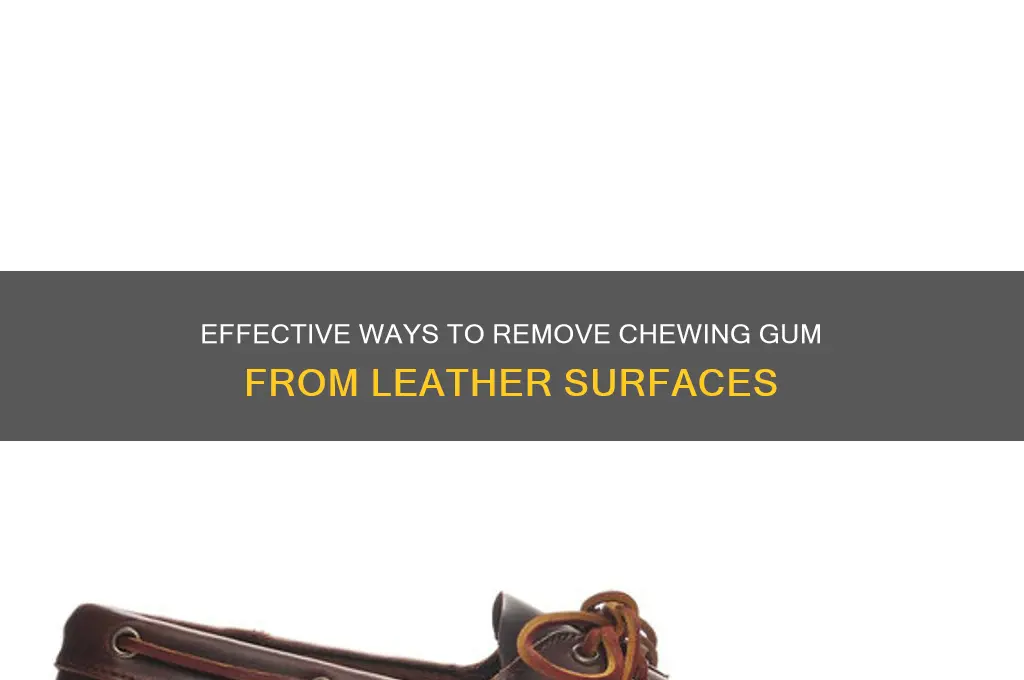
Removing gum from leather can be a delicate process, as leather is a sensitive material that requires careful handling to avoid damage. Whether it’s chewing gum stuck to a leather couch, car seat, or jacket, the key is to act quickly and use the right techniques. Common methods include freezing the gum with ice or a freezer pack to harden it for easy removal, using a commercial leather cleaner, or applying natural solvents like vinegar or peanut butter to break down the gum’s adhesive properties. Always test any method on a small, inconspicuous area first to ensure it doesn’t harm the leather, and follow up with proper conditioning to restore the material’s natural luster.
| Characteristics | Values |
|---|---|
| Method 1: Freezing | Place the leather item in a plastic bag and put it in the freezer for 1-2 hours. Once the gum is frozen, use a dull knife or spoon to gently scrape it off. Be careful not to scratch the leather surface. |
| Method 2: Peanut Butter | Apply a small amount of creamy peanut butter (not crunchy) onto the gum. Let it sit for 5-10 minutes, then use a cloth or soft brush to wipe away the gum and peanut butter residue. Clean the area with a leather cleaner afterward. |
| Method 3: Rubbing Alcohol | Dip a cotton ball or cloth in rubbing alcohol (isopropyl alcohol) and gently rub the gum until it softens and lifts off. Avoid saturating the leather, and clean the area with a leather cleaner after removal. |
| Method 4: Vinegar and Warm Water | Mix equal parts white vinegar and warm water. Dip a cloth into the solution, wring it out, and gently dab the gum until it softens. Wipe away the gum and clean the area with a leather conditioner. |
| Method 5: Commercial Gum Removers | Use leather-safe gum removers or adhesive removers specifically designed for leather. Follow the product instructions carefully to avoid damaging the material. |
| Precaution | Always test any method on a small, inconspicuous area of the leather first to ensure it doesn't cause discoloration or damage. |
| Aftercare | Clean the area with a leather cleaner and apply a leather conditioner to restore moisture and protect the surface after gum removal. |
| Avoid | Using sharp objects or excessive force, as these can scratch or damage the leather. Avoid heat-based methods, as they may cause the gum to melt further into the leather. |
What You'll Learn
- Use Oil-Based Products: Apply olive oil, coconut oil, or peanut butter to dissolve gum for easy removal
- Freeze the Gum: Use ice or frozen spoon to harden gum, then scrape it off gently
- Rubbing Alcohol Method: Dab rubbing alcohol on gum, let it dissolve, and wipe clean
- Commercial Leather Cleaners: Use specialized leather cleaners to safely remove gum without damage
- Goo Gone Application: Apply Goo Gone, let it sit, then wipe away gum residue carefully

Use Oil-Based Products: Apply olive oil, coconut oil, or peanut butter to dissolve gum for easy removal
Oil-based products like olive oil, coconut oil, and even peanut butter can be surprisingly effective at breaking down gum’s sticky polymers, making it easier to remove from leather surfaces. The fats and oils in these household items act as solvents, penetrating the gum’s structure and loosening its grip on the material. This method is particularly appealing because it relies on natural, non-toxic substances that are gentle on leather, unlike harsh chemicals that might damage its finish.
To apply this technique, start by scraping off as much gum as possible with a dull knife or spatula, being careful not to scratch the leather. Next, dab a small amount of olive oil, coconut oil, or peanut butter directly onto the remaining gum. For olive or coconut oil, use about a teaspoon, while peanut butter should be applied in a thin layer. Allow the oil or peanut butter to sit for 10–15 minutes, giving it time to dissolve the gum’s adhesive properties. Wipe away the softened gum with a clean cloth, then use a second cloth dampened with warm water to remove any oily residue.
While all three options work similarly, coconut oil has the added benefit of conditioning the leather, making it a dual-purpose solution. Olive oil is readily available in most kitchens, but it can leave a stronger scent, so ensure proper cleaning afterward. Peanut butter, though unconventional, is highly effective due to its oil content, but it requires thorough cleaning to avoid attracting dirt or insects. Each option has its pros and cons, so choose based on what you have on hand and the condition of your leather.
A cautionary note: always test the oil or peanut butter on a small, inconspicuous area of the leather first to ensure it doesn’t discolor or damage the surface. Additionally, avoid using excessive amounts, as leftover oil can attract dust or leave a greasy stain. This method is best suited for smooth leather surfaces rather than suede or nubuck, which require specialized cleaning techniques. With patience and the right approach, oil-based products can transform a stubborn gum stain into a manageable problem.
Effective Ways to Treat and Prevent Black Gums Naturally
You may want to see also
Freeze the Gum: Use ice or frozen spoon to harden gum, then scrape it off gently
Chewing gum stuck to leather is a frustrating scenario, but freezing offers a surprisingly effective solution. This method leverages the principle that gum becomes brittle when cold, making it easier to remove without damaging the delicate leather surface. By applying ice or a frozen spoon directly to the gum, you can harden it within minutes, transforming it from a sticky mess into a manageable, crumbly texture.
Steps to Freeze and Remove Gum:
- Prepare the Freezing Tool: Wrap ice cubes in a thin cloth or use a metal spoon placed in the freezer for at least 15 minutes. The cloth prevents water condensation from wetting the leather, while the spoon provides a flat, controlled surface for application.
- Apply Cold to the Gum: Hold the wrapped ice or frozen spoon directly on the gum for 5–10 minutes. Ensure the entire gum mass is chilled; larger pieces may require longer exposure.
- Scrape Gently: Once the gum is hardened, use a plastic scraper, butter knife, or the edge of a credit card to carefully lift and flake it away. Work slowly to avoid scratching the leather.
- Clean Residue: After removing the bulk of the gum, use a leather-safe cleaner or a mixture of mild soap and water to wipe away any remaining residue. Follow with a leather conditioner to restore moisture and shine.
Cautions and Practical Tips:
Avoid using metal tools directly on leather, as they can cause scratches. If the gum is in a hard-to-reach area, such as a seam, reapply the ice and scrape in small sections. For stubborn residue, a small amount of rubbing alcohol on a cotton swab can help dissolve it, but test in an inconspicuous area first to ensure it doesn’t discolor the leather.
Why This Method Works:
Freezing gum alters its molecular structure, making it less adhesive and more fragile. Unlike heat, which can melt gum and embed it further into the leather, cold preserves the material’s integrity while neutralizing the gum’s stickiness. This approach is particularly useful for delicate leather items like handbags, car seats, or furniture, where harsh chemicals or abrasive techniques could cause permanent damage.
Freezing gum is a simple, cost-effective, and gentle way to remove it from leather surfaces. With minimal tools and a bit of patience, you can restore your leather items to their original condition without risking harm. Keep this method in your cleaning arsenal for those unexpected gum-related mishaps.
Effective Ways to Remove Black Lines on Gums: A Comprehensive Guide
You may want to see also
Rubbing Alcohol Method: Dab rubbing alcohol on gum, let it dissolve, and wipe clean
Rubbing alcohol, a household staple, emerges as a surprisingly effective solution for removing gum from leather. Its solvent properties break down the gum’s sticky polymers, making it easier to lift away without damaging the leather’s surface. This method is particularly appealing because it uses a readily available, inexpensive product and avoids harsh chemicals that could degrade the material.
Steps to Execute the Rubbing Alcohol Method:
- Prepare the Area: Blot the gum gently with a cloth to remove any loose particles. Avoid pressing too hard, as this can embed the gum further into the leather.
- Apply Rubbing Alcohol: Pour a small amount of isopropyl alcohol (70% concentration is ideal) onto a cotton ball or clean cloth. Dab it directly onto the gum, ensuring the area is saturated but not dripping wet.
- Let It Dissolve: Allow the alcohol to sit for 2–3 minutes. During this time, the gum will begin to soften and break down, losing its adhesive grip on the leather.
- Wipe Clean: Use a fresh cloth to gently wipe away the dissolved gum. Work in circular motions to avoid scratching the leather. For stubborn remnants, repeat the process until the gum is completely removed.
Cautions and Practical Tips:
While rubbing alcohol is generally safe for leather, it’s crucial to test it on a small, inconspicuous area first to ensure it doesn’t discolor or dry out the material. Avoid using this method on untreated or aniline leather, as it may absorb the alcohol unevenly. Additionally, always ventilate the area when working with rubbing alcohol to avoid inhaling fumes. For larger gum stains, work in sections to prevent the alcohol from drying out before it can dissolve the gum.
Comparative Advantage:
Compared to methods like freezing or using peanut butter, the rubbing alcohol approach is faster and less messy. Freezing requires waiting for the gum to harden, while peanut butter can leave oily residue. Rubbing alcohol acts quickly, dissolves the gum efficiently, and evaporates cleanly, leaving no trace behind. This makes it a go-to solution for those seeking a straightforward, effective fix.
Takeaway:
The rubbing alcohol method is a reliable, cost-effective way to remove gum from leather. Its simplicity and accessibility make it a favorite among DIY enthusiasts and professionals alike. By following the steps carefully and taking necessary precautions, you can restore your leather items to their original condition without the need for specialized tools or products.
Effective Ways to Remove Old Gum from Your Carpet Easily
You may want to see also
Commercial Leather Cleaners: Use specialized leather cleaners to safely remove gum without damage
Specialized commercial leather cleaners are formulated to tackle stubborn stains like gum without compromising the integrity of the leather. Unlike household cleaners, these products contain enzymes or solvents that break down gum’s adhesive properties while conditioning the leather to prevent drying or cracking. Look for cleaners labeled as "pH-balanced" or "leather-safe" to ensure compatibility with your material, whether it’s aniline, nubuck, or bonded leather. Always test the cleaner on a small, inconspicuous area first to confirm it won’t alter the color or texture.
To use a commercial leather cleaner effectively, start by gently scraping off excess gum with a plastic spatula or the edge of a credit card. Apply a small amount of cleaner—typically a dime-sized drop for a gum-sized stain—onto a clean, lint-free cloth. Work the cleaner into the affected area using circular motions, allowing it to penetrate the gum residue. Let the product sit for 1–2 minutes, then wipe away the loosened gum with a damp cloth. Follow up with a leather conditioner to restore moisture and protect the surface.
One advantage of commercial cleaners is their versatility across leather types and stain severity. For instance, products like Leather Honey or Chamberlain’s Leather Milk are popular for their dual-action cleaning and conditioning properties. However, avoid over-saturating the leather, as excessive moisture can lead to discoloration or warping. For older or delicate leather, opt for a milder cleaner and apply it sparingly, reapplying as needed rather than scrubbing aggressively.
While commercial cleaners are generally safe, they’re not a one-size-fits-all solution. For example, oil-based cleaners may leave a residue on suede or nubuck, requiring a specialized dry cleaning kit instead. Additionally, some cleaners contain alcohol or harsh chemicals that can strip dyes from colored leather. Always read the product label for compatibility warnings and follow the manufacturer’s instructions for dosage and application frequency.
In comparison to DIY methods like peanut butter or vinegar, commercial leather cleaners offer a more controlled and predictable outcome. They’re particularly useful for high-value items like car seats, handbags, or furniture, where the risk of damage from experimentation is too great. While they may cost more upfront, their ability to preserve leather’s longevity and appearance often justifies the investment. For best results, pair them with regular leather maintenance to prevent future stains and extend the material’s lifespan.
Can Dentures Halt Gum Disease? Understanding the Connection and Prevention
You may want to see also
Goo Gone Application: Apply Goo Gone, let it sit, then wipe away gum residue carefully
Removing gum from leather can be a delicate task, but Goo Gone offers a reliable solution when used correctly. The key to success lies in the application process: apply a small amount of Goo Gone directly to the gum residue, ensuring it saturates the affected area. This step is crucial because Goo Gone’s formula is designed to break down sticky substances, but it needs time to penetrate and loosen the gum’s grip on the leather. Avoid over-saturating the area, as excessive product can seep into the leather, potentially causing discoloration or damage. Precision is your ally here—use a cotton swab or cloth to target the gum residue without spreading the product unnecessarily.
Once applied, patience becomes your next tool. Let the Goo Gone sit for 1–2 minutes, allowing it to work its magic. This waiting period is essential for the product to dissolve the gum’s adhesive properties. Rushing this step may result in incomplete removal, leaving behind stubborn remnants. While waiting, observe how the gum begins to soften and lift from the leather’s surface. This visual cue signals that the product is doing its job, preparing the residue for easy removal.
The final step—wiping away the gum residue—requires a gentle touch. Use a clean, dry cloth to carefully blot or wipe the area, working in the direction of the leather’s grain to avoid scratching or damaging the surface. For particularly stubborn gum, a plastic scraper or the edge of a credit card can be used to lift off the softened residue, but apply minimal pressure to prevent harm to the leather. After removing the gum, wipe the area with a damp cloth to eliminate any Goo Gone residue, followed by a dry cloth to ensure no moisture remains.
While Goo Gone is effective, it’s important to test it on a small, inconspicuous area of the leather first to ensure compatibility. Leather types vary, and some may react differently to the product. Additionally, always work in a well-ventilated area, as Goo Gone contains solvents that can emit strong fumes. By following these steps—apply, let sit, and wipe carefully—you can restore your leather to its original condition, free from unsightly gum residue.
Effective Ways to Safely Remove Objects Stuck in Your Gums
You may want to see also
Frequently asked questions
The best method is to freeze the gum using an ice pack or aerosol freeze spray, then gently scrape it off with a plastic scraper or dull knife.
Avoid using heat, as it can damage the leather. Stick to cold methods like freezing or using rubbing alcohol to harden the gum for easier removal.
Use a mild leather cleaner or a mixture of warm water and dish soap to gently clean the area. Follow up with a leather conditioner to restore moisture.
While peanut butter can work on other surfaces, it’s not recommended for leather as it can leave oily residue and potentially stain the material. Stick to safer methods like freezing or rubbing alcohol.