Ethan Brooks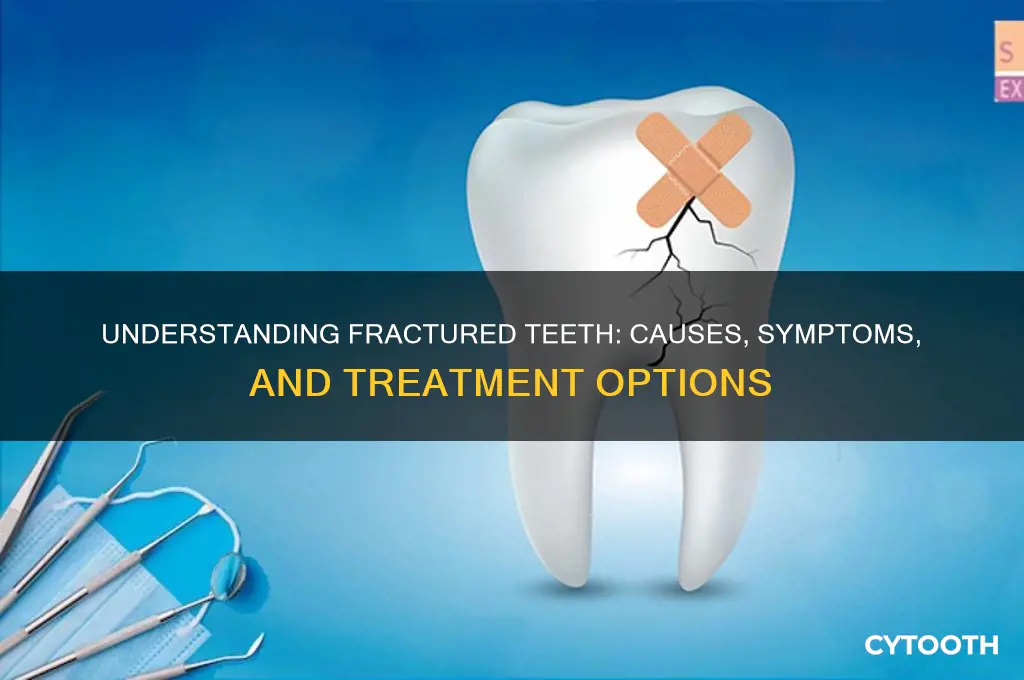
Fractured teeth, a common dental issue, can occur due to various factors such as trauma, biting hard objects, or underlying tooth decay. When a tooth fractures, it can range from a minor chip to a severe break affecting the nerve, causing pain, sensitivity, and potential complications if left untreated. Understanding the causes, symptoms, and treatment options for fractured teeth is essential for maintaining oral health and preventing further damage. Early intervention by a dentist is crucial to assess the extent of the fracture and determine the appropriate treatment, which may include bonding, crowns, root canals, or extraction in severe cases.
| Characteristics | Values |
|---|---|
| Causes | Trauma (falls, accidents), biting hard objects, cavities, teeth grinding, temperature changes (hot/cold foods), aging, weakened tooth structure. |
| Types of Fractures | Craze lines (superficial cracks), fractured cusp, split tooth, vertical root fracture, cracked tooth. |
| Symptoms | Pain when chewing, sensitivity to hot/cold, swelling, visible crack or chip, rough edges on the tongue. |
| Diagnosis | Visual examination, dental X-rays, bite tests, transillumination (shining light through the tooth). |
| Treatment Options | Dental bonding, veneers, crowns, root canal therapy, extraction (if severely damaged). |
| Prevention | Wearing mouthguards during sports, avoiding hard foods, regular dental check-ups, treating cavities promptly, addressing teeth grinding (bruxism). |
| Complications | Infection, tooth loss, pulp damage, further cracking, gum irritation. |
| Recovery Time | Varies; minor fractures (1-2 days), major repairs (up to several weeks). |
| Cost of Treatment | $100-$3,000+ depending on severity and treatment type (e.g., bonding vs. crown). |
| Prognosis | Generally good with early treatment; poor if left untreated or if the fracture extends to the root. |
What You'll Learn
- Causes of Fractured Teeth: Trauma, biting hard objects, cavities, or weakened tooth structure can cause fractures
- Types of Tooth Fractures: Craze lines, chipped, cracked, split, or vertical root fractures are common types
- Symptoms of Fractures: Pain, sensitivity, swelling, or visible damage indicate a fractured tooth
- Diagnosis Methods: Visual exams, X-rays, or dental imaging help diagnose tooth fractures accurately
- Treatment Options: Fillings, crowns, root canals, or extraction depend on fracture severity

Causes of Fractured Teeth: Trauma, biting hard objects, cavities, or weakened tooth structure can cause fractures
Tooth fractures are a common dental issue, often resulting from a combination of external forces and internal weaknesses. Trauma stands as a primary culprit, whether from sports injuries, falls, or accidents. A sudden impact can crack or break a tooth, especially if the force is directed at the mouth. For instance, athletes who participate in contact sports like football or hockey are at higher risk, even with mouthguards. However, trauma isn’t limited to high-impact activities; a simple slip on a wet floor can lead to a fractured tooth if the fall is awkwardly timed.
Biting down on hard objects is another frequent cause of tooth fractures. Many people underestimate the strength required to crack a tooth, assuming it takes something extreme like chewing on ice or hard candy. In reality, even seemingly harmless items like popcorn kernels, pens, or fingernails can cause damage if bitten with enough force. Children are particularly susceptible, as they often explore objects orally without understanding the potential consequences. A practical tip: avoid using your teeth as tools, such as opening packaging or cutting thread, as this habit significantly increases the risk of fractures.
Cavities play a silent but destructive role in tooth fractures by weakening the tooth structure from within. When tooth decay progresses, it hollows out the inner layers of the tooth, making it more brittle and prone to cracking under pressure. Even routine activities like chewing can cause a fractured tooth if the underlying structure is compromised. Regular dental check-ups are crucial for detecting and treating cavities early, as fillings or crowns can restore strength before a fracture occurs. Ignoring dental pain or sensitivity often leads to more severe issues, including fractures that may require extensive repair.
Weakened tooth structure, often due to age, grinding, or previous dental work, is another significant factor. As we age, our teeth naturally become more susceptible to fractures due to wear and tear. Bruxism, or teeth grinding, exacerbates this by placing excessive pressure on the teeth, especially during sleep. Over time, this can lead to microfractures that eventually cause a tooth to break. For those with existing dental restorations like large fillings or root canals, the remaining tooth structure may be too weak to withstand normal forces, increasing the likelihood of fractures. Custom night guards and stress management techniques can help mitigate grinding-related risks, while regular dental evaluations ensure that weakened teeth are monitored and protected.
Dentists' X-Ray Humor: Why They Call Them Tooth Pics
You may want to see also
Types of Tooth Fractures: Craze lines, chipped, cracked, split, or vertical root fractures are common types
Tooth fractures are not one-size-fits-all; they vary in severity, appearance, and treatment. Craze lines, for instance, are the most superficial type, affecting only the outer enamel. These hairline cracks are common in adults and often go unnoticed unless they cause cosmetic concerns. While they rarely require treatment, monitoring is essential to ensure they don’t deepen. In contrast, chipped teeth involve a small piece of enamel breaking off, often due to biting hard objects or trauma. Minor chips may only need smoothing, but larger ones could expose the dentin, requiring bonding or veneers to restore function and appearance.
Moving deeper, cracked teeth extend beyond the enamel into the dentin, posing a higher risk of infection or tooth loss if left untreated. Symptoms like pain when chewing or sensitivity to temperature are red flags. Treatment ranges from crowns to root canals, depending on the crack’s extent. A split tooth, however, is a more severe fracture where the tooth divides into two parts, often vertically. This type is irreversible and typically requires extraction, as the separation extends through the root. Early intervention is critical to prevent further damage or infection.
Vertical root fractures are the most elusive, as they often show no visible signs above the gum line. These fractures occur below the gum line, extending through the root, and are usually detected only through persistent pain or infection. Treatment options are limited; extraction is often the only solution, followed by replacement with an implant or bridge. Unlike other fractures, vertical root fractures are challenging to diagnose, making regular dental check-ups crucial for early detection.
Understanding these fracture types empowers individuals to seek timely care. For example, a child with a chipped front tooth from a playground fall may only need cosmetic bonding, while an adult with a cracked molar might require a crown to prevent further damage. Always avoid chewing hard items like ice or pens, and wear a mouthguard during sports to minimize fracture risk. If you suspect a fracture, avoid home remedies and consult a dentist immediately—delaying treatment can turn a minor issue into a major problem.
In summary, recognizing the type of tooth fracture is the first step toward effective treatment. Craze lines and chips are cosmetic nuisances, while cracks, splits, and vertical root fractures threaten tooth viability. Each type demands a tailored approach, from simple smoothing to extraction and replacement. By staying informed and proactive, you can protect your dental health and avoid complications that could impact your overall well-being.
How Dentists Perform Root Canals to Remove Infected Tooth Nerves
You may want to see also
Symptoms of Fractures: Pain, sensitivity, swelling, or visible damage indicate a fractured tooth
A fractured tooth can manifest in several ways, each symptom serving as a distress signal from your body. Pain is often the first and most immediate indicator. This discomfort can range from a dull ache to a sharp, intense pain, particularly when chewing or applying pressure. It’s your body’s way of saying, “Something’s wrong here.” If you experience sudden or persistent pain in a tooth, it’s crucial to take note and investigate further. Ignoring this symptom can lead to more severe complications, such as infection or further damage to the tooth structure.
Beyond pain, sensitivity is another telltale sign of a fractured tooth. You might notice increased discomfort when consuming hot, cold, or sweet foods and drinks. This sensitivity occurs because the fracture may expose the inner layers of the tooth, including the dentin or even the nerve. If you find yourself wincing after sipping a cold drink or biting into something sweet, it’s not just a minor annoyance—it could be a red flag. Over-the-counter desensitizing toothpaste might provide temporary relief, but it’s not a long-term solution. Persistent sensitivity warrants a visit to the dentist to address the underlying issue.
Swelling in the gum area around the affected tooth is another symptom that shouldn’t be overlooked. This can indicate inflammation or infection resulting from the fracture. Swelling may be accompanied by redness or tenderness in the gums. If you notice these signs, it’s essential to act promptly. Applying a cold compress can help reduce swelling temporarily, but professional intervention is necessary to prevent further complications. Delaying treatment could allow bacteria to enter the fracture, leading to abscesses or systemic infections.
Finally, visible damage is perhaps the most straightforward symptom of a fractured tooth. This can range from a small chip to a noticeable crack or missing piece of the tooth. In some cases, the fracture might be so subtle that it’s only detectable under a dental examination light or X-ray. If you can see the damage, it’s a clear sign that immediate dental care is needed. Even minor fractures can worsen over time, especially if left untreated. A dentist can assess the extent of the damage and recommend appropriate treatments, such as bonding, crowns, or root canals, depending on the severity.
In summary, recognizing the symptoms of a fractured tooth—pain, sensitivity, swelling, or visible damage—is the first step toward addressing the issue. Each symptom provides valuable clues about the nature and severity of the fracture. While home remedies like cold compresses or desensitizing toothpaste can offer temporary relief, they are not substitutes for professional care. Prompt dental intervention is essential to prevent further damage, alleviate discomfort, and restore the health and function of your tooth. Don’t wait for symptoms to worsen—act at the first sign of trouble.
Understanding Dental Tooth Numbering: A Comprehensive Guide for Patients
You may want to see also
Diagnosis Methods: Visual exams, X-rays, or dental imaging help diagnose tooth fractures accurately
A fractured tooth can be a subtle yet serious issue, often requiring a keen eye and advanced tools for accurate diagnosis. Visual exams serve as the first line of defense, allowing dentists to detect obvious cracks, chips, or discoloration. However, not all fractures are visible to the naked eye, especially those beneath the enamel or within the tooth’s structure. This is where the limitations of visual inspection become apparent, necessitating more sophisticated methods to ensure a precise diagnosis.
X-rays emerge as a critical tool in uncovering hidden fractures, particularly those affecting the tooth’s root or internal layers. A periapical X-ray, for instance, provides a detailed view of the entire tooth, from crown to root, and surrounding bone. For more complex cases, a bitewing X-ray may be used to examine the tooth’s contact areas and detect cracks that might otherwise go unnoticed. While X-rays are invaluable, they have their constraints—some hairline fractures or vertical root fractures may still evade detection due to their size or orientation.
Dental imaging technologies, such as cone-beam computed tomography (CBCT), offer a three-dimensional perspective that traditional X-rays cannot match. CBCT scans provide a comprehensive view of the tooth and its surrounding structures, making it easier to identify fractures, assess their extent, and plan appropriate treatment. This method is particularly useful for fractures involving the tooth’s pulp or those complicating dental procedures like root canals. However, due to higher radiation exposure and cost, CBCT is typically reserved for cases where simpler methods fall short.
In practice, a combination of these diagnostic methods often yields the most accurate results. For example, a dentist might start with a visual exam, proceed to an X-ray if suspicion arises, and finally use CBCT for complex or high-risk cases. Early and precise diagnosis not only prevents further damage but also ensures the most effective treatment, whether it’s a simple filling, a crown, or a root canal. Understanding these tools empowers both dentists and patients to address fractured teeth with confidence and clarity.
Laser Dentistry: Treating Abscessed Teeth with Precision and Comfort
You may want to see also
Treatment Options: Fillings, crowns, root canals, or extraction depend on fracture severity
A fractured tooth demands immediate attention, as the treatment path hinges on the extent of the damage. Minor chips confined to the enamel might only require cosmetic intervention, such as dental bonding or a veneer, to restore appearance and function. However, deeper fractures that expose the dentin or pulp necessitate more invasive procedures. Understanding the severity of the fracture is crucial, as it dictates whether a simple filling will suffice or if a crown, root canal, or even extraction becomes necessary.
For moderate fractures where the damage extends beyond the enamel but hasn’t reached the pulp, a dental crown is often the treatment of choice. Crowns act as protective caps, restoring the tooth’s shape, strength, and appearance. The process involves removing a portion of the damaged tooth structure and then cementing a custom-made crown in place. While durable, crowns require careful maintenance, including regular brushing, flossing, and avoiding hard foods that could compromise their integrity.
When a fracture reaches the tooth’s pulp, infection becomes a significant risk, making a root canal therapy essential. During this procedure, the infected or inflamed pulp is removed, the interior of the tooth is cleaned and disinfected, and the space is filled with a biocompatible material. A crown is typically placed afterward to protect the now-brittle tooth. Root canals have a success rate of over 90%, often saving the tooth from extraction and preserving the natural bite.
In cases of severe fractures where the tooth is extensively damaged or the fracture extends below the gum line, extraction may be the only viable option. While losing a tooth is undesirable, modern solutions like dental implants or bridges can effectively restore function and aesthetics. Post-extraction care is critical, including avoiding smoking, maintaining oral hygiene, and following the dentist’s instructions to ensure proper healing and prevent complications such as dry socket.
Ultimately, the treatment for a fractured tooth is not one-size-fits-all. A thorough dental examination, including X-rays, is essential to determine the fracture’s severity and the most appropriate intervention. Early intervention not only alleviates pain but also increases the likelihood of saving the tooth and preventing further complications. Consult a dentist promptly to explore the best treatment option tailored to your specific situation.
Substances and Their Impact: Unraveling How They Alter Tooth Structure
You may want to see also
Frequently asked questions
A fractured tooth can result from trauma, such as a fall or accident, biting hard objects, teeth grinding (bruxism), or weakened tooth structure due to decay or large fillings.
Symptoms of a fractured tooth include pain when chewing, sensitivity to hot or cold, swelling around the tooth, and visible cracks or chips. In some cases, there may be no immediate symptoms.
No, a fractured tooth cannot heal on its own. It requires prompt dental treatment to prevent further damage, infection, or tooth loss.
Treatment depends on the severity of the fracture. Options include dental bonding, veneers, crowns, root canal therapy, or extraction in severe cases.
To prevent fractures, avoid biting hard objects, wear a mouthguard during sports or if you grind your teeth, maintain good oral hygiene, and visit your dentist regularly for check-ups.