Logan Hayes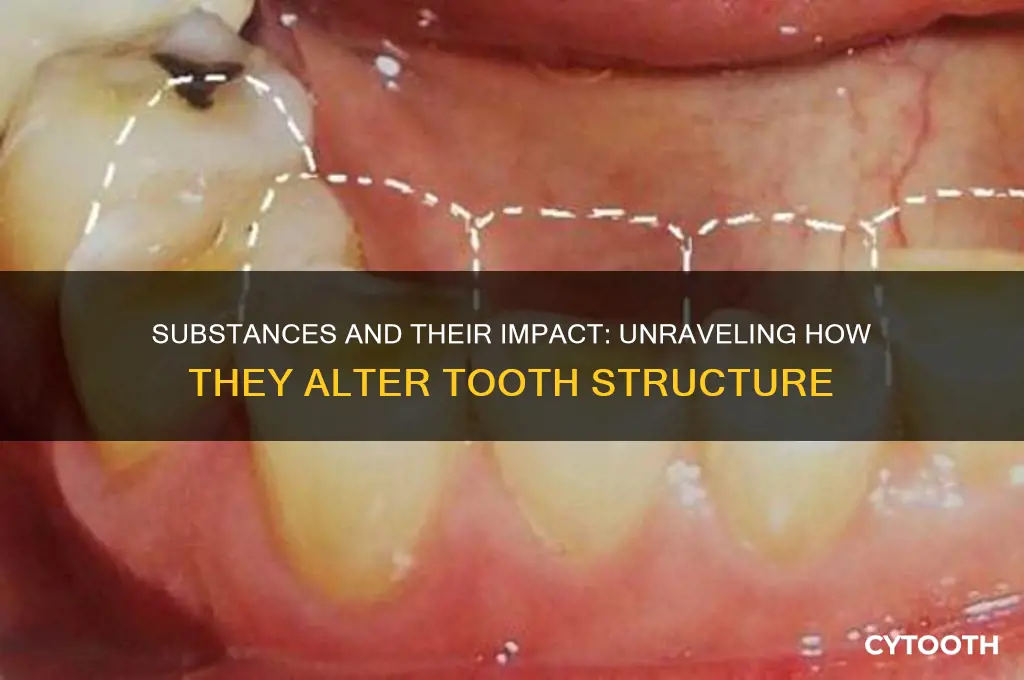
Certain substances can significantly impact the structure of teeth, either by directly damaging the enamel, dentin, or cementum, or by creating an environment conducive to decay and erosion. For instance, acidic foods and beverages, such as citrus fruits, soda, and wine, can erode enamel over time, making teeth more susceptible to sensitivity and cavities. Sugary substances promote the growth of harmful bacteria in the mouth, which produce acids that attack enamel, leading to demineralization and the formation of cavities. Additionally, abrasive substances like hard candies or aggressive brushing can wear down enamel, while staining agents like coffee, tea, and tobacco can alter the tooth’s surface appearance. Understanding how these substances interact with dental tissues is crucial for developing effective preventive measures and maintaining oral health.
What You'll Learn

Enamel erosion by acidic foods/drinks
Acidic foods and drinks, such as citrus fruits, sodas, and vinegar-based dressings, have a pH level below 5.5, which is low enough to soften and dissolve tooth enamel over time. This process, known as demineralization, occurs when the acid in these substances reacts with the calcium and phosphate minerals in enamel, weakening its structure. For instance, frequent consumption of carbonated soft drinks, which have a pH ranging from 2.3 to 3.3, can lead to noticeable enamel erosion within as little as 30 days of consistent exposure. Even seemingly healthy choices like lemon water (pH 2.0–2.6) can be harmful if sipped throughout the day, as prolonged contact with acid increases the risk of damage.
To minimize enamel erosion, it’s essential to limit the frequency and duration of exposure to acidic substances. Instead of sipping acidic drinks over an extended period, consume them quickly and in moderation. For example, drinking a glass of orange juice (pH 3.3–4.2) in one sitting is less harmful than nursing it over an hour. After consumption, rinse your mouth with water to neutralize acids and reduce their contact with teeth. Waiting at least 30 minutes before brushing allows softened enamel to reharden, as immediate brushing can exacerbate wear. Chewing sugar-free gum containing xylitol can also stimulate saliva production, which helps buffer acids and remineralize enamel naturally.
Children and adolescents are particularly vulnerable to enamel erosion due to their developing teeth and higher consumption of sugary and acidic beverages. A study found that 12–14-year-olds who drank soda daily had a 54% higher risk of enamel erosion compared to non-consumers. Parents can protect young teeth by encouraging water as the primary drink, diluting fruit juices with water (1 part juice to 3 parts water), and limiting snacks like gummy candies that prolong acid exposure. For adults, monitoring dietary habits and reading labels to avoid hidden acids (e.g., in sports drinks or salad dressings) is crucial. Regular dental check-ups can detect early signs of erosion, allowing for timely intervention.
Comparing acidic foods and drinks reveals that not all acids are equally harmful. While phosphoric acid in colas (pH 2.3–2.7) and malic acid in apples (pH 2.9–3.3) are both erosive, the frequency and manner of consumption play a larger role. For example, occasional apple consumption is less damaging than daily soda intake due to the latter’s higher acidity and sugar content. Fermented foods like sauerkraut (pH 3.3–3.6) or kombucha (pH 2.5–3.5) pose risks if consumed in excess, but their probiotic benefits may outweigh occasional enamel concerns. Moderation and mindful consumption are key to balancing dietary choices with dental health.
In conclusion, enamel erosion from acidic foods and drinks is a preventable yet widespread issue. By understanding the pH levels of common substances, adjusting consumption habits, and adopting protective measures, individuals can safeguard their tooth structure. Practical steps like rinsing with water, limiting exposure time, and prioritizing water over acidic beverages can significantly reduce the risk. Awareness and proactive care are the most effective tools in preserving enamel and maintaining long-term oral health.
How Braces Gently Pull Teeth Forward: The Orthodontic Process Explained
You may want to see also
Fluoride's role in strengthening tooth enamel
Tooth enamel, the hardest substance in the human body, is constantly under attack from acids produced by bacteria in plaque. These acids erode enamel, leading to cavities and tooth decay. Fluoride, a naturally occurring mineral, plays a pivotal role in combating this process by strengthening enamel and making it more resistant to acid attacks.
Fluoride's mechanism of action is twofold. Firstly, it promotes remineralization, a process where minerals like calcium and phosphate are redeposited into areas of enamel weakened by acid. This effectively repairs microscopic damage before it progresses into a full-fledged cavity. Secondly, fluoride inhibits demineralization by making the enamel more acid-resistant. It does this by incorporating itself into the enamel structure, forming a more stable and acid-resistant compound called fluorapatite.
Practical Application: The most common way to benefit from fluoride is through fluoridated toothpaste. The American Dental Association recommends using a pea-sized amount of fluoride toothpaste twice daily for children and adults. For children under 3, a smear of toothpaste the size of a grain of rice is sufficient. Mouth rinses containing fluoride can also be beneficial, especially for individuals at high risk of cavities. However, these rinses should be used under dentist supervision, as excessive fluoride intake can lead to fluorosis, a cosmetic condition causing white streaks or spots on teeth.
Professional fluoride treatments administered by dentists offer a more concentrated dose of fluoride. These treatments are often recommended for individuals with a history of cavities, dry mouth, or other factors that increase their risk of tooth decay.
It's important to note that fluoride intake should be monitored, especially in children. Excessive fluoride consumption during tooth development can lead to dental fluorosis. This is why it's crucial to supervise young children while brushing and ensure they don't swallow toothpaste.
In conclusion, fluoride is a powerful tool in the fight against tooth decay. By promoting remineralization, inhibiting demineralization, and forming a stronger enamel structure, fluoride helps protect teeth from the damaging effects of acids. Through proper use of fluoridated products and professional treatments, individuals can significantly strengthen their tooth enamel and maintain optimal oral health.
How Do Toothbrush Bristles Stay Secure and Effective Over Time?
You may want to see also
Sugar's impact on tooth decay
Sugar, a ubiquitous ingredient in modern diets, is a primary culprit in the development of tooth decay. When you consume sugary foods or beverages, bacteria in your mouth feast on these sugars, producing acids as a byproduct. These acids attack the enamel, the hard outer layer of your teeth, leading to demineralization—a process where essential minerals like calcium and phosphate are stripped away. Over time, this weakens the enamel, making it more susceptible to cavities. For instance, frequent consumption of sugary snacks or drinks, especially between meals, prolongs the exposure of teeth to these acids, accelerating decay.
Consider this: a single can of soda can contain up to 40 grams of sugar, which is nearly 10 teaspoons. When you sip on such a beverage over an extended period, your teeth are under constant acid attack, leaving little time for saliva to neutralize the pH and remineralize the enamel. Children and adolescents are particularly vulnerable due to their higher consumption of sugary snacks and drinks, coupled with still-developing dental hygiene habits. Practical advice? Limit sugar intake to mealtimes, opt for water or unsweetened beverages, and encourage thorough brushing with fluoride toothpaste twice daily.
The impact of sugar on tooth decay isn’t just about quantity—frequency matters too. Each time you eat or drink something sugary, the acid attack on your teeth can last up to 20 minutes. This means that grazing on sugary snacks throughout the day can create a near-constant acidic environment in your mouth. Chewing sugar-free gum after meals can stimulate saliva production, which helps wash away food particles and neutralize acids. Additionally, incorporating foods rich in calcium and phosphate, such as cheese or nuts, can aid in remineralization and strengthen enamel.
Comparatively, not all sugars are equally harmful. Sucrose, commonly known as table sugar, is the most detrimental to dental health because it’s easily fermentable by oral bacteria. Other sugars, like those found in fruits, come packaged with fiber, which can mitigate their impact by reducing the time sugar lingers in the mouth. However, dried fruits or fruit juices, which concentrate sugars, can be just as harmful as candy. The takeaway? Be mindful of hidden sugars in processed foods and opt for whole, unprocessed alternatives whenever possible.
Finally, while sugar is a major player in tooth decay, it’s not the only factor. Poor oral hygiene, genetic predisposition, and certain medical conditions can exacerbate its effects. Regular dental check-ups are essential for early detection and prevention. For those at high risk, dentists may recommend additional measures like fluoride treatments or dental sealants. By understanding the specific role of sugar and taking proactive steps, you can significantly reduce the risk of tooth decay and maintain a healthier smile.
How Braces Rotate Teeth: Understanding Orthodontic Mechanics and Movement
You may want to see also
Alcohol's effects on oral hydration and health
Alcohol, a ubiquitous substance in social settings, significantly impacts oral hydration and health, often in ways that are overlooked. Its diuretic properties increase urine production, leading to dehydration, which reduces saliva flow—a critical factor in maintaining oral health. Saliva neutralizes acids, remineralizes enamel, and washes away food particles. When alcohol consumption decreases saliva production, the mouth becomes more susceptible to bacterial growth, plaque formation, and ultimately, tooth decay. For instance, a study published in the *Journal of Oral Rehabilitation* found that even moderate alcohol intake (2–3 drinks per day) can reduce salivary flow rate by up to 20%, exacerbating dry mouth symptoms and increasing the risk of cavities.
Consider the practical implications: a night of drinking not only dehydrates the body but also creates an environment where oral bacteria thrive. Alcohol’s acidic nature further compounds the issue, as it can erode tooth enamel over time. For example, dark-colored alcoholic beverages like red wine or whiskey contain chromogens and tannins, which stain teeth and contribute to enamel wear. Even clear spirits, when mixed with sugary sodas or juices, introduce a double threat: alcohol-induced dehydration and sugar-fueled acid attacks on teeth. To mitigate these effects, individuals should alternate alcoholic drinks with water, chew sugar-free gum to stimulate saliva production, and wait at least 30 minutes after drinking before brushing teeth to avoid damaging softened enamel.
From a comparative perspective, alcohol’s impact on oral health is often more insidious than that of other dehydrating substances like caffeine. While both reduce saliva production, alcohol’s acidic content and potential for sugar pairing make it uniquely harmful. For instance, a cup of coffee may dehydrate, but it lacks the enamel-eroding acids and sugar found in a rum and coke. Additionally, alcohol’s systemic effects—such as impairing liver function, which indirectly affects nutrient absorption—can weaken overall oral health by compromising the body’s ability to repair tissues. This highlights the need for targeted oral care strategies for alcohol consumers, such as using fluoride mouthwash to strengthen enamel and scheduling regular dental check-ups to monitor for early signs of decay.
Persuasively, it’s clear that reducing alcohol intake is one of the most effective ways to protect oral hydration and health. For those unwilling or unable to abstain, moderation is key. Limiting consumption to recommended guidelines—up to 1 drink per day for women and 2 for men—can minimize risks. Pairing alcohol with water-rich foods like cucumbers or watermelon can also help counteract dehydration. However, the most impactful step is awareness: recognizing that alcohol’s effects extend beyond hangovers to long-term oral health issues. By adopting proactive habits, individuals can enjoy social drinking while safeguarding their teeth and gums from its detrimental effects.
Understanding Cavity Formation: How Decay Eats Away at Your Teeth
You may want to see also
Tobacco's staining and structural damage to teeth
Tobacco use leaves an indelible mark on teeth, both aesthetically and structurally. The nicotine and tar in cigarettes, cigars, and smokeless tobacco products are notorious for causing deep, persistent staining. Unlike surface-level discoloration from coffee or tea, tobacco stains penetrate the enamel, embedding into the microscopic pores of the tooth structure. This results in a yellow or brown hue that resists conventional whitening methods, often requiring professional intervention like laser treatments or micro-abrasion. The longer the duration of tobacco use, the more pronounced and challenging these stains become to remove.
Beyond staining, tobacco wreaks havoc on the structural integrity of teeth. Smoking reduces blood flow to the gums, impairing nutrient delivery and waste removal. This compromises the body’s ability to repair and maintain oral tissues, leading to weakened enamel and increased susceptibility to decay. Smokeless tobacco, such as chewing tobacco or snuff, introduces additional risks. The direct contact of these products with the teeth and gums exposes them to high levels of sugar and irritants, accelerating enamel erosion and gum recession. Studies show that regular users of smokeless tobacco are 50% more likely to develop cavities in their molars and incisors compared to non-users.
The structural damage from tobacco extends to the periodontal system, which supports the teeth. Smoking is a leading cause of gum disease, with smokers being four times more likely to develop advanced periodontitis than non-smokers. This condition destroys the gum tissue and bone that hold teeth in place, leading to tooth mobility and eventual loss. Even secondhand smoke exposure can exacerbate these effects, particularly in children and adolescents, whose developing oral structures are more vulnerable to damage. For instance, a study published in the *Journal of Clinical Periodontology* found that teens exposed to secondhand smoke had a 2.5 times higher risk of early-stage gum disease.
Practical steps can mitigate tobacco’s impact on teeth, though prevention is paramount. For current users, reducing consumption and adopting a rigorous oral hygiene routine—including twice-daily brushing with a fluoride toothpaste, daily flossing, and regular dental check-ups—can slow progression of damage. Professional cleanings every six months are essential to remove tartar buildup and assess for early signs of decay or gum disease. For those seeking to quit, nicotine replacement therapies or prescription medications like varenicline can ease withdrawal symptoms, while behavioral support groups provide accountability. Combining these approaches increases the likelihood of success, preserving not only oral health but overall well-being.
Bear Head Tooth Mushroom Hibernation: Survival Secrets of Hericium Americanum
You may want to see also
Frequently asked questions
Sugar interacts with bacteria in the mouth to produce acids that erode tooth enamel, leading to cavities and tooth decay over time.
Yes, acidic substances like citrus fruits, soda, and vinegar can weaken and dissolve tooth enamel, making teeth more susceptible to sensitivity and decay.
Tobacco use, whether smoked or chewed, stains teeth, weakens enamel, and increases the risk of gum disease, tooth loss, and oral cancer.