Ethan Brooks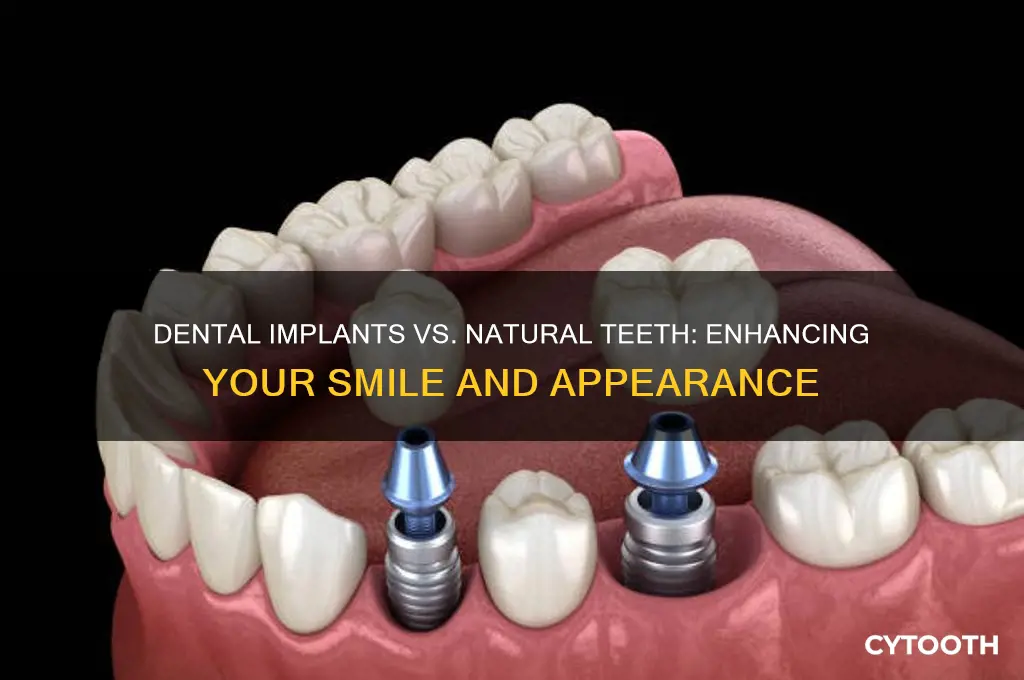
Dental implants have revolutionized the way we approach tooth replacement, offering a solution that not only restores functionality but also significantly enhances natural appearance. Unlike traditional dentures or bridges, dental implants are designed to mimic the structure of a natural tooth, from the root to the crown. This ensures a seamless integration with the surrounding teeth, maintaining the natural contour of the smile and preventing the facial sagging often associated with tooth loss. By preserving the jawbone and supporting facial tissues, implants help retain the natural shape of the face, contributing to a more youthful and harmonious appearance. Furthermore, the customizability of implant crowns in terms of color, shape, and size allows for a perfect match with existing teeth, making them virtually indistinguishable from natural teeth and boosting overall aesthetic confidence.
| Characteristics | Values |
|---|---|
| Natural Appearance | Dental implants mimic the look of natural teeth, blending seamlessly with existing teeth. |
| Tooth Shape and Size | Customizable to match the shape, size, and color of adjacent natural teeth. |
| Gum Integration | Implants integrate with the gum line, providing a natural contour and preventing gaps. |
| Smile Enhancement | Restores a complete and symmetrical smile, improving overall facial aesthetics. |
| Prevention of Facial Sagging | Supports facial structure by preventing bone loss, maintaining natural facial contours. |
| Tooth Alignment | Does not affect the alignment of natural teeth; acts as a standalone replacement. |
| Color Matching | Porcelain crowns are matched to the shade of natural teeth for a cohesive appearance. |
| Long-Term Stability | Maintains appearance over time, unlike dentures or bridges that may wear or shift. |
| Speech Improvement | Restores natural speech patterns, unlike missing teeth or ill-fitting dentures. |
| Confidence Boost | Enhances self-esteem by providing a natural, permanent solution to tooth loss. |
| Bone Preservation | Stimulates jawbone growth, preventing the sunken appearance caused by bone loss. |
| Durability | Designed to last decades with proper care, maintaining a consistent natural look. |
| Minimal Impact on Adjacent Teeth | Unlike bridges, implants do not require altering adjacent natural teeth. |
| Customizability | Tailored to individual oral anatomy for a personalized, natural appearance. |
| Hygiene and Maintenance | Requires the same care as natural teeth, ensuring a healthy and natural look. |
What You'll Learn

Implant Shape & Size Matching
Dental implants are not one-size-fits-all solutions. The shape and size of the implant must harmonize with your natural teeth to achieve a seamless, aesthetically pleasing result. This precision is crucial because even a slight mismatch can disrupt the balance of your smile, drawing unwanted attention to the replacement tooth.
Consider the anatomical variations in tooth morphology. Anterior teeth, such as incisors and canines, are typically wider mesiodistally (front to back) and thinner buccolingually (cheek to tongue side) compared to posterior teeth like molars, which are broader and flatter to accommodate chewing forces. A skilled prosthodontist will select an implant with a diameter and contour that mimics these natural dimensions. For instance, a 4.1 mm diameter implant might suit a narrow central incisor, while a 5.0 mm or larger implant could be appropriate for a broader molar.
Material selection also plays a role in shape and size matching. Zirconia implants, known for their tooth-like color and biocompatibility, are often preferred in the anterior region to avoid the grayish shadow that can sometimes show through thin gum tissue with titanium implants. However, titanium remains the gold standard for posterior implants due to its strength and durability under heavy occlusal loads.
Post-extraction planning is critical for optimal shape and size matching. Immediate implant placement, when feasible, preserves the natural alveolar ridge contour, allowing for better integration with adjacent teeth. In cases of delayed placement, bone grafting may be necessary to recreate the original tooth socket dimensions. Digital smile design (DSD) technology further enhances precision by allowing the dentist to simulate the final restoration before surgery, ensuring the implant’s shape and size align with the patient’s facial aesthetics and existing dentition.
Finally, the emergence profile—the way the implant crown meets the gumline—must mirror the natural tooth it replaces. A poorly designed emergence profile can create a “black triangle” gap between teeth or cause the gums to recede unevenly. Customized abutments and meticulous soft tissue management are essential to achieving this natural transition. Regular follow-ups and adjustments ensure long-term stability and aesthetic harmony.
In summary, implant shape and size matching is a multifaceted process requiring careful consideration of tooth morphology, material properties, surgical timing, and digital planning. When executed correctly, it ensures the implant blends indistinguishably with your natural teeth, preserving the integrity of your smile.
How Do Toothbrush Bristles Stay Secure and Effective Over Time?
You may want to see also
Gum Tissue Integration
Dental implants are designed to mimic natural teeth, but their success in enhancing appearance hinges significantly on gum tissue integration. Unlike natural teeth, which have a biological connection to the gums, implants rely on a mechanical bond. This integration is crucial because it determines how well the implant blends with the surrounding gum line, influencing the overall aesthetic outcome. Poor integration can lead to visible gaps, uneven gum contours, or a "black triangle" effect, where spaces between the implant and adjacent teeth become noticeable.
Achieving optimal gum tissue integration requires precise surgical placement and post-operative care. During the implant procedure, the dentist must ensure the implant is positioned at the correct depth and angle to allow gum tissue to heal naturally around it. This involves careful flap management and the use of biocompatible materials to minimize tissue trauma. For instance, using a connective tissue graft can enhance gum volume and stability around the implant, particularly in cases where bone or gum recession is present.
Post-surgery, patients play a critical role in promoting healthy gum integration. Maintaining impeccable oral hygiene is non-negotiable. This includes gentle brushing with a soft-bristled toothbrush, flossing daily with unwaxed floss or implant-specific tools, and using antimicrobial mouthwash to reduce bacterial buildup. Avoiding smoking is equally vital, as it impairs blood flow to the gums and delays healing. Patients should also follow their dentist’s instructions regarding follow-up appointments, as these allow for monitoring of tissue healing and early intervention if issues arise.
The aesthetic success of a dental implant is not solely about the implant itself but how it interacts with the surrounding gum tissue. A well-integrated implant should appear seamless, with gum contours that mirror those of natural teeth. This requires a collaborative effort between the dentist’s surgical precision and the patient’s commitment to care. When done correctly, gum tissue integration ensures the implant not only functions like a natural tooth but also looks indistinguishable from one, preserving the harmony of the smile.
How Braces Rotate Teeth: Understanding Orthodontic Mechanics and Movement
You may want to see also
Color Harmony with Natural Teeth
Dental implants are designed to mimic the look and function of natural teeth, but achieving seamless color harmony is a nuanced art. The human eye is remarkably adept at detecting even subtle discrepancies in tooth shade, making color matching a critical factor in the success of dental implants. Unlike natural teeth, which can vary in color due to factors like diet, age, and genetics, implants require a precise match to blend in effortlessly. This involves a detailed assessment of the surrounding teeth’s hue, chroma (saturation), and value (lightness or darkness), often using shade guides and digital tools for accuracy.
To ensure color harmony, dentists typically begin by evaluating the patient’s existing dentition under natural light, as artificial lighting can distort shades. The goal is to replicate not just the color but also the translucency and texture of adjacent teeth. Modern advancements, such as ceramic layering techniques and custom staining, allow for intricate customization. For instance, zirconia implants can be adjusted to match the subtle gradients of natural enamel, ensuring the restoration appears lifelike. Patients should communicate their expectations clearly, as personal preferences for brightness or whiteness can influence the final result.
One common challenge is matching implants to teeth that have undergone discoloration over time. In such cases, dentists may recommend whitening the natural teeth before the implant procedure to achieve a uniform shade. Alternatively, if the patient prefers not to whiten, the implant can be crafted to match the existing, darker tone. It’s essential to consider long-term color stability, as materials like porcelain and zirconia resist staining better than natural teeth. Regular maintenance, including professional cleanings and avoiding stain-causing foods, helps preserve the harmony between implants and natural teeth.
For patients seeking a more predictable outcome, digital smile design can be a game-changer. This technology uses 3D imaging to simulate the appearance of the implant alongside natural teeth, allowing for adjustments before the final restoration is created. While this approach adds an extra step, it significantly reduces the risk of color mismatches. Additionally, patients should be aware that factors like gum health and tissue color can influence the perceived shade of an implant, making holistic oral care crucial for optimal aesthetics.
In conclusion, achieving color harmony with dental implants requires a blend of technical precision and artistic insight. By leveraging advanced materials, meticulous shade matching, and patient-centered planning, dentists can create restorations that are virtually indistinguishable from natural teeth. For those considering implants, understanding these nuances ensures a result that enhances both appearance and confidence.
Understanding Dead Teeth: Causes, Symptoms, and Treatment Options Explained
You may want to see also
Facial Structure Preservation
Dental implants are not just a solution for missing teeth; they play a crucial role in maintaining the integrity of your facial structure. When a tooth is lost, the underlying jawbone begins to deteriorate due to lack of stimulation, a process known as resorption. This bone loss can lead to a sunken appearance in the face, particularly around the cheeks and lips, making individuals look older than they are. Dental implants, however, act as artificial tooth roots, providing the necessary stimulation to preserve jawbone density and prevent facial collapse.
Consider the anatomical changes that occur without intervention. Within the first year of tooth loss, the jawbone can lose up to 25% of its volume in the affected area. Over time, this can alter the lower third of the face, causing the chin to appear more prominent and the lips to lose support, resulting in a downturned expression. Dental implants halt this process by integrating with the jawbone, mimicking the function of natural tooth roots. For optimal results, implants should be placed as soon as possible after tooth extraction, ideally within 3–6 months, to minimize bone loss and maintain facial contours.
From a comparative perspective, traditional tooth replacement options like dentures or bridges fail to address bone resorption. Dentures, for instance, rest on the gums and do nothing to stimulate the jawbone, leading to gradual facial sagging. Bridges, while fixed, rely on adjacent teeth for support and do not replace the missing tooth root. Dental implants, on the other hand, are a standalone solution that preserves both function and aesthetics. Studies show that patients with implants experience significantly less facial height reduction compared to those with conventional prosthetics, particularly in the posterior regions where bone loss is most pronounced.
To maximize facial structure preservation, a multidisciplinary approach is often recommended. This may involve collaboration between a prosthodontist, oral surgeon, and periodontist to assess bone quality, plan implant placement, and ensure proper restoration. Advanced techniques such as bone grafting or sinus lifts can be employed to rebuild lost bone structure before implant placement, particularly in cases of severe resorption. Post-implant care, including regular dental check-ups and good oral hygiene, is essential to prevent complications like peri-implantitis, which can compromise both the implant and surrounding bone.
In conclusion, dental implants are a cornerstone of facial structure preservation, offering a long-term solution to the aesthetic and functional challenges posed by tooth loss. By mimicking natural tooth roots, they prevent bone resorption, maintain facial contours, and support soft tissues like lips and cheeks. For individuals concerned about aging gracefully, implants provide a proactive measure to retain a youthful appearance. Consulting with a dental professional early in the tooth loss process can help tailor a treatment plan that prioritizes both oral health and facial harmony.
Substances and Their Impact: Unraveling How They Alter Tooth Structure
You may want to see also
Smile Line Alignment
Dental implants are not just about replacing missing teeth; they play a crucial role in maintaining the natural alignment of your smile line. The smile line refers to the curve formed by the edges of your upper teeth when you smile. This curve is unique to each individual and is influenced by factors such as tooth shape, gum health, and jaw structure. When a tooth is lost, the surrounding teeth can shift, causing the smile line to become uneven. Dental implants, by filling the gap and providing a stable foundation, help preserve this natural alignment, ensuring your smile remains harmonious and aesthetically pleasing.
One of the key benefits of dental implants is their ability to mimic the function and appearance of natural teeth. Unlike traditional dentures or bridges, implants are anchored directly into the jawbone, which prevents bone loss and maintains the integrity of the facial structure. This is particularly important for smile line alignment, as bone loss can lead to a sunken appearance around the mouth, altering the natural curve of the smile. By preserving bone density, implants ensure that the smile line remains consistent, contributing to a more youthful and natural look.
Achieving optimal smile line alignment with dental implants requires careful planning and collaboration between the patient and the dental team. The process begins with a comprehensive assessment, including 3D imaging, to determine the ideal position of the implant. Factors such as lip movement, gum contour, and adjacent teeth are considered to ensure the implant complements the natural smile line. For instance, the height and angle of the implant crown are meticulously adjusted to match the curve of the existing teeth, creating a seamless integration.
Patients considering dental implants should be aware of the importance of post-procedure care in maintaining smile line alignment. Proper oral hygiene, including regular brushing, flossing, and check-ups, is essential to prevent gum disease, which can affect the stability of the implant and the surrounding teeth. Additionally, avoiding habits like teeth grinding or chewing hard objects can help preserve the alignment of the smile line. For those with a history of bruxism, a night guard may be recommended to protect the implants and natural teeth alike.
In conclusion, dental implants offer a reliable solution for maintaining smile line alignment by addressing both functional and aesthetic concerns. Their ability to prevent bone loss, mimic natural teeth, and integrate seamlessly into the existing dental structure makes them a superior choice for those looking to preserve their smile’s natural curve. With proper planning and care, implants can provide long-lasting results, ensuring your smile remains as aligned and beautiful as ever.
Understanding Cavity Formation: How Decay Eats Away at Your Teeth
You may want to see also
Frequently asked questions
Dental implants are designed to mimic the look of natural teeth closely. The crown, which is the visible part of the implant, is custom-made to match the color, shape, and size of your surrounding teeth, ensuring a seamless and natural appearance.
Yes, dental implants can significantly enhance your smile by filling gaps left by missing teeth. They restore the natural contour of your face and prevent the sunken appearance often associated with tooth loss, resulting in a more youthful and complete smile.
Dental implants do not alter the alignment of your natural teeth. In fact, they help maintain proper tooth spacing and prevent adjacent teeth from shifting into the gap, preserving the overall harmony of your smile.
Yes, modern dental implants are crafted from high-quality materials like porcelain or ceramic, which closely resemble the translucency and texture of natural tooth enamel. When properly placed and matched, they are virtually indistinguishable from real teeth.
Dental implants can help restore facial structure by supporting the jawbone and preventing bone loss, which often occurs with missing teeth. This can maintain or improve the natural shape of your face and jawline, contributing to a more natural appearance.