Olivia Bennett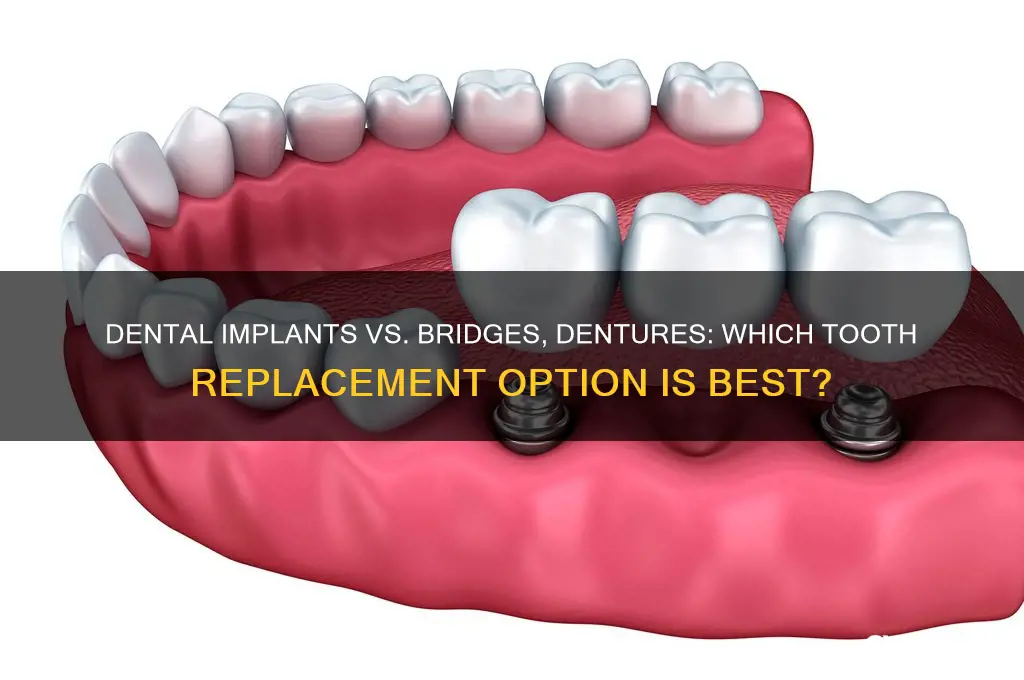
Dental implants stand out as a highly effective and durable solution for replacing missing teeth, offering distinct advantages over other options like dentures and dental bridges. Unlike dentures, which are removable and can sometimes feel unstable, implants are surgically anchored into the jawbone, providing a permanent and secure foundation that mimics the strength and functionality of natural teeth. Compared to dental bridges, which rely on adjacent teeth for support and may require altering healthy teeth, implants preserve the integrity of surrounding teeth and promote jawbone health by stimulating natural bone growth. Additionally, implants offer a more natural appearance and feel, allowing for better chewing efficiency and long-term oral health, making them a preferred choice for many patients seeking a reliable and aesthetically pleasing tooth replacement solution.
| Characteristics | Values |
|---|---|
| Longevity | Dental Implants: Can last a lifetime with proper care. Dental Bridges: 5-15 years. Dentures: 5-10 years, require replacement or relining. |
| Bone Preservation | Dental Implants: Stimulate jawbone growth, preventing bone loss. Dental Bridges: Do not prevent bone loss. Dentures: Accelerate bone loss due to pressure on the gums. |
| Functionality | Dental Implants: Closest to natural teeth in terms of chewing and biting. Dental Bridges: Good functionality but depends on adjacent teeth. Dentures: Less stable, may affect chewing efficiency. |
| Aesthetics | Dental Implants: Look and feel like natural teeth. Dental Bridges: Natural appearance but may require altering adjacent teeth. Dentures: Appearance varies; may look less natural. |
| Maintenance | Dental Implants: Regular brushing and flossing, similar to natural teeth. Dental Bridges: Requires special flossing tools. Dentures: Daily removal, cleaning, and soaking. |
| Cost | Dental Implants: Highest initial cost ($3,000-$4,500 per tooth). Dental Bridges: Moderate cost ($1,500-$3,000 per bridge). Dentures: Lowest initial cost ($300-$5,000 per arch). |
| Invasiveness | Dental Implants: Surgical procedure required. Dental Bridges: Minimal invasiveness, but adjacent teeth are altered. Dentures: Non-invasive, no surgery needed. |
| Stability | Dental Implants: Highly stable, fixed in place. Dental Bridges: Stable but dependent on supporting teeth. Dentures: Least stable, may slip or move. |
| Impact on Adjacent Teeth | Dental Implants: No impact on neighboring teeth. Dental Bridges: Requires altering adjacent teeth for support. Dentures: No impact on adjacent teeth. |
| Comfort | Dental Implants: Most comfortable, feels like natural teeth. Dental Bridges: Comfortable but may cause sensitivity. Dentures: Can cause discomfort, irritation, or sore spots. |
| Speech Impact | Dental Implants: No impact on speech. Dental Bridges: Minimal impact. Dentures: May cause initial speech difficulties until adjusted. |
| Success Rate | Dental Implants: 95-98% success rate. Dental Bridges: 90-95% success rate. Dentures: High success rate but depends on fit and maintenance. |
| Time for Completion | Dental Implants: 3-6 months (including healing time). Dental Bridges: 2-3 weeks. Dentures: 4-8 weeks. |
| Suitability for Multiple Missing Teeth | Dental Implants: Can replace single or multiple teeth (implant-supported bridges/dentures). Dental Bridges: Suitable for multiple adjacent missing teeth. Dentures: Best for full arch replacement. |
| Removability | Dental Implants: Non-removable. Dental Bridges: Non-removable. Dentures: Removable by the patient. |
What You'll Learn
- Cost Comparison: Implants vs. bridges, dentures; long-term investment vs. initial affordability
- Durability: Implants last decades; bridges, dentures need replacement sooner
- Aesthetics: Implants mimic natural teeth; dentures, bridges may look artificial
- Functionality: Implants restore full chewing power; dentures, bridges have limitations
- Bone Health: Implants prevent bone loss; dentures, bridges do not stimulate bone

Cost Comparison: Implants vs. bridges, dentures; long-term investment vs. initial affordability
Dental implants, bridges, and dentures each come with distinct cost structures that reflect their longevity, functionality, and maintenance requirements. Initially, dentures often appear as the most affordable option, with prices ranging from $300 to $5,000 per plate, depending on materials and customization. Bridges, which replace one or more missing teeth by anchoring to adjacent teeth, typically cost between $1,500 and $4,500 per tooth. Dental implants, however, are the most expensive upfront, with costs ranging from $3,000 to $6,000 per tooth, including the implant, abutment, and crown. This immediate price difference often steers patients toward dentures or bridges, but the long-term financial implications tell a different story.
While dentures and bridges may seem budget-friendly initially, their shorter lifespan and maintenance needs can lead to recurring expenses. Dentures, for instance, require replacement every 5–10 years due to wear and changes in jawbone structure, and they often necessitate adhesives or relining for comfort. Bridges, though more durable, typically last 10–15 years but can compromise the health of adjacent teeth, potentially leading to additional dental work. In contrast, dental implants are designed to last a lifetime with proper care, making them a one-time investment for many patients. This longevity eliminates the need for frequent replacements, reducing overall costs over time.
From a long-term investment perspective, dental implants offer unparalleled value despite their higher initial cost. They preserve jawbone health by stimulating bone growth, preventing the facial collapse often associated with dentures. This not only maintains oral health but also avoids the need for bone grafts or other corrective procedures later on. Additionally, implants function like natural teeth, allowing patients to eat, speak, and smile with confidence—a benefit that bridges and dentures, with their limitations in stability and comfort, cannot fully match.
For those weighing initial affordability, bridges and dentures remain viable short-term solutions, particularly for patients with budget constraints or immediate needs. However, it’s crucial to factor in hidden costs, such as denture adhesives, cleaning solutions, and bridge repairs, which can add up over the years. Patients should also consider their lifestyle and oral health goals. For example, younger patients or those with active lifestyles may find implants more practical due to their durability and low maintenance, while older adults might prioritize the lower upfront cost of dentures.
In conclusion, the cost comparison between implants, bridges, and dentures hinges on balancing initial affordability with long-term value. While dentures and bridges offer immediate financial relief, implants provide a cost-effective solution over time, thanks to their durability and health benefits. Patients should consult with their dentist to evaluate their specific needs, budget, and long-term oral health goals before making a decision. Practical tips include exploring insurance coverage, payment plans, or dental savings plans to make implants more accessible, as well as considering partial solutions like implant-supported bridges or dentures for a middle-ground option.
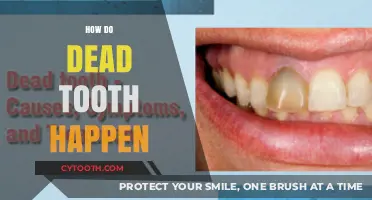
Substances and Their Impact: Unraveling How They Alter Tooth Structure
You may want to see also
Durability: Implants last decades; bridges, dentures need replacement sooner
Dental implants stand out in the realm of tooth replacement due to their exceptional longevity. Crafted from biocompatible titanium, they fuse with the jawbone through a process called osseointegration, creating a stable foundation that mimics natural teeth. This integration ensures implants can last 20 years or more with proper care, often outliving the patient’s lifespan. In contrast, traditional bridges and dentures face inherent limitations. Bridges, which rely on adjacent teeth for support, typically last 5 to 15 years before requiring replacement due to wear, decay, or shifting of supporting teeth. Dentures, being removable prosthetics, endure even less, with an average lifespan of 5 to 10 years before warping, cracking, or needing adjustment due to bone resorption.
Consider the maintenance implications of these durability differences. Implants demand no more than regular brushing, flossing, and dental check-ups—similar to natural teeth. Bridges, however, require meticulous care to prevent decay around the supporting crowns, while dentures necessitate daily cleaning, soaking, and adhesive use, alongside periodic relining to accommodate bone changes. Over time, the cumulative cost and effort of replacing bridges or dentures every decade can surpass the initial investment in implants, which, despite higher upfront costs, offer long-term savings and convenience.
For patients weighing their options, age and oral health play pivotal roles. Younger individuals or those with good bone density are ideal candidates for implants, as their durability aligns with long-term needs. Older adults or those with compromised oral health might opt for bridges or dentures due to shorter treatment timelines or cost considerations, but they should factor in the inevitability of replacements. For instance, a 40-year-old with a missing molar could choose an implant, expecting it to last well into their 70s, whereas a 70-year-old might prioritize the immediate functionality of dentures, accepting the need for future adjustments.
Practical tips can further enhance the durability of each option. Implant recipients should avoid habits like teeth grinding, which can strain the implant, and maintain regular dental visits to monitor gum health. Bridge users should invest in interdental brushes to clean hard-to-reach areas around the pontic (false tooth), while denture wearers should handle their prosthetics carefully to avoid breakage and use soft-bristled brushes to prevent scratching. Ultimately, while bridges and dentures serve as viable short-term solutions, implants offer unparalleled durability, making them the gold standard for those seeking a permanent, low-maintenance tooth replacement.
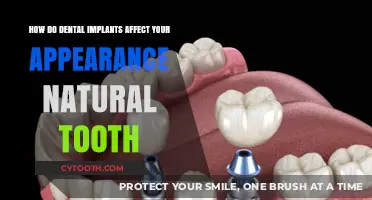
Dental Implants vs. Natural Teeth: Enhancing Your Smile and Appearance
You may want to see also
Aesthetics: Implants mimic natural teeth; dentures, bridges may look artificial
Dental implants stand out in the realm of tooth replacement due to their unparalleled ability to mimic the appearance of natural teeth. Crafted from biocompatible materials like titanium and ceramic, implants are designed to blend seamlessly with existing teeth in terms of shape, color, and texture. Unlike dentures or bridges, which often have telltale signs of artificiality—such as visible metal clasps or uneven gum lines—implants are custom-made to match the patient’s unique dental anatomy. This precision ensures that the replacement tooth looks indistinguishable from its natural counterparts, even upon close inspection. For individuals prioritizing aesthetics, this natural appearance is a decisive factor in choosing implants over other options.
Consider the case of a 45-year-old professional whose front tooth was lost due to an accident. A dental implant, with its custom-shaded crown, restored not only the function but also the natural contour of their smile. In contrast, a bridge might have required altering adjacent healthy teeth, and dentures could have introduced bulkiness or an unnatural fit. The implant’s ability to integrate with the jawbone also ensures that the gum line remains stable and natural-looking, avoiding the receded or uneven appearance sometimes associated with long-term denture use. This example underscores how implants address both the cosmetic and structural aspects of tooth loss.
While dentures and bridges have improved in aesthetics over the years, they still fall short in replicating the subtleties of natural teeth. Dentures, for instance, often lack the translucency and light-reflecting properties of real enamel, making them appear flat or overly uniform. Bridges, though fixed, may not align perfectly with the curvature of the smile or the natural bite, leading to an artificial look. Implants, however, are anchored directly into the jawbone, allowing for a dynamic interaction with light and movement that mirrors natural teeth. This level of detail is particularly crucial in the "aesthetic zone," such as the front teeth, where even minor discrepancies can be noticeable.
For those considering tooth replacement, a practical tip is to request a digital smile preview or a temporary prosthetic to visualize the potential outcome. Dentists can use advanced imaging tools to simulate how implants, dentures, or bridges will look in your mouth, helping you make an informed decision. Additionally, maintaining good oral hygiene and regular check-ups can prolong the lifelike appearance of implants, ensuring they remain a natural part of your smile for decades. While the initial cost of implants may be higher, their aesthetic superiority and long-term benefits often justify the investment for those seeking a flawless, natural-looking solution.
How Do Toothbrush Bristles Stay Secure and Effective Over Time?
You may want to see also
Functionality: Implants restore full chewing power; dentures, bridges have limitations
Dental implants stand out as the only tooth replacement option that restores nearly 100% of natural chewing power. This is because implants are anchored directly into the jawbone, mimicking the root structure of a natural tooth. Unlike dentures or bridges, which rely on adhesives or adjacent teeth for support, implants provide a stable foundation that allows for efficient biting and grinding. For individuals who enjoy a varied diet, including tough meats, crunchy vegetables, or sticky foods, implants offer unparalleled functionality. This level of performance is particularly beneficial for older adults, who may experience diminished chewing ability due to tooth loss but still require proper nutrition for overall health.
Consider the limitations of dentures and bridges in comparison. Dentures, whether partial or full, often slip or shift during eating, reducing chewing efficiency by up to 50%. This instability can lead to discomfort, difficulty eating certain foods, and even social embarrassment. Bridges, while more secure than dentures, rely on neighboring teeth for support, which can weaken those teeth over time. Additionally, bridges do not stimulate the jawbone, leading to gradual bone loss beneath the missing tooth. Implants, on the other hand, integrate with the jawbone through a process called osseointegration, preserving bone density and maintaining facial structure.
For those weighing their options, it’s instructive to examine real-world scenarios. A patient with a missing molar might opt for a bridge, only to find that chewing on that side remains uncomfortable. In contrast, an implant in the same position would allow them to bite down with confidence, as the implant distributes force evenly, just like a natural tooth. Similarly, denture wearers often report avoiding social gatherings involving food due to fear of slippage or difficulty chewing. Implants eliminate these concerns, enabling a return to a normal, unrestricted diet.
A practical tip for maximizing implant functionality is to maintain diligent oral hygiene. While implants themselves are not susceptible to decay, the surrounding gums and bone require care to prevent peri-implantitis, an inflammatory condition that can compromise implant stability. Regular brushing, flossing, and professional check-ups are essential. For denture or bridge wearers considering a switch, consulting a prosthodontist or oral surgeon can provide a clear roadmap for transitioning to implants, including bone grafting if necessary to ensure a successful outcome.
In conclusion, the functional superiority of dental implants lies in their ability to replicate the natural tooth structure, offering unmatched chewing power and stability. While dentures and bridges serve as viable alternatives, their limitations in bite force and long-term bone health make implants the gold standard for those seeking a permanent, high-functioning solution. For anyone prioritizing a return to normal eating habits and overall oral health, implants are a worthwhile investment.
Understanding Cavity Formation: How Decay Eats Away at Your Teeth
You may want to see also
Bone Health: Implants prevent bone loss; dentures, bridges do not stimulate bone
Dental implants stand apart from other tooth replacement options because they actively prevent bone loss, a critical factor in long-term oral health. When a tooth is lost, the jawbone beneath it begins to deteriorate due to lack of stimulation. This process, known as resorption, can lead to a weakened jaw structure, facial sagging, and even further tooth loss. Implants, however, act as artificial tooth roots, integrating with the jawbone through a process called osseointegration. This stimulation mimics the natural interaction between a tooth root and the bone, halting resorption and preserving bone density.
Dentures and bridges, while effective at restoring function and aesthetics, do nothing to address bone loss. They sit on top of the gums, providing no stimulation to the underlying bone. Over time, this lack of stimulation accelerates bone resorption, leading to a condition known as "denture face," characterized by a sunken appearance around the mouth and jaw. This not only affects appearance but can also compromise the fit and stability of dentures, requiring frequent adjustments or replacements.
Consider a 45-year-old patient who loses a molar. Opting for a dental implant would involve a surgical procedure where a titanium post is inserted into the jawbone. Over 3-6 months, the bone fuses with the implant, creating a stable foundation for a crown. In contrast, a bridge would involve grinding down adjacent teeth to support a prosthetic, while dentures would simply rest on the gums. While both bridges and dentures restore chewing function and aesthetics, only the implant prevents the jawbone from shrinking, ensuring long-term oral health and facial structure integrity.
For those concerned about bone health, dental implants are the gold standard. They require adequate bone density for placement, so early intervention is key. Patients with significant bone loss may need a bone graft before implant surgery, a procedure that adds bone material to the jaw to support the implant. While this adds time and cost, it’s a worthwhile investment in preserving oral health. Dentures and bridges, on the other hand, offer no such preventive benefits and may exacerbate bone loss over time.
In summary, while dentures and bridges are viable short-term solutions, dental implants are the only option that actively preserves bone health. By stimulating the jawbone like a natural tooth root, implants prevent resorption, maintain facial structure, and provide a long-lasting solution. For anyone prioritizing bone health and long-term oral stability, implants are the clear choice, despite their higher initial cost and longer treatment timeline.
How Braces Rotate Teeth: Understanding Orthodontic Mechanics and Movement
You may want to see also
Frequently asked questions
Dental implants are more comfortable and functional than dentures because they are anchored directly into the jawbone, providing a stable and natural feel. Dentures, being removable, can slip or cause discomfort, especially during eating or speaking.
Yes, dental implants are generally more durable than dental bridges. Implants are made of titanium and integrate with the jawbone, offering long-term stability. Bridges rely on adjacent teeth for support, which can weaken those teeth over time.
Dental implants promote better oral health by preserving the jawbone and preventing bone loss, unlike dentures or bridges. They also do not require altering adjacent teeth, which helps maintain overall dental integrity.
Initially, dental implants are more expensive than dentures or bridges. However, they are a long-term investment, often lasting a lifetime with proper care, whereas dentures and bridges may need frequent replacements or repairs.
Dental implants look and feel the most natural compared to dentures or bridges. They are custom-made to match the color, shape, and size of your natural teeth, providing a seamless and aesthetically pleasing result.