Hailey Morgan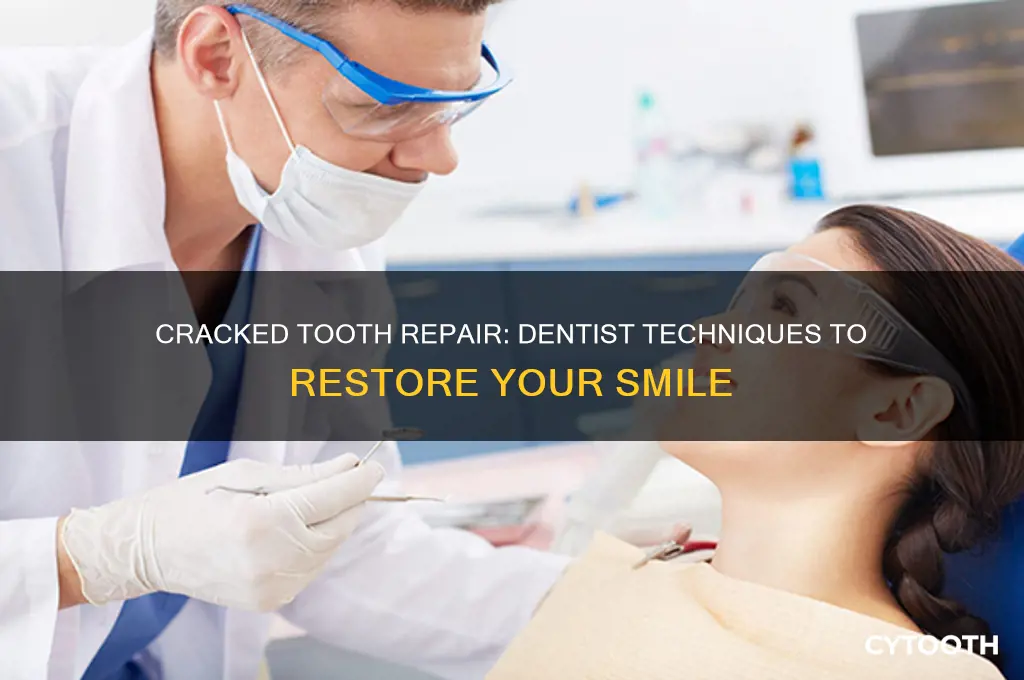
Dentists employ various methods to repair a cracked tooth, depending on the severity and location of the damage. For minor cracks, a simple bonding procedure using tooth-colored resin can restore the tooth’s appearance and function. More extensive cracks may require a dental crown to protect and strengthen the tooth, while deep cracks extending into the pulp may necessitate a root canal treatment followed by a crown. In severe cases where the crack compromises the tooth’s structural integrity, extraction might be the only option. Early diagnosis and treatment are crucial to prevent further damage and preserve the tooth.
| Characteristics | Values |
|---|---|
| Diagnosis | Dentist examines the tooth, takes X-rays, and assesses the crack's severity. |
| Treatment Options | Depends on crack severity: bonding, crowns, root canals, or extraction. |
| Dental Bonding | For minor cracks: resin is applied and hardened with UV light. |
| Dental Crowns | For moderate to severe cracks: custom crown covers and protects the tooth. |
| Root Canal Therapy | If the crack affects the pulp: removes infected tissue and seals the tooth. |
| Extraction | For severely cracked teeth that cannot be saved. |
| Post-Treatment Care | Avoid hard foods, maintain oral hygiene, and attend follow-up appointments. |
| Cost | Varies by treatment: bonding ($100–$400), crowns ($800–$1,500), root canal ($700–$1,500). |
| Duration of Treatment | Bonding (30–60 minutes), crowns (2–3 visits), root canal (1–2 visits). |
| Longevity of Repairs | Bonding (5–10 years), crowns (10–15 years), root canal (lifetime with care). |
| Pain Management | Local anesthesia used during procedures; post-treatment pain managed with medications. |
| Prevention | Avoid chewing hard objects, wear mouthguards for sports, and address teeth grinding. |
What You'll Learn
- Initial Assessment and Diagnosis: Dentist examines crack severity, location, and symptoms to determine repair method
- Dental Bonding Procedure: Composite resin applied, shaped, and cured to restore minor cracks cosmetically
- Dental Crown Placement: Damaged tooth filed, impression taken, and custom crown fitted for full coverage
- Root Canal Therapy: Performed if crack affects pulp, removing infection and sealing the tooth
- Tooth Extraction Option: Considered for severe cracks; replaced with implants, bridges, or dentures

Initial Assessment and Diagnosis: Dentist examines crack severity, location, and symptoms to determine repair method
A cracked tooth is a dental emergency that requires prompt attention to prevent further damage or infection. The first step in repairing a cracked tooth is a thorough initial assessment and diagnosis by a dentist. This critical phase involves examining the severity, location, and associated symptoms of the crack to determine the most appropriate repair method. Without a precise diagnosis, even the most advanced dental techniques may fail to address the underlying issue.
During the assessment, the dentist will use a combination of visual inspection, tactile examination, and diagnostic tools such as dental loupes, transillumination, or radiographs. For instance, a hairline crack may only be visible under magnification, while a deeper fracture might cause sensitivity to temperature changes or pressure. The location of the crack is equally important—a crack extending below the gum line or into the pulp chamber may require a different approach than one confined to the enamel. Patients should communicate all symptoms, including pain, swelling, or difficulty chewing, as these clues help the dentist gauge the extent of the damage.
Once the crack’s characteristics are identified, the dentist will categorize it based on established criteria, such as the Ellis Classification for cracked teeth. This classification guides treatment decisions: a superficial crack may be smoothed or sealed with a dental bonding agent, while a more severe crack involving the pulp may necessitate a root canal followed by a crown. For example, a crack extending into the dentin but not the pulp might be treated with a partial coverage restoration, whereas a split tooth may require extraction if the fracture is below the bone level.
Practical tips for patients include avoiding hard or chewy foods and using desensitizing toothpaste if the crack causes discomfort. However, self-diagnosis is risky; what seems like a minor crack could be a symptom of a more serious issue. For instance, a vertical root fracture may not be visible on a standard X-ray but could lead to infection if untreated. Therefore, seeking professional evaluation is non-negotiable.
In conclusion, the initial assessment and diagnosis are the cornerstone of effective cracked tooth repair. By meticulously evaluating the crack’s severity, location, and symptoms, dentists can tailor a treatment plan that preserves tooth structure, alleviates pain, and prevents complications. Patients play a vital role in this process by providing detailed symptom reports and following post-assessment instructions, ensuring the best possible outcome for their dental health.
How Do Toothbrush Bristles Stay Secure and Effective Over Time?
You may want to see also
Dental Bonding Procedure: Composite resin applied, shaped, and cured to restore minor cracks cosmetically
A cracked tooth, though seemingly minor, can lead to significant discomfort and potential complications if left untreated. For superficial cracks that primarily affect appearance, dental bonding offers a minimally invasive, cost-effective solution. This procedure involves the strategic application of composite resin—a tooth-colored material—to restore the tooth’s natural shape and color. Unlike more extensive treatments like crowns or veneers, bonding requires no removal of healthy tooth structure, making it an ideal choice for minor cosmetic repairs.
The bonding process begins with careful preparation of the tooth surface. The dentist lightly etches the enamel with a mild acid solution to create a rough texture, enhancing the resin’s adhesion. A bonding agent is then applied to further improve the material’s grip. Next, the composite resin is applied in layers, meticulously shaped to match the surrounding tooth structure. This step demands precision, as the dentist must sculpt the resin to achieve seamless integration with the natural tooth. Once shaped, the resin is hardened using a special curing light, which bonds the material to the tooth.
While dental bonding is a straightforward procedure, its success hinges on the dentist’s skill and attention to detail. The resin must be carefully selected to match the patient’s tooth shade, ensuring a natural appearance. Additionally, the bonding material, though durable, is not as strong as natural enamel and may chip or stain over time, particularly if exposed to hard foods or dark beverages. Patients are advised to avoid biting on hard objects, such as ice or pens, and to maintain good oral hygiene to prolong the life of the restoration.
Compared to alternatives like veneers or crowns, dental bonding is less expensive and can often be completed in a single visit, typically lasting 30 to 60 minutes per tooth. However, it’s important to note that bonding is best suited for small cracks or chips rather than structural damage. For more extensive issues, a dentist may recommend a more robust solution. Despite its limitations, dental bonding remains a popular choice for patients seeking a quick, conservative fix for minor cosmetic imperfections.
In summary, dental bonding offers a practical, aesthetic solution for repairing minor cracks in teeth. By applying, shaping, and curing composite resin, dentists can restore a tooth’s appearance with minimal intervention. While not as durable as other restorative options, bonding provides an accessible, efficient way to enhance smiles and address superficial damage. For those with small cracks or chips, this procedure can be a transformative yet simple step toward renewed confidence.
Tooth Restoration: How Dentists Rebuild and Strengthen Damaged Teeth
You may want to see also
Dental Crown Placement: Damaged tooth filed, impression taken, and custom crown fitted for full coverage
A cracked tooth can compromise both function and aesthetics, often requiring more than a simple filling. Dental crown placement emerges as a robust solution, offering full coverage and restoration of the tooth’s original shape, size, and strength. This procedure involves three critical steps: filing the damaged tooth, taking an impression, and fitting a custom crown. Each step is meticulously designed to ensure durability, comfort, and natural appearance.
Step 1: Filing the Damaged Tooth
Before a crown can be placed, the dentist must prepare the tooth by removing decayed or weakened areas and reshaping it to accommodate the crown. This process, often completed under local anesthesia, involves filing down the tooth’s enamel to create a stable foundation. The extent of reduction depends on the severity of the crack and the type of crown material used. For instance, porcelain crowns typically require more reduction than gold crowns. Patients may experience mild sensitivity post-preparation, which can be managed with desensitizing toothpaste or fluoride treatments.
Step 2: Taking the Impression
Once the tooth is prepared, the dentist takes an impression—a detailed mold of the tooth and surrounding area. This step is crucial for crafting a crown that fits seamlessly. Modern dentistry often employs digital impressions using intraoral scanners, which provide precise 3D images in minutes, eliminating the need for messy traditional molds. The impression is then sent to a dental lab, where technicians fabricate the custom crown. Temporary crowns are often placed to protect the prepared tooth while the permanent one is being made, a process that typically takes 2–3 weeks.
Step 3: Fitting the Custom Crown
Upon receiving the custom crown, the dentist ensures proper fit, color match, and bite alignment. Adjustments are made as needed to achieve optimal function and aesthetics. The crown is then cemented or bonded permanently onto the prepared tooth. For patients with metal allergies or those seeking a more conservative approach, adhesive resin crowns may be considered, though they are less durable than traditional cemented options. Post-placement, patients are advised to avoid hard or sticky foods for 24–48 hours and maintain regular oral hygiene to prolong the crown’s lifespan, which can exceed 10–15 years with proper care.
Practical Tips and Considerations
While dental crowns are highly effective, they are not one-size-fits-all. Factors such as age, oral health, and lifestyle influence material selection—porcelain for natural appearance, gold for durability, or ceramic-fused-to-metal for a balance of both. Cost varies widely, ranging from $800 to $3,000 per crown, depending on material and location. Insurance often covers a portion, but patients should verify coverage beforehand. Regular check-ups are essential to monitor the crown’s integrity and address any issues early, ensuring long-term success in repairing a cracked tooth.
Dental Implants vs. Bridges, Dentures: Which Tooth Replacement Option is Best?
You may want to see also
Root Canal Therapy: Performed if crack affects pulp, removing infection and sealing the tooth
A cracked tooth can be a painful and potentially serious issue, especially when the damage extends to the pulp—the innermost part of the tooth containing nerves and blood vessels. When this occurs, root canal therapy becomes a critical treatment option. This procedure is designed to save the tooth by removing infected or damaged pulp, cleaning the area, and sealing it to prevent further infection. Without intervention, the crack can allow bacteria to infiltrate the pulp, leading to abscesses, severe pain, and even tooth loss. Root canal therapy is not just a repair; it’s a restoration of the tooth’s health and function, often allowing it to remain in place for years to come.
The process begins with a thorough examination, often involving X-rays, to assess the extent of the crack and the condition of the pulp. Once diagnosed, the dentist administers local anesthesia to ensure the patient remains comfortable throughout the procedure. Using specialized instruments, the dentist accesses the pulp chamber, carefully removing the infected or inflamed tissue. This step is crucial, as it eliminates the source of pain and prevents the spread of infection. The canals are then cleaned and shaped to prepare them for filling. A biocompatible material, typically gutta-percha, is used to seal the canals, creating a barrier against bacteria and debris.
One of the key advantages of root canal therapy is its ability to preserve the natural tooth. Unlike extraction, which requires replacement with a bridge or implant, a successful root canal allows the tooth to remain functional. However, the treated tooth may become more brittle over time, so a dental crown is often recommended to provide additional strength and protection. This crown is custom-made to match the shape and color of the surrounding teeth, ensuring both aesthetics and durability. Patients are usually advised to avoid hard or sticky foods immediately after the procedure to prevent damage during the healing process.
While root canal therapy has a high success rate, proper aftercare is essential. Patients should maintain good oral hygiene, including regular brushing, flossing, and dental check-ups, to ensure the longevity of the treated tooth. In some cases, a follow-up X-ray may be necessary to confirm that the infection has fully resolved. It’s also important to address any underlying issues, such as teeth grinding or clenching, which can contribute to tooth cracks. Custom night guards or behavioral modifications may be recommended to reduce the risk of future damage.
For those concerned about the procedure’s reputation for discomfort, modern techniques and anesthesia make root canal therapy comparable to having a filling placed. The relief from pain and the preservation of the natural tooth far outweigh any temporary discomfort. By addressing the issue promptly, patients can avoid more extensive and costly treatments down the line. Root canal therapy is not just a repair—it’s a proactive step toward maintaining oral health and preventing complications that could arise from an untreated cracked tooth.
Dentists' X-Ray Humor: Why They Call Them Tooth Pics
You may want to see also
Tooth Extraction Option: Considered for severe cracks; replaced with implants, bridges, or dentures
In cases where a cracked tooth extends below the gum line or compromises the structural integrity of the jaw, extraction becomes the most viable option. This decision is not taken lightly, as preserving natural teeth is always the primary goal. However, when the crack is severe enough to risk infection, nerve damage, or further dental complications, removing the tooth prevents long-term health issues. The extraction process is typically performed under local anesthesia, ensuring minimal discomfort. Once the tooth is removed, the focus shifts to restoring function and aesthetics through replacement options like implants, bridges, or dentures.
Following extraction, dental implants emerge as the gold standard for tooth replacement due to their durability and natural appearance. A titanium post is surgically embedded into the jawbone, acting as a root for a custom-made crown. This process requires a healthy jawbone and can take several months to complete, as the bone needs time to fuse with the implant. For patients with sufficient bone density and overall good health, implants offer a permanent solution that mimics the strength and feel of a natural tooth. However, the cost and time commitment may be prohibitive for some, making alternative options worth considering.
For those seeking a less invasive and more affordable solution, dental bridges provide a reliable alternative. A bridge consists of a prosthetic tooth anchored to adjacent natural teeth, which are prepared with crowns to support the structure. This option is ideal for patients with healthy neighboring teeth and those who prefer a quicker restoration process. While bridges restore chewing function and appearance effectively, they do require altering the adjacent teeth, which can weaken them over time. Proper oral hygiene is crucial to prevent decay around the bridge, ensuring its longevity.
Dentures, either partial or full, offer a removable solution for patients with multiple missing teeth or those who cannot undergo implant surgery. Modern dentures are designed to fit comfortably and look natural, though they may take time to adjust to. Partial dentures are held in place by clasps attached to existing teeth, while full dentures rely on suction and adhesive for stability. While dentures are the most cost-effective option, they may not provide the same level of chewing efficiency as implants or bridges. Regular maintenance, including cleaning and occasional adjustments, is essential to keep them functional and comfortable.
Choosing the right replacement option after tooth extraction depends on individual factors such as oral health, budget, and lifestyle. Implants offer the most natural and long-lasting solution but require a significant investment of time and money. Bridges provide a quicker fix but involve altering adjacent teeth. Dentures are the most accessible option but may require more maintenance and adaptation. Consulting with a dentist will help determine the best course of action, ensuring both immediate relief and long-term dental health. Regardless of the choice, addressing a severe crack through extraction and replacement is crucial to maintaining overall oral function and aesthetics.
Understanding Dental Implants: A Single Tooth Replacement Solution Explained
You may want to see also
Frequently asked questions
Dentists typically repair a cracked tooth using methods such as dental bonding, dental crowns, or root canal treatment, depending on the severity of the crack. Minor cracks may be treated with bonding, while more extensive damage often requires a crown to restore strength and function.
Dental bonding involves applying a tooth-colored resin to the cracked area, shaping it to match the natural tooth, and then hardening it with a special light. This procedure is minimally invasive, preserves the natural tooth structure, and is often used for small or superficial cracks.
A root canal is necessary if the crack extends into the pulp (inner part) of the tooth, causing infection or severe pain. During the procedure, the damaged pulp is removed, the area is cleaned, and the tooth is sealed and often capped with a crown to prevent further damage.