Olivia Bennett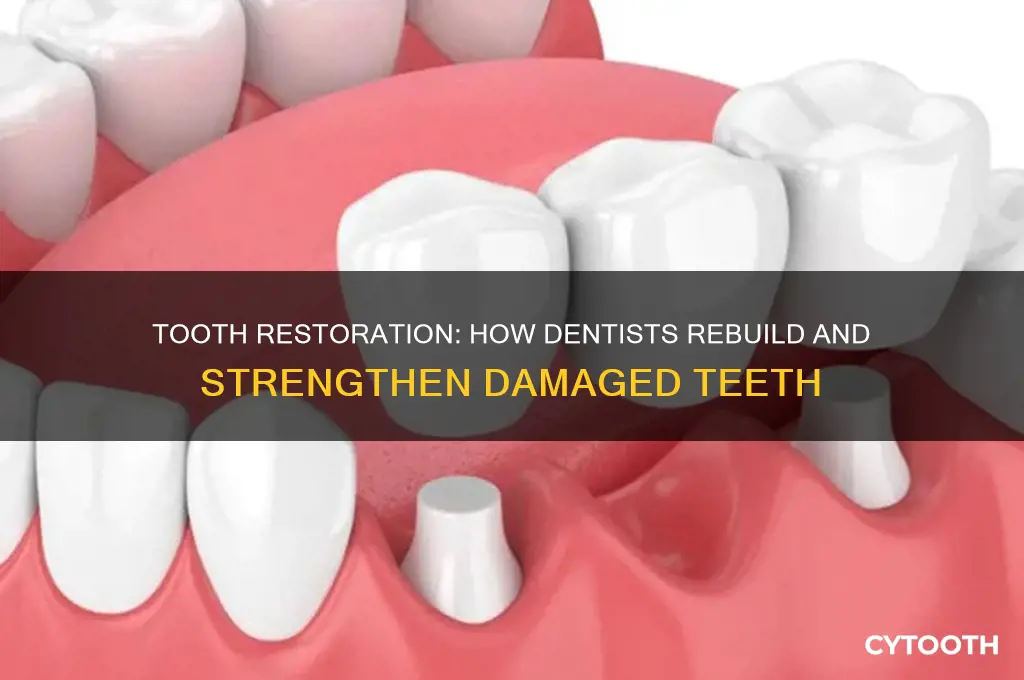
Dentists employ various techniques to build up a tooth when it is weakened, damaged, or decayed, ensuring its structural integrity and functionality are restored. One common method is the use of dental fillings, where the decayed portion of the tooth is removed and replaced with materials like composite resin, amalgam, or porcelain. For more extensive damage, a dental crown may be used to encase the entire tooth, providing strength and protection. In cases where the tooth’s structure is severely compromised, a procedure called a build-up or core build-up is performed, often using materials like composite resin or glass ionomer cement to recreate the tooth’s shape before placing a crown. Additionally, techniques such as inlays, onlays, or dental implants may be utilized depending on the extent of the damage. These procedures not only restore the tooth’s appearance but also ensure it can withstand the forces of chewing and biting, promoting long-term oral health.
| Characteristics | Values |
|---|---|
| Procedure Name | Tooth Build-Up (also known as Core Build-Up or Crown Lengthening) |
| Purpose | Restore tooth structure, prepare for crowns, or support weakened teeth |
| Materials Used | Composite resin, amalgam, glass ionomer cement, or gutta-percha |
| Steps Involved | 1. Tooth preparation (cleaning, shaping) 2. Filling or building material application 3. Shaping and contouring 4. Polishing and finishing |
| Types of Build-Up | Direct (in-office) or Indirect (lab-fabricated inlays/onlays) |
| Anesthesia | Local anesthesia typically used |
| Duration | 30 minutes to 1 hour per tooth |
| Aftercare | Avoid hard foods, maintain oral hygiene, follow dentist’s instructions |
| Cost | $200–$2,000+ (varies by material, complexity, and location) |
| Longevity | 5–15+ years depending on material and care |
| Common Applications | Root canal-treated teeth, severely decayed teeth, or cosmetic restoration |
| Potential Risks | Sensitivity, material failure, or further tooth damage if not done properly |
| Alternative Procedures | Dental crowns, implants, or extraction (depending on tooth condition) |
What You'll Learn
- Preparation: Removing decay, cleaning the area, and shaping the tooth for restoration
- Bonding Agent: Applying adhesive to ensure filling material adheres securely to the tooth
- Layering Material: Building up the tooth structure using composite resin or amalgam
- Shaping & Sculpting: Molding the material to match the natural tooth contour and bite
- Polishing & Finishing: Smoothing surfaces, checking bite alignment, and ensuring comfort and functionality

Preparation: Removing decay, cleaning the area, and shaping the tooth for restoration
The first step in rebuilding a tooth is dismantling the damage. Decay, often caused by bacteria feeding on sugars and starches, weakens tooth structure, creating cavities that compromise integrity. Dentists use specialized drills and handheld instruments to meticulously remove all decayed material, ensuring no infected tissue remains. This process, though precise, can be uncomfortable, which is why local anesthesia is typically administered to numb the area. The goal is to eliminate the source of infection and create a clean, stable foundation for restoration.
Once decay is removed, the tooth’s interior is exposed, revealing a rough, uneven surface. Cleaning this area is critical to ensure the bonding materials and restorative substances adhere properly. Dentists use antiseptic solutions, such as sodium hypochlorite or chlorhexidine, to disinfect the site and remove debris. This step prevents future infections and prepares the tooth for the next phase. For deeper cavities, a liner or base material, like calcium hydroxide or glass ionomer, may be applied to protect the pulp and provide additional support.
Shaping the tooth is both an art and a science. The dentist must sculpt the remaining tooth structure to accommodate the restorative material while maintaining its natural contour and function. This involves creating retention grooves or boxes to mechanically lock the filling in place. For example, in a Class II cavity (between teeth), the dentist shapes the walls in a dovetail or box design to prevent the filling from dislodging under biting pressure. The angle and depth of these preparations vary depending on the location and extent of the cavity, requiring skill and precision.
While preparation is essential, it’s not without risks. Over-removal of healthy tooth structure can weaken the tooth, and improper shaping can lead to recurrent decay or filling failure. Patients with sensitive teeth or those undergoing extensive work may experience post-operative discomfort, which can be managed with over-the-counter pain relievers like ibuprofen (200–400 mg every 4–6 hours). Dentists often use rubber dams to isolate the tooth, keeping it dry and free from saliva, which can compromise bonding. This isolation technique, though time-consuming, significantly improves the outcome of the restoration.
In conclusion, preparation is the cornerstone of successful tooth restoration. Removing decay, cleaning the area, and shaping the tooth are interdependent steps that require careful execution. Each action sets the stage for the next, ensuring the restored tooth is both functional and durable. While the process may seem straightforward, it demands technical expertise and attention to detail, highlighting the dentist’s role as both a clinician and an artisan.
Understanding the Tooth Bonding Process: A Dentist's Step-by-Step Guide
You may want to see also
Bonding Agent: Applying adhesive to ensure filling material adheres securely to the tooth
A crucial step in tooth restoration involves the use of bonding agents, which serve as the foundation for a secure and long-lasting filling. This adhesive technology has revolutionized dentistry, allowing for more conservative and aesthetically pleasing treatments. When a tooth requires a filling, whether due to decay or damage, the bonding agent plays a pivotal role in ensuring the new material integrates seamlessly with the natural tooth structure.
The Science Behind Bonding:
Dentists employ a meticulous process to prepare the tooth surface before applying the bonding agent. This preparation is critical, as it involves cleaning and conditioning the enamel and dentin to create a receptive environment for the adhesive. The bonding agent, typically a resin-based material, is then carefully applied, forming a strong chemical bond with the tooth. This process is akin to creating a microscopic anchor system, ensuring the filling material has a solid grip on the tooth. For instance, a common technique involves using phosphoric acid to etch the tooth surface, followed by the application of a primer and adhesive, creating a hybrid layer that enhances bond strength.
Application Technique:
The application of the bonding agent requires precision and attention to detail. Dentists follow a specific protocol, often starting with the isolation of the tooth to keep it dry and free from saliva, which can compromise the bond. The adhesive is then applied in thin layers, ensuring complete coverage of the prepared tooth surface. This process may involve the use of a curing light to activate the bonding agent, initiating a chemical reaction that hardens the material. The dentist must work swiftly yet carefully, as the bonding agent's effectiveness is time-sensitive.
Material Compatibility and Longevity:
One of the key considerations in bonding is the compatibility of the adhesive with the filling material. Different types of fillings, such as composite resins or amalgam, may require specific bonding agents to optimize adhesion. For instance, a total-etch technique, where both enamel and dentin are etched, is often used with composite resins to achieve a durable bond. The choice of bonding agent can significantly impact the filling's longevity, with some studies suggesting that certain adhesives can reduce microleakage, a common cause of filling failure, by up to 50%.
Clinical Tips and Best Practices:
Dentists should be mindful of the patient's age and oral health when selecting a bonding agent. For pediatric patients, for instance, a more gentle etching technique might be preferred to minimize sensitivity. Additionally, in cases of extensive decay, a liner or base material may be applied before the bonding agent to provide extra protection to the pulp. Proper isolation and moisture control are critical to success, and dentists often use rubber dams or cotton rolls to achieve a dry field. Regular updates on adhesive technology and techniques are essential for dentists to provide the best care, as the field of dental adhesives continues to evolve with new research and innovations.
In summary, the bonding agent is a critical component in the tooth restoration process, providing the necessary adhesion for fillings to withstand the forces of chewing and maintain their integrity over time. Its application requires a combination of scientific understanding, technical skill, and attention to detail, making it a cornerstone of modern restorative dentistry.
Bear Head Tooth Mushroom Hibernation: Survival Secrets of Hericium Americanum
You may want to see also
Layering Material: Building up the tooth structure using composite resin or amalgam
Dentists often use layering techniques with composite resin or amalgam to rebuild tooth structure compromised by decay, fracture, or wear. This method mimics the natural tooth’s layered anatomy, ensuring strength, aesthetics, and functionality. Composite resin, a tooth-colored material, is applied in incremental layers, each cured with a light source to harden it. Amalgam, a silver-colored alloy, is condensed into the prepared cavity in a single placement but relies on mechanical retention and corrosion resistance for durability. Both materials require precise technique to bond effectively to the tooth, prevent microleakage, and restore proper occlusion.
The layering process begins with preparation of the tooth, removing decayed or damaged tissue and shaping the cavity to retain the restorative material. For composite resin, the dentist etches the enamel and dentin with phosphoric acid, followed by application of a bonding agent to create a micromechanical bond. The composite is then placed in 2–3mm layers, each light-cured for 20–40 seconds depending on the material and curing light intensity. Over-curing can lead to shrinkage stress and post-operative sensitivity, while under-curing compromises strength. Amalgam, in contrast, requires a properly shaped cavity with retentive features like dovetails or boxes to prevent displacement. After placement, it is condensed using a well-fitting instrument to eliminate voids and ensure adaptation to the cavity walls.
Composite resin offers superior aesthetics, making it ideal for visible areas, but its success depends on meticulous technique. For instance, using a dentin shade for the base layer and an enamel shade for the final layer can replicate the natural tooth’s translucency. Amalgam, while less aesthetic, is more durable in high-stress areas like molars due to its compressive strength. However, its use has declined due to concerns about mercury release and increasing patient demand for tooth-colored restorations. Both materials require proper isolation with a rubber dam to prevent contamination from saliva or blood, which can weaken the bond or compromise marginal integrity.
A critical aspect of layering is managing polymerization shrinkage in composite resin, which can lead to gap formation at the restoration margins. Techniques like incremental layering, using flowable composite as a liner, or applying gentle pressure during curing can minimize this risk. For amalgam, the dentist must ensure proper condensation to avoid porosity, which weakens the restoration. Post-operative instructions for patients include avoiding hard or sticky foods for 24 hours with composite and being cautious with amalgam until the material fully sets, typically within 24 hours. Regular follow-ups are essential to monitor wear, marginal integrity, and secondary caries, ensuring the longevity of the restoration.
In summary, layering composite resin or amalgam to build up tooth structure requires a blend of precision, material knowledge, and technique. Composite offers aesthetic advantages but demands careful handling to avoid shrinkage and ensure bonding, while amalgam provides durability in high-stress areas despite its aesthetic limitations. Both materials, when used correctly, can effectively restore function and morphology, preserving the natural tooth and preventing further damage. Dentists must weigh factors like location, patient preference, and occlusal load when choosing the material and technique, ensuring a restoration that stands the test of time.
How Braces Rotate Teeth: Understanding Orthodontic Mechanics and Movement
You may want to see also
Shaping & Sculpting: Molding the material to match the natural tooth contour and bite
The success of a tooth restoration hinges on achieving seamless integration with the surrounding dentition. Shaping and sculpting the restorative material is a meticulous process demanding precision and artistry. Imagine a sculptor chiseling marble, but instead of stone, the medium is composite resin, porcelain, or amalgam, and the goal is not abstract beauty, but functional harmony within the intricate landscape of the mouth.
Dentists employ a variety of tools, from fine-tipped instruments to specialized burs, to meticulously mold the material, mimicking the natural contours of the tooth. This involves carefully layering and shaping the material, building up the structure in increments, allowing for light curing (in the case of composites) and ensuring proper adaptation to the prepared tooth surface.
Consider the bite, a complex interplay of forces. The restored tooth must not only look natural but also function seamlessly within the occlusal scheme. This requires careful consideration of the patient's bite pattern, ensuring the restoration doesn't interfere with the opposing teeth during chewing or grinding. Dentists use articulating paper and other tools to assess the occlusion, making minute adjustments to the sculpted material until it achieves optimal contact and harmony with the opposing dentition.
This stage is crucial, as an improperly shaped restoration can lead to discomfort, premature wear, and even damage to the surrounding teeth.
The artistry lies in achieving both aesthetics and functionality. The sculpted material should blend seamlessly with the natural tooth color and texture, while also providing the necessary strength and durability to withstand the rigors of daily use. This delicate balance requires a deep understanding of dental anatomy, material properties, and the patient's individual needs.
Mastering the art of shaping and sculpting is a cornerstone of restorative dentistry. It demands a combination of technical skill, artistic sensibility, and a keen understanding of the complex dynamics of the oral environment. Through meticulous attention to detail and a commitment to excellence, dentists can create restorations that are not only beautiful but also functionally sound, restoring both the health and confidence of their patients.
Dental Implants vs. Natural Teeth: Enhancing Your Smile and Appearance
You may want to see also
Polishing & Finishing: Smoothing surfaces, checking bite alignment, and ensuring comfort and functionality
After the bulk of the tooth restoration is complete, the polishing and finishing stage is where the dentist transforms a functional repair into a seamless, comfortable part of the patient’s mouth. This phase is critical not just for aesthetics but for long-term oral health. Using fine-grit polishing burs or cups, the dentist meticulously smooths the restored surface, eliminating any rough edges or imperfections that could irritate soft tissues or trap plaque. For composite fillings, a silicone polishing point or disk is often employed, followed by a final shine with a rubber cup and polishing paste. This process ensures the restoration blends naturally with the surrounding tooth structure, reducing the risk of sensitivity or inflammation.
Checking bite alignment is the next crucial step, often overlooked by patients but vital for functionality. A misaligned bite can lead to uneven wear, jaw pain, or even TMJ disorders. Dentists use articulating paper, a thin, pressure-sensitive strip, to identify high spots in the restoration. By asking the patient to bite down and then examining the paper’s marks, the dentist can adjust the restoration incrementally until the bite feels balanced. For more complex cases, digital bite analysis tools may be used to ensure precision. Patients should communicate any discomfort during this process, as even minor adjustments can significantly improve long-term comfort.
Ensuring comfort and functionality goes beyond bite alignment. The dentist will also assess how the restored tooth interacts with the opposing teeth during chewing and speaking. For children or elderly patients, this step is particularly important due to their developing or aging oral structures. A well-finished restoration should not only feel natural but also withstand the forces of daily use. Dentists often recommend a follow-up appointment after a few weeks to recheck the bite and address any emerging issues, such as sensitivity or shifting alignment.
Practical tips for patients include avoiding hard or sticky foods for the first 24–48 hours post-procedure, as the restoration sets fully during this time. Over-the-counter pain relievers like ibuprofen (200–400 mg every 6 hours, as needed) can manage minor discomfort, but persistent pain should be reported immediately. Maintaining good oral hygiene, including regular flossing around the restored tooth, prevents secondary decay and ensures the longevity of the work. By prioritizing polishing, bite alignment, and post-procedure care, both dentist and patient contribute to a restoration that is as durable as it is discreet.
Exploring the Unique Bear Head Tooth Mushroom: Identification and Uses
You may want to see also
Frequently asked questions
Building up a tooth refers to the process of restoring a tooth that has been damaged, weakened, or reduced in size due to decay, trauma, or wear. This involves adding material, such as composite resin, amalgam, or porcelain, to reconstruct the tooth’s shape, strength, and function.
A dentist may need to build up a tooth if it has been severely damaged by decay, fracture, or wear, leaving it unable to support a filling or crown. Building up the tooth provides a stable foundation for further restorative work, such as a crown or bridge, and helps restore its natural appearance and function.
Common materials used to build up a tooth include composite resin (a tooth-colored material), amalgam (a silver-colored alloy), and porcelain. The choice of material depends on factors like the location of the tooth, the extent of damage, and the patient’s aesthetic preferences. Composite resin is often preferred for visible teeth due to its natural appearance.