Samantha Blake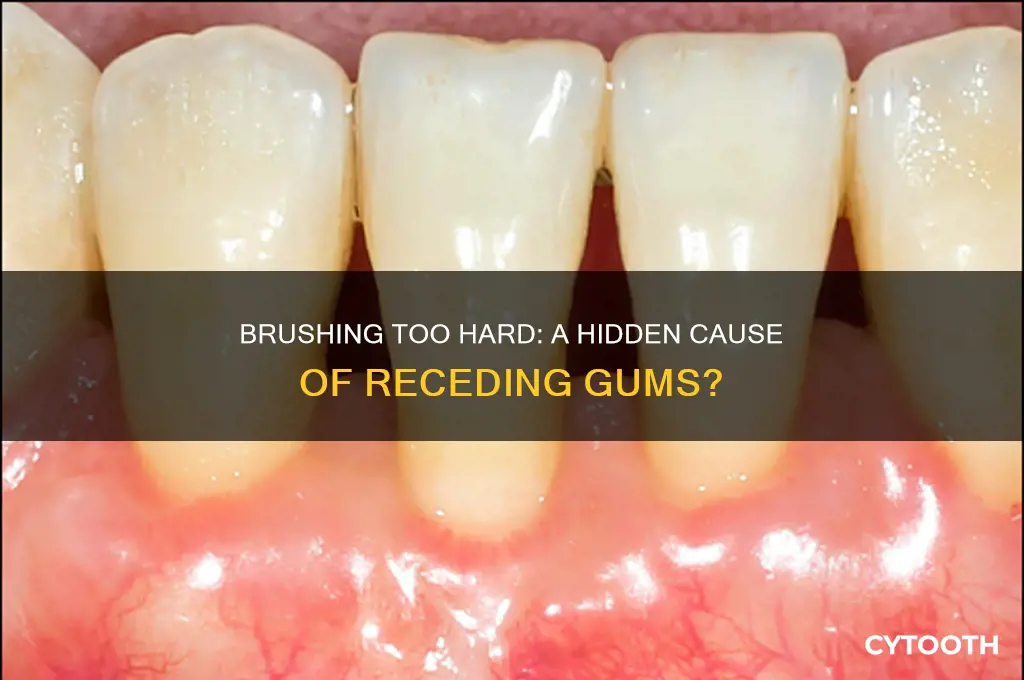
Brushing your teeth is a fundamental part of oral hygiene, but the technique and pressure used can significantly impact your gum health. Many people believe that applying more force while brushing will lead to cleaner teeth, but this misconception can lead to serious issues such as receding gums. Receding gums, a condition where the gum tissue pulls away from the teeth, can expose the tooth's root, causing sensitivity, pain, and even tooth loss if left untreated. This raises the question: does brushing too hard indeed cause receding gums? Understanding the relationship between brushing habits and gum health is crucial for maintaining a healthy smile and preventing long-term dental problems.
| Characteristics | Values |
|---|---|
| Cause of Receding Gums | Yes, brushing too hard can lead to gum recession. |
| Mechanism | Aggressive brushing causes enamel wear and gum tissue damage. |
| Type of Toothbrush | Hard-bristled toothbrushes increase the risk. |
| Brushing Technique | Horizontal scrubbing or applying excessive pressure exacerbates the issue. |
| Long-Term Effects | Chronic hard brushing can lead to gum inflammation and recession. |
| Prevention | Use a soft-bristled toothbrush and gentle, circular motions. |
| Recommended Brushing Time | Brush for 2 minutes, twice daily, without applying excessive force. |
| Associated Conditions | Can contribute to gingivitis, periodontitis, and tooth sensitivity. |
| Reversibility | Gum recession is generally irreversible; focus on prevention. |
| Professional Advice | Dentists recommend regular check-ups to monitor gum health. |
| Alternative Tools | Electric toothbrushes with pressure sensors can help reduce damage. |
What You'll Learn

Over-brushing and Gum Recession
Brushing your teeth is a cornerstone of oral hygiene, but there’s a fine line between thorough cleaning and overdoing it. Over-brushing, particularly with a hard-bristled toothbrush or aggressive technique, can lead to gum recession—a condition where the gum tissue pulls away from the teeth, exposing the roots. This isn’t just a cosmetic issue; exposed roots can cause sensitivity, increase the risk of decay, and even lead to tooth loss if left untreated. The irony is clear: the very act meant to protect your teeth can harm them if not executed correctly.
Consider the mechanics of over-brushing. When you apply excessive force, the bristles of your toothbrush can wear away the protective enamel near the gum line and erode the delicate gum tissue. Over time, this repeated trauma causes the gums to recede. A 2018 study published in the *Journal of Periodontology* found that individuals who brushed with high force were twice as likely to experience gum recession compared to those using a gentle technique. The damage is often gradual, making it easy to overlook until the symptoms become noticeable.
Preventing over-brushing starts with your tools and technique. Opt for a soft-bristled toothbrush, as recommended by the American Dental Association, and replace it every three months or sooner if the bristles fray. Hold the brush at a 45-degree angle to your gums and use short, circular motions rather than sawing back and forth. Electric toothbrushes can be a great alternative, as many models have pressure sensors that alert you if you’re brushing too hard. For children and teenagers, whose gums are still developing, gentle brushing is especially critical to avoid long-term damage.
If you’re already experiencing gum recession, it’s essential to address the issue promptly. Start by adjusting your brushing habits and scheduling a dental checkup. A dentist may recommend treatments such as deep cleaning (scaling and root planing) to remove plaque buildup or, in severe cases, gum graft surgery to restore lost tissue. Additionally, incorporating a fluoride toothpaste and antimicrobial mouthwash can help strengthen enamel and reduce sensitivity. Remember, gum recession is often irreversible, so early intervention is key.
The takeaway is clear: brushing too hard doesn’t make your teeth cleaner—it makes them vulnerable. By adopting a gentler approach and staying mindful of your technique, you can maintain healthy gums and avoid the pitfalls of over-brushing. Your teeth and gums will thank you in the long run.
Anemia and Bleeding Gums: Uncovering the Surprising Connection and Risks
You may want to see also
Proper Brushing Techniques
Brushing too hard can indeed contribute to receding gums, a condition often exacerbated by improper technique and excessive force. The enamel and gum tissue are surprisingly delicate, and aggressive brushing can wear them down over time. To prevent this, it’s essential to adopt proper brushing techniques that prioritize gentleness and precision.
Technique Matters: The 45-Degree Angle
Hold your toothbrush at a 45-degree angle to your gums, ensuring the bristles make contact with both the tooth surface and the gum line. This angle allows for effective plaque removal without causing irritation. Use short, circular motions or gentle back-and-forth strokes, covering one or two teeth at a time. Avoid sawing motions, which can damage gums and enamel. Spend at least 2 minutes brushing, dividing your mouth into four quadrants and dedicating 30 seconds to each.
Choose the Right Tools: Soft-Bristled Brushes and Fluoride Toothpaste
Opt for a soft-bristled toothbrush, as medium or hard bristles can be too abrasive for gums. Electric toothbrushes with pressure sensors can be particularly helpful, as they alert you if you’re brushing too hard. Pair your brush with a fluoride toothpaste to strengthen enamel and protect against decay. For children under 3, use a rice-sized amount of fluoride toothpaste; for ages 3–6, a pea-sized amount is sufficient.
Frequency and Timing: Twice a Day, Every Day
Brush twice daily—once in the morning and once before bed—to maintain oral health. Wait at least 30 minutes after consuming acidic foods or drinks (like citrus or coffee) to brush, as immediate brushing can weaken enamel. If you’re unable to brush after a meal, rinse your mouth with water to neutralize acids and dislodge debris.
Cautions and Common Mistakes to Avoid
Avoid using excessive force, as it doesn’t clean better—it only causes harm. Be mindful of over-brushing, especially if you’re using an electric toothbrush with high-speed settings. Replace your toothbrush every 3–4 months or sooner if the bristles appear frayed. Lastly, don’t neglect your gum line, as plaque buildup here is a primary cause of gum recession and disease.
By mastering these techniques, you can maintain a healthy smile while minimizing the risk of receding gums. Proper brushing isn’t about force—it’s about consistency, precision, and care.
Braces and Gum Recession: Uncovering the Truth Behind the Myth
You may want to see also
Hard vs. Soft Bristles
Brushing your teeth is a fundamental part of oral hygiene, but the choice of toothbrush bristles plays a pivotal role in maintaining gum health. Hard bristles, often marketed for their deep-cleaning abilities, can be more abrasive than beneficial. When applied with excessive force, they can wear down tooth enamel and irritate the gums, potentially leading to recession. In contrast, soft bristles are gentler, reducing the risk of damage while still effectively removing plaque and debris. The American Dental Association (ADA) recommends soft-bristled toothbrushes for most individuals, emphasizing their safety and efficacy.
Consider the mechanics of brushing: hard bristles, when pressed too firmly against the gums, can create micro-tears in the delicate gum tissue. Over time, this repeated trauma can cause the gums to recede, exposing the tooth’s root and increasing sensitivity. For instance, a study published in the *Journal of Periodontology* found that individuals using hard-bristled brushes were 2.5 times more likely to experience gum recession compared to those using soft bristles. This highlights the importance of not only the brush type but also the technique—a soft brush used aggressively can still cause harm, but the risk is significantly lower.
For those unsure about their brushing pressure, a simple test can help: if your toothbrush bristles flatten or spread out after three months of use, you’re likely brushing too hard. To mitigate this, pair a soft-bristled brush with the Bass technique, a dentist-recommended method. Hold the brush at a 45-degree angle to the gums, using short, gentle strokes. Avoid sawing motions, which can exacerbate gum irritation. Electric toothbrushes with pressure sensors can also be a valuable tool, providing real-time feedback to prevent overbrushing.
Children and older adults, in particular, benefit from soft bristles. Kids’ gums are still developing, making them more susceptible to damage from hard bristles, while seniors may have receding gums due to age or periodontal disease, requiring extra gentleness. For these groups, soft or extra-soft bristles are non-negotiable. Additionally, individuals with braces or dental restorations should opt for soft bristles to avoid scratching or damaging orthodontic appliances.
In conclusion, the debate between hard and soft bristles is not about preference but about preservation. Soft bristles offer a safer, more effective approach to oral care, minimizing the risk of gum recession while ensuring thorough cleaning. By choosing the right brush and adopting a mindful technique, you can protect your gums and maintain a healthy smile for years to come. Remember, it’s not just about brushing harder—it’s about brushing smarter.
Smoking and Oral Health: Do Cigarettes Cause Gum Disease?
You may want to see also
Signs of Brushing Too Hard
Brushing your teeth is a fundamental part of oral hygiene, but applying too much pressure can lead to unintended consequences. One of the most noticeable signs of brushing too hard is gum recession, where the gum tissue pulls away from the tooth, exposing the root. This occurs because aggressive brushing wears down the enamel at the gum line and damages the delicate gum tissue. Over time, this can lead to sensitivity, increased risk of decay, and even tooth loss. If you notice your teeth appear longer or feel notches near the gum line, it’s a red flag that your brushing technique may be too harsh.
Another telltale sign is gum bleeding, which many people mistakenly dismiss as normal. While occasional bleeding can happen due to gingivitis, frequent or persistent bleeding during brushing is often a result of excessive force. The bristles of your toothbrush should gently clean, not irritate or cut into the gums. If you see blood in the sink regularly, it’s time to reassess your brushing pressure and consider switching to a softer bristle toothbrush. Dentists recommend using a gentle, circular motion rather than sawing back-and-forth, which can exacerbate damage.
Tooth sensitivity is another common indicator of overzealous brushing. When enamel wears thin near the gum line, the dentin beneath becomes exposed, leading to discomfort when consuming hot, cold, or sweet foods. This sensitivity can be a direct result of brushing too hard or using a hard-bristled toothbrush. If you experience a sharp, sudden pain when eating or drinking, it’s a sign to adjust your brushing habits. Using desensitizing toothpaste can provide temporary relief, but addressing the root cause—your brushing technique—is essential for long-term improvement.
Lastly, worn toothbrush bristles can serve as a visual cue that you’re brushing too aggressively. If your toothbrush bristles become frayed or bent after just a few weeks of use, it’s a clear indication that you’re applying too much force. A toothbrush should last about three months with normal use. To prevent this, hold your toothbrush at a 45-degree angle to your gums and use short, gentle strokes. Electric toothbrushes with pressure sensors can also help by alerting you when you’re brushing too hard, making them a worthwhile investment for those struggling with technique.
In summary, recognizing the signs of brushing too hard—gum recession, bleeding, sensitivity, and rapid bristle wear—is crucial for maintaining oral health. By adjusting your technique and tools, you can protect your gums and teeth from unnecessary damage. Remember, effective brushing is about consistency and gentleness, not force.
Invisalign and Gum Health: Does Clear Aligners Cause Recession?
You may want to see also
Preventing Gum Recession Tips
Brushing your teeth too aggressively can indeed contribute to gum recession, a condition where the gum tissue pulls away from the teeth, exposing the roots. This not only causes sensitivity but also increases the risk of decay and tooth loss. To prevent gum recession, it’s essential to adopt a gentler, more mindful oral care routine. Start by using a soft-bristled toothbrush and applying minimal pressure—imagine you’re brushing an apple without damaging its skin. Electric toothbrushes with pressure sensors can be particularly helpful, as they alert you when you’re brushing too hard.
Beyond technique, the type of toothbrush and brushing motion matter significantly. Hold your toothbrush at a 45-degree angle to your gums and use small, circular motions rather than sawing back-and-forth. Spend at least two minutes brushing twice daily, ensuring you cover all surfaces of your teeth. Avoid using medium or hard-bristled brushes, as they can irritate and wear down gum tissue over time. For those with braces or dental work, consult your dentist for specialized brushing techniques to prevent additional stress on the gums.
Flossing is another critical component of preventing gum recession, but it must be done correctly. Snap flossing—where the floss is forced between teeth—can damage gums. Instead, gently curve the floss around each tooth in a "C" shape and slide it up and down against the tooth’s surface. If traditional floss is too harsh, consider using a water flosser, which cleans between teeth and along the gumline without physical contact. Aim to floss at least once daily, preferably before brushing, to remove debris that could cause irritation.
Lifestyle factors also play a role in gum health. Smoking and tobacco use are major contributors to gum recession, as they reduce blood flow to the gums and impair healing. Quitting smoking can significantly improve gum health and reduce recession risk. Additionally, a diet rich in vitamins C and D, calcium, and phosphorus supports gum tissue strength. Foods like leafy greens, dairy, nuts, and citrus fruits are excellent choices. Stay hydrated, as dry mouth can lead to gum irritation and recession.
Finally, regular dental check-ups are non-negotiable. Dentists can detect early signs of gum recession and provide treatments like deep cleaning or gum grafting if necessary. Adults over 30 should be particularly vigilant, as gum recession becomes more common with age. If you notice symptoms like tooth sensitivity, longer-looking teeth, or exposed roots, seek professional care immediately. Prevention is always easier than correction, and a proactive approach to oral health can save your gums—and your smile—in the long run.
Zyns and Gum Health: Uncovering the Truth About Potential Damage
You may want to see also
Frequently asked questions
Yes, brushing too hard can lead to receding gums. Aggressive brushing can wear away the enamel and damage the gum tissue, causing it to pull away from the teeth.
Signs of brushing too hard include frayed toothbrush bristles after a few weeks, tooth sensitivity, gum bleeding, and visible notches near the gum line (called abfraction lesions).
Once gums recede, they typically cannot grow back on their own. However, proper oral care, using a soft-bristled brush, and seeing a dentist can prevent further recession and manage the condition.
Use a soft-bristled toothbrush, hold it at a 45-degree angle to your gums, and brush gently in circular motions. Avoid sawing back-and-forth motions, and brush for at least 2 minutes twice daily.