Samantha Blake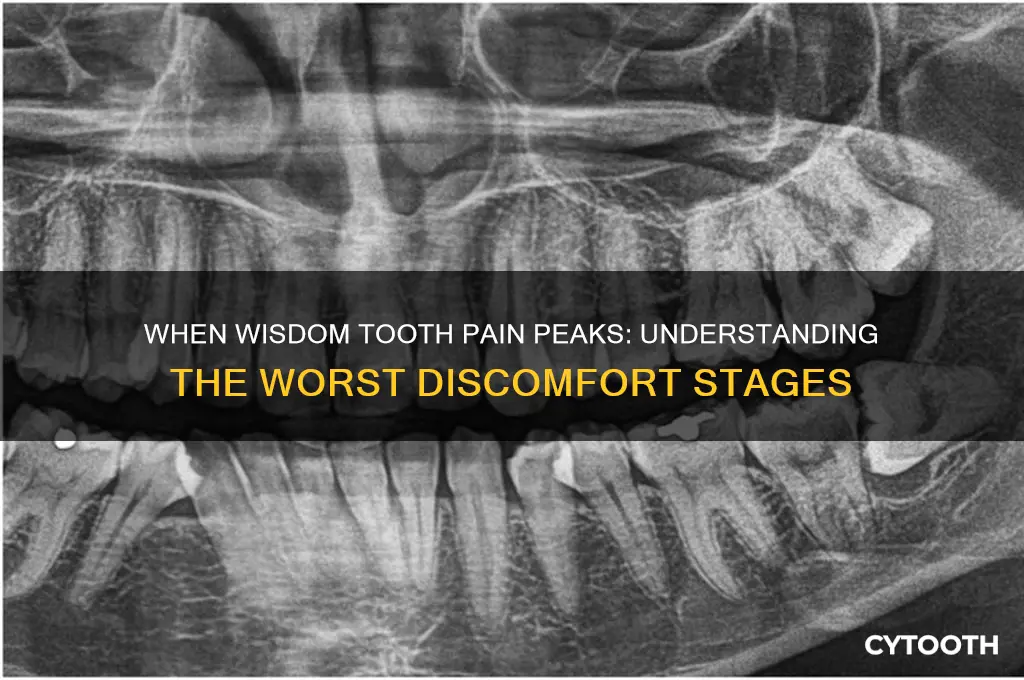
Wisdom tooth pain can be excruciating, but its intensity often varies depending on the stage of eruption and the individual’s unique dental anatomy. The pain is typically at its worst during the initial stages of eruption, when the tooth begins to push through the gum tissue, causing inflammation, swelling, and pressure. This discomfort is often exacerbated if the tooth is impacted, meaning it doesn’t have enough space to emerge properly, leading to sharp, throbbing pain that can radiate to the jaw, ear, or head. Additionally, infections such as pericoronitis, where bacteria accumulate around the partially erupted tooth, can intensify the pain, making it nearly unbearable. Understanding when wisdom tooth pain peaks is crucial for seeking timely relief and appropriate dental care.
| Characteristics | Values |
|---|---|
| Timing of Pain | Most severe during eruption (when the tooth breaks through the gum line). |
| Inflammation | Worst when the gum tissue surrounding the tooth is swollen and infected. |
| Infection (Pericoronitis) | Pain peaks when bacteria enter the gum flap, causing localized infection. |
| Impaction Type | Worst with mesial or horizontal impaction due to pressure on adjacent teeth. |
| Gum Flap (Operculum) Irritation | Pain intensifies when food or bacteria trap under the gum flap. |
| Swelling and Tenderness | Worst when the jaw, cheek, or lymph nodes are significantly swollen. |
| Difficulty Opening Mouth | Pain is most severe when trismus (jaw stiffness) occurs due to inflammation. |
| Headache or Earache | Worst when pain radiates to the head, ear, or neck due to nerve involvement. |
| Fever and Malaise | Pain peaks when systemic symptoms like fever and fatigue accompany infection. |
| Nighttime Pain | Often worse at night due to reduced distraction and changes in blood flow. |
| Chewing or Pressure | Pain intensifies during chewing or when pressure is applied to the area. |
| Duration of Pain | Worst during the initial 3–5 days of eruption or infection. |
| Age Factor | Typically worst in late teens to mid-20s when wisdom teeth erupt. |
What You'll Learn
- Pain During Eruption: Intense discomfort as the tooth breaks through the gum line
- Impacted Teeth Agony: Severe pain when the tooth grows at an angle or gets stuck
- Infection Peak Pain: Excruciating ache caused by gum or tooth infections (pericoronitis)
- Nighttime Worsening: Pain intensifies at night due to lying down and blood flow changes
- Post-Extraction Peak: Maximum pain occurs 2-3 days after wisdom tooth removal surgery

Pain During Eruption: Intense discomfort as the tooth breaks through the gum line
The eruption of a wisdom tooth is a pivotal moment in oral development, often marked by intense discomfort as the tooth pushes through the gum line. This pain typically peaks during the initial stages of eruption, when the gum tissue is most resistant to the emerging tooth. The pressure exerted by the tooth can cause inflammation, swelling, and tenderness in the surrounding area, making even simple actions like chewing or speaking uncomfortable. For many, this phase is the most challenging, as the body works to accommodate the new tooth in an already crowded mouth.
To manage this pain effectively, over-the-counter pain relievers such as ibuprofen (400–600 mg every 6–8 hours) or acetaminophen (500–1000 mg every 4–6 hours) can provide significant relief. It’s crucial to follow the recommended dosages and consult a healthcare provider if pain persists or worsens. Additionally, applying a cold compress to the outside of the cheek for 15–20 minutes at a time can reduce swelling and numb the area, offering temporary comfort. Avoiding hard or chewy foods during this period can also minimize irritation to the sensitive gum tissue.
Comparatively, the pain during eruption is often more acute than the discomfort experienced during later stages of wisdom tooth development, such as impaction or infection. This is because the initial breakthrough involves direct trauma to the gum tissue, whereas other issues may develop more gradually. For individuals in their late teens to mid-twenties—the typical age range for wisdom tooth eruption—this pain can be particularly disruptive, affecting daily activities and sleep. Early intervention, such as monitoring the tooth’s progress and seeking dental advice, can prevent complications and alleviate suffering.
A descriptive approach reveals that the pain during eruption is often characterized by a throbbing or sharp sensation localized to the back of the mouth. Some individuals may also experience radiating pain to the ear, jaw, or head, as the trigeminal nerve—responsible for facial sensation—can be affected. The gums may appear red, swollen, or even bleed slightly as the tooth emerges. Maintaining good oral hygiene during this time is essential; gently rinsing with warm salt water (1/2 teaspoon of salt in 8 ounces of water) can help reduce bacteria and soothe the area.
In conclusion, the pain during wisdom tooth eruption is a temporary but intense experience, requiring proactive management to ensure comfort and prevent further issues. By understanding the nature of this discomfort and employing practical strategies, individuals can navigate this phase with greater ease. If pain becomes unbearable or is accompanied by signs of infection (e.g., fever, pus, or persistent bad taste), immediate dental consultation is advised to address the issue promptly.
Toothache and Throat Pain: Understanding the Surprising Connection
You may want to see also
Impacted Teeth Agony: Severe pain when the tooth grows at an angle or gets stuck
Wisdom tooth pain peaks when impaction occurs, a condition where the tooth fails to erupt properly, growing at an angle or becoming trapped within the jawbone or gums. This misalignment triggers inflammation, infection, and intense discomfort, often radiating to the jaw, ear, or head. Unlike routine dental aches, impaction pain is persistent, worsening with time if left untreated.
Anatomy of Agony: Why Impacted Teeth Hurt
When a wisdom tooth grows sideways, it presses against adjacent teeth, gums, or bone, creating pressure that irritates nerves and soft tissues. Partial eruption leaves a flap of gum tissue prone to infection, forming a breeding ground for bacteria. This combination of mechanical stress and infection leads to swelling, throbbing pain, and sometimes fever or lymph node tenderness. Nighttime often amplifies the discomfort as lying down increases blood flow to the head, intensifying inflammation.
Identifying the Crisis: Symptoms and Red Flags
Impaction pain is unmistakable: a deep, aching sensation in the back of the mouth, accompanied by gum tenderness, bad breath, and difficulty opening the mouth. Pus discharge or a foul taste signals infection, while jaw stiffness indicates spreading inflammation. If pain persists beyond three days, interferes with sleep, or is accompanied by fever, seek immediate dental care. Over-the-counter pain relievers like ibuprofen (600–800 mg every 6–8 hours) can temporarily ease symptoms but won’t resolve the root cause.
Prevention and Relief: Practical Strategies
Regular dental check-ups for individuals aged 16–25 can catch impaction early, often leading to preemptive extraction before pain begins. For immediate relief, rinse with warm salt water (1 tsp salt in 8 oz water) to reduce inflammation and apply a cold compress to the cheek for 15–20 minutes to numb the area. Avoid hard or chewy foods that aggravate the site, and sleep with your head elevated to minimize swelling.
The Definitive Solution: When Extraction is Non-Negotiable
Impacted wisdom teeth rarely resolve on their own and often require surgical removal. Delaying extraction risks complications like cysts, nerve damage, or crowding of other teeth. Modern techniques, including local anesthesia or sedation, make the procedure manageable, with recovery typically taking 3–7 days. Post-surgery, follow your dentist’s instructions meticulously: take prescribed antibiotics, use gauze to control bleeding, and stick to soft foods like yogurt or mashed potatoes to prevent dislodging clots.
Impacted wisdom teeth represent a unique dental emergency, where pain is not just a symptom but a call to action. Addressing it promptly prevents long-term damage, ensuring your smile remains both functional and pain-free.
Gum Infections and Back Pain: Surprising Connection Explained
You may want to see also
Infection Peak Pain: Excruciating ache caused by gum or tooth infections (pericoronitis)
Wisdom tooth pain can escalate from a mild nuisance to an unbearable ordeal, especially when infection takes hold. Among the worst scenarios is pericoronitis, an infection of the gum tissue surrounding a partially erupted or impacted wisdom tooth. This condition doesn’t just cause pain—it unleashes a relentless ache that radiates to the jaw, ear, and throat, often accompanied by swelling, fever, and difficulty opening the mouth. Understanding when and why this pain peaks is crucial for timely intervention.
The peak pain of pericoronitis typically occurs when the infection reaches its zenith, usually 3 to 5 days after symptoms first appear. During this phase, the body’s immune response intensifies, leading to increased inflammation and pressure in the affected area. The pain is often described as throbbing, sharp, or constant, and it can be exacerbated by chewing, swallowing, or even speaking. For those aged 17 to 25—the prime years for wisdom tooth eruption—this can disrupt daily life, making sleep and eating nearly impossible. Immediate action is essential to prevent the infection from spreading to surrounding tissues or entering the bloodstream, a potentially life-threatening condition known as sepsis.
To manage this excruciating pain, a combination of professional treatment and home care is necessary. Dentists often prescribe antibiotics such as amoxicillin (500 mg, 3 times daily for 7–10 days) to combat the infection, paired with over-the-counter pain relievers like ibuprofen (600 mg every 6 hours) to reduce inflammation and discomfort. Warm saltwater rinses (1/2 teaspoon of salt in 8 ounces of water) can help soothe the area, while avoiding hard or chewy foods minimizes irritation. Applying a cold compress to the outside of the cheek for 15–20 minutes at a time can also reduce swelling and numb the pain temporarily.
Prevention plays a key role in avoiding the peak pain of pericoronitis. Regular dental check-ups, especially during the late teens and early twenties, allow for early detection of impacted or partially erupted wisdom teeth. In many cases, proactive extraction of problematic wisdom teeth can eliminate the risk of infection altogether. For those already experiencing symptoms, ignoring the pain is not an option—delaying treatment can lead to abscess formation, bone loss, or systemic infection. Recognizing the signs of pericoronitis, such as bad breath, foul taste, or visible pus, and seeking immediate dental care can spare individuals from the worst of this agonizing condition.
In summary, the peak pain of pericoronitis is a critical phase that demands swift action. By understanding its timeline, symptoms, and treatment options, individuals can mitigate the excruciating ache and prevent complications. Whether through antibiotics, pain management, or preventive measures, addressing this infection head-on is the only way to reclaim comfort and oral health.
Tooth Pain After Flying: Duration and Relief Tips Explained
You may want to see also
Nighttime Worsening: Pain intensifies at night due to lying down and blood flow changes
Nighttime can transform a manageable wisdom tooth ache into a throbbing ordeal. This intensification isn’t merely psychological; it’s rooted in physiological changes that occur when you lie down. As you recline, blood flow to the head increases, causing greater pressure on the inflamed tissues surrounding the erupting tooth. This heightened circulation amplifies the inflammatory response, making the pain feel sharper and more persistent. If you’ve ever woken up in the middle of the night with a pulsating jaw, this is why.
To mitigate this nighttime worsening, consider elevating your head slightly while sleeping. Use an extra pillow or adjust your bed frame to create a 30-degree angle. This simple positional change reduces blood flow to the head, alleviating pressure on the affected area. Additionally, applying a cold compress to the jawline for 15–20 minutes before bed can constrict blood vessels, temporarily numbing the pain. Avoid lying flat on your back, as this position maximizes blood pooling in the head and exacerbates discomfort.
Another practical tip is to take an over-the-counter anti-inflammatory medication, such as ibuprofen (400–600 mg), 30 minutes before bedtime. This timing ensures the medication peaks in your system during the early hours of sleep, when pain is most likely to intensify. However, always consult a pharmacist or dentist to ensure the dosage is appropriate for your age and health condition. For those under 18, acetaminophen (500–1000 mg) is a safer alternative, as ibuprofen can pose risks in younger populations.
Comparing daytime and nighttime pain reveals a stark contrast. During the day, gravity naturally reduces blood flow to the head, and distractions like work or activity can shift focus away from the discomfort. At night, however, the absence of these distractions and the body’s horizontal position create a perfect storm for pain amplification. Understanding this difference empowers you to take proactive steps, turning a sleepless night into a manageable rest.
Finally, if nighttime pain persists despite these measures, it may signal an infection or impaction requiring immediate dental attention. Persistent throbbing, swelling, or fever are red flags that should not be ignored. While home remedies can provide temporary relief, they are not substitutes for professional care. Nighttime worsening of wisdom tooth pain is a common yet treatable issue—address it strategically, and you’ll reclaim your sleep.
Relieve Tooth Pain from Allergies: Effective Remedies and Tips
You may want to see also
Post-Extraction Peak: Maximum pain occurs 2-3 days after wisdom tooth removal surgery
The clock is ticking after your wisdom tooth extraction, and the real test of your pain tolerance begins around day two. This is when the initial numbness from the anesthesia wears off, and your body’s inflammatory response kicks into high gear. Blood rushes to the surgical site, swelling peaks, and nerve endings awaken to the trauma of the procedure. This perfect storm of biological reactions explains why pain often escalates rather than subsides in the first 48 to 72 hours post-surgery. Understanding this timeline is crucial for managing expectations and preparing for the most challenging phase of recovery.
To navigate this post-extraction peak, follow a structured pain management plan. Start with prescribed medications, typically a combination of nonsteroidal anti-inflammatory drugs (NSAIDs) like ibuprofen (600–800 mg every 6–8 hours) and opioids (e.g., hydrocodone or oxycodone) for breakthrough pain. Take the first dose of pain medication before the anesthesia completely wears off to stay ahead of the pain curve. Pair this with cold compresses applied to the cheek for 20 minutes on, 20 minutes off, to reduce swelling and numb the area. Avoid hot packs during this phase, as they can increase blood flow and exacerbate discomfort.
Comparing this phase to other post-surgical experiences highlights its unique challenges. Unlike a muscle strain or joint injury, wisdom tooth extraction pain is localized but intense, often radiating to the ear, jaw, or head. The confined space of the mouth limits mobility and makes even simple tasks like eating or speaking uncomfortable. Unlike external wounds, the surgical site is hidden, making it difficult to monitor healing progress visually. This combination of factors underscores the need for proactive, multi-modal pain management during the 2–3 day peak.
Descriptively, the pain during this period can feel like a throbbing pulse deep within the jaw, accompanied by tightness or pressure as swelling reaches its zenith. Some patients report sharp, shooting pains when chewing or yawning, while others experience a constant, dull ache that disrupts sleep. The key is to differentiate between normal post-operative pain and signs of complications, such as dry socket (a sharp, radiating pain that begins 3–5 days after surgery and is often accompanied by a foul taste or odor). If pain intensifies beyond day 3 or new symptoms arise, contact your oral surgeon immediately.
In conclusion, the 2–3 day mark after wisdom tooth removal is the critical window for pain management. By combining medication, cold therapy, and rest, you can mitigate the worst of the discomfort. Stay hydrated with room-temperature fluids, avoid strenuous activity, and stick to soft foods like yogurt or mashed potatoes to minimize jaw movement. Remember, this peak is temporary—by day 4, most patients begin to notice a gradual improvement as swelling subsides and healing accelerates. Patience and preparation are your best allies during this phase.
Can Tooth Pain Cause Dizziness? Exploring the Surprising Connection
You may want to see also
Frequently asked questions
Wisdom tooth pain is often worst during the eruption phase, when the tooth is actively breaking through the gum tissue. This can cause inflammation, swelling, and intense discomfort.
Yes, wisdom tooth pain can feel worse at night due to reduced distractions, changes in head position, and increased blood flow to the head while lying down, which can intensify the sensation of pain.
Yes, wisdom tooth pain is significantly worse during an infection, such as pericoronitis, where the gum tissue around the tooth becomes infected. This can lead to severe pain, swelling, fever, and difficulty opening the mouth.