Logan Hayes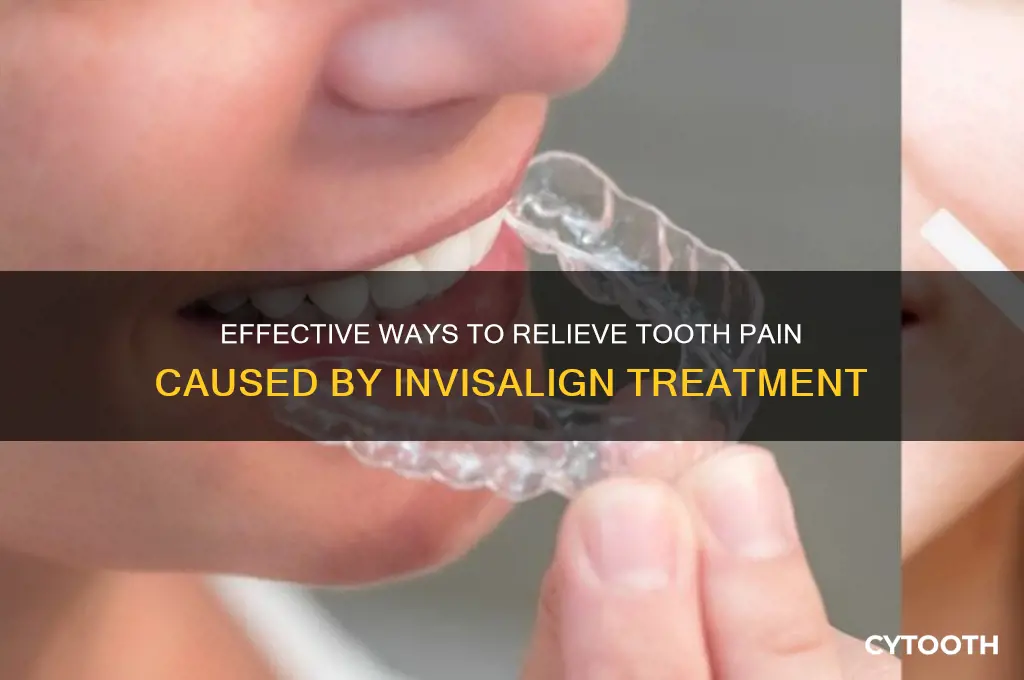
Experiencing tooth pain while undergoing Invisalign treatment is a common concern for many patients. This discomfort often arises from the pressure exerted by the aligners as they gradually shift teeth into their desired positions. While some soreness is normal, especially after switching to a new set of aligners, persistent or severe pain can be distressing. Fortunately, there are several effective strategies to alleviate this discomfort, ranging from simple home remedies to professional advice from your orthodontist. Understanding how to manage and relieve tooth pain from Invisalign can significantly enhance your treatment experience, ensuring a smoother journey toward achieving a straighter smile.
| Characteristics | Values |
|---|---|
| Over-the-Counter Pain Relief | Use NSAIDs like ibuprofen (e.g., Advil, Motrin) or acetaminophen (Tylenol) as directed. |
| Cold Compress | Apply an ice pack or cold compress to the outside of the jaw for 10-15 minutes to reduce inflammation. |
| Soft Foods Diet | Stick to soft, easy-to-chew foods like yogurt, mashed potatoes, and smoothies to minimize pressure on teeth. |
| Orthodontic Wax | Apply orthodontic wax to rough edges of Invisalign aligners to prevent irritation. |
| Proper Aligners Fit | Ensure aligners are correctly seated by using the Invisalign Chewies or gently pushing them into place. |
| Oral Hygiene | Maintain good oral hygiene by brushing and flossing regularly to prevent additional irritation or infection. |
| Saltwater Rinse | Gargle with warm saltwater (1/2 tsp salt in 8 oz water) to soothe sore gums and reduce inflammation. |
| Aligner Wear Schedule | Follow the recommended wear schedule (20-22 hours/day) to avoid discomfort from improper alignment. |
| Avoid Hard or Chewy Foods | Refrain from hard, sticky, or chewy foods that can exacerbate pain or damage aligners. |
| Hydration | Stay hydrated to keep the mouth moist and reduce discomfort. |
| Chewies for Seating | Use Invisalign Chewies to help seat aligners properly, reducing pressure points. |
| Consult Orthodontist | Contact your orthodontist if pain persists or worsens, as adjustments may be needed. |
| Temporary Removal | Remove aligners for short periods (e.g., during meals) if pain is severe, but avoid prolonged removal. |
| Avoid Teeth Grinding | Wear a night guard if you grind your teeth to prevent additional pressure on aligners. |
| Patience | Understand that mild discomfort is normal during the initial days of a new aligner set. |
What You'll Learn
- Apply Cold Compress: Reduce inflammation and numb pain by applying a cold pack to the affected area
- Use Orthodontic Wax: Cover sharp edges or rough spots on aligners to prevent irritation
- Take Pain Relievers: Over-the-counter medications like ibuprofen can temporarily alleviate discomfort
- Practice Gentle Oral Care: Use a soft toothbrush and avoid aggressive brushing to minimize sensitivity
- Stay Hydrated: Drink water to keep mouth moist and reduce pressure-related pain from aligners

Apply Cold Compress: Reduce inflammation and numb pain by applying a cold pack to the affected area
A cold compress is a simple yet effective remedy for tooth pain caused by Invisalign. The principle behind it is rooted in the body’s physiological response to cold: vasoconstriction. When a cold pack is applied to the affected area, blood vessels narrow, reducing blood flow to the site of inflammation. This not only minimizes swelling but also numbs the nerve endings, providing immediate relief from pain. It’s a method backed by both scientific reasoning and practical experience, making it a go-to solution for many Invisalign wearers.
To apply a cold compress effectively, start by wrapping a cold pack or a bag of frozen vegetables in a thin cloth to prevent direct contact with the skin, which can cause frostbite. Hold the compress against the outside of your cheek near the painful area for 15–20 minutes at a time. Repeat this process every 1–2 hours as needed, ensuring you allow your skin to return to its normal temperature between applications. For children or individuals with sensitive skin, reduce the application time to 10 minutes to avoid discomfort.
While a cold compress is generally safe, there are a few precautions to keep in mind. Avoid applying ice directly to the skin, as this can cause tissue damage. If you experience numbness or tingling that persists after removing the compress, take a break and reassess your technique. Additionally, if the pain worsens or doesn’t improve after 48 hours of consistent cold therapy, consult your orthodontist or dentist, as this could indicate an underlying issue that requires professional attention.
The beauty of this method lies in its accessibility and immediacy. Unlike over-the-counter pain relievers, which may take time to kick in, a cold compress provides relief almost instantly. It’s also a drug-free option, making it suitable for individuals who prefer natural remedies or are unable to take certain medications. By incorporating this technique into your Invisalign care routine, you can manage discomfort effectively while continuing your journey toward a straighter smile.
Popcorn Kernels and Tooth Pain: Uncovering the Surprising Connection
You may want to see also
Use Orthodontic Wax: Cover sharp edges or rough spots on aligners to prevent irritation
Orthodontic wax is a simple yet effective solution for alleviating discomfort caused by Invisalign aligners. This soft, moldable wax acts as a protective barrier, smoothing out sharp edges or rough spots that can irritate gums, cheeks, or tongue. By applying a small amount of wax to problematic areas, you can significantly reduce friction and prevent soreness, allowing you to continue your orthodontic treatment without interruption.
To use orthodontic wax, start by ensuring your hands and aligners are clean and dry. Pinch off a small piece of wax—roughly the size of a pea—and roll it into a ball between your fingers to warm and soften it. Identify the sharp edge or rough spot on your aligner causing irritation, then press the wax firmly onto the area, molding it to create a smooth surface. Be mindful not to use too much wax, as excess can interfere with the aligner’s fit or cause discomfort in other areas.
While orthodontic wax is generally safe for all age groups, it’s essential to monitor its use, especially with children or individuals who may accidentally ingest it. If irritation persists despite wax application, consult your orthodontist, as the issue may require professional adjustment of your aligners. Additionally, avoid using wax as a long-term solution for poorly fitting aligners, as this could hinder treatment progress.
Comparatively, orthodontic wax is a more practical and cost-effective remedy than other methods like filing down aligners (which voids warranties) or switching to a new set prematurely. Its convenience lies in its accessibility—most drugstores carry orthodontic wax, and many Invisalign providers include it in their treatment kits. By addressing irritation promptly with wax, you can maintain comfort and adherence to your treatment plan, ensuring a smoother journey toward a straighter smile.
Gum Infections and Back Pain: Surprising Connection Explained
You may want to see also
Take Pain Relievers: Over-the-counter medications like ibuprofen can temporarily alleviate discomfort
Tooth pain from Invisalign can be a real nuisance, but over-the-counter pain relievers like ibuprofen offer a straightforward solution. These medications work by reducing inflammation and blocking pain signals, providing temporary relief from the discomfort caused by the aligners. For adults, a typical dose is 200-400 mg every 4-6 hours, not exceeding 1200 mg in 24 hours. It’s essential to take these medications with food to avoid stomach irritation, a common side effect when taken on an empty stomach. Always follow the label instructions or consult a pharmacist if unsure about dosage, especially for those with pre-existing conditions like kidney issues or allergies to NSAIDs.
While ibuprofen is effective, it’s not a one-size-fits-all remedy. For instance, individuals under 18 should avoid ibuprofen unless directed by a healthcare provider, as it can pose risks in younger populations. Acetaminophen (Tylenol) is a safer alternative for teens and children, though it primarily addresses pain without reducing inflammation. Pregnant or breastfeeding individuals should also consult a doctor before using any pain reliever, as some medications can have adverse effects. The key is to use these medications as a temporary measure, not a long-term solution, while your mouth adjusts to the aligners.
The timing of pain reliever use can also maximize its effectiveness. Taking ibuprofen 30 minutes before inserting your Invisalign trays can preempt discomfort, especially during the first few days of a new set of aligners. Pairing medication with other remedies, like applying a cold compress to the outside of your jaw, can enhance relief by numbing the area and reducing swelling. However, over-reliance on pain relievers can mask underlying issues, such as ill-fitting aligners or oral infections, so monitor your symptoms closely.
A practical tip is to keep a pain reliever on hand during the initial weeks of Invisalign treatment, as this is when discomfort is most pronounced. Travel-sized packs are convenient for on-the-go relief. Additionally, tracking your pain levels in a journal can help determine if the medication is sufficient or if professional intervention is needed. While over-the-counter options are accessible, they’re not a substitute for orthodontic advice—persistent or severe pain warrants a call to your provider. Used wisely, pain relievers can make the Invisalign journey more bearable, allowing you to focus on the end goal: a straighter smile.
Tooth Infection and Back Pain: Uncovering the Surprising Connection
You may want to see also
Practice Gentle Oral Care: Use a soft toothbrush and avoid aggressive brushing to minimize sensitivity
Brushing your teeth should be a gentle act of care, not a vigorous scrubbing session. When you're experiencing tooth sensitivity from Invisalign, every stroke of your toothbrush matters. The key is to minimize irritation while maintaining oral hygiene. Start by swapping your regular toothbrush for one with soft bristles—look for the "soft" or "extra soft" label on the packaging. These bristles are designed to clean effectively without causing additional stress to your gums and teeth.
Consider the technique as well. Hold your toothbrush at a 45-degree angle to your gums and use short, circular motions rather than sawing back and forth. This method ensures thorough cleaning without applying excessive pressure. It’s easy to brush too hard when you’re in a rush or feeling frustrated by discomfort, so set a mental reminder to slow down. Think of it as a mindful practice—each stroke deliberate, each movement gentle.
For those who struggle with light-handed brushing, an electric toothbrush with a pressure sensor can be a game-changer. These devices alert you when you’re pressing too hard, helping you break bad habits. If you prefer manual brushing, try holding the toothbrush with your nondominant hand to naturally reduce force. It might feel awkward at first, but it’s an effective way to retrain your approach.
Children and teenagers, who often make up a significant portion of Invisalign users, may need guidance to adopt this gentler technique. Parents can demonstrate proper brushing and even supervise until the habit sticks. For adults, it’s about unlearning years of potentially harmful habits. The goal isn’t just to relieve current pain but to prevent future sensitivity by treating your teeth and gums with consistent kindness.
Finally, pair your gentle brushing with a toothpaste formulated for sensitive teeth. Look for options containing potassium nitrate or fluoride, which help reduce nerve sensitivity over time. By combining the right tools, technique, and products, you’ll create an oral care routine that soothes rather than aggravates—a small but impactful step toward easing Invisalign-related discomfort.
Cracked Tooth and Jaw Pain: Understanding the Surprising Connection
You may want to see also
Stay Hydrated: Drink water to keep mouth moist and reduce pressure-related pain from aligners
Dry mouth isn't just uncomfortable—it amplifies the pressure and irritation caused by Invisalign aligners. Saliva acts as a natural lubricant, reducing friction between the plastic trays and your teeth. When saliva production drops, every movement of the aligners becomes more noticeable, sometimes even painful. This is where hydration steps in as a simple yet effective remedy. Drinking water consistently throughout the day keeps your mouth moist, minimizing the discomfort associated with aligner pressure.
To implement this strategy, aim for at least 8–10 glasses of water daily, adjusting based on activity level and climate. Carry a reusable water bottle to ensure easy access, especially during busy days. Avoid waiting until you feel thirsty, as this is a late indicator of dehydration. For those who struggle with plain water, infuse it with cucumber, mint, or lemon for added flavor without sugar. Remember, beverages like coffee, tea, and alcohol can dehydrate you further, so balance them with extra water intake.
A practical tip is to drink water immediately after inserting your aligners, as this helps create a smooth barrier between the trays and your teeth. Additionally, sipping water during meals can prevent food particles from getting trapped under the aligners, reducing irritation. For nighttime wearers, keep a glass of water by your bed to hydrate if you wake up with a dry mouth. Consistency is key—make hydration a habit, and your mouth will thank you.
While drinking water is a straightforward solution, it’s not just about quantity but also timing. Pair hydration with other habits like avoiding dry, crunchy snacks and using a humidifier in dry environments to maximize comfort. By keeping your mouth moist, you’re not only alleviating immediate pain but also supporting the overall effectiveness of your Invisalign treatment. It’s a small step with a significant impact on your orthodontic journey.
Flossing Too Hard: A Hidden Cause of Tooth Pain?
You may want to see also
Frequently asked questions
Apply a cold compress to the outside of your cheek to reduce inflammation, take over-the-counter pain relievers like ibuprofen, and ensure your aligners are properly seated and not causing irritation.
Invisalign causes pain due to the pressure exerted on teeth as they shift. To prevent it, wear your aligners consistently, avoid removing them unnecessarily, and follow your orthodontist’s instructions for gradual adjustments.
Rinse with warm salt water to reduce inflammation, use orthodontic wax on rough edges of the aligners, and gently massage your gums with a clean finger to alleviate discomfort.
Yes, mild to moderate pain is normal for the first few days of each new aligner set. The discomfort typically subsides within 2–3 days as your teeth adjust to the new pressure.