Hailey Morgan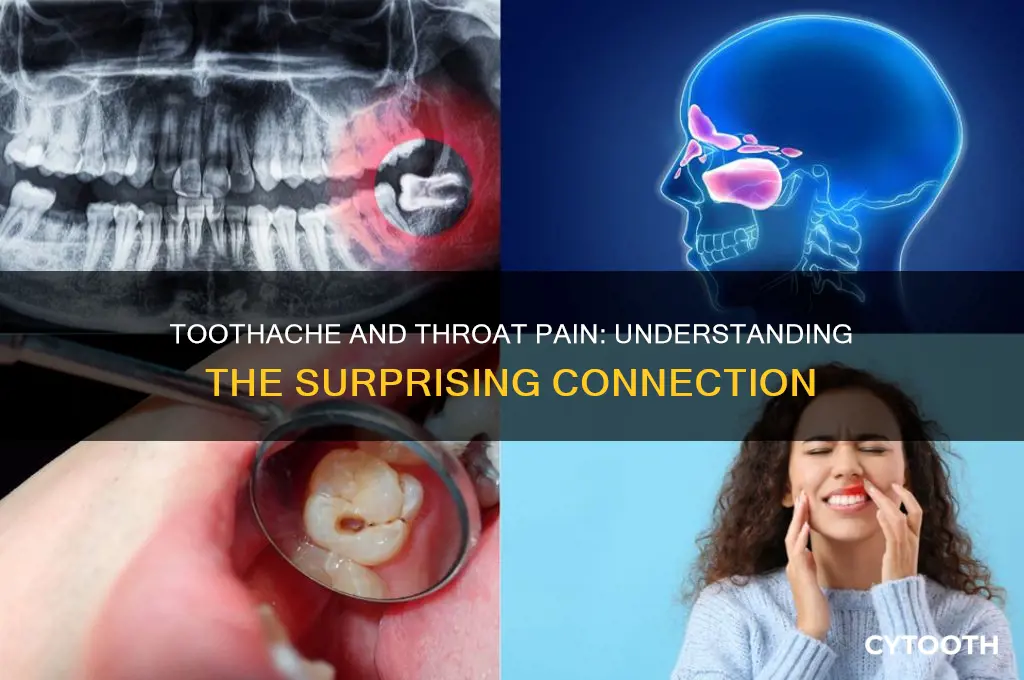
Toothaches and throat pain are common ailments that can sometimes overlap in symptoms, leading individuals to wonder if one can cause the other. While toothaches typically arise from issues within the teeth or gums, such as cavities, infections, or abscesses, throat pain is often associated with conditions like sore throats, tonsillitis, or pharyngitis. However, there is a connection between the two, as infections or inflammation in the oral cavity can spread to nearby areas, including the throat. For instance, a severe dental abscess can lead to swelling and discomfort that radiates to the throat, causing pain or difficulty swallowing. Additionally, referred pain—where pain is felt in a location different from its source—can occur, making it seem like a toothache is causing throat pain. Understanding this relationship is crucial for proper diagnosis and treatment, as addressing the root cause of the toothache may alleviate associated throat discomfort.
| Characteristics | Values |
|---|---|
| Direct Cause | Toothache itself does not directly cause throat pain. However, infections or inflammation in the tooth or surrounding areas can spread to nearby structures, potentially affecting the throat. |
| Referred Pain | Toothache can cause referred pain, where the pain is felt in a different location, such as the throat, due to shared nerve pathways. |
| Infections | Dental abscesses or infections can spread to the throat, causing pain, swelling, or discomfort. |
| Swelling | Inflammation or swelling from a toothache can press on nearby nerves or tissues, leading to throat pain or discomfort. |
| Common Conditions | Conditions like tooth decay, gum disease, or impacted wisdom teeth can indirectly contribute to throat pain if left untreated. |
| Symptoms Overlap | Symptoms like difficulty swallowing, earache, or jaw pain may accompany both toothache and throat pain, making the connection more apparent. |
| Medical Advice | If toothache and throat pain coexist, it is essential to consult a dentist or healthcare professional to identify and treat the underlying cause. |
What You'll Learn

Referred Pain Mechanisms
Toothaches can indeed cause throat pain, a phenomenon rooted in referred pain mechanisms. This occurs when pain is perceived in a location different from its actual source due to shared nerve pathways. For instance, the trigeminal nerve, responsible for facial and oral sensations, overlaps with nerves supplying the throat, leading to confusion in pain signaling. This overlap explains why a decaying molar or infected gum might manifest as soreness in the throat, even though the throat itself is unaffected.
Understanding this mechanism requires a closer look at the body’s sensory system. Nerves from the teeth and throat converge at the same spinal cord level, causing the brain to misinterpret the origin of pain signals. For example, inflammation in the lower wisdom tooth (third molar) often radiates to the throat or ear, mimicking symptoms of a sore throat or earache. This is not merely psychological; it’s a physiological quirk of neural wiring. To differentiate, note that referred pain typically lacks localized throat symptoms like redness or swelling, which are common in direct throat infections.
Clinically, referred pain is diagnosed through process of elimination. If throat discomfort persists despite normal throat exams and resolves with dental treatment, it strongly suggests a dental origin. For instance, a patient with untreated periodontal disease might describe a persistent "scratchy" throat sensation, only to find relief after addressing the oral infection. Dentists often use cold tests or X-rays to pinpoint the tooth responsible, as the pain’s intensity and location can vary based on the affected nerve branch.
Managing referred pain involves targeting the source. Over-the-counter analgesics like ibuprofen (400–600 mg every 6 hours) can provide temporary relief, but definitive treatment requires dental intervention—be it a root canal, extraction, or gum therapy. Ignoring the dental issue risks complications, such as abscess formation, which can exacerbate both oral and referred symptoms. For immediate comfort, rinsing with warm salt water (1 teaspoon salt in 8 ounces of water) may soothe throat irritation, though it doesn’t address the underlying cause.
In summary, referred pain mechanisms highlight the intricate connections within the nervous system, explaining why toothaches can masquerade as throat pain. Recognizing this link is crucial for accurate diagnosis and treatment, ensuring patients don’t mistakenly treat the throat when the teeth are the true culprits. Always consult a dentist if throat pain coincides with dental symptoms, as timely intervention prevents unnecessary suffering and potential systemic health risks.
Can Tooth Pain Cause Dizziness? Exploring the Surprising Connection
You may want to see also
Infection Spread Risks
Toothaches can indeed radiate pain to the throat, but the more pressing concern is the potential for infection to spread from the tooth to surrounding areas. Dental infections, if left untreated, can migrate through the bloodstream or adjacent tissues, leading to complications such as pharyngitis (throat inflammation) or even systemic issues. Understanding this risk is crucial for timely intervention.
Consider the anatomy: the roots of upper molars are in close proximity to the maxillary sinus, while infections in lower molars can spread to the submandibular space. If bacteria breach these barriers, they can travel to the pharynx, causing throat pain, swelling, or difficulty swallowing. For instance, a periapical abscess—an infection at the tooth’s root—can drain into the throat, mimicking symptoms of a sore throat. This is why a persistent toothache accompanied by throat discomfort warrants immediate dental evaluation.
Preventing infection spread begins with proactive oral hygiene and regular dental check-ups. If a toothache occurs, rinsing with warm saltwater can temporarily alleviate symptoms, but it’s not a substitute for professional care. Antibiotics, such as amoxicillin (500 mg every 8 hours for adults), may be prescribed to control bacterial spread, but they should only be taken under a dentist’s guidance. Delaying treatment increases the risk of complications like Ludwig’s angina, a severe infection of the floor of the mouth that can obstruct airways.
Children and older adults are particularly vulnerable due to weaker immune systems or preexisting health conditions. For children, monitor for signs like fever, drooling, or refusal to eat, which may indicate an infection spreading beyond the tooth. In older adults, especially those with diabetes or cardiovascular disease, even minor dental infections can escalate rapidly. Early intervention is key: a root canal or extraction may be necessary to halt the infection’s progression and prevent systemic involvement.
In summary, while toothaches can cause throat pain, the underlying infection spread poses a greater threat. Recognizing symptoms like persistent pain, swelling, or fever and seeking prompt dental care can prevent complications. Remember, oral health is interconnected with overall well-being—neglecting one can jeopardize the other.
Tooth Infection and Back Pain: Uncovering the Surprising Connection
You may want to see also
Nerve Pathways Link
Toothaches and throat pain, though seemingly unrelated, can be connected through the intricate network of nerve pathways in the head and neck. The trigeminal nerve, responsible for facial and oral sensations, shares close proximity with the glossopharyngeal nerve, which innervates the throat. When inflammation or infection occurs in a tooth, the trigeminal nerve can become irritated, potentially sending overlapping signals to the brain. This phenomenon, known as referred pain, may cause the brain to misinterpret the source of discomfort, leading to throat pain. Understanding this neural link is crucial for accurate diagnosis and targeted treatment.
Analyzing the anatomy further, the maxillary branch of the trigeminal nerve supplies the upper teeth and parts of the sinus cavity, while the glossopharyngeal nerve extends to the throat and tonsils. In cases of severe dental abscesses or sinus infections, inflammation can compress or irritate these nerves, creating a pathway for pain to radiate from the tooth to the throat. For instance, a molar infection in the upper jaw might trigger sensations of soreness or tightness in the throat, even without direct throat involvement. This overlap highlights the importance of considering dental health when evaluating throat pain, especially in patients with no apparent throat symptoms.
From a practical standpoint, patients experiencing persistent throat discomfort alongside dental issues should seek a dual assessment. Dentists can identify infections or abscesses that may be causing referred pain, while ENT specialists can rule out throat-specific conditions. Over-the-counter anti-inflammatory medications like ibuprofen (200–400 mg every 4–6 hours) can temporarily alleviate symptoms, but they do not address the root cause. Warm salt water gargles (1/2 teaspoon of salt in 8 ounces of water) may provide symptomatic relief for throat irritation, though dental intervention remains essential for long-term resolution.
Comparatively, conditions like tonsillitis or pharyngitis typically present with localized throat symptoms, such as redness, swelling, or difficulty swallowing, without concurrent dental pain. In contrast, toothache-related throat pain often lacks these signs, making it easier to misdiagnose. For example, a 35-year-old patient with a throbbing upper molar and mild throat discomfort might be incorrectly treated for a throat infection if the dental source is overlooked. This underscores the need for healthcare providers to inquire about dental history and perform comprehensive oral exams when evaluating throat pain.
In conclusion, the nerve pathways linking the teeth and throat provide a biological basis for referred pain, offering a compelling explanation for why toothaches can manifest as throat discomfort. Recognizing this connection enables more accurate diagnoses and tailored treatments, ensuring patients receive appropriate care for both dental and throat-related issues. By integrating knowledge of neural anatomy into clinical practice, healthcare professionals can address the root cause of symptoms rather than merely managing surface-level manifestations.
Can the Flu Trigger Tooth Pain? Exploring the Surprising Connection
You may want to see also
Symptom Overlap Cases
Toothaches and throat pain often coexist, leaving patients and even some healthcare providers puzzled about their interconnectedness. This symptom overlap isn’t merely coincidental; it stems from the anatomical proximity of the oral cavity and pharynx, along with shared nerve pathways. For instance, the trigeminal nerve (responsible for facial and oral sensations) and the glossopharyngeal nerve (linked to throat sensations) can both be affected by dental infections, leading to referred pain. Understanding this neural crosstalk is crucial for accurate diagnosis and treatment.
Consider a scenario where a patient presents with a throbbing toothache and concurrent throat discomfort. The culprit might be a periapical abscess, a localized infection at the tooth’s root tip. As the infection spreads, it can irritate nearby tissues, including the pharynx, causing throat pain. In such cases, a dental X-ray or CBCT scan can confirm the abscess, while a warm saltwater gargle may provide temporary throat relief. However, definitive treatment—such as root canal therapy or extraction—is essential to address the root cause.
Another overlap occurs in cases of impacted wisdom teeth, particularly when they are partially erupted. The pressure and inflammation from the erupting tooth can irritate the adjacent mucous membranes, leading to both localized tooth pain and a sore throat. For adults aged 18–25, this is a common issue, often requiring surgical extraction. Post-operative care, including 500–1000 mg of acetaminophen every 6 hours for pain and a soft diet for 48–72 hours, can aid recovery and minimize symptom overlap.
TMJ disorders also exemplify symptom overlap, as jaw misalignment or dysfunction can cause toothaches and throat pain simultaneously. The temporomandibular joint’s proximity to the ear and throat means inflammation or strain can radiate pain to these areas. Patients may benefit from conservative measures like jaw exercises, a night guard, or anti-inflammatory medications (e.g., 200–400 mg of ibuprofen every 6–8 hours). Persistent cases may require consultation with a maxillofacial specialist.
Finally, systemic conditions like sinus infections or GERD can mimic this overlap. Sinusitis can cause referred tooth pain due to shared nerve pathways, while throat irritation from acid reflux may accompany dental discomfort. In such cases, treating the underlying condition—such as using nasal corticosteroids for sinusitis or proton pump inhibitors for GERD—can alleviate both symptoms. Always consult a healthcare provider to differentiate between localized dental issues and systemic causes.
Can a Bad Tooth Cause Throat Pain? Exploring the Connection
You may want to see also
Treatment Approaches Overview
Toothaches can indeed radiate pain to the throat, often due to shared nerve pathways or infections spreading from the oral cavity. Addressing this dual discomfort requires a targeted treatment approach that considers both the dental and pharyngeal aspects. Here’s a structured overview of effective strategies.
Step 1: Identify the Root Cause
Begin by consulting a dentist to determine if the toothache is due to decay, infection, or injury. A throat swab or imaging may be necessary to rule out secondary infections like tonsillitis or pharyngitis. For instance, a dental abscess can release bacteria into nearby tissues, inflaming the throat. Without pinpointing the source, symptom management remains temporary.
Step 2: Dental Interventions
If the toothache is primary, root canal therapy or extraction may be required. Antibiotics (e.g., amoxicillin 500 mg every 8 hours for adults) are prescribed for infections. Over-the-counter pain relievers like ibuprofen (200–400 mg every 4–6 hours) can alleviate both tooth and throat pain by reducing inflammation. For children, dosages vary by weight, so consult a pediatrician.
Step 3: Throat-Specific Remedies
Gargling with warm salt water (1/2 teaspoon salt in 8 oz water) reduces throat inflammation. Lozenges containing benzocaine numb the pharynx temporarily. Humidifiers add moisture to the air, easing irritation. Avoid acidic or spicy foods that exacerbate soreness. If pain persists, a corticosteroid like dexamethasone may be prescribed to reduce swelling.
Cautions and Considerations
Antibiotics should only be used if bacterial infection is confirmed to avoid antibiotic resistance. Prolonged use of throat lozenges can mask symptoms, delaying proper diagnosis. Children under 2 should not use lozenges due to choking risks. Always follow professional advice, as self-medication can worsen conditions like untreated abscesses or strep throat.
Treating toothache-induced throat pain demands a dual approach: resolving the dental issue while soothing the throat. Combining professional interventions with home remedies provides comprehensive relief. Early action prevents complications, ensuring both oral and pharyngeal health are restored efficiently.
Tooth Pain and Hypertension: Exploring the Surprising Connection
You may want to see also
Frequently asked questions
Yes, a toothache can cause throat pain, especially if the infection or inflammation spreads from the tooth to nearby areas, including the throat. Conditions like abscessed teeth or gum infections can lead to referred pain or swelling that affects the throat.
A tooth infection can spread to the surrounding tissues, including the throat, through the bloodstream or lymphatic system. This can cause inflammation, swelling, or irritation in the throat, resulting in pain or discomfort.
Symptoms may include difficulty swallowing, a sore throat, swollen lymph nodes in the neck, and a persistent feeling of something stuck in the throat. These symptoms often accompany tooth pain, bad breath, or a foul taste in the mouth.
Seek immediate care if you experience severe pain, fever, difficulty breathing or swallowing, or if the pain persists for more than a few days. These could indicate a serious infection that requires prompt treatment.