Matthew Grant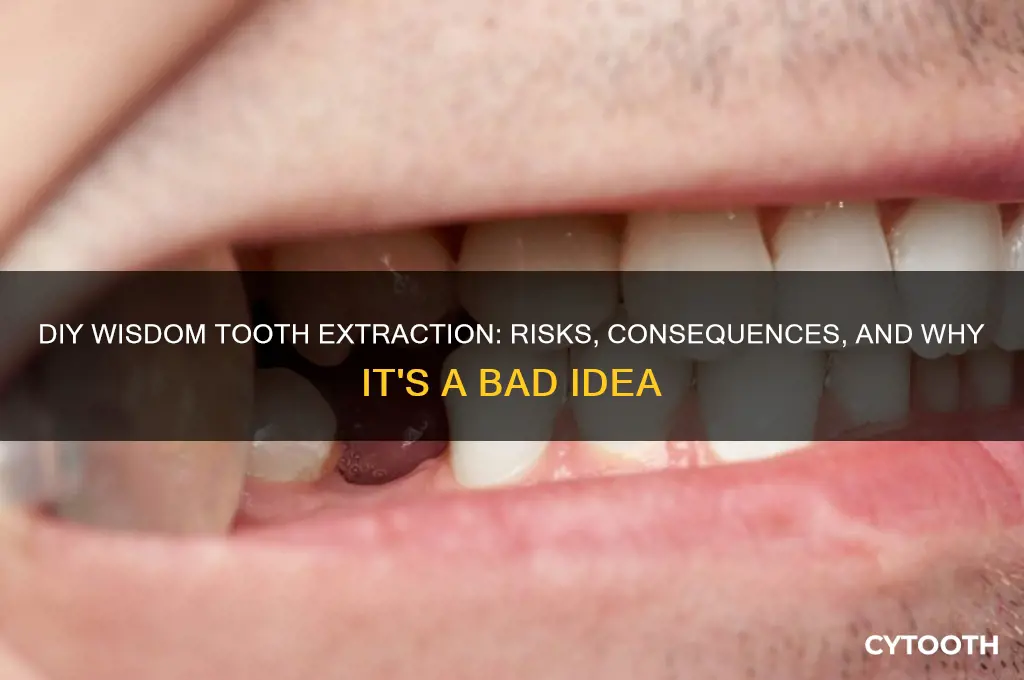
Pulling your own wisdom tooth is a risky and highly discouraged practice due to the potential for severe complications. Wisdom teeth are often located deep within the jaw, surrounded by nerves, blood vessels, and other teeth, making extraction a complex procedure that requires professional expertise. Attempting to remove one yourself could lead to infection, excessive bleeding, nerve damage, or even a fractured jaw. Additionally, incomplete removal of the tooth or its roots can cause long-term issues, such as abscesses or gum disease. It is always best to consult a dentist or oral surgeon, who can safely assess the situation, provide anesthesia, and ensure the procedure is done correctly, minimizing pain and complications.
What You'll Learn
- Pain and Discomfort: Immediate and intense pain, potential nerve damage, and prolonged healing
- Infection Risk: Open wound may lead to bacterial infections, swelling, and abscesses
- Bleeding Complications: Excessive bleeding, difficulty clotting, and risk of dry socket
- Damage to Adjacent Teeth: Misalignment, cracks, or harm to nearby teeth and gums
- Post-Extraction Care: Need for antibiotics, pain management, and strict oral hygiene practices

Pain and Discomfort: Immediate and intense pain, potential nerve damage, and prolonged healing
Attempting to extract your own wisdom tooth is a recipe for immediate and intense pain. Unlike a minor toothache, this pain isn’t localized or fleeting—it’s a deep, throbbing agony that radiates through your jaw and face. The pressure required to loosen and remove a tooth, especially one as stubborn as a wisdom tooth, often exceeds what your hands or tools can safely manage. Without proper anesthesia, you’ll feel every nerve-shattering moment, making this a profoundly uncomfortable experience.
Beyond the initial pain, there’s a significant risk of nerve damage. Wisdom teeth are often located near the inferior alveolar nerve, which supplies sensation to your lower lip, chin, and tongue. Even a slight miscalculation during extraction can sever or compress this nerve, leading to temporary or permanent numbness, tingling, or loss of function. Professional dentists use precise imaging and techniques to avoid this, but without their expertise, you’re essentially gambling with your facial nerves.
The aftermath of a DIY extraction is rarely quick or clean. Prolonged healing is almost guaranteed due to the high likelihood of infection, improper removal, or leftover tooth fragments. Unlike a simple procedure performed by a dentist, who can ensure the socket is thoroughly cleaned and sutured, your at-home attempt may leave debris or bacteria behind. This can lead to dry socket, a painful condition where the blood clot protecting the extraction site dislodges, exposing bone and nerves. Healing times can stretch from days to weeks, with persistent discomfort and potential complications.
If you’re considering this, pause and ask yourself: Is the temporary relief of avoiding a dentist’s visit worth the risk of excruciating pain, nerve damage, and a prolonged recovery? The answer is almost always no. Professional extraction, though costly, ensures safety, minimizes pain, and promotes faster healing. For those concerned about cost, many clinics offer payment plans or sliding-scale fees. Your oral health—and your nerves—deserve better than a risky DIY attempt.
Wisdom Tooth Woes: Essential Steps for Pain Relief and Recovery
You may want to see also
Infection Risk: Open wound may lead to bacterial infections, swelling, and abscesses
An open wound in your mouth is a breeding ground for bacteria, and pulling your own wisdom tooth significantly increases the risk of infection. Unlike a cut on your skin, oral wounds are constantly exposed to food, drink, and the natural bacteria in your mouth, creating the perfect storm for complications.
Saliva, while beneficial for digestion and oral health, contains numerous bacteria that can easily infiltrate an open socket, leading to infections. This is especially true if proper sterilization techniques are not employed, which is highly unlikely in a DIY tooth extraction scenario.
Imagine a small cut on your finger, but instead of being able to keep it clean and dry, you constantly introduce food particles and moisture. This is essentially what happens when you attempt to extract a wisdom tooth at home. The risk of infection skyrockets, potentially leading to painful and dangerous consequences. Bacterial infections in the mouth can quickly escalate, causing swelling, redness, and the formation of abscesses – pockets of pus that indicate a severe infection. These abscesses can be extremely painful and may require surgical drainage and a course of antibiotics to resolve.
The human mouth harbors over 700 different species of bacteria, many of which are opportunistic pathogens, meaning they can cause disease under favorable conditions. When you create an open wound by pulling a tooth, you provide these bacteria with an ideal environment to thrive and multiply. For instance, *Streptococcus mutans* and *Porphyromonas gingivalis* are common oral bacteria associated with dental infections and gum disease. Without the sterile environment and skilled techniques of a dental professional, controlling these bacteria becomes nearly impossible.
Practical Tip: If you experience any signs of infection after a tooth extraction, such as persistent pain, swelling, fever, or discharge, seek immediate dental attention. Early intervention is crucial to prevent the infection from spreading and causing further complications.
Identifying the Tooth Located Just in Front of Your Wisdom Tooth
You may want to see also
Bleeding Complications: Excessive bleeding, difficulty clotting, and risk of dry socket
Excessive bleeding is one of the most immediate and alarming risks of attempting to pull your own wisdom tooth. Without proper training, you’re likely to damage surrounding tissues, sever small blood vessels, or even nick a major artery like the maxillary artery. This can result in bleeding that’s difficult to control at home, requiring emergency intervention. Unlike a professional extraction, where a dentist can quickly cauterize or suture the area, you’ll be left scrambling for solutions like gauze or cold compresses, which may not be effective. The risk escalates if you’re taking blood thinners or have a bleeding disorder, making this a potentially life-threatening scenario.
Difficulty clotting compounds the problem, as a stable blood clot is essential for proper healing. When you pull a tooth yourself, the extraction site is often jagged or uneven, disrupting the natural clotting process. This leaves the socket exposed to infection and prolongs recovery. Factors like smoking, poor nutrition, or dehydration further impair clotting, increasing the likelihood of complications. Without professional guidance, you may not recognize the signs of inadequate clotting, such as persistent oozing or a dark, empty socket, until it’s too late.
The risk of dry socket—a painful condition where the clot dislodges or fails to form—skyrockets with DIY extractions. Dry socket exposes the underlying bone and nerves, causing intense pain that radiates to the ear or neck. Over-the-counter pain relievers like ibuprofen (600–800 mg every 6–8 hours) may provide temporary relief, but they won’t address the root cause. Professional extractions minimize this risk through techniques like careful tooth sectioning and post-op care instructions, which are impossible to replicate at home.
To mitigate these risks, consider practical precautions if you’re tempted to attempt self-extraction. First, assess whether the tooth is fully erupted and easily accessible—partial eruptions or impacted teeth are strictly off-limits. Second, avoid tools like pliers or makeshift instruments, which increase tissue trauma. Instead, opt for sterile dental tools if you must proceed. However, the safest and most effective approach is to consult a dentist, who can evaluate the tooth, administer local anesthesia, and ensure proper aftercare to prevent bleeding complications and dry socket. The temporary cost of a professional extraction far outweighs the long-term consequences of a botched DIY attempt.
Wisdom Tooth Fell Out? Immediate Steps and Care Tips
You may want to see also
Damage to Adjacent Teeth: Misalignment, cracks, or harm to nearby teeth and gums
Attempting to extract your own wisdom tooth is a risky endeavor, and one of the most significant dangers lies in the potential damage to adjacent teeth and gums. The force required to remove a wisdom tooth can easily transfer to neighboring structures, leading to misalignment, cracks, or other forms of harm. For instance, using pliers or similar tools without proper technique can place excessive pressure on the surrounding teeth, causing them to shift or fracture. Even a slight misalignment can disrupt your bite, leading to long-term issues like jaw pain, difficulty chewing, or uneven tooth wear.
Consider the anatomy of the mouth: wisdom teeth are often positioned close to the second molars, which are crucial for proper chewing function. If you accidentally damage these adjacent teeth during a DIY extraction, the consequences can be severe. A cracked tooth may require a crown, root canal, or even extraction if the damage is extensive. Gum tissue is equally vulnerable; improper extraction can cause lacerations, infections, or recession, exposing sensitive tooth roots and increasing the risk of decay. These complications are not only painful but also costly to repair, often requiring multiple dental visits and specialized procedures.
From a comparative perspective, professional extractions minimize these risks through precise techniques and tools. Dentists use specialized elevators and forceps designed to grip the tooth securely without damaging surrounding structures. They also administer local anesthesia to ensure the procedure is painless and use surgical techniques to protect the gums and bone. In contrast, DIY methods lack these safeguards, making it nearly impossible to control the force and direction of the extraction. The result is often collateral damage that could have been avoided with professional care.
If you’re tempted to try a self-extraction, pause and consider the long-term implications. For example, a misaligned tooth might seem minor initially but can lead to chronic issues like temporomandibular joint (TMJ) disorder, which affects jaw movement and causes persistent pain. Similarly, a cracked tooth can become a breeding ground for bacteria, leading to abscesses or systemic infections if left untreated. Practical advice: instead of risking irreversible harm, consult a dentist or oral surgeon who can assess whether the wisdom tooth needs removal and perform the procedure safely. While it may seem cost-effective to attempt it yourself, the potential for damaging adjacent teeth and gums far outweighs any short-term savings.
Pre-Wisdom Tooth Surgery Checklist: Essential Steps for a Smooth Recovery
You may want to see also
Post-Extraction Care: Need for antibiotics, pain management, and strict oral hygiene practices
Pulling your own wisdom tooth is a risky endeavor that can lead to severe complications, including infection, nerve damage, and prolonged healing. Even if the extraction seems successful, the aftermath requires meticulous care to prevent further issues. Post-extraction care is not just about managing discomfort—it’s about safeguarding your oral and overall health. Antibiotics, pain management, and strict oral hygiene practices are non-negotiable components of this process, each playing a unique role in ensuring a smooth recovery.
Antibiotics: A Preventive Shield Against Infection
Infection is the most immediate threat after a tooth extraction, especially in a DIY scenario where sterile techniques may not be followed. Antibiotics such as amoxicillin (500 mg, three times daily for 5–7 days) are often prescribed to prevent bacterial invasion of the socket. For those allergic to penicillin, clindamycin (300 mg, four times daily) is a common alternative. These medications are not optional—they are a critical barrier against complications like dry socket or systemic infections. Ignoring this step can turn a minor procedure into a major health crisis, particularly for individuals with compromised immune systems or pre-existing conditions like diabetes.
Pain Management: Balancing Relief and Recovery
Pain after extraction is inevitable, but mismanagement can exacerbate the issue. Over-the-counter analgesics like ibuprofen (600 mg every 6 hours) or acetaminophen (1000 mg every 8 hours) are typically sufficient for the first 48 hours. For severe pain, a dentist might prescribe stronger options like hydrocodone. However, opioids carry risks of dependency and should be used sparingly. Applying a cold compress for 20 minutes on, 20 minutes off can reduce swelling and numb the area naturally. Avoid hot packs or strenuous activity, as increased blood flow can prolong bleeding and discomfort.
Strict Oral Hygiene: The Foundation of Healing
The extraction site is a breeding ground for bacteria if not kept clean. Rinsing with warm salt water (1/2 teaspoon of salt in 8 ounces of water) every 2–3 hours helps remove debris and reduces inflammation. Avoid brushing the area directly for the first 24 hours, but continue to clean the rest of your mouth gently. After the first day, incorporate a soft-bristled brush and alcohol-free mouthwash into your routine. Refrain from smoking, using straws, or eating crunchy foods, as these actions can dislodge the blood clot essential for healing. Poor hygiene at this stage can lead to dry socket, a painful condition where the bone is exposed due to clot loss.
The Interplay of Care Practices: A Holistic Approach
Post-extraction care is not a series of isolated steps but an interconnected system. Antibiotics reduce infection risk, pain management ensures compliance with hygiene routines, and oral hygiene prevents complications that could negate the benefits of medication. For instance, uncontrolled pain might lead to neglecting oral care, while an infection can intensify discomfort and prolong recovery. Adhering to these practices collectively minimizes the risk of long-term issues, such as bone loss or chronic pain. Age and health status influence recovery—younger individuals may heal faster, but older adults or those with conditions like osteoporosis require extra vigilance.
Practical Tips for a Smooth Recovery
Elevate your head with extra pillows while sleeping to reduce swelling. Stick to soft, cool foods like yogurt or mashed potatoes for the first few days. Stay hydrated, but avoid hot beverages that can dissolve the protective clot. Monitor the site for signs of infection (foul taste, pus, fever) and contact a dentist immediately if symptoms arise. While DIY extractions are ill-advised, understanding post-extraction care underscores the complexity of even seemingly simple dental procedures. Proper care is not just about healing—it’s about preserving your oral health for the long term.
Cavity in Wisdom Tooth? Here’s What to Do Next
You may want to see also
Frequently asked questions
Pulling your own wisdom tooth without professional help can lead to severe pain, infection, nerve damage, excessive bleeding, and improper healing. It’s highly risky and not recommended.
Even if the tooth feels loose, attempting to remove it at home can cause complications like breakage, infection, or damage to surrounding teeth and gums. Consult a dentist instead.
Risks include incomplete removal, infection, dry socket (a painful condition where the blood clot dislodges), nerve damage, and prolonged bleeding.
While it might seem cost-effective, complications from DIY extraction can lead to expensive emergency dental treatments, making it more costly in the long run.
Manage pain with over-the-counter pain relievers, rinse with warm salt water, and avoid irritating the area. Do not attempt to pull the tooth yourself—wait for professional care.