Samantha Blake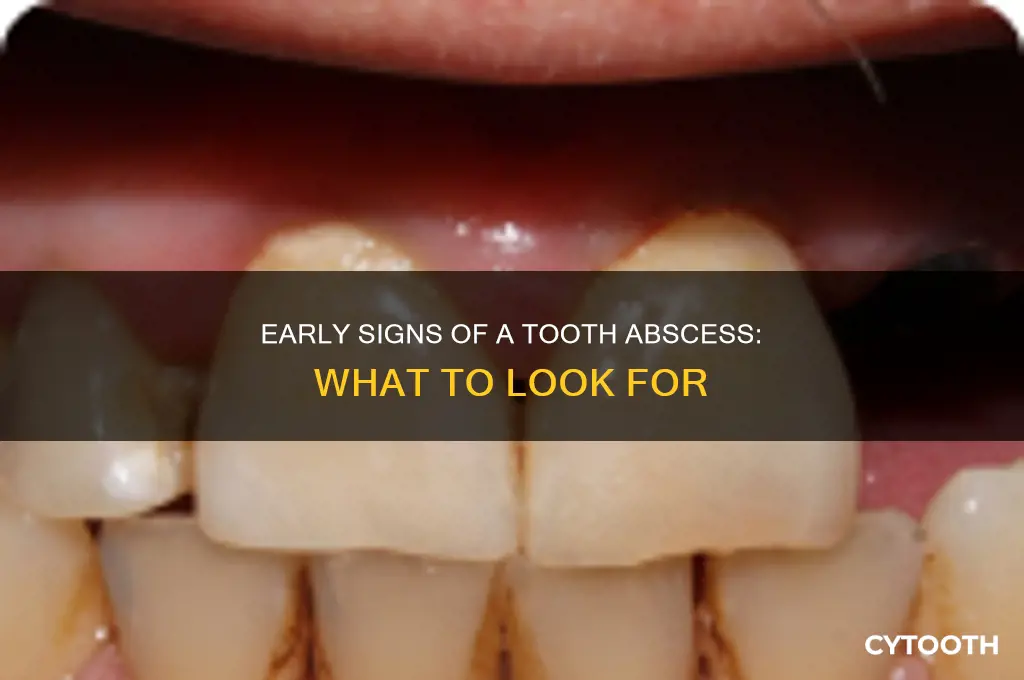
A tooth abscess, in its early stages, often begins as a subtle yet concerning oral issue. Initially, you might notice a persistent, throbbing pain in or around the affected tooth, which can radiate to the jaw, ear, or neck. The area may feel tender to the touch, and you could experience sensitivity to hot or cold foods. Visually, the gum near the infected tooth might appear red, swollen, or inflamed, sometimes with a small, pimple-like bump called a parulis or gum boil, which can ooze pus. Bad breath or a foul taste in the mouth may also be present. Recognizing these early signs is crucial, as prompt treatment can prevent the infection from worsening and causing more severe complications.
What You'll Learn

Small, red bump on gums
A small, red bump on the gums can be one of the earliest signs of a developing tooth abscess, a localized infection that forms at the root of a tooth or between the gum and a tooth. This bump, often referred to as a gum boil or parulis, is the body’s response to trapped bacteria, pus, and inflammation. It typically appears as a shiny, raised area that may be tender to the touch and can range in size from a pinpoint dot to a pea-sized swelling. While it may seem minor, this symptom is a warning sign that the infection is active and spreading, potentially threatening the tooth and surrounding tissues.
Analyzing its appearance, the bump is usually bright red due to increased blood flow to the infected area, though it may also have a whitish or yellowish center if pus is present. It often develops near the root of the affected tooth, though its exact location can vary. For instance, an abscess originating from a molar might cause the bump to appear farther back in the mouth, while an infection in a front tooth could result in a more visible swelling near the gumline. Ignoring this early symptom can lead to more severe complications, such as bone loss, tooth decay, or even systemic infection if the bacteria enter the bloodstream.
If you notice a small, red bump on your gums, immediate action is crucial. Start by rinsing your mouth with warm saltwater to reduce inflammation and gently clean the area with a soft toothbrush. Avoid applying pressure directly on the bump, as this can release pus and spread the infection. Over-the-counter pain relievers like ibuprofen (200–400 mg every 6 hours) can help manage discomfort, but they are not a substitute for professional treatment. Schedule a dental appointment within 24–48 hours, as antibiotics or a root canal may be necessary to eliminate the infection. Delaying care increases the risk of tooth loss or more invasive procedures.
Comparatively, a small, red bump on the gums differs from other gum issues like canker sores or gingivitis. Canker sores typically appear inside the mouth, are grayish with a red border, and are not associated with a specific tooth. Gingivitis causes generalized redness and swelling along the gumline, often accompanied by bleeding during brushing. In contrast, the abscess-related bump is localized, tied to a specific tooth, and may be accompanied by symptoms like throbbing pain, bad breath, or a foul taste in the mouth. Recognizing these distinctions can help you respond appropriately and seek timely dental intervention.
Practically, prevention is key to avoiding this early stage of a tooth abscess. Maintain good oral hygiene by brushing twice daily with fluoride toothpaste, flossing daily, and using an antiseptic mouthwash. Regular dental check-ups every six months allow your dentist to detect and treat issues like cavities or gum disease before they lead to infection. If you have a weakened immune system, diabetes, or a history of dental problems, be especially vigilant, as these factors increase susceptibility to abscesses. By staying proactive, you can protect your oral health and prevent the small, red bump from becoming a major dental crisis.
Treating Abscessed Teeth: Dentists' Role in Diagnosis and Relief
You may want to see also
Swelling near affected tooth
One of the earliest and most noticeable signs of a tooth abscess is swelling near the affected tooth. This swelling, often referred to as a gum boil or parulis, is your body’s response to infection. It typically appears as a small, tender bump on the gum tissue near the infected tooth. The area may feel warm to the touch and can be accompanied by redness or inflammation. While it might start as a minor discomfort, ignoring this symptom can lead to more severe complications, such as the spread of infection to surrounding tissues or even systemic issues.
To identify swelling in the early stages, pay attention to changes in your gum line. Gently press around the suspected area—if it feels spongy or painful, this could indicate an abscess. Swelling may also cause the cheek or face to appear puffy, particularly if the infection is deep or spreading. For children or older adults, who may not communicate discomfort clearly, visual inspection is crucial. Use a small mirror to examine the gums and teeth, looking for any unusual bumps or discoloration.
If you notice swelling, immediate action is essential. Rinse your mouth with warm saltwater (1/2 teaspoon of salt in 8 ounces of water) to temporarily reduce discomfort and draw out pus. Avoid applying heat or pressure directly to the area, as this can worsen inflammation. Over-the-counter pain relievers like ibuprofen (200–400 mg every 4–6 hours for adults) can help manage pain, but they do not treat the infection. Schedule a dental appointment within 24–48 hours, as antibiotics or drainage may be necessary to resolve the abscess.
Comparing early-stage swelling to other oral issues can help differentiate an abscess. Unlike a canker sore, which is typically flat and appears inside the mouth, abscess-related swelling is raised and localized near a tooth. It also differs from gingivitis, where redness and swelling are more generalized and not tied to a specific tooth. Understanding these distinctions ensures you seek appropriate care promptly, preventing the infection from progressing to more serious stages, such as bone loss or sepsis.
Identifying a Dog Tooth Abscess: Symptoms and Visual Signs
You may want to see also
Shiny, red, inflamed gums
To identify this symptom effectively, examine your gums in natural light, gently pulling back the cheek or lip for a clear view. Compare the appearance of the suspected area to the surrounding gum tissue—healthy gums are pale pink and firm, while inflamed gums will stand out as brighter red and may feel tender or swollen. If you notice a persistent shiny redness, especially accompanied by mild discomfort or sensitivity, it’s crucial to act promptly. Early intervention can prevent the abscess from worsening and reduce the risk of complications like bone loss or systemic infection.
While shiny, red, inflamed gums are a common early sign, they can sometimes be mistaken for gingivitis or other gum issues. To differentiate, note whether the redness is localized to a specific tooth or more widespread. Abscess-related inflammation is typically concentrated and may be accompanied by a pimple-like bump on the gums (a dental fistula) that drains pus. If you’re unsure, a dental professional can provide a definitive diagnosis using tools like X-rays or a periodontal probe to assess the extent of infection.
Preventing this symptom starts with diligent oral hygiene: brush twice daily with fluoride toothpaste, floss regularly, and avoid sugary foods that fuel bacterial growth. For those prone to gum issues, incorporating an antimicrobial mouthwash into your routine can help reduce infection risk. If you notice shiny, red, inflamed gums, avoid self-treating with over-the-counter remedies alone—these may mask symptoms without addressing the underlying infection. Instead, schedule a dental appointment within 48 hours to receive appropriate treatment, which may include antibiotics, drainage, or a root canal. Early action not only preserves your oral health but also spares you from the intense pain and systemic risks of a neglected abscess.
Tooth Abscess After Popping: Appearance, Symptoms, and What to Expect
You may want to see also
Throbbing pain in tooth
A throbbing pain in your tooth is often the first alarm bell signaling a potential abscess in its early stages. This pain isn’t constant but comes in waves, intensifying when lying down or applying pressure. It’s your body’s way of telling you something is deeply wrong beneath the surface, where infection is brewing in the pulp or surrounding tissues. Ignoring this symptom can lead to more severe complications, making early recognition crucial.
Analyzing the nature of this pain reveals its connection to the abscess’s progression. In the early stages, the infection causes inflammation, which presses on nearby nerves, resulting in the characteristic throbbing. This pain often radiates to the jaw, ear, or head, making it difficult to pinpoint the exact source. Over-the-counter pain relievers like ibuprofen (600–800 mg every 6–8 hours) may provide temporary relief, but they do not address the underlying infection. If the pain persists for more than 48 hours, it’s a clear sign to seek dental care immediately.
For those experiencing this symptom, practical steps can help manage discomfort while awaiting professional treatment. Rinsing with warm saltwater (1/2 teaspoon of salt in 8 ounces of water) can reduce inflammation and soothe the area. Avoid hot or cold foods and beverages, as extreme temperatures can exacerbate the pain. Applying a cold compress to the cheek for 15–20 minutes at a time can also help numb the area and reduce swelling. However, these measures are temporary fixes—not substitutes for dental intervention.
Comparing this early-stage symptom to later signs of an abscess highlights the importance of acting swiftly. While throbbing pain is an initial indicator, untreated abscesses can lead to visible swelling, fever, and even pus drainage. At this point, the infection may have spread to other parts of the body, posing serious health risks. Early detection and treatment, such as root canal therapy or drainage, can prevent such outcomes and save the affected tooth.
In conclusion, a throbbing toothache is not merely an inconvenience—it’s a critical warning sign of a developing abscess. Recognizing this symptom and taking immediate action can prevent further damage and preserve oral health. Don’t wait for the pain to worsen or for visible signs to appear; consult a dentist at the first sign of trouble. Your tooth—and your overall well-being—depend on it.
Effective Treatments for Tooth Abscess: What Dentists Do to Relieve Pain
You may want to see also
Pimple-like bump on gum line
A pimple-like bump on the gum line is often one of the earliest signs of a tooth abscess, a localized infection at the root of a tooth or between the gum and a tooth. This small, raised bump, known as a gum boil or parulis, is your body’s way of draining pus from the infection. It typically appears as a red, swollen dot that may feel tender to the touch. While it might resemble a pimple, it’s a clear indicator of an underlying issue that requires attention. Ignoring it can lead to more severe complications, such as bone loss or systemic infection.
To identify this symptom, examine your gum line carefully, especially near the area where you feel pain or discomfort. The bump may be accompanied by throbbing pain, bad breath, or an unpleasant taste in your mouth. If you notice these signs, it’s crucial to act promptly. Rinsing with warm salt water can provide temporary relief, but this is not a substitute for professional treatment. Avoid popping or squeezing the bump, as this can worsen the infection and spread bacteria.
From a comparative perspective, a pimple-like bump on the gum line differs from a typical acne pimple in both cause and treatment. While acne is related to clogged pores and oil glands, a gum boil stems from bacterial infection in the tooth or gums. Over-the-counter acne treatments are ineffective and potentially harmful in this case. Instead, a dentist will likely prescribe antibiotics to combat the infection and may perform a root canal or drainage procedure to address the source.
For practical management, maintain good oral hygiene by brushing twice daily with fluoride toothpaste and flossing regularly to prevent further bacterial buildup. If you’re in pain, over-the-counter pain relievers like ibuprofen (200–400 mg every 4–6 hours) can help manage discomfort, but always consult a healthcare provider for proper dosing, especially for children or individuals with medical conditions. Early intervention is key—schedule a dental appointment immediately if you suspect an abscess. Delaying treatment can lead to more invasive procedures and higher costs.
Unpleasant Taste of a Burst Tooth Abscess: What to Expect
You may want to see also
Frequently asked questions
In the early stages, a tooth abscess may appear as a small, pimple-like bump on the gums near the affected tooth. This bump, called a gum boil or parulis, can be red, swollen, and may ooze pus.
Yes, early signs of a tooth abscess can include discoloration of the tooth. The tooth may appear darker or yellowed due to the infection affecting the inner pulp and spreading to the enamel.
Early symptoms include redness, swelling, and tenderness in the gums around the infected tooth. The area may feel warm to the touch, and you might notice slight puffiness or inflammation.