Matthew Grant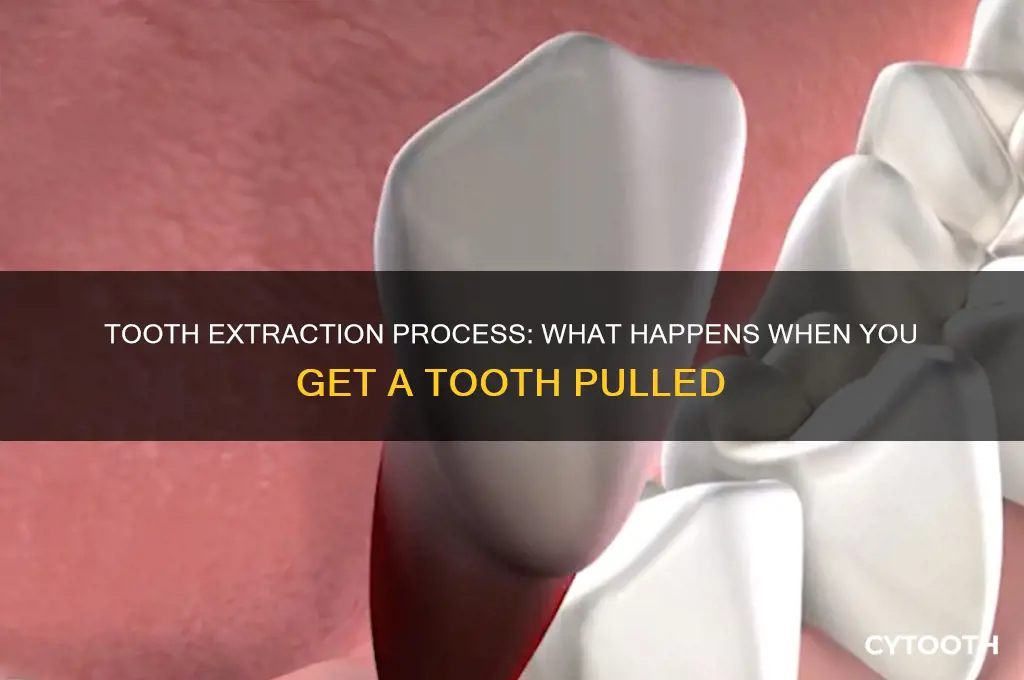
When you get a tooth pulled, the process typically begins with a consultation where the dentist or oral surgeon evaluates the tooth and discusses the procedure, including anesthesia options to ensure comfort. During the extraction, local anesthesia is administered to numb the area, and in some cases, sedation may be used for more complex procedures or anxious patients. The dentist then uses specialized tools to loosen the tooth from its socket and gently remove it, with the process usually lasting just a few minutes. Afterward, a blood clot forms in the socket, which is essential for healing, and patients are given post-operative care instructions, such as avoiding strenuous activity, using cold compresses to reduce swelling, and eating soft foods. Pain management is often addressed with prescribed or over-the-counter medications, and follow-up appointments may be scheduled to monitor healing and address any complications.
| Characteristics | Values |
|---|---|
| Pre-Procedure Consultation | Dentist examines the tooth, discusses risks, and reviews medical history. |
| Anesthesia | Local anesthesia (e.g., lidocaine) is administered to numb the area. |
| Tooth Loosening | Dentist uses tools to gently rock the tooth back and forth to loosen it. |
| Extraction Process | The tooth is carefully removed using forceps or surgical tools if complex. |
| Blood Clot Formation | A blood clot forms in the socket to aid healing. |
| Gauze Placement | Gauze is placed over the extraction site to control bleeding. |
| Post-Extraction Instructions | Avoid rinsing, spitting, or using straws for 24 hours. |
| Pain Management | Over-the-counter pain relievers (e.g., ibuprofen) or prescribed medication. |
| Swelling Reduction | Ice packs applied to the cheek for 10–20 minutes at a time. |
| Dietary Restrictions | Soft foods (e.g., yogurt, soup) recommended for the first few days. |
| Oral Hygiene | Gentle brushing and avoiding the extraction site for 24 hours. |
| Follow-Up Care | Dentist may schedule a follow-up to ensure proper healing. |
| Dry Socket Prevention | Avoid smoking, vigorous rinsing, or disturbing the clot. |
| Healing Time | Typically 1–2 weeks for initial healing; complete healing may take months. |
What You'll Learn
- Pre-extraction preparation: Numbing the area, discussing sedation options, and reviewing medical history for a safe procedure
- Extraction process: Loosening the tooth, removing it carefully, and ensuring minimal tissue damage
- Post-extraction care: Applying gauze, managing bleeding, and providing pain relief instructions
- Healing guidelines: Avoiding straws, soft diet, and keeping the site clean to prevent infection
- Follow-up care: Monitoring for complications, removing stitches if needed, and ensuring proper healing

Pre-extraction preparation: Numbing the area, discussing sedation options, and reviewing medical history for a safe procedure
Before a tooth extraction, the first step is numbing the area to ensure you remain comfortable throughout the procedure. Local anesthesia, such as lidocaine or articaine, is typically administered via injection into the gum tissue surrounding the tooth. The dosage varies based on the tooth's location and your pain tolerance, but a common amount is 1.8–3.6 mL of 2% lidocaine with 1:100,000 epinephrine to reduce bleeding. For children or anxious patients, a topical numbing gel may be applied first to ease the injection process. The goal is to block nerve signals in the area, rendering it insensitive to pain while keeping you fully awake and aware.
Sedation options are a critical part of pre-extraction preparation, especially for complex cases or patients with dental anxiety. Nitrous oxide (laughing gas) is a mild sedative delivered through a mask, allowing you to remain relaxed yet responsive. For deeper sedation, oral medications like diazepam (5–10 mg) or intravenous (IV) sedation administered by an anesthesiologist may be recommended. The choice depends on factors like the procedure’s complexity, your anxiety level, and medical history. Discussing these options with your dentist beforehand ensures you receive the appropriate level of comfort and safety during the extraction.
Reviewing your medical history is a non-negotiable step to prevent complications. Conditions like diabetes, hypertension, or heart disease can influence the procedure and require adjustments in anesthesia or sedation. Medications such as blood thinners (e.g., warfarin or aspirin) may need to be paused temporarily, but only under a physician’s guidance. Allergies to medications, previous reactions to anesthesia, and recent illnesses like a cold or fever must also be disclosed. This thorough review allows the dental team to tailor the procedure to your specific needs, minimizing risks and ensuring a smooth process.
Practical tips can enhance your pre-extraction experience. Wear comfortable clothing and avoid heavy meals 6–8 hours before the procedure, especially if sedation is involved. Arrange for a friend or family member to drive you home if sedation is used, as its effects can linger. For children, bringing a favorite toy or blanket can provide comfort during preparation. Lastly, follow all pre-procedure instructions carefully, such as fasting if required or taking prescribed antibiotics, to ensure the extraction proceeds without complications. Preparation is key to a safe and stress-free experience.
Soft Foods to Eat After Wisdom Tooth Removal: A Healing Guide
You may want to see also
Extraction process: Loosening the tooth, removing it carefully, and ensuring minimal tissue damage
The extraction process begins with loosening the tooth, a critical step that requires precision and patience. Using a specialized instrument called an elevator, the dentist gently applies controlled force to the tooth, rocking it back and forth to detach it from the periodontal ligament. This ligament, a fibrous connective tissue, anchors the tooth to the jawbone, and its gradual separation minimizes trauma to the surrounding bone and gum tissue. The dentist’s skill in this phase is paramount; excessive force can fracture the tooth or damage the alveolar socket, complicating the procedure and prolonging recovery. For children or patients with particularly stubborn teeth, a local anesthetic is administered to ensure comfort, typically lidocaine at a dosage of 1–2 mL for adults, adjusted for age and weight.
Once the tooth is sufficiently loosened, the removal phase demands careful technique to avoid tissue injury. The dentist uses forceps designed for the specific tooth type (e.g., upper molar or incisor) to grasp the tooth firmly at its crown. A steady, deliberate pull is applied in the direction of the tooth’s root, leveraging the natural curvature of the alveolar socket. In some cases, such as impacted wisdom teeth, the tooth may need to be sectioned into smaller pieces to facilitate removal without disturbing adjacent structures. This step is particularly crucial in adults over 30, whose jawbones are denser and less pliable than those of younger patients. Post-extraction, the dentist inspects the socket for any remaining fragments or damaged tissue, irrigating the area with saline solution if necessary.
Ensuring minimal tissue damage is the final, often overlooked, aspect of a successful extraction. After the tooth is removed, the dentist may place a sterile gauze over the socket and ask the patient to apply gentle pressure for 15–20 minutes to encourage clot formation. This clot, known as a fibrin clot, is essential for proper healing and prevents dry socket (alveolar osteitis), a painful condition that delays recovery. Patients are advised to avoid rinsing, spitting, or using straws for 24 hours to preserve the clot. For high-risk cases, such as smokers or those with compromised immune systems, the dentist might prescribe a chlorhexidine mouthwash (0.12% concentration) to reduce infection risk. Adhering to these post-extraction guidelines significantly reduces complications and promotes faster healing.
Comparatively, modern extraction techniques have evolved to prioritize tissue preservation, a stark contrast to historical methods that often prioritized speed over patient comfort. Advances in instrumentation, such as ultrasonic devices for bone cutting and piezoelectric surgery, allow for more precise extractions with reduced collateral damage. These tools are particularly beneficial for complex cases, such as teeth near vital structures like the inferior alveolar nerve. Additionally, the integration of 3D imaging (cone-beam computed tomography) enables dentists to plan extractions with unprecedented accuracy, further minimizing tissue disruption. While these technologies are more commonly used in specialized cases, their adoption underscores a broader shift toward patient-centered, minimally invasive dentistry.
In practice, the extraction process is a delicate balance of force and finesse, requiring both technical expertise and a nuanced understanding of oral anatomy. Patients can aid the process by following pre-extraction instructions, such as fasting for 6–8 hours if sedation is used and arranging for transportation if general anesthesia is administered. Post-extraction, adhering to a soft diet (e.g., yogurt, mashed potatoes) for 48–72 hours and avoiding strenuous activity for 24 hours can significantly reduce the risk of complications. While the procedure itself typically lasts 20–40 minutes, the long-term success depends on both the dentist’s technique and the patient’s commitment to aftercare. By focusing on loosening, removing, and preserving, the extraction process transforms a potentially daunting experience into a manageable, routine procedure.
Post-Extraction Diet: Soft, Nutritious Foods to Eat After a Tooth Extraction
You may want to see also
Post-extraction care: Applying gauze, managing bleeding, and providing pain relief instructions
After a tooth extraction, the immediate post-care routine is crucial to ensure proper healing and minimize complications. One of the first steps is applying gauze to the extraction site. The dentist or oral surgeon will place a sterile gauze pad over the socket and ask you to bite down firmly but gently. This pressure helps to stop the bleeding by promoting blood clot formation, a critical step in the healing process. Leave the gauze in place for about 30–45 minutes, avoiding the urge to check it frequently, as this can disrupt clotting. If bleeding persists, replace the gauze with a fresh pad and maintain pressure. Remember, a small amount of oozing is normal, but excessive bleeding warrants immediate attention.
Managing bleeding effectively goes beyond gauze application. Elevating your head slightly while resting can reduce blood flow to the extraction site, aiding in clot stabilization. Avoid strenuous activities, hot liquids, and alcohol for the first 24 hours, as these can increase blood flow and dislodge the clot. If bleeding continues despite these measures, contact your dentist or oral surgeon promptly. They may need to apply a hemostatic agent or provide further instructions to control the bleeding.
Pain relief is another critical aspect of post-extraction care. Over-the-counter pain relievers like ibuprofen (e.g., Advil or Motrin) or acetaminophen (e.g., Tylenol) are typically recommended to manage discomfort. Follow the dosage instructions on the label or as advised by your dentist. For adults, a common dose is 400–600 mg of ibuprofen every 6 hours or 650–1000 mg of acetaminophen every 4–6 hours. Avoid aspirin, as it can thin the blood and increase bleeding risk. If pain is severe or persists beyond a few days, consult your dentist, as this could indicate an infection or dry socket.
Practical tips can further enhance your recovery. Apply a cold compress to the cheek near the extraction site for 15–20 minutes at a time during the first 24 hours to reduce swelling and numb the area. After the first day, switch to a warm compress to promote healing. Maintain a soft diet, avoiding crunchy or sticky foods that could irritate the socket. Gently rinse your mouth with warm salt water starting 24 hours after the extraction to keep the area clean, but avoid vigorous rinsing or using straws, as suction can dislodge the blood clot.
By following these specific steps—applying gauze correctly, managing bleeding proactively, and adhering to pain relief guidelines—you can significantly improve your post-extraction experience. Each action plays a vital role in preventing complications and ensuring a smooth recovery. Always communicate with your dental care provider if you have concerns or if symptoms worsen, as timely intervention can make all the difference.
Soft and Soothing Foods to Eat After a Tooth Extraction
You may want to see also
Healing guidelines: Avoiding straws, soft diet, and keeping the site clean to prevent infection
After a tooth extraction, the initial 24–48 hours are critical for clot formation, a natural process that protects the socket and initiates healing. One seemingly harmless habit—using a straw—can disrupt this delicate clot, leading to a painful condition called dry socket. The suction created by sipping through a straw dislodges the clot, exposing sensitive nerves and bone. This risk persists for at least 72 hours post-extraction, making straw avoidance a non-negotiable rule during early recovery. Opt for gentle sipping directly from a cup instead, ensuring the healing process remains undisturbed.
Diet plays a pivotal role in post-extraction recovery, with soft, nutrient-rich foods being the cornerstone of a healing regimen. For the first 24 hours, stick to cold options like yogurt, applesauce, or smoothies (consumed without a straw) to reduce swelling and discomfort. Gradually introduce lukewarm foods like mashed potatoes, scrambled eggs, or well-cooked vegetables as tolerated. Avoid crunchy, spicy, or hot foods that could irritate the extraction site or dislodge the clot. Staying hydrated is equally vital; aim for 8–10 glasses of water daily, but skip alcoholic or caffeinated beverages, which can impede healing and increase bleeding risk.
Maintaining oral hygiene is essential, but cleaning the extraction site requires a gentle, strategic approach. For the first 24 hours, avoid rinsing or spitting forcefully to protect the clot. After this initial period, use a mild saltwater rinse (1/2 teaspoon of salt dissolved in 8 ounces of warm water) to cleanse the area without irritating it. Resume brushing your teeth the day after the procedure, but steer clear of the extraction site for at least 3–4 days. Once you begin cleaning the area, use a soft-bristled brush and gentle motions to prevent infection without disrupting healing tissues.
Infection prevention hinges on vigilance and consistency in following these guidelines. Signs of infection—such as persistent pain, swelling, fever, or foul-smelling discharge—warrant immediate attention from your dentist. To minimize risk, avoid smoking or vaping, as these habits reduce blood flow to the extraction site and introduce harmful bacteria. Keep your hands clean when handling food or touching your face, and change your toothbrush after the procedure to eliminate any lingering oral bacteria. By adhering to these measures, you create an environment conducive to healing, ensuring a smooth and complication-free recovery.
What Happens to Your Pulled Tooth: Dentists' Surprising Practices Explained
You may want to see also
Follow-up care: Monitoring for complications, removing stitches if needed, and ensuring proper healing
After a tooth extraction, the initial 24–48 hours are critical for clot formation and wound stabilization. Follow-up care begins with monitoring for complications such as dry socket, infection, or excessive bleeding. Dry socket, a painful condition where the blood clot dislodges, affects up to 5% of cases, particularly in lower molars and smokers. Signs include severe pain radiating to the ear or neck, visible bone in the socket, and foul breath. Immediate dental intervention is necessary if these symptoms arise, often involving cleaning the socket and applying medicated dressings.
Stitches, if used, are typically either dissolvable or non-dissolvable. Dissolvable stitches break down over 7–10 days and require no removal, but non-dissolvable stitches must be taken out by a dentist after 1–2 weeks. Patients should avoid tugging or disturbing the stitches, as premature removal can disrupt healing. During follow-up appointments, the dentist will assess stitch integrity and remove them if necessary, ensuring the gum tissue is closing properly. This step is crucial for preventing complications like food impaction or delayed healing.
Ensuring proper healing involves patient adherence to post-extraction instructions. For the first 24 hours, avoid rinsing, spitting forcefully, or using straws, as these actions can dislodge the blood clot. After 24 hours, gentle saltwater rinses (1/2 teaspoon of salt in 8 ounces of warm water) can aid healing and reduce bacteria. Pain management typically includes over-the-counter medications like ibuprofen (600 mg every 6 hours) or acetaminophen (1000 mg every 6 hours), avoiding aspirin due to its blood-thinning effects. A soft, cool diet (e.g., yogurt, smoothies) minimizes pressure on the extraction site, gradually reintroducing solid foods as tolerated.
Comparatively, children and elderly patients require tailored follow-up care. Pediatric patients often heal faster but may struggle with post-extraction instructions, necessitating parental supervision to prevent complications like dry socket. Elderly patients, particularly those on blood thinners or with compromised immune systems, face higher infection risks and may require antibiotic prophylaxis (e.g., amoxicillin 500 mg, 3 times daily for 3–5 days). Both age groups benefit from shorter follow-up intervals to ensure compliance and address concerns promptly.
In conclusion, follow-up care after a tooth extraction is a structured process focusing on complication monitoring, stitch management, and patient education. By recognizing early signs of issues, adhering to specific protocols, and tailoring care to individual needs, patients can achieve optimal healing outcomes. Regular communication with the dentist remains essential, as timely intervention can prevent minor issues from escalating into major complications.
Post-Extraction Care: Essential Tips for Healing After a Tooth Extraction
You may want to see also
Frequently asked questions
During a tooth extraction, the dentist or oral surgeon will numb the area with a local anesthetic to minimize discomfort. They will then use specialized tools to gently loosen the tooth from its socket and remove it. In some cases, a small incision in the gum tissue may be necessary.
Yes, in most cases, patients remain awake during a tooth extraction. Local anesthesia is used to numb the area, ensuring you don't feel any pain during the procedure. However, if you experience anxiety or have a complex extraction, your dentist might offer sedation options to help you relax.
Recovery time varies, but most people can resume normal activities within a few days. Initial healing typically takes about 1-2 weeks, during which you should avoid strenuous activities and follow post-extraction care instructions. Complete healing of the socket can take several weeks to a few months.
Stick to soft, cool foods for the first few days, such as yogurt, mashed potatoes, smoothies, and soups. Avoid hot, spicy, or hard foods that could irritate the extraction site. Gradually reintroduce solid foods as healing progresses, but avoid chewing on the side of the extraction until fully healed.
Over-the-counter pain relievers like ibuprofen or acetaminophen can help manage discomfort. Applying an ice pack to the cheek for 20 minutes on, then 20 minutes off, can reduce swelling. Follow your dentist’s instructions for rinsing with warm salt water after the first 24 hours to keep the area clean and promote healing.