Logan Hayes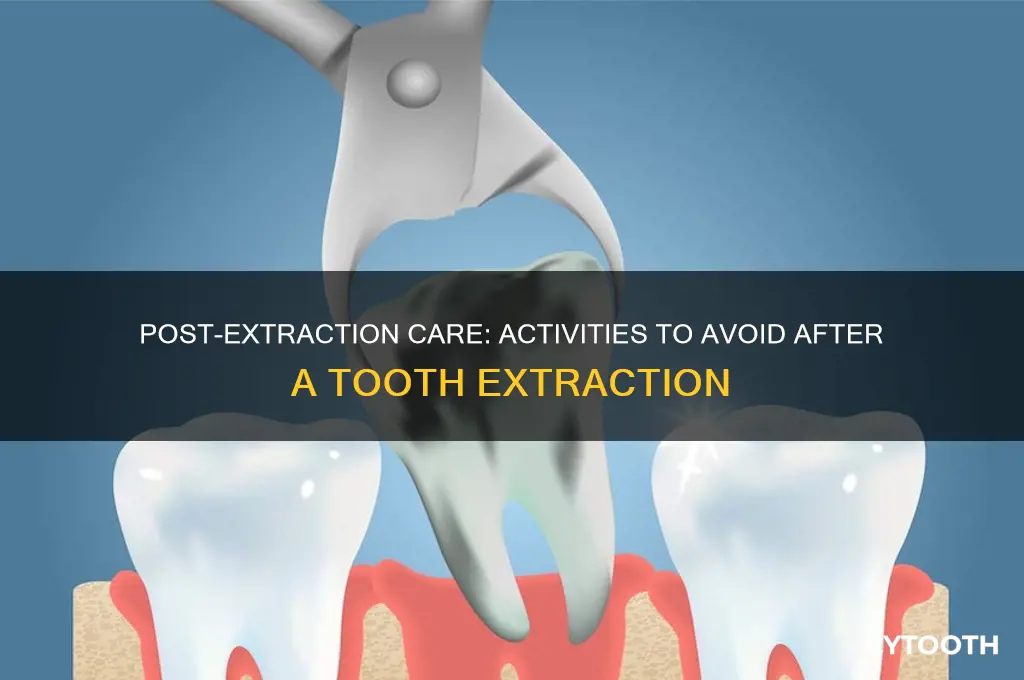
After getting a tooth pulled, it’s crucial to follow specific post-extraction guidelines to ensure proper healing and avoid complications. Activities such as smoking, using straws, or engaging in strenuous exercise should be avoided, as they can dislodge the blood clot forming in the socket and lead to a painful condition called dry socket. Additionally, patients should steer clear of hot foods, spicy dishes, and alcohol, as these can irritate the extraction site and delay recovery. It’s also important not to touch or rinse the area vigorously for the first 24 hours, as this can disrupt the healing process. Following these restrictions helps minimize discomfort and promotes a smooth recovery.
| Characteristics | Values |
|---|---|
| Avoid Smoking | Do not smoke for at least 72 hours after extraction to prevent dry socket. |
| No Alcohol Consumption | Avoid alcohol for 24-48 hours as it can interfere with healing and medications. |
| No Straws | Do not use straws for 1-2 weeks to prevent dislodging the blood clot. |
| Avoid Hard or Chewy Foods | Stick to soft foods for a few days to avoid irritating the extraction site. |
| No Vigorous Rinsing | Avoid forceful rinsing or spitting for 24 hours to protect the blood clot. |
| No Touching the Extraction Site | Refrain from touching the area with your tongue or fingers to prevent infection. |
| Avoid Strenuous Exercise | Limit physical activity for 24-48 hours to reduce bleeding and swelling. |
| No Hot Foods or Drinks | Avoid hot items for 24 hours as they can dissolve the blood clot. |
| No Spicy or Acidic Foods | Steer clear of spicy or acidic foods for a few days to prevent irritation. |
| Avoid Dental Hygiene Near the Site | Gently brush and floss, avoiding the extraction area for the first 24 hours. |
| No Heavy Lifting | Avoid lifting heavy objects for a few days to minimize pressure on the site. |
| No Prolonged Talking or Laughing | Limit excessive talking or laughing to reduce strain on the extraction area. |
What You'll Learn

Avoid strenuous activity
After a tooth extraction, your body needs time to heal, and engaging in strenuous activity can significantly hinder this process. The physical stress from intense exercise or heavy lifting increases blood flow, which can dislodge the blood clot forming in the extraction site—a condition known as dry socket. This painful complication delays healing and requires immediate dental intervention. To avoid this, it’s crucial to understand the types of activities to limit and the timeline for resuming normal routines.
Strenuous activity isn’t just about hitting the gym or running a marathon. It includes any exertion that elevates your heart rate or blood pressure, such as vigorous housework, gardening, or even intense sexual activity. For the first 24 to 48 hours post-extraction, complete rest is recommended. After this initial period, light activities like walking are acceptable, but anything more demanding should be postponed for at least 3 to 5 days. Patients over 40 or those with cardiovascular conditions should be especially cautious, as their recovery times may be longer due to reduced healing capacity.
If your job involves physical labor, plan ahead by scheduling the extraction during a period when you can take time off. Ignoring this advice can lead to prolonged discomfort, infection, or the need for additional procedures. For athletes or fitness enthusiasts, modifying your routine is essential. Swap high-impact workouts for low-intensity alternatives like gentle yoga or stretching. Remember, the goal is to protect the extraction site, not test its limits.
Practical tips can make this adjustment easier. Set reminders to avoid overexertion, and keep a list of safe activities nearby. Stay hydrated and maintain a balanced diet to support healing. If you experience unusual pain, swelling, or bleeding, contact your dentist immediately. By prioritizing rest and avoiding strenuous activity, you’ll ensure a smoother, quicker recovery and reduce the risk of complications.
Soft Foods to Eat After Wisdom Tooth Removal: A Healing Guide
You may want to see also
Don’t rinse mouth vigorously
After a tooth extraction, the blood clot that forms in the socket is your body's natural way of healing. Rinsing your mouth vigorously can dislodge this clot, leading to a painful condition called dry socket. This complication not only delays healing but also exposes sensitive nerves and bone, causing intense discomfort.
To avoid this, follow a gentle oral care routine for the first 24 hours. Instead of vigorous rinsing, use a mild saltwater solution (1/2 teaspoon of salt in 8 ounces of warm water) to gently swish around the extraction site after meals. Avoid creating forceful pressure by spitting; instead, let the water passively drain from your mouth. This method cleanses without disturbing the clot.
For those who struggle with the temptation to rinse forcefully, consider setting a timer for 30 seconds to limit the duration of rinsing. Additionally, avoid using commercial mouthwashes, which often contain alcohol or other irritants that can further disrupt the healing process. Stick to the saltwater solution until your dentist advises otherwise.
Children and elderly patients, who may have less control over rinsing intensity, should be closely supervised. For kids, make it a game by encouraging them to "pretend they’re gently blowing bubbles" instead of rinsing hard. For older adults, remind them to take slow, deliberate sips of the saltwater solution and tilt their heads slightly to allow it to reach the extraction site without forceful movement.
By understanding the risks of vigorous rinsing and adopting these practical strategies, you can protect the blood clot and ensure a smoother, less painful recovery. Remember, patience and gentleness are key in the first few days post-extraction.
Post-Extraction Diet: Soft, Nutritious Foods to Eat After a Tooth Extraction
You may want to see also
Skip smoking or alcohol
After a tooth extraction, the blood clot that forms in the socket is crucial for proper healing. Smoking introduces harmful chemicals and reduces blood flow, increasing the risk of a painful condition called dry socket. Nicotine constricts blood vessels, impairing oxygen and nutrient delivery to the wound site. Even one cigarette within the first 72 hours can disrupt clot stability, prolonging recovery and causing intense pain. If you’re a smoker, consider this a critical window to abstain or explore nicotine replacement therapies like patches (7 mg for heavy smokers, 5 mg for light smokers) to minimize withdrawal symptoms without compromising healing.
Alcohol, particularly in the first 24 hours, is equally detrimental. It dilates blood vessels, increasing bleeding risk and delaying clot formation. A single drink can elevate blood pressure and interfere with pain medications, such as opioids, heightening side effects like dizziness or nausea. For those accustomed to evening drinks, opt for non-alcoholic alternatives like herbal tea or sparkling water with lime to satisfy the ritual without jeopardizing recovery. Remember, moderation isn’t enough here—complete avoidance is key during the initial healing phase.
Comparing the two, smoking poses a more immediate and severe threat due to its direct impact on blood flow and clot integrity. Alcohol’s risks are more about timing and interaction with medications. However, both substances impair the body’s ability to heal efficiently. For instance, a 2018 study in the *Journal of Oral and Maxillofacial Surgery* found that smokers were three times more likely to develop dry socket than non-smokers, while alcohol consumption doubled the risk of postoperative bleeding. These statistics underscore the importance of abstaining from both, even if it means temporarily altering deeply ingrained habits.
Practically, planning ahead can make this transition smoother. If you’re a smoker, inform your dentist beforehand to discuss strategies like prescription nicotine gum or counseling. For alcohol, stock your fridge with appealing substitutes and inform friends or family to avoid social pressure during recovery. The temporary inconvenience of skipping these habits pales in comparison to the potential complications—a few days of discipline can save weeks of discomfort. Treat this post-extraction period as an opportunity to reset, not just for your mouth, but for your overall health.
Tooth Loss Solutions: Exploring Effective Replacements for Pulled Teeth
You may want to see also
No hot or hard foods
After a tooth extraction, your mouth is in a delicate state, and the foods you choose can significantly impact the healing process. One of the most critical guidelines to follow is avoiding hot and hard foods, which can disrupt the blood clot forming in the socket and lead to complications like dry socket. This clot is essential for protecting the underlying bone and nerves, and its dislodgement can cause severe pain and delay healing.
Consider the mechanics of eating hot foods. High temperatures can cause blood vessels to expand, increasing blood flow to the extraction site. This heightened circulation may dislodge the clot, especially if you’re consuming soups, hot beverages, or steamed dishes. Similarly, hard or crunchy foods—think chips, nuts, or raw vegetables—require vigorous chewing, which exerts pressure on the extraction site. This force can physically disturb the clot or irritate the surrounding tissues, leading to inflammation or infection.
To navigate this restriction, focus on soft, lukewarm, or cool foods that require minimal chewing. Examples include yogurt, mashed potatoes, smoothies (without crunchy add-ins), and well-cooked pasta. Aim for a diet that’s gentle on the extraction site for at least 24–72 hours post-procedure, gradually reintroducing firmer textures as your dentist advises. For beverages, stick to room-temperature or slightly cool liquids, avoiding straws, as the suction can dislodge the clot.
A practical tip is to plan meals in advance to avoid temptation. Stock up on soft foods before your appointment, and consider preparing meals that can be easily reheated to a safe, lukewarm temperature. If you’re unsure about a specific food, err on the side of caution—consult your dentist or oral surgeon. Remember, adhering to this restriction isn’t just about comfort; it’s about ensuring a smooth, complication-free recovery.
Toddler-Friendly Drinks Post-Tooth Extraction: Safe and Soothing Options
You may want to see also
Don’t touch the extraction site
The extraction site is a delicate wound, and touching it can disrupt the healing process. Your fingers, no matter how clean they seem, carry bacteria that can introduce infection. Even the slightest pressure from your touch can dislodge the blood clot forming in the socket, leading to a painful condition called dry socket. This clot is crucial for protecting the underlying bone and nerves, and its loss can significantly delay healing and cause intense pain.
Resisting the urge to explore the gap with your tongue or fingers is crucial. While it’s natural to be curious about the extraction site, any contact can introduce bacteria and irritate the wound. Even seemingly harmless actions like rinsing too vigorously or eating crunchy foods can disturb the clot. Imagine the site as a freshly planted seed – it needs time, protection, and minimal disturbance to grow strong.
To ensure proper healing, follow these practical tips: avoid touching the area with your fingers, tongue, or any objects; rinse gently with warm salt water after 24 hours, but avoid forceful spitting; stick to soft foods like yogurt, mashed potatoes, and smoothies for the first few days; and refrain from smoking or using straws, as the suction can dislodge the clot. If you experience persistent pain, swelling, or signs of infection, contact your dentist immediately.
Comparing the extraction site to a scab on your skin can help illustrate the importance of leaving it alone. Just as picking at a scab delays healing and increases the risk of infection, touching the extraction site can have similar consequences. Patience and gentle care are key to a smooth recovery. By resisting the urge to touch and following your dentist’s instructions, you’ll give your mouth the best chance to heal properly and avoid complications.
Soft and Soothing Foods to Eat After a Tooth Extraction
You may want to see also
Frequently asked questions
No, stick to soft foods like yogurt, mashed potatoes, or smoothies for the first 24–48 hours to avoid irritating the extraction site.
Avoid using mouthwash for the first 24 hours, as it can disrupt the blood clot and delay healing. Gentle saltwater rinses can begin after the first day.
No, smoking or using tobacco can significantly slow healing, increase the risk of infection, and cause a painful condition called dry socket. Avoid it for at least 72 hours.
No, avoid using straws for at least a week, as the suction can dislodge the blood clot and lead to dry socket, a painful complication.