Hailey Morgan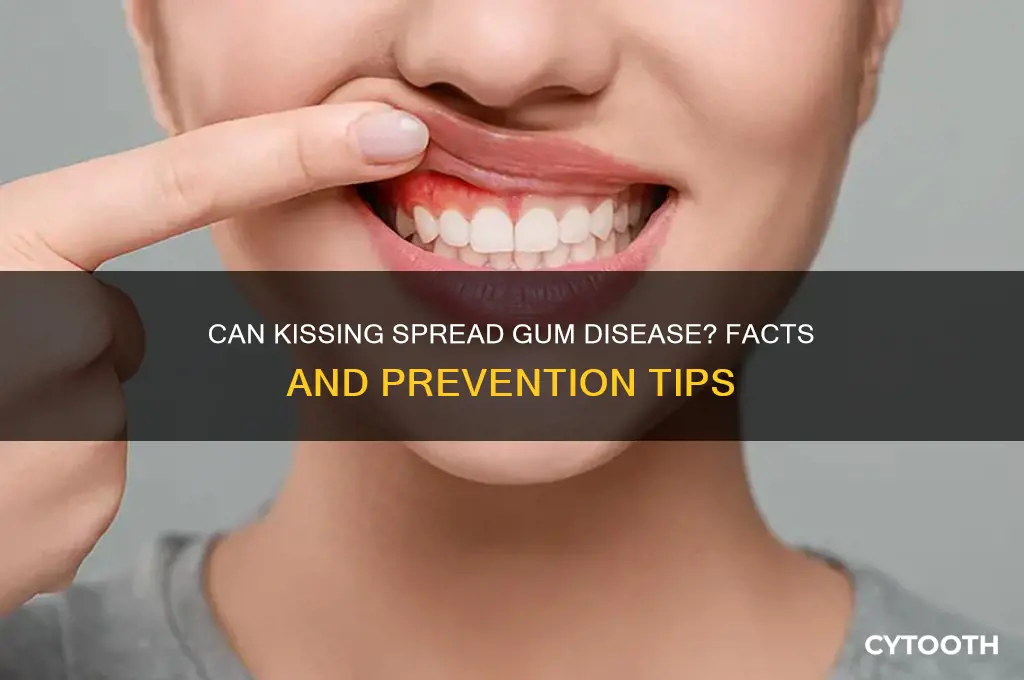
Gum disease, also known as periodontal disease, is a common oral health issue caused by bacterial infection and inflammation of the gums. While the bacteria responsible for gum disease can be transmitted through activities like kissing or sharing utensils, the disease itself is not directly contagious. However, individuals with poor oral hygiene or weakened immune systems may be more susceptible to developing gum disease if exposed to these bacteria. Therefore, while kissing someone with gum disease does not guarantee you will develop it, practicing good oral hygiene and being mindful of potential bacterial transfer is essential to maintaining your own oral health.
| Characteristics | Values |
|---|---|
| Contagious by Kissing | Gum disease itself is not directly contagious through kissing. |
| Bacterial Transmission | Harmful bacteria (e.g., Porphyromonas gingivalis) can be transferred via saliva, potentially increasing the recipient's risk if they have poor oral hygiene or weakened immunity. |
| Risk Factors | Poor oral hygiene, smoking, diabetes, genetic predisposition, and weakened immune system are primary contributors to gum disease, not kissing alone. |
| Prevention | Maintaining good oral hygiene (brushing, flossing, regular dental check-ups) reduces risk, even if exposed to bacteria through kissing. |
| Symptoms | Red, swollen gums, bleeding during brushing, bad breath, receding gums, and loose teeth. These are not directly caused by kissing but by bacterial buildup. |
| Medical Consensus | Dentists and health organizations (e.g., ADA, WHO) agree that gum disease is not contagious but acknowledge bacterial transfer as a minor risk factor. |
| Long-Term Impact | Untreated gum disease can lead to periodontitis, tooth loss, and systemic health issues (e.g., heart disease), but these are not directly linked to kissing. |
| Myth vs. Reality | Myth: Kissing directly causes gum disease. Reality: Kissing may transfer bacteria, but disease development depends on individual oral health and immunity. |
What You'll Learn

Direct transmission risks during intimate contact
Gum disease, or periodontal disease, primarily stems from bacterial buildup in the mouth. While it’s not as contagious as the common cold, direct transmission risks during intimate contact, such as kissing, cannot be ignored. Saliva exchange introduces oral bacteria, including *Porphyromonas gingivalis* and *Treponema denticola*, which are key contributors to gum disease. If one partner has advanced periodontitis, these pathogens can transfer to the other, potentially accelerating their risk of developing similar issues, especially if their oral hygiene is poor.
Consider the mechanics of kissing: prolonged, deep contact increases the volume of saliva exchanged, heightening the likelihood of bacterial transfer. For instance, a study in the *Journal of Clinical Periodontology* found that couples who kissed frequently had a higher correlation of shared oral microbiomes. This doesn’t mean kissing is off-limits, but it underscores the importance of both partners maintaining good oral health. Brushing twice daily, flossing, and regular dental check-ups reduce bacterial load, minimizing transmission risks.
Age and immune status also play a role in susceptibility. Younger adults with robust immune systems may fend off introduced bacteria more effectively than older adults or immunocompromised individuals. For example, a 30-year-old with healthy gums is less likely to develop issues from occasional exposure compared to a 60-year-old with pre-existing gum sensitivity. Practical advice? If one partner has active gum disease, using antimicrobial mouthwash before intimate contact can lower bacterial transfer, though it’s not a foolproof solution.
Comparatively, gum disease transmission via kissing is less direct than viral infections like herpes or bacterial infections like strep throat. However, repeated exposure in close relationships can tip the balance. Couples should monitor symptoms like bleeding gums, bad breath, or gum recession in either partner, as these indicate active disease. Addressing these issues promptly with a dentist not only protects oral health but also safeguards the intimacy shared between partners.
In summary, while gum disease isn’t highly contagious, kissing does pose a direct transmission risk, particularly with frequent, deep contact. Mitigation strategies include maintaining excellent oral hygiene, using antimicrobial rinses, and staying vigilant for early signs of gum disease. By taking these steps, couples can enjoy intimacy without unnecessarily elevating their risk of oral health complications.
Holistic Dentistry Approaches: Natural Gum Disease Treatment Strategies Explained
You may want to see also
Role of bacteria in spreading gum disease
Gum disease, or periodontal disease, is primarily caused by bacterial infections in the mouth. These bacteria form plaque, a sticky film that adheres to teeth and gums, leading to inflammation, bleeding, and eventual tissue damage. While poor oral hygiene is a major risk factor, the role of bacteria in spreading gum disease through activities like kissing cannot be overlooked. Certain strains, such as *Porphyromonas gingivalis* and *Treponema denticola*, are key culprits in periodontal infections and can be transmitted from one person to another.
Consider the mechanics of kissing: saliva exchange introduces oral bacteria from one mouth to another. If one partner has an active gum infection, harmful bacteria can transfer, potentially colonizing the recipient’s mouth. This is particularly concerning if the recipient has compromised oral health, such as weakened enamel, gum recession, or pre-existing plaque buildup. For instance, studies show that *Aggregatibacter actinomycetemcomitans*, a bacterium linked to aggressive periodontitis, can be passed through close contact, including kissing. While not everyone exposed will develop gum disease, the risk increases with frequency of exposure and the recipient’s susceptibility.
To mitigate this risk, proactive oral hygiene is essential. Brushing twice daily with fluoride toothpaste, flossing daily, and using antimicrobial mouthwash can reduce bacterial load in the mouth. For couples, synchronizing dental check-ups and cleanings can help identify and address infections early. If one partner has gum disease, both should prioritize treatment, which may include professional scaling, antibiotics, or lifestyle changes. For example, reducing sugar intake limits bacterial fuel, while quitting smoking improves gum tissue health.
Comparatively, while kissing is a potential transmission route, it is not the sole means of bacterial spread. Sharing utensils, toothbrushes, or even lip balm can also transfer oral bacteria. However, kissing poses a higher risk due to the direct exchange of saliva. Interestingly, children are more likely to acquire oral bacteria from caregivers through shared utensils or pacifier cleaning, highlighting the role of early exposure in shaping oral microbiomes. By age 12, most individuals have established their core oral flora, but new bacterial introductions remain possible throughout life.
In conclusion, while gum disease itself is not contagious in the traditional sense, the bacteria responsible for it can spread through kissing and other close contact. Understanding this bacterial role empowers individuals to take preventive measures, such as maintaining oral hygiene, avoiding sharing personal items, and seeking timely dental care. For couples, open communication about oral health and shared responsibility for prevention can reduce transmission risks, ensuring both partners maintain healthy gums.
Gum Disease in Your 20s: Prevalence, Risks, and Prevention Tips
You may want to see also
Preventive measures to avoid contagion
Gum disease, particularly periodontitis, can indeed be transmitted through intimate activities like kissing, as the bacteria responsible for the infection can be passed from one person to another. To mitigate this risk, adopting preventive measures is crucial. One of the most effective strategies is maintaining impeccable oral hygiene. Brushing twice daily with fluoride toothpaste and flossing at least once a day removes plaque and bacteria, reducing the likelihood of infection. Adding an antimicrobial mouthwash to your routine can further decrease bacterial load, providing an additional layer of protection.
Beyond personal care, regular dental check-ups are indispensable. Dentists can detect early signs of gum disease and provide professional cleanings to remove tartar buildup, which cannot be addressed by brushing alone. Aim for biannual visits, or more frequently if you have a history of gum issues. During these appointments, discuss your risk factors and ask for personalized advice on preventing contagion, especially if you have a partner with known gum disease.
Lifestyle adjustments also play a significant role in prevention. Smoking and excessive alcohol consumption weaken the immune system and exacerbate gum disease, making it easier for bacteria to spread. Quitting smoking and moderating alcohol intake can dramatically reduce your susceptibility to infection. Additionally, a diet rich in vitamins C and D, calcium, and antioxidants supports gum health and strengthens your body’s defenses against pathogens.
For couples, taking proactive steps together can minimize transmission risk. Avoid sharing utensils, toothbrushes, or other items that come into contact with the mouth, as these can harbor bacteria. If one partner has active gum disease, consider using protective barriers during intimate activities until the infection is treated. While this may seem extreme, it’s a practical measure to prevent cross-contamination, especially during the initial stages of treatment when bacterial shedding is highest.
Finally, education and awareness are key. Understanding the symptoms of gum disease—such as bleeding gums, bad breath, and receding gums—allows for early intervention. If you or your partner notice any of these signs, seek dental care promptly. By combining vigilant oral hygiene, healthy habits, and informed practices, you can significantly reduce the risk of transmitting gum disease through kissing and other close contact.
Reversing Gum Disease: Understanding the Timeline for Healthy Gums
You may want to see also
Common misconceptions about kissing and gum health
Kissing, an intimate act shared by millions daily, often raises concerns about the transmission of oral health issues, particularly gum disease. One prevalent misconception is that gum disease can be easily spread through kissing. While it’s true that the bacteria responsible for gum disease, such as *Porphyromonas gingivalis*, can be exchanged during close contact, simply sharing these bacteria doesn’t guarantee infection. The development of gum disease depends on multiple factors, including oral hygiene, immune response, and genetic predisposition. Kissing alone is unlikely to cause gum disease unless the recipient already has poor oral health habits or a compromised immune system.
Another common myth is that using mouthwash or chewing gum immediately after kissing can prevent the transmission of gum disease. While these practices can temporarily reduce bacterial load in the mouth, they do not eliminate the risk entirely. Mouthwash, for instance, may kill some bacteria but doesn’t address the root cause of gum disease, which is plaque buildup. Chewing sugar-free gum can stimulate saliva production, aiding in neutralizing acids, but it’s no substitute for regular brushing and flossing. To protect gum health, focus on consistent oral hygiene rather than quick fixes after intimate moments.
A third misconception is that gum disease is only contagious if there’s visible bleeding or inflammation during kissing. In reality, gum disease can be present without obvious symptoms in its early stages. Gingivitis, the mildest form, often causes minimal discomfort or redness, making it easy to overlook. This silent progression means that even a seemingly healthy mouth could harbor harmful bacteria. Regular dental check-ups are essential to detect and manage gum disease before it worsens, regardless of whether symptoms are apparent.
Lastly, some believe that avoiding deep kissing can prevent the spread of gum disease. While deeper kisses may increase bacterial exchange, even brief contact can transfer bacteria. The key factor isn’t the intensity of the kiss but the overall oral health of both partners. Couples can minimize risk by maintaining good oral hygiene practices, such as brushing twice daily with fluoride toothpaste and flossing regularly. Additionally, using antimicrobial mouthwash can reduce bacterial counts, though it’s not a foolproof method. Open communication about oral health and regular dental visits are equally important in maintaining a healthy relationship and a healthy smile.
Understanding the Timeline: How Periodontal Disease Progresses Over Time
You may want to see also
Scientific evidence on gum disease transmission
Gum disease, or periodontal disease, primarily stems from bacterial buildup in the mouth. While these bacteria can transfer between individuals through activities like kissing, transmission alone does not guarantee disease development. Scientific studies highlight that susceptibility to gum disease depends on multiple factors, including oral hygiene, immune response, and genetic predisposition. For instance, research published in the *Journal of Clinical Periodontology* found that the presence of *Porphyromonas gingivalis*, a key pathogen in periodontitis, can be shared via saliva. However, merely detecting the bacteria in a recipient does not equate to active disease progression.
Analyzing the mechanics of transmission, the transfer of oral bacteria during kissing is dose-dependent. Occasional exposure to pathogens like *Aggregatibacter actinomycetemcomitans* is unlikely to overwhelm a healthy immune system. However, frequent or prolonged exposure, especially in individuals with compromised oral health, increases the risk of colonization. A study in *Microbiology Spectrum* noted that consistent bacterial exchange over time could accelerate plaque formation in susceptible individuals. Practical advice includes maintaining good oral hygiene and limiting deep kissing if either partner has active gum inflammation.
Comparatively, gum disease transmission differs from viral infections like herpes or bacterial infections like strep throat, which have higher contagion rates. Unlike these conditions, gum disease requires a conducive environment—poor oral care, smoking, or diabetes—to manifest. For example, a partner with excellent oral hygiene is less likely to develop periodontitis even after repeated exposure. This underscores the importance of individual risk factors over mere bacterial transfer.
Persuasively, evidence suggests that while kissing can introduce gum disease pathogens, it is not a direct cause of the condition. Instead, it acts as a contributing factor in a multistep process. Preventive measures, such as regular dental check-ups and using antimicrobial mouthwash, can mitigate risks. Couples concerned about transmission should focus on shared oral health practices rather than avoiding intimacy. Ultimately, gum disease transmission via kissing is possible but not inevitable, hinging on both exposure and individual vulnerability.
Can Gum Disease Be Cured? Understanding Treatment and Prevention Options
You may want to see also
Frequently asked questions
Gum disease itself is not directly contagious, but the bacteria that cause it can be transmitted through saliva during activities like kissing.
While kissing can transfer the bacteria associated with gum disease, whether you develop the condition depends on factors like your oral hygiene and immune system.
Maintain good oral hygiene, including regular brushing, flossing, and dental check-ups. Additionally, avoid sharing utensils or toothbrushes to minimize bacterial transfer.