Logan Hayes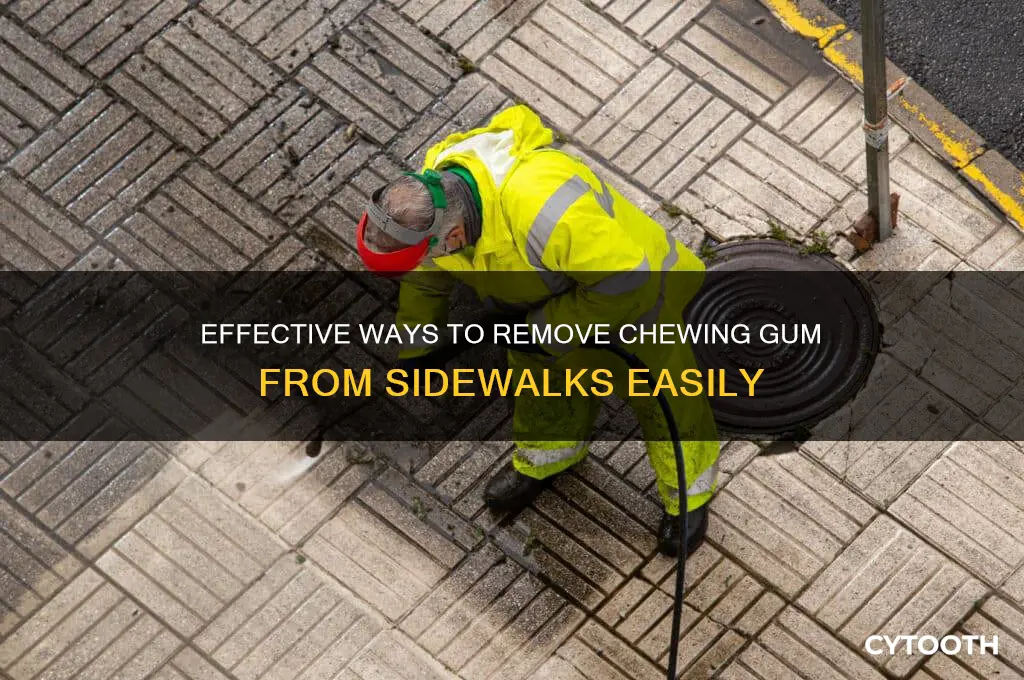
Removing gum from sidewalks can be a tricky but manageable task with the right approach. Chewing gum adheres stubbornly to surfaces due to its sticky, polymer-based composition, making it resistant to simple scraping or washing. Effective methods include freezing the gum with ice or compressed air to harden it for easy removal, using household solvents like peanut butter or vinegar to break down the adhesive, or applying heat with a hairdryer or specialized gum remover tool to soften and lift it away. Each technique requires care to avoid damaging the sidewalk or leaving residue, ensuring a clean and gum-free surface.
| Characteristics | Values |
|---|---|
| Methods | Freezing, Heating, Chemical Solvents, Scraping, Pressure Washing |
| Tools/Materials | Ice pack, freezer spray, hairdryer, heat gun, scraper (plastic or metal), peanut butter, vinegar, WD-40, commercial gum removers, pressure washer |
| Effectiveness | Varies; freezing and heating are highly effective, chemical solvents work well but may require multiple applications |
| Safety | Freezing and scraping are safest; heating and chemicals require caution to avoid burns or surface damage |
| Environmental Impact | Freezing and scraping are eco-friendly; chemical solvents may harm the environment if not disposed of properly |
| Cost | Low to moderate; household items like ice packs and vinegar are inexpensive, commercial removers can be pricier |
| Time Required | 5 minutes to 1 hour, depending on method and gum adhesion |
| Surface Compatibility | Most methods are safe for concrete and asphalt; avoid excessive heat on sensitive surfaces |
| Residue | Minimal to none with proper technique; chemical solvents may leave a slight residue |
| Prevention | Regular cleaning and discouraging gum disposal on sidewalks |
What You'll Learn

Using Ice to Harden Gum
Chewing gum's sticky nature makes it a stubborn adversary when stuck to sidewalks. One surprisingly effective method to combat this is using ice to harden the gum, making it easier to remove. This technique leverages the principle that cold temperatures reduce gum's elasticity, transforming it from a pliable mess into a brittle, removable substance.
The Science Behind It:
Gum is a polymer, meaning it’s composed of long, flexible chains of molecules. When exposed to cold, these chains slow down and stiffen, reducing the gum’s adhesiveness. Applying ice directly to the gum lowers its temperature, causing it to contract and become rigid. This physical change simplifies removal, as the gum no longer clings stubbornly to the sidewalk’s surface.
Step-by-Step Application:
- Gather Materials: You’ll need an ice pack, a plastic scraper (or sturdy spatula), and gloves to protect your hands from the cold.
- Apply Ice: Press the ice pack firmly onto the gum for 10–15 minutes. Ensure the entire piece of gum is covered. For larger pieces, use multiple ice packs or reapply as the ice melts.
- Scrape Off: Once the gum is hardened, use the scraper to lift it off the sidewalk. Work gently but firmly to avoid damaging the surface.
- Clean Residue: After removing the bulk of the gum, use a cloth or brush with warm, soapy water to clean any remaining residue.
Practical Tips for Success:
- Timing Matters: Apply ice when the gum is still fresh, as older gum may require more effort to harden fully.
- Temperature Control: If ice packs aren’t available, a can of compressed air (upside down) or a bag of frozen vegetables works equally well.
- Surface Consideration: Test the scraper on a small area first to ensure it won’t scratch or damage the sidewalk.
Comparative Advantage:
Unlike chemical solvents or heat-based methods, using ice is non-toxic, cost-effective, and environmentally friendly. It’s also safer for children and pets, as there’s no risk of burns or exposure to harsh substances. While it may take slightly longer than other methods, its simplicity and accessibility make it a go-to solution for households and public spaces alike.
By understanding the science and following these steps, removing gum from sidewalks becomes a manageable task. Ice not only hardens the gum but also softens the challenge, offering a practical, efficient solution to a common problem.
Effective Ways to Safely Remove Denture Glue from Gums
You may want to see also
Applying Peanut Butter for Removal
Peanut butter, a household staple, doubles as an unexpected yet effective solution for removing gum from sidewalks. Its natural oils and sticky texture work together to break down the gum’s adhesive properties, making it easier to lift away. Unlike chemical solvents, peanut butter is safe, non-toxic, and readily available, making it an ideal choice for quick, eco-friendly cleanup.
To apply this method, start by generously spreading a thick layer of creamy peanut butter over the gum. Use a spatula or spoon to ensure even coverage, pressing slightly to allow the oils to penetrate the gum. Let it sit for 15–20 minutes; this allows the oils to soften the gum’s grip on the concrete. Afterward, use a plastic scraper or stiff brush to gently lift the gum away. Wipe the area with a damp cloth to remove any residue, leaving the sidewalk clean and gum-free.
While this method is effective, it’s not without its quirks. Peanut butter can attract ants or other pests if left unattended, so clean the area thoroughly after use. Additionally, this technique works best on small to medium-sized gum stains; larger areas may require multiple applications or a combination of methods. For best results, opt for creamy peanut butter, as chunky varieties may leave behind nut particles.
Comparatively, peanut butter outshines other home remedies like vinegar or ice in terms of convenience and effectiveness. Vinegar requires prolonged soaking, and ice can be messy and time-consuming. Peanut butter’s dual action—softening and adhering—makes it a standout choice for those seeking a simple, mess-free solution. Its affordability and accessibility further cement its place as a go-to remedy for gum-covered sidewalks.
Understanding the Timeline: How Quickly Periodontal Disease Develops
You may want to see also
Scraping with a Putty Knife
A putty knife, with its thin, flexible blade, is an ideal tool for tackling the stubborn remnants of gum on sidewalks. Its design allows for precise scraping without damaging the concrete surface, making it a go-to choice for this task. The key to success lies in the technique: angle the knife blade almost flat against the sidewalk to maximize surface contact while minimizing the risk of gouging. This method is particularly effective for fresh gum that hasn’t fully hardened, as the blade can slide beneath the gum and lift it away with relative ease.
For older, more stubborn gum, preparation is crucial. Applying heat to soften the gum before scraping can significantly improve results. A hairdryer on high heat or a heat gun set to a low temperature can be used to warm the gum for 30–60 seconds. This softens the gum’s polymers, making it more pliable and easier to remove. Once heated, work the putty knife gently but firmly beneath the gum, using short, controlled strokes to avoid smearing it further. Be cautious not to overheat the area, as excessive heat can damage the concrete or surrounding materials.
While scraping with a putty knife is effective, it’s not without its challenges. Hardened gum may resist removal, leaving behind a thin, sticky residue. In such cases, follow up with a solvent like rubbing alcohol or a commercial adhesive remover to break down the remaining gum. Apply the solvent to a cloth or paper towel and rub the area until the residue is gone. This two-step approach—scraping followed by solvent application—ensures a thorough clean without resorting to harsher methods that could harm the sidewalk.
Compared to other methods like freezing or power washing, scraping with a putty knife offers a balance of effectiveness and gentleness. Freezing, for instance, requires specialized tools like liquid nitrogen and can be dangerous if mishandled. Power washing, while powerful, may erode concrete over time. The putty knife method, on the other hand, is accessible, affordable, and safe for most surfaces. It’s a practical solution for homeowners, property managers, or anyone looking to restore a gum-stained sidewalk with minimal fuss.
In conclusion, scraping with a putty knife is a straightforward yet highly effective technique for removing gum from sidewalks. By combining the right tool with proper technique and, if needed, additional solvents, even the most stubborn gum can be eliminated. This method stands out for its simplicity, safety, and versatility, making it a top choice for anyone facing this common outdoor cleaning challenge. With a bit of patience and the right approach, your sidewalk can be gum-free and looking as good as new.
Achieve Healthy Pink Gums: Simple Tips for Gum Care and Color
You may want to see also
Cleaning with Vinegar Solution
Vinegar, a household staple, emerges as a surprisingly effective weapon against stubborn gum residue on sidewalks. Its acidic nature, courtesy of acetic acid, breaks down the sticky polymers in gum, making it easier to remove. This method is not only cost-effective but also environmentally friendly compared to harsh chemical solvents. A simple solution of equal parts white vinegar and warm water can be your first line of defense.
Applying this solution requires patience and a bit of elbow grease. Start by saturating the gum and the surrounding area with the vinegar solution, allowing it to penetrate for at least 15 minutes. The longer it sits, the more effective it becomes. Use a stiff-bristled brush to scrub the area vigorously, working the solution into the gum. You’ll notice the gum begins to soften and lift from the surface. For particularly stubborn spots, reapply the solution and repeat the process until the gum is completely removed.
While vinegar is gentle on most surfaces, it’s important to consider the material of your sidewalk. Concrete and asphalt typically handle vinegar well, but brick or stone surfaces may be more sensitive. Test the solution on a small, inconspicuous area first to ensure it doesn’t cause discoloration or damage. Additionally, avoid using vinegar in excessive amounts or leaving it to dry on the surface, as prolonged exposure could etch porous materials.
For enhanced effectiveness, consider adding a few drops of dish soap to your vinegar solution. The soap acts as a surfactant, helping to lift the gum residue more efficiently. Another pro tip: if the gum is particularly old or hardened, try freezing it first with ice or a can of compressed air. Once brittle, the gum can be chipped away more easily before applying the vinegar solution to remove any remaining residue.
In conclusion, cleaning with a vinegar solution is a practical, eco-friendly, and budget-conscious approach to removing gum from sidewalks. With the right technique and a bit of persistence, you can restore your walkway to its original condition without resorting to harsh chemicals. Keep this method in your cleaning arsenal for future gum-related mishaps.
Effective Ways to Treat and Prevent Black Gums Naturally
You may want to see also
Using Commercial Gum Removers
Commercial gum removers are specifically formulated to break down the polymers in chewing gum, making them a highly effective solution for sidewalks. These products typically contain solvents like citrus oil, acetone, or glycol ethers that dissolve the gum’s sticky base. Unlike household remedies, they are designed to minimize surface damage while ensuring complete removal. Most commercial removers come in spray or gel form, allowing for precise application directly onto the gum residue. For best results, follow the manufacturer’s instructions, which often involve letting the product sit for 5–10 minutes before scraping or wiping away the softened gum.
When selecting a commercial gum remover, consider the surface material of your sidewalk. Concrete and asphalt are generally compatible with most products, but delicate surfaces like natural stone may require a milder formula. Always test the remover on a small, inconspicuous area first to ensure it doesn’t discolor or etch the surface. Popular brands like *Gum-X* or *Chewing Gum Remover Pro* are widely available and come with applicator tools for convenience. Prices range from $10 to $50 per bottle, depending on the size and concentration.
Application techniques vary slightly depending on the product. For sprays, hold the bottle 6–8 inches away from the gum and apply a generous amount, ensuring full coverage. Gels often require a scraper tool included in the package to spread the product evenly. After the recommended dwell time, use a plastic scraper or stiff brush to remove the gum. Stubborn residue may need a second application. Dispose of the gum and any paper towels or cloths used in the process, as the solvents can be flammable or harmful if not handled properly.
While commercial removers are powerful, they are not without drawbacks. Some products emit strong fumes, so ensure proper ventilation and wear gloves to protect your skin. Additionally, frequent use on the same area may weaken the sidewalk’s surface over time. For large-scale gum removal, such as in public spaces or commercial areas, consider hiring professionals who use industrial-grade removers and equipment. This approach is cost-effective for extensive gum buildup and ensures thorough cleaning without damaging the pavement.
In conclusion, commercial gum removers offer a reliable and efficient solution for removing gum from sidewalks. Their targeted formulas and ease of use make them a go-to choice for both homeowners and facility managers. By choosing the right product, following safety precautions, and applying it correctly, you can restore your sidewalk’s appearance with minimal effort. For long-term maintenance, combine regular cleaning with preventive measures like posting "No Gum" signs to reduce future buildup.
Effective Ways to Remove Chewing Gum from Dentures Easily
You may want to see also
Frequently asked questions
The easiest method is to freeze the gum using ice or a can of compressed air. Once frozen, the gum becomes brittle and can be easily scraped off with a putty knife or scraper.
Yes, you can use common household items like peanut butter, vinegar, or WD-40. Apply the substance to the gum, let it sit for a few minutes, and then scrape it off with a blunt tool.
Yes, pouring hot (not boiling) water over the gum can soften it, making it easier to scrape off. Be cautious not to burn yourself and avoid using boiling water, as it can damage the sidewalk.
Regularly clean the sidewalk to remove debris and discourage gum disposal. Installing "no gum" signs or providing designated disposal bins nearby can also help reduce the problem.