Hailey Morgan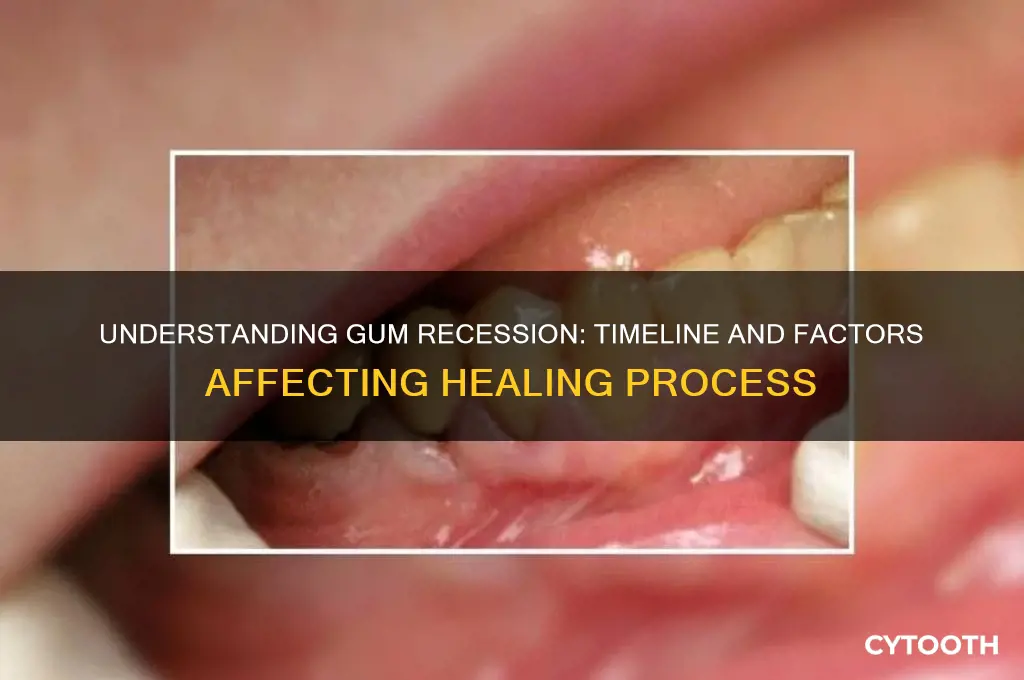
Gum recession, a common dental concern, occurs when the gum tissue surrounding the teeth wears away, exposing more of the tooth or its root. Understanding how long it takes for gums to recede is essential for early detection and prevention. The timeline for gum recession varies widely, influenced by factors such as oral hygiene practices, genetics, aggressive brushing, periodontal disease, hormonal changes, and tobacco use. In some cases, recession can occur gradually over several years, while in others, it may progress more rapidly, especially if left untreated. Early signs, such as tooth sensitivity or visible gaps between teeth and gums, should prompt immediate attention to prevent further damage and preserve oral health.
| Characteristics | Values |
|---|---|
| Average Time for Gum Recession | Gradual process over several years, often unnoticed until advanced stages |
| Factors Influencing Speed | Poor oral hygiene, aggressive brushing, genetics, periodontal disease, hormonal changes, tobacco use |
| Early Stage Recession | May take months to years to become noticeable |
| Advanced Stage Recession | Can progress rapidly, especially with untreated periodontal disease |
| Reversibility | Early stages may be slowed or prevented with proper care; advanced stages are irreversible |
| Treatment Impact | Professional interventions (e.g., deep cleaning, gum grafting) can halt progression but not reverse it |
| Prevention Timeframe | Consistent oral care (brushing, flossing, regular check-ups) can prevent recession over a lifetime |
| Age-Related Recession | More common with age; progression varies based on individual factors |
| Visible Signs Timeline | Tooth sensitivity, longer teeth appearance, or gum line changes may take months to years to appear |
What You'll Learn

Causes of Gum Recession
Gum recession is a gradual process, often unnoticed until it reaches an advanced stage. While the timeline varies, understanding the causes is crucial for prevention. One primary culprit is poor oral hygiene. When plaque and tartar build up along the gum line, they create a breeding ground for bacteria, leading to gum inflammation (gingivitis) and eventual recession. Brushing twice daily with a soft-bristled toothbrush and flossing daily are non-negotiable habits. However, overzealous brushing—applying excessive force or using a hard-bristled brush—can also wear away gum tissue. The American Dental Association recommends replacing your toothbrush every 3-4 months or sooner if bristles become frayed.
Another significant cause is periodontal disease, a bacterial infection that destroys gum tissue and bone supporting the teeth. This condition often progresses silently, with symptoms like bleeding gums, bad breath, and loose teeth appearing in later stages. Risk factors include smoking, diabetes, and genetic predisposition. Studies show that smokers are up to four times more likely to develop gum disease compared to nonsmokers. If you suspect periodontal disease, seek professional treatment promptly. Deep cleaning procedures like scaling and root planing can halt progression, but advanced cases may require surgical intervention.
Hormonal changes, particularly in women, can also contribute to gum recession. Fluctuations during puberty, pregnancy, and menopause alter blood flow to the gums, making them more susceptible to irritation and disease. Pregnant women, for instance, are at higher risk of developing pregnancy gingivitis, which, if untreated, can lead to recession. Maintaining regular dental checkups during these life stages is essential. Your dentist may recommend more frequent cleanings or prescribe antimicrobial mouthwash to manage symptoms.
Lastly, malocclusion (misaligned teeth) and occlusal trauma (teeth grinding or clenching) place uneven pressure on the gums and jawbone, accelerating recession. Orthodontic issues like overcrowding or an overbite create hard-to-clean areas where plaque accumulates. Similarly, bruxism, often stress-related, wears down enamel and stresses gum tissue. Custom night guards, available through your dentist, can protect teeth and gums during sleep. For malocclusion, orthodontic treatment—braces or clear aligners—can correct alignment, reducing the risk of recession.
While these causes vary in nature, their impact on gum health is undeniable. Prevention hinges on proactive measures: consistent oral care, regular dental visits, and addressing risk factors like smoking or bruxism. By understanding these triggers, you can take targeted steps to preserve your gum line and overall oral health.
Healing Timeline for Cut Gums: What to Expect and How to Care
You may want to see also
Stages of Gum Recession Progression
Gum recession is a gradual process, often advancing silently until symptoms become noticeable. The timeline varies widely—from months to years—depending on underlying causes like aggressive brushing, periodontal disease, or genetic predisposition. Understanding the stages of gum recession progression is crucial for early intervention and prevention of irreversible damage.
Stage 1: Early Recession (Mild)
At this stage, gums begin to pull away from the teeth by 1–2 millimeters, exposing the tooth’s root slightly. Patients may notice minor sensitivity to hot, cold, or sweet stimuli but often dismiss it as temporary discomfort. Plaque buildup near the gumline is typically present, and gingivitis may be diagnosed during a dental exam. Practical Tip: Switch to a soft-bristled toothbrush and use a fluoride toothpaste designed for sensitivity. Visit a dentist for a professional cleaning to remove tartar and assess the need for antimicrobial mouthwash.
Stage 2: Moderate Recession (Noticeable)
Recession deepens to 3–4 millimeters, and sensitivity becomes more pronounced. The tooth’s root surface is visibly exposed, increasing the risk of decay and infection. Patients may experience bleeding gums during brushing or flossing, and periodontal pockets (spaces between the gums and teeth) may measure 4–5 millimeters in depth. Caution: Avoid abrasive dental hygiene practices, such as horizontal scrubbing. Instead, use the Bass brushing technique, angling the brush 45 degrees toward the gumline. A dentist may recommend a deep cleaning (scaling and root planing) to remove bacterial deposits below the gumline.
Stage 3: Advanced Recession (Severe)
Recession exceeds 5 millimeters, and teeth appear elongated due to significant gum and bone loss. Sensitivity intensifies, and teeth may feel loose due to compromised support structures. Periodontal pockets deepen to 6–7 millimeters or more, and furcation involvement (damage to the tooth’s fork-like base) may occur. Analytical Insight: At this stage, gum tissue cannot regenerate on its own, and surgical intervention, such as gum grafting, becomes necessary to prevent tooth loss. Patients should prioritize regular periodontal maintenance visits every 3–4 months to monitor disease progression.
Stage 4: Critical Recession (Severe with Complications)
Recession is severe, often exceeding 7 millimeters, and teeth are at high risk of falling out or requiring extraction. Bone loss is extensive, and infections like abscesses may develop. Patients may experience difficulty chewing or speaking due to shifting teeth. Comparative Perspective: Unlike earlier stages, where nonsurgical treatments suffice, advanced cases demand procedures like guided tissue regeneration or bone grafting alongside gum grafting. Takeaway: Early detection and management in Stages 1–2 can prevent progression to this critical point, emphasizing the importance of biannual dental checkups and prompt treatment of gum disease.
Receding Gums or Paranoia: Understanding Your Gum Health Concerns
You may want to see also
Treatment Options and Recovery Time
Gum recession is a gradual process, often progressing silently until it demands attention. While prevention is key, various treatment options exist to address receding gums, each with its own recovery timeline. Understanding these options empowers individuals to make informed decisions about their oral health.
Gum recession treatment primarily falls into two categories: non-surgical and surgical. Non-surgical approaches, suitable for mild to moderate cases, focus on managing the underlying cause and preventing further progression. This often involves deep cleaning procedures like scaling and root planing, performed by a dentist or hygienist. These procedures remove plaque and tartar buildup below the gum line, allowing the gums to reattach to the tooth surface. Recovery from scaling and root planing is generally swift, with mild discomfort and sensitivity subsiding within a few days.
For more advanced cases, surgical intervention may be necessary. Gum grafting, a common surgical procedure, involves taking tissue from another part of the mouth, typically the palate, and grafting it onto the receded area. This procedure effectively covers exposed roots and promotes gum tissue regeneration. Recovery from gum grafting typically takes 1-2 weeks, during which patients may experience swelling, bleeding, and discomfort managed with pain medication and a soft diet.
While recovery times vary depending on the chosen treatment and individual healing rates, consistent oral hygiene practices are crucial for long-term success. This includes twice-daily brushing with a soft-bristled toothbrush, flossing daily, and regular dental checkups. Additionally, addressing contributing factors like aggressive brushing, teeth grinding, or tobacco use is essential to prevent further recession.
It's important to note that gum recession is a progressive condition, and even with successful treatment, ongoing maintenance is vital. Regular monitoring by a dental professional allows for early detection of any recurrence and ensures the longevity of treatment outcomes. Remember, seeking professional advice is paramount for determining the most suitable treatment plan and understanding the expected recovery timeline for your specific case.
Healing Time for Gum Injuries: What to Expect and How to Speed Recovery
You may want to see also
Preventive Measures to Slow Recession
Gum recession doesn't happen overnight. It's a gradual process, often taking years or even decades to become noticeable. But just because it's slow doesn't mean it's inevitable.
Brush Like You Mean It (But Gently): The cornerstone of recession prevention is proper brushing. Ditch the hard-bristled brushes – they're gum bullies. Opt for a soft-bristled brush and use the modified Bass technique: tilt the brush at a 45-degree angle to your gums and use short, circular motions. Think massage, not scrub. Aim for twice-daily brushing for two minutes each session.
Floss Like Your Smile Depends on It: Flossing isn't just about dislodging popcorn kernels. It removes plaque and debris from between teeth, where brushes can't reach. This prevents gum inflammation and recession. If traditional floss feels like a wrestling match, try water flossers or interdental brushes for a gentler approach.
Tame the Grind: Bruxism, or teeth grinding, puts immense pressure on your gums, accelerating recession. If you suspect you grind your teeth, especially at night, consult your dentist. They might recommend a custom-fitted night guard to act as a protective cushion.
Fuel Your Gums: A diet rich in vitamins C and D, calcium, and antioxidants strengthens gum tissue and promotes overall oral health. Think citrus fruits, leafy greens, dairy products, and nuts. Conversely, limit sugary drinks and processed foods that fuel harmful bacteria.
Regular Check-Ups: Your Early Warning System: Don't wait until you see pink toothbrush bristles to see your dentist. Biannual check-ups allow for early detection of gum issues and professional cleanings to remove stubborn plaque buildup. Remember, prevention is always cheaper and less painful than treatment.
Healing Bruised Gums: Understanding Recovery Time and Care Tips
You may want to see also
Factors Affecting Recession Speed
Gum recession doesn't occur at a fixed pace; it's a gradual process influenced by a myriad of factors. Understanding these factors is crucial for anyone concerned about their oral health, as it empowers individuals to take proactive steps in preventing or slowing down gum recession. The speed at which gums recede can vary significantly from person to person, and it's often a combination of genetic predisposition, lifestyle choices, and oral hygiene practices that dictate the rate of recession.
Oral Hygiene Habits: The Daily Defense
The cornerstone of preventing gum recession lies in maintaining impeccable oral hygiene. Brushing twice a day with a soft-bristled toothbrush and fluoride toothpaste is essential, but the technique is equally important. Aggressive brushing or using a hard-bristled brush can accelerate gum recession by wearing away the delicate gum tissue. Opt for a gentle, circular motion, ensuring you clean all surfaces of the teeth, including the gum line. Flossing daily is another critical habit, as it removes plaque and food particles from between the teeth, where a toothbrush can't reach. For those with braces or dental work, interdental brushes can be a game-changer, providing a more thorough clean.
Lifestyle Choices: Beyond the Bathroom
Certain lifestyle factors can significantly impact the speed of gum recession. Smoking, for instance, is a major culprit. The toxins in cigarette smoke can weaken the gum tissue, making it more susceptible to recession. Moreover, smoking impairs blood flow to the gums, hindering their ability to heal and regenerate. Similarly, excessive alcohol consumption can irritate the gums and disrupt the balance of bacteria in the mouth, leading to inflammation and potential recession. A balanced diet rich in vitamins and minerals, particularly vitamin C and calcium, can fortify gum health. Foods high in sugar and carbohydrates, on the other hand, should be consumed in moderation, as they contribute to plaque formation and acid production, both of which can erode gum tissue over time.
Medical Conditions and Medications: Hidden Influences
Underlying medical conditions and certain medications can also play a role in gum recession. Periodontal diseases, such as gingivitis and periodontitis, directly attack the gum tissue, causing it to recede. Diabetes, another significant factor, affects the body's ability to fight infection, making the gums more vulnerable to bacterial invasion. Hormonal changes, particularly in women during puberty, pregnancy, and menopause, can alter the gums' sensitivity and susceptibility to recession. Additionally, some medications, including antihypertensives and anticonvulsants, have been linked to gum overgrowth or recession as side effects. It's essential for individuals with these conditions or on such medications to maintain regular dental check-ups and inform their dentist about their medical history.
Genetic Predisposition and Age: The Unchangeable Factors
While many factors contributing to gum recession are within our control, genetic predisposition and age are not. Some individuals are naturally more prone to gum recession due to the thickness and strength of their gum tissue, which is largely determined by genetics. As we age, our gums naturally become more susceptible to recession due to years of wear and tear, reduced collagen production, and potential bone loss. However, understanding these inherent risks can motivate individuals to be more vigilant with their oral care and regular dental visits, potentially slowing down the recession process.
Incorporating these insights into daily routines and long-term health strategies can significantly impact the speed of gum recession. By addressing modifiable factors and being aware of non-modifiable ones, individuals can take a comprehensive approach to preserving their gum health. Regular dental check-ups, every six months or as recommended by a dentist, are vital for monitoring gum health and catching any signs of recession early. With the right knowledge and actions, it's possible to maintain healthy gums and prevent the complications associated with gum recession, such as tooth sensitivity, increased risk of cavities, and, in severe cases, tooth loss.
Dentures In or Out: Which Speeds Up Gum Healing?
You may want to see also
Frequently asked questions
Gum recession can occur gradually over months or years, depending on factors like oral hygiene, genetics, and habits like aggressive brushing or teeth grinding.
While gum recession is typically a slow process, certain conditions like gum disease, trauma, or infection can cause more rapid recession over weeks or months.
Early signs of gum recession, such as tooth sensitivity or visible gaps between teeth and gums, may take weeks to months to become noticeable, depending on the rate of recession.
With proper treatment, such as improved oral hygiene or surgical intervention, gum recession can stabilize within weeks to months, but regrowth of receded gums is rare without surgical procedures.