Hailey Morgan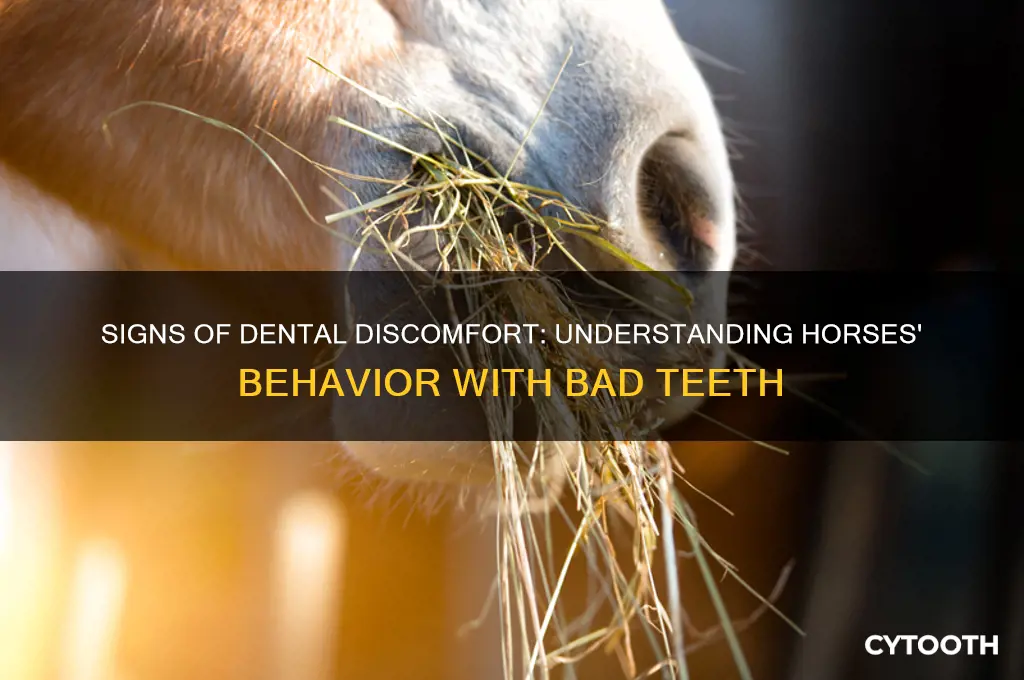
Horses with a bad tooth often exhibit noticeable changes in behavior and eating habits, as dental pain can significantly affect their comfort and ability to chew. Common signs include difficulty eating, dropping feed, or favoring one side of the mouth while chewing. They may also show reluctance to accept the bit during riding, head tossing, or excessive salivation. In some cases, horses might become irritable, sensitive to touch around the face, or even lose weight due to reduced food intake. Recognizing these symptoms early is crucial, as untreated dental issues can lead to further health complications and discomfort for the horse.
What You'll Learn
- Signs of Dental Pain: Head tossing, difficulty chewing, excessive drooling, or reluctance to eat
- Behavioral Changes: Irritability, aggression, or resistance to bridling during riding
- Weight Loss: Poor dental health can lead to inadequate nutrition and weight loss
- Dropping Food: Horses may drop feed while eating due to discomfort
- Veterinary Examination: Regular dental check-ups to diagnose and treat issues early

Signs of Dental Pain: Head tossing, difficulty chewing, excessive drooling, or reluctance to eat
Horses with dental pain often exhibit head tossing, a clear sign of discomfort. This behavior can be subtle or pronounced, depending on the severity of the issue. When a horse tosses its head, it may be attempting to alleviate pressure on a sore tooth or gum. Observing the frequency and context of this action is crucial; head tossing during feeding or when the bit is engaged in riding could indicate oral pain. For instance, a horse might toss its head while chewing hay, suggesting difficulty in processing food due to a sharp edge or infected tooth.
Difficulty chewing is another telltale sign of dental pain in horses. Healthy horses should chew methodically, with a steady rhythm. If you notice uneven chewing, prolonged eating times, or food falling from the mouth, it may signal a problem. Horses with dental issues might also drop partially chewed food, a behavior known as "quidding." This can lead to weight loss and malnutrition if not addressed promptly. Regularly monitoring feeding habits and checking for undigested food in the stall can help identify chewing difficulties early.
Excessive drooling is a less common but equally important indicator of dental pain. While some drooling during eating is normal, a constant or excessive flow of saliva warrants attention. This may occur if a horse has an abscessed tooth, gum inflammation, or a foreign object lodged in the mouth. Drooling can also be accompanied by foul-smelling breath, another red flag. If you notice these symptoms, inspect the mouth carefully, but avoid inserting your fingers without proper training, as an injured horse may react unpredictably.
Reluctance to eat is perhaps the most concerning sign of dental pain in horses. These animals are natural grazers, and any reduction in appetite can quickly lead to health issues. A horse in pain may approach food hesitantly, nibble without consuming much, or avoid hard feeds altogether. This behavior can be mistaken for fussiness, but it often stems from the discomfort of chewing. If a horse’s feed intake decreases significantly, consult a veterinarian immediately. Early intervention, such as a dental float to smooth sharp edges or extract a damaged tooth, can restore eating habits and prevent further complications.
Dental Implants vs. Natural Teeth: Enhancing Your Smile and Appearance
You may want to see also
Behavioral Changes: Irritability, aggression, or resistance to bridling during riding
Horses with dental issues often exhibit noticeable changes in behavior, particularly when it comes to irritability, aggression, or resistance during bridling and riding. These behaviors are not merely acts of defiance but are frequently rooted in the discomfort and pain caused by a bad tooth. For instance, a horse may toss its head, grind its teeth, or even snap when the bit is introduced, signaling that the pressure on its mouth is exacerbating an existing dental problem. Recognizing these signs early can prevent further pain and ensure a more harmonious riding experience.
Analyzing these behaviors reveals a clear pattern: horses with dental pain often associate the bit with discomfort, leading to resistance during bridling. This resistance can manifest as pulling away, opening the mouth excessively, or even refusing to allow the bridle to be put on. Riders might mistake this for stubbornness, but it’s a protective response to avoid aggravating the sore area. For example, a sharp edge on a molar or an infected tooth can make even gentle bit pressure unbearable. Observing these reactions during tacking up can serve as an early warning sign that a dental check is overdue.
To address this issue, riders should adopt a systematic approach. First, ensure the bridle fits correctly and the bit is appropriate for the horse’s mouth anatomy. If resistance persists, consult an equine dentist or veterinarian to rule out dental problems. Practical tips include warming the bit before use to reduce sensitivity and using a softer bit material like rubber or leather temporarily. However, these are stopgap measures; professional dental care is essential for long-term relief. Ignoring the problem can lead to worsening aggression or even refusal to ride, as the horse learns to associate riding with pain.
Comparatively, horses without dental issues typically accept bridling without fuss and maintain a calm demeanor during riding. The contrast highlights how dental pain can drastically alter behavior. For instance, a horse that was once docile might suddenly become irritable or aggressive under saddle, particularly during turns or transitions that increase bit pressure. This shift underscores the importance of regular dental check-ups, ideally every 6–12 months, depending on the horse’s age and diet. Younger horses (under 5 years) and older horses (over 15 years) are more prone to dental issues due to developing or wearing teeth, respectively, making frequent monitoring critical.
In conclusion, irritability, aggression, or resistance to bridling are red flags that should prompt immediate investigation into a horse’s dental health. By understanding the connection between these behaviors and dental pain, riders can take proactive steps to alleviate discomfort and restore trust. Regular dental care, combined with observant riding practices, ensures not only the horse’s well-being but also a safer and more enjoyable partnership between horse and rider.
Treating a Dead Tooth: Dentists' Methods for Extraction and Restoration
You may want to see also
Weight Loss: Poor dental health can lead to inadequate nutrition and weight loss
Horses with dental issues often struggle to maintain their weight, a problem that stems from the pain and discomfort associated with chewing. When a horse has a bad tooth, it may avoid hard feed or hay, opting instead for softer, easier-to-chew options that are often less nutritious. This selective eating behavior can lead to a significant calorie deficit, as the horse is unable to consume the volume of food necessary to meet its energy requirements. For instance, a 1,000-pound horse typically requires 15 to 20 pounds of hay daily, but a horse with dental pain might only manage half that amount. Over time, this inadequate intake results in noticeable weight loss, which can be particularly concerning in older horses or those already in poor condition.
Analyzing the nutritional impact, the quality of a horse’s diet is just as critical as the quantity. Horses with dental issues may drop feed or hay while chewing, leading to wastage and reduced nutrient absorption. Additionally, they often favor grazing on softer grasses, which are lower in fiber and protein compared to mature hay. This shift in diet can cause imbalances, particularly in essential nutrients like calcium, phosphorus, and vitamins A and E. For example, a horse consistently consuming immature grass may develop deficiencies that further exacerbate weight loss and overall health decline. Monitoring manure consistency and coat condition can provide early indicators of nutritional deficiencies linked to poor dental health.
To address weight loss in horses with dental issues, a proactive approach is essential. Start by consulting an equine dentist to identify and treat the underlying dental problem, such as sharp enamel points, infected teeth, or malocclusions. Once the pain is alleviated, gradually transition the horse to a more nutrient-dense diet. Soaking hay pellets or cubes in warm water can make them easier to chew while providing concentrated nutrition. Supplementing with high-calorie feeds, such as rice bran or stabilized rice bran (fed at 1–2 pounds per day), can help restore weight without overburdening the digestive system. For older horses or those with severe dental wear, consider feeding senior feeds formulated with easy-to-chew ingredients and added vitamins and minerals.
A comparative perspective highlights the importance of early intervention. Horses with untreated dental issues often experience a downward spiral of weight loss and declining health, whereas those receiving timely care can recover and maintain a healthy weight. For instance, a study comparing two groups of horses with dental problems found that those treated within three months regained an average of 50–75 pounds over six weeks, while the untreated group continued to lose weight. This underscores the need for regular dental check-ups, ideally every 6–12 months, to prevent minor issues from becoming major obstacles to nutrition and weight management. Practical tips include observing feeding behavior daily and maintaining a body condition score chart to track changes over time.
Replacing Missing Teeth: Dental Solutions for a Complete Smile
You may want to see also
Dropping Food: Horses may drop feed while eating due to discomfort
Horses with dental issues often exhibit subtle yet telling behaviors, and one of the most noticeable is dropping food while eating. This isn't merely clumsiness; it’s a clear sign of discomfort. When a horse’s teeth are misaligned, sharp, or infected, chewing becomes painful, causing them to lose grip on their feed. For example, a horse with a sharp enamel point on a molar may struggle to grind hay effectively, leading to loose mouthfuls that fall to the ground. Observing this behavior should prompt an immediate dental check, as untreated issues can escalate to weight loss or colic.
To address dropping feed, start by assessing the horse’s diet. Coarse hay or large grain pellets can exacerbate discomfort, so consider switching to softer forage or soaking hay to reduce chewing effort. If dietary adjustments don’t resolve the issue, consult an equine dentist. A routine dental float—a procedure to smooth sharp edges—can alleviate pain and restore proper chewing function. For older horses or those with chronic issues, biannual dental exams are essential to prevent recurrence.
Comparatively, dropping food isn’t exclusive to dental problems; it can also stem from ill-fitting tack or behavioral quirks. However, when paired with other signs like head tossing or slow eating, dental discomfort is the likely culprit. Unlike a horse that drops feed due to excitement or poor manners, one with a bad tooth will show consistent reluctance to chew thoroughly. This distinction is critical for accurate diagnosis and treatment.
Finally, prevention is key. Regular dental care, starting as early as 2 years old, can identify issues before they cause noticeable discomfort. Monitor feeding habits closely, especially in young or senior horses, who are more prone to dental wear. By addressing dropping feed promptly, you not only relieve the horse’s pain but also ensure they receive adequate nutrition, maintaining their overall health and performance.
How Braces Gently Pull Teeth Forward: The Orthodontic Process Explained
You may want to see also
Veterinary Examination: Regular dental check-ups to diagnose and treat issues early
Horses, like humans, can suffer from dental issues that affect their overall health and behavior. A bad tooth can cause pain, difficulty eating, and even systemic infections if left untreated. Recognizing the signs early is crucial, but the most effective way to address dental problems is through regular veterinary examinations. These check-ups allow for early diagnosis and treatment, preventing minor issues from escalating into major health concerns.
Steps to Ensure Effective Dental Care:
- Schedule Biannual Examinations: Horses should undergo a dental check-up at least twice a year, with older horses or those with a history of dental issues requiring more frequent visits. A veterinarian will use specialized tools to examine the mouth, checking for sharp points, uneven wear, infections, or loose teeth.
- Monitor Feeding Behavior: Between check-ups, observe your horse’s eating habits. Dropping feed, favoring one side of the mouth, or excessive salivation can indicate dental pain. Addressing these signs promptly can prevent further complications.
- Maintain a Balanced Diet: Provide a diet that promotes natural tooth wear, such as high-quality forage. Avoid overly soft or sugary feeds that can accelerate dental decay.
Cautions to Consider:
While regular check-ups are essential, over-treatment can be as harmful as neglect. Avoid unnecessary procedures like aggressive floating (filing down sharp tooth edges) unless recommended by a qualified veterinarian. Additionally, sedation during dental exams should be administered by a professional to ensure safety and accuracy.
Practical Tips for Horse Owners:
- Use a bright light and a speculum to inspect your horse’s mouth monthly for visible issues like broken teeth or gum inflammation.
- Keep a dental record log to track examinations, treatments, and changes in behavior.
- Work with an equine dentist or veterinarian who specializes in dental care for accurate assessments and treatments.
Regular veterinary dental examinations are a cornerstone of equine health. By staying proactive and informed, horse owners can ensure their animals remain pain-free, maintain proper nutrition, and enjoy a better quality of life. Early intervention not only saves money in the long run but also strengthens the bond between horse and owner through consistent care.
How Braces Rotate Teeth: Understanding Orthodontic Mechanics and Movement
You may want to see also
Frequently asked questions
Signs of a bad tooth in horses include difficulty chewing, dropping feed, excessive salivation, head tossing, reluctance to eat hard or cold feed, and sensitivity when the mouth or face is touched.
Yes, horses may exhibit signs of pain such as ear pinning, head shaking, reluctance to accept the bit, or changes in behavior like irritability or reluctance to work.
Yes, a bad tooth can lead to weight loss because the horse may avoid eating or struggle to chew properly, resulting in reduced feed intake and poor digestion.
Treatment typically involves a veterinary dentist or equine dentist who will perform a dental exam, float (file) sharp edges, extract severely damaged teeth, or address other issues like infections or fractures.