Samantha Blake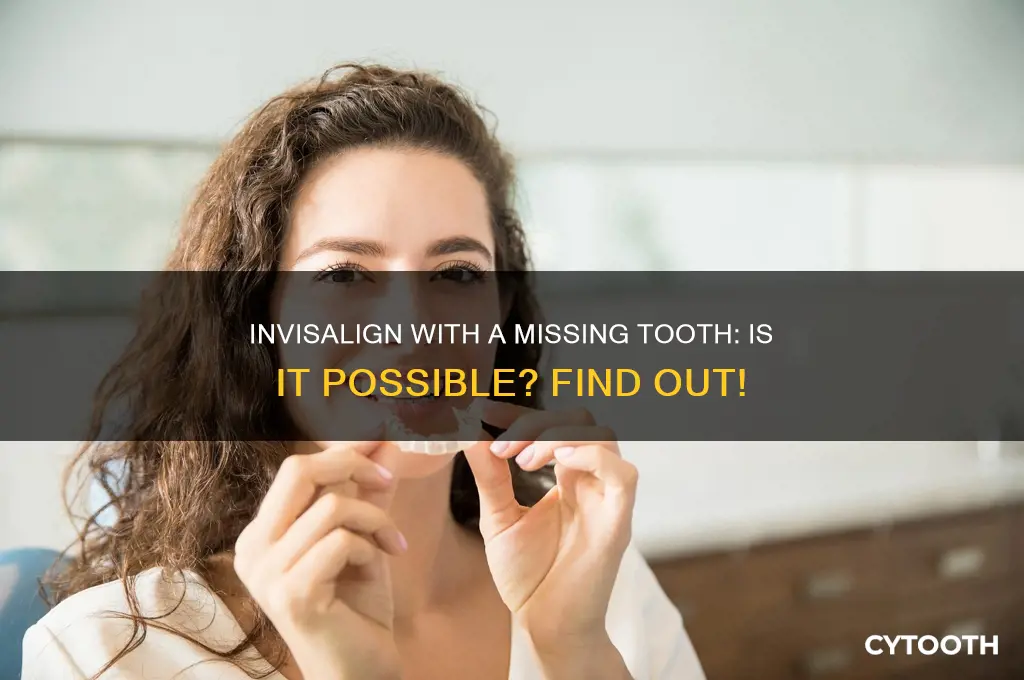
If you’re considering Invisalign but have a missing tooth, you might wonder if this orthodontic treatment is still an option for you. The good news is that Invisalign can often accommodate patients with missing teeth, as the aligners are custom-designed to fit your unique dental structure. However, the feasibility depends on the location of the missing tooth and your overall oral health. In some cases, Invisalign can even help close gaps caused by missing teeth, but additional treatments like dental implants or bridges may be recommended for optimal results. Consulting with an orthodontist or dentist will help determine the best approach for your specific situation.
| Characteristics | Values |
|---|---|
| Eligibility | Yes, Invisalign can be used with a missing tooth, but case-specific evaluation is required. |
| Treatment Purpose | Closes gaps, aligns teeth, and prepares for potential tooth replacement (e.g., implant). |
| Attachment Requirements | SmartForce attachments or elastic bands may be needed for precise tooth movement. |
| Treatment Duration | Varies based on complexity; may take longer than standard cases due to gap closure. |
| Cost | Comparable to standard Invisalign, but additional procedures (e.g., implants) increase overall cost. |
| Success Rate | High success rate when planned by an experienced orthodontist or Invisalign provider. |
| Limitations | Not suitable for severe misalignments or multiple missing teeth without comprehensive planning. |
| Follow-Up Care | Regular check-ins to monitor progress and adjust treatment as needed. |
| Alternative Options | Traditional braces, partial dentures, or dental implants may be recommended in some cases. |
| Aesthetic Impact | Nearly invisible aligners maintain aesthetics during treatment. |
| Patient Suitability | Best for patients with good oral health, commitment to treatment, and realistic expectations. |
What You'll Learn

Invisalign feasibility with missing teeth
Missing teeth don't automatically disqualify you from Invisalign treatment. In fact, Invisalign can often be a viable solution for addressing gaps and misalignments caused by missing teeth. The feasibility depends on several factors, including the location of the missing tooth, the overall health of your remaining teeth, and your specific orthodontic goals.
For instance, if you're missing a single premolar, Invisalign can be used to close the gap by gradually shifting adjacent teeth into the empty space. This process, known as "closing a space," is a common application of Invisalign. However, if the missing tooth is a molar, the treatment plan may be more complex, as molars play a crucial role in maintaining proper bite alignment.
Before embarking on Invisalign treatment, your orthodontist will conduct a thorough evaluation, which may include X-rays, impressions, and a digital scan of your teeth. This assessment will help determine whether Invisalign is a suitable option for your specific case. In some instances, additional procedures, such as dental implants or bridges, may be necessary to restore proper tooth function and aesthetics before initiating Invisalign treatment. It's essential to consult with a qualified orthodontist who has experience treating patients with missing teeth using Invisalign.
One of the advantages of Invisalign in cases of missing teeth is its ability to provide a discreet and comfortable treatment option. The clear aligners are custom-made to fit your teeth and can be removed for eating, brushing, and flossing. This feature is particularly beneficial for patients who may have difficulty maintaining oral hygiene around a missing tooth. Moreover, Invisalign's digital treatment planning allows your orthodontist to simulate the movement of your teeth and predict the final outcome, ensuring a more precise and controlled treatment process.
In cases where a missing tooth has led to significant shifting of adjacent teeth, Invisalign can be used in conjunction with other orthodontic appliances, such as temporary anchorage devices (TADs) or elastic bands, to achieve optimal results. TADs, for example, can provide additional anchorage and support during the tooth movement process, while elastic bands can help apply targeted forces to specific teeth. By combining Invisalign with these auxiliary appliances, your orthodontist can address complex cases of missing teeth and achieve a more stable and aesthetically pleasing outcome.
Ultimately, the feasibility of Invisalign treatment with missing teeth depends on individual factors and should be evaluated on a case-by-case basis. With proper planning, experienced orthodontic care, and, if necessary, adjunctive procedures, Invisalign can be a highly effective solution for patients seeking to address gaps and misalignments caused by missing teeth. As with any orthodontic treatment, patience, commitment to wearing the aligners as prescribed, and regular follow-up appointments are crucial for achieving successful and lasting results. By working closely with your orthodontist and following their guidance, you can determine whether Invisalign is the right choice for your unique needs and goals.
Pregnancy and Dental Care: Is Tooth Extraction Safe for Expecting Moms?
You may want to see also
Treatment options for gaps in teeth
Missing teeth create gaps that go beyond aesthetics—they disrupt bite function, speech, and even jawbone health over time. Fortunately, modern dentistry offers several solutions to close these spaces, each with unique advantages depending on your needs.
Orthodontic Treatment with Invisalign: Contrary to popular belief, Invisalign can effectively address gaps caused by missing teeth. By strategically moving adjacent teeth, Invisalign aligners can close small to moderate spaces, improving both appearance and bite alignment. This method is particularly appealing for its discreet, removable nature. However, success depends on the size of the gap and surrounding tooth positions. Larger gaps may require additional treatments like dental implants or bridges for optimal results.
Dental Implants: The Gold Standard for Single Missing Teeth: For a permanent, natural-looking solution, dental implants are the gold standard. A titanium post is surgically implanted into the jawbone, acting as a replacement root. Once healed, a custom-made crown is attached, seamlessly filling the gap. Implants preserve jawbone density, prevent adjacent teeth from shifting, and function just like natural teeth. While the process takes several months, the long-term benefits are unparalleled.
Dental Bridges: A Fixed, Non-Surgical Option: Bridges are a reliable choice for those seeking a fixed solution without surgery. A bridge consists of a prosthetic tooth (pontic) anchored to crowns placed on the adjacent teeth. This method is less invasive than implants but requires altering healthy teeth for crown placement. Bridges typically last 10-15 years with proper care, making them a cost-effective option for many.
Removable Partial Dentures: A Flexible, Affordable Alternative: For a budget-friendly, non-invasive solution, removable partial dentures are worth considering. These custom-made appliances replace one or more missing teeth and are held in place by clasps or precision attachments. While they may not offer the same stability as implants or bridges, modern dentures are more comfortable and natural-looking than ever. Regular cleaning and adjustments ensure optimal fit and function.
Choosing the Right Treatment: The best option for closing a gap depends on factors like the size and location of the space, your oral health, budget, and personal preferences. Consulting with an experienced dentist or orthodontist is crucial for a personalized treatment plan. Remember, addressing missing teeth promptly not only enhances your smile but also prevents further dental complications down the line.
Effective Tips to Remove Food Stuck in Tooth Holes Easily
You may want to see also
Invisalign vs. implants for missing teeth
Missing teeth create gaps that affect not only your smile but also your bite alignment and oral health. Invisalign and dental implants both address these issues, but they do so in fundamentally different ways. Invisalign, a clear aligner system, focuses on moving existing teeth into proper position, while implants replace missing teeth entirely with artificial roots and crowns. This distinction makes them suitable for different scenarios and patient needs.
For those considering Invisalign with a missing tooth, the feasibility depends on the location and number of missing teeth. Invisalign can effectively close small gaps caused by a single missing tooth, particularly if the adjacent teeth have shifted. However, it cannot replace the missing tooth itself. The treatment involves a series of custom-made aligners that gradually shift teeth into alignment, typically over 12 to 18 months. For example, if a premolar is missing, Invisalign might be used to close the gap by moving the surrounding teeth together. This approach is less invasive than implants and offers a discreet aesthetic solution.
Dental implants, on the other hand, provide a permanent replacement for the missing tooth, including the root. They are surgically implanted into the jawbone, where they fuse over 3 to 6 months in a process called osseointegration. Once healed, a custom crown is attached, restoring both function and appearance. Implants are ideal for patients seeking a long-term, standalone solution that doesn’t rely on altering adjacent teeth. For instance, if a front tooth is missing, an implant can restore the smile without affecting neighboring teeth, unlike Invisalign, which would require moving them to close the gap.
Choosing between Invisalign and implants often comes down to the patient’s goals, oral health, and budget. Invisalign is generally more affordable, with costs ranging from $3,000 to $7,000, while a single implant can cost between $3,000 and $6,000, excluding the crown. However, implants offer durability and prevent bone loss in the jaw, a common issue with missing teeth. Invisalign is best for minor gaps and alignment issues, whereas implants are the gold standard for single-tooth replacement.
Practical considerations also play a role. Invisalign requires strict adherence to wearing aligners for 20–22 hours daily and involves regular check-ins. Implants demand good oral hygiene and a healthy jawbone but are low-maintenance once healed. For example, a 35-year-old with a missing molar might opt for an implant to maintain chewing function, while a 25-year-old with a small gap from a missing lateral incisor could choose Invisalign for a less invasive, cosmetic fix. Ultimately, consulting a dentist or orthodontist is essential to determine the best option based on individual needs.
Pregnancy and Dental Implants: What You Need to Know
You may want to see also
Aligner adjustments for tooth loss
Tooth loss doesn't automatically disqualify you from Invisalign treatment. In fact, aligners can be strategically adjusted to accommodate missing teeth, often improving both aesthetics and function. The key lies in understanding how the absence of a tooth impacts the overall alignment and bite, and then tailoring the treatment plan accordingly.
Advanced 3D scanning technology allows orthodontists to create a precise digital model of your mouth, including the gap left by the missing tooth. This model serves as the foundation for designing custom aligners that gradually shift the surrounding teeth into optimal positions.
For instance, if a premolar is missing, the adjacent teeth might tilt or shift into the empty space, causing misalignment and potential bite issues. Aligners can be programmed to apply targeted forces to these teeth, guiding them back into their correct positions while maintaining the integrity of the bite.
The success of Invisalign with a missing tooth heavily relies on the expertise of your orthodontist. They will carefully assess the location of the missing tooth, the overall health of your gums and jawbone, and your desired outcome. In some cases, a temporary prosthetic tooth, known as a pontic, might be incorporated into the aligner to maintain space and aesthetics during treatment. This pontic can be removed for cleaning and adjusted as needed throughout the treatment process.
It's crucial to remember that Invisalign isn't a one-size-fits-all solution. The treatment plan for someone with a missing tooth will be highly individualized, taking into account the specific circumstances of the tooth loss and the patient's goals.
While Invisalign can effectively address alignment issues associated with a missing tooth, it's important to consider the long-term implications. Once the desired alignment is achieved, a permanent solution for the missing tooth, such as a dental implant or bridge, may be recommended to restore full function and prevent further dental problems. Think of Invisalign as a stepping stone towards a comprehensive solution, addressing the immediate alignment concerns while paving the way for a more permanent and aesthetically pleasing outcome.
Quick Fix: Removing Popcorn Kernels Stuck in Your Teeth Easily
You may want to see also
Cost and timeline considerations for gaps
Missing teeth complicate Invisalign treatment, but they don’t disqualify you. The cost and timeline for addressing gaps depend heavily on the gap’s location, size, and your overall treatment goals. For instance, a single missing front tooth may require a dental implant or bridge before Invisalign, adding $1,000 to $3,000 to the total cost and extending the timeline by 6 to 12 months. In contrast, a gap between molars might be closed directly with Invisalign, but this process can take 12 to 18 months, depending on the complexity of tooth movement.
Closing gaps with Invisalign often requires strategic planning. Smaller gaps (under 3mm) may be closed in as little as 6 months, while larger gaps (over 5mm) can take up to 24 months. The cost of Invisalign itself typically ranges from $3,000 to $8,000, but additional procedures like bone grafting or implant placement can significantly increase expenses. For example, a patient with a missing lateral incisor might spend $5,000 on Invisalign and $2,500 on a Maryland bridge, totaling $7,500.
One cost-saving strategy is to prioritize closing the gap with Invisalign first, then address the missing tooth later. However, this approach may not be ideal for aesthetic or functional reasons. For instance, leaving a front tooth gap unaddressed during Invisalign treatment could lead to uneven results or bite issues. Conversely, opting for a temporary solution like a removable partial denture during Invisalign can cost as little as $300 to $500, providing a functional and cosmetic stopgap.
Timeline management is equally critical. If you’re planning to replace a missing tooth with an implant, the process typically involves a 3- to 6-month healing period after implant placement, followed by another 3 to 6 months for the abutment and crown. Coordinating this with Invisalign treatment requires precise planning—starting Invisalign after the implant is stable ensures the aligners don’t interfere with osseointegration. Alternatively, some dentists may place a temporary crown and begin Invisalign immediately, but this approach requires careful monitoring.
Ultimately, the cost and timeline for addressing gaps with Invisalign hinge on your unique case and treatment priorities. Consulting an orthodontist or prosthodontist for a comprehensive evaluation is essential. They can outline a phased treatment plan, balancing immediate needs with long-term goals. For example, a 30-year-old patient with a missing molar might opt for Invisalign to close the gap first, followed by an implant, while a 50-year-old with bone loss may need a bone graft before any treatment begins. Tailoring the approach ensures both cost-effectiveness and optimal results.
Where to Get a Gold Tooth Implant: Top Clinics and Options
You may want to see also
Frequently asked questions
Yes, Invisalign can still be an option even if you have a missing tooth. The treatment plan can be adjusted to accommodate the gap, and in some cases, Invisalign can help prepare your mouth for a future restoration like an implant or bridge.
Invisalign can move the surrounding teeth to close a gap from a missing tooth, but this depends on the location of the gap and your overall dental health. Your orthodontist will assess if this is a viable option for your specific case.
Not necessarily. In some cases, Invisalign can be used to create space for a future tooth replacement, such as an implant or bridge. However, your dentist or orthodontist will determine the best approach based on your needs.
Invisalign is generally safe for patients with missing teeth, but the treatment plan must be carefully designed to account for the gap. Improper planning could lead to issues like uneven tooth movement, so it’s crucial to work with an experienced provider.