Hailey Morgan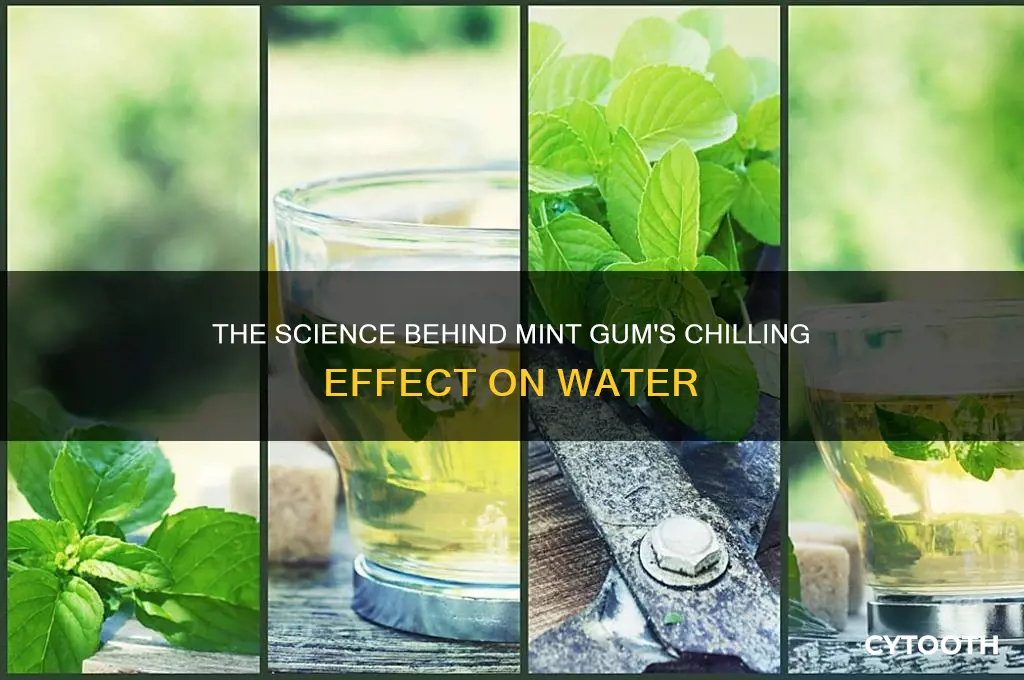
Mint gum can create the sensation of making water feel colder due to the activation of the body's cold receptors by the menthol compound found in mint. When you chew mint gum, menthol binds to the TRPM8 receptors in your mouth, which are responsible for detecting cold temperatures. This interaction sends a signal to your brain, tricking it into perceiving a cooling effect. When you subsequently drink water, the mild cooling sensation from the menthol combines with the natural temperature of the water, amplifying the perception of coldness. This phenomenon is purely sensory and does not actually lower the temperature of the water, but rather enhances the subjective experience of its coolness.
| Characteristics | Values |
|---|---|
| Sensory Perception | Mint gum contains compounds like menthol, which activate cold-sensitive receptors (TRPM8) in the mouth, creating a cooling sensation. |
| Temperature Effect | The cooling sensation from mint gum does not actually lower the temperature of water; it only tricks the brain into perceiving it as colder. |
| Psychological Factor | The association of mint with coldness (e.g., mint ice cream, mint-flavored cold drinks) influences perception, making water seem colder. |
| Saliva Production | Chewing gum increases saliva production, which can slightly cool the mouth due to evaporative cooling, enhancing the perception of coldness. |
| Contrast Effect | The intense, cool sensation from mint gum contrasts with the neutral temperature of water, making the water feel colder by comparison. |
| Duration of Effect | The cooling sensation is temporary and lasts only as long as the mint flavor is active in the mouth. |
| Individual Variability | Sensitivity to mint and cold perception varies among individuals, affecting how strongly the effect is experienced. |
| No Physical Cooling | Mint gum does not alter the thermodynamic properties of water; the effect is purely sensory and psychological. |
What You'll Learn
- Sensory Perception: Mint triggers cold-sensitive receptors in the mouth, mimicking the sensation of cold water
- Taste Buds & Temperature: Menthol in mint activates TRPM8 receptors, linked to cold detection
- Psychological Effect: The brain associates mint flavor with cold, enhancing the perceived temperature drop
- Evaporative Cooling: Saliva production from chewing gum can create a slight cooling effect on water
- Contrast Illusion: Mint’s intensity makes neutral-temperature water feel colder by comparison

Sensory Perception: Mint triggers cold-sensitive receptors in the mouth, mimicking the sensation of cold water
Mint’s ability to create a cooling sensation is rooted in its interaction with the body’s sensory receptors. When you chew mint gum or consume mint-flavored products, the compound responsible—often menthol—activates transient receptor potential melastatin 8 (TRPM8) channels in the mouth. These receptors are typically triggered by cold temperatures below 25°C (77°F), signaling the brain that something cold is present. Menthol doesn’t lower the temperature of water or your mouth; instead, it hijacks these receptors, creating a perceptual illusion of coldness. This mechanism explains why drinking water after chewing mint gum feels colder than usual—your brain is interpreting the menthol-induced signal as a drop in temperature.
To maximize this effect, consider the concentration of menthol in the mint product. Most chewing gums contain between 0.05% and 0.1% menthol, which is sufficient to activate TRPM8 receptors without overwhelming the senses. For a more pronounced cooling sensation, opt for sugar-free gum, as sugar can dull the perception of cold. Experiment with timing: chew the gum for 1–2 minutes before drinking water to allow menthol to fully interact with oral receptors. This simple adjustment can enhance the perceived coldness of water, making it a refreshing experience, particularly after physical activity or in warm environments.
The phenomenon isn’t limited to mint gum—it’s why mint-based lozenges, mouthwashes, and even certain toothpastes leave a cooling aftertaste. However, the effect is most noticeable when paired with water because the liquid acts as a medium to distribute menthol across the mouth, amplifying the sensation. For those seeking a practical application, this trick can be particularly useful for athletes or outdoor enthusiasts who want to enhance hydration without relying on ice-cold beverages, which may not always be available.
Interestingly, the perception of coldness from mint varies across age groups and individuals. Children and younger adults tend to report a stronger cooling sensation due to heightened sensitivity of TRPM8 receptors. Conversely, older adults may experience a milder effect as sensory perception naturally diminishes with age. To tailor the experience, adjust the menthol dosage or product type: stronger mints or menthol crystals (used sparingly) can intensify the effect for those with reduced sensitivity. Always exercise caution with concentrated menthol products, as excessive use can irritate mucous membranes.
Incorporating this sensory trick into daily routines can elevate mundane activities, such as drinking water, into a more engaging experience. For instance, pairing mint gum with room-temperature water can make hydration feel more satisfying, encouraging consistent fluid intake. While the effect is purely perceptual, its impact on enjoyment and behavior underscores the power of sensory manipulation. Understanding the science behind mint’s cooling sensation not only satisfies curiosity but also offers practical ways to enhance everyday experiences.
Does Zyn Cause Gum Recession? Uncovering the Truth and Risks
You may want to see also
Taste Buds & Temperature: Menthol in mint activates TRPM8 receptors, linked to cold detection
The sensation of a cooling effect from mint gum isn't just a trick of the mind—it's a biological response rooted in how our taste buds interact with temperature-sensing mechanisms. At the heart of this phenomenon is menthol, a compound found in mint, which activates a specific protein in our cells called TRPM8. This receptor is typically triggered by cold temperatures, but menthol mimics this effect, creating a sensation of coldness without an actual drop in temperature.
To understand this process, imagine your mouth as a sophisticated sensory hub. When you chew mint gum, menthol molecules bind to TRPM8 receptors on nerve endings in your oral cavity. These receptors are part of the transient receptor potential (TRP) family, which detect various stimuli like heat, cold, and pain. Activation of TRPM8 sends a signal to the brain, which interprets it as a cooling sensation. This is why a sip of water after chewing mint gum feels colder than usual—the menthol has primed your sensory system to perceive cold more intensely.
From a practical standpoint, this effect isn’t just a curiosity; it has applications in food science and medicine. For instance, menthol is often added to oral care products like toothpaste and mouthwash to enhance the perception of freshness. In pharmaceuticals, it’s used in topical treatments to provide a cooling sensation that can soothe minor irritations. However, the intensity of this effect depends on the concentration of menthol. Products typically contain 0.04% to 0.1% menthol to achieve a noticeable cooling effect without overwhelming the senses.
Interestingly, the TRPM8 receptor’s role extends beyond the mouth. It’s also present in the skin and respiratory tract, which is why menthol-based products like cough drops or muscle rubs create a cooling or tingling sensation. This dual activation—both in the mouth and on the skin—highlights the versatility of menthol as a sensory modulator. For those experimenting with menthol-infused products, start with lower concentrations to gauge sensitivity, especially in children or individuals with heightened sensory responses.
In summary, the "cold" feeling from mint gum is a direct result of menthol’s interaction with TRPM8 receptors, hijacking the body’s natural cold detection system. This mechanism not only explains a common sensory experience but also underscores the intricate ways our bodies interpret and respond to external stimuli. Whether in gum, toothpaste, or therapeutic products, menthol’s ability to activate TRPM8 receptors makes it a powerful tool for enhancing sensory experiences.
Discover the Best Gum for Blowing the Biggest Bubble Ever
You may want to see also
Psychological Effect: The brain associates mint flavor with cold, enhancing the perceived temperature drop
The human brain is a master of associations, often linking sensory experiences to create a complex web of perceptions. One such intriguing connection is the relationship between mint flavor and the sensation of cold. When you chew mint gum and then drink water, the brain's interpretation of temperature can be remarkably altered, leading to the phenomenon of water feeling colder than it actually is. This psychological effect is not merely a trick of the mind but a result of our brain's intricate processing of sensory information.
Unraveling the Sensory Illusion
Imagine this scenario: you've just finished a strenuous workout, and your mouth is parched. You reach for a bottle of water, but before taking a sip, you pop a piece of mint gum into your mouth. As you chew, the cool, refreshing flavor of mint explodes on your taste buds. Now, when you finally drink the water, it feels like an icy blast, providing instant relief from your thirst. But is the water truly colder, or is this a clever illusion crafted by your mind? The answer lies in the brain's remarkable ability to intertwine taste and temperature perception.
A Journey into the Brain's Sensory Processing
Our brains are wired to detect and interpret sensory stimuli, often blending inputs from multiple senses to create a cohesive experience. In the case of mint and cold perception, the brain's association is deeply rooted in our evolutionary past. Menthol, the primary compound in mint, activates specific receptors in the mouth and nose that are also responsible for detecting actual cold temperatures. This activation triggers a neural response, signaling to the brain that something cold is being experienced. Over time, the brain learns to associate the mint flavor with the sensation of cold, even when the temperature remains constant.
Practical Implications and Everyday Applications
Understanding this psychological effect can have practical benefits. For instance, athletes and outdoor enthusiasts can use mint-flavored products to enhance their perception of hydration. A quick chew of mint gum before drinking water during a marathon or a hike might make the water feel more refreshing, encouraging proper hydration. Additionally, this concept can be applied in culinary arts, where chefs can experiment with mint-infused dishes to create unique sensory experiences, making diners perceive food as cooler or fresher.
Maximizing the Effect: Tips and Considerations
To optimize this psychological effect, consider the following:
- Intensity of Mint Flavor: Stronger mint flavors, such as peppermint or spearmint, tend to produce a more pronounced cooling sensation. Experiment with different mint varieties to find the most effective one for your preference.
- Timing: The effect is most noticeable when the mint flavor is fresh and intense. Chew the gum or consume the mint-flavored product immediately before drinking water for the best results.
- Individual Sensitivity: People have varying sensitivities to mint and temperature perception. Some individuals may experience a more dramatic effect, while others might perceive a subtler change.
- Temperature of Water: While the psychological effect can enhance the perceived coldness, starting with water at a cooler temperature can amplify the overall sensation.
By harnessing the power of this psychological association, we can manipulate our sensory experiences, making everyday activities like drinking water a more refreshing and enjoyable affair. This simple yet fascinating interplay between taste and temperature perception showcases the brain's incredible ability to shape our reality.
COVID and Gum Pain: Unraveling the Connection and Symptoms
You may want to see also
Evaporative Cooling: Saliva production from chewing gum can create a slight cooling effect on water
Chewing mint gum before taking a sip of water can create a surprising sensation: the water feels colder than it actually is. This phenomenon isn’t magic—it’s science. The key lies in evaporative cooling, a process triggered by the increased saliva production caused by chewing gum. When you chew, your mouth produces more saliva, and when that saliva comes into contact with the water, it begins to evaporate. Evaporation is an endothermic process, meaning it absorbs heat from its surroundings. As the saliva evaporates, it draws heat away from the water, creating a temporary cooling effect.
To maximize this effect, consider the timing and technique. Chew mint gum for at least 30 seconds before taking a sip of water to ensure sufficient saliva production. The mint flavor enhances the perception of coolness due to its association with cold sensations, but it’s the saliva’s evaporation that does the physical cooling. For best results, take small sips rather than large gulps, allowing more surface area of the water to interact with the saliva. This method works particularly well with room-temperature or slightly warm water, as the contrast between the evaporative cooling and the water’s baseline temperature is more noticeable.
While the cooling effect is subtle, it’s a practical trick for those seeking a quick refresh without refrigeration. However, there are limitations. The effect is temporary, lasting only as long as the saliva is actively evaporating. Additionally, excessive gum chewing can lead to jaw fatigue or overproduction of saliva, which may dilute the cooling sensation. For optimal results, limit gum-chewing sessions to 5–10 minutes and avoid swallowing excess saliva, as it can disrupt the cooling process.
Comparing this method to other cooling techniques highlights its simplicity. Unlike refrigeration or ice cubes, evaporative cooling via gum requires no external tools or energy. It’s a portable, cost-effective solution ideal for outdoor activities or situations where refrigeration isn’t available. While it won’t replace traditional cooling methods, it’s a clever hack rooted in basic physics, demonstrating how everyday actions can manipulate temperature perception. Next time you’re craving a cooler sip, reach for a stick of mint gum and let science do the work.
Natural Gum Care: Easy Turmeric Paste Recipe for Healthy Gums
You may want to see also
Contrast Illusion: Mint’s intensity makes neutral-temperature water feel colder by comparison
The sensation of mint gum making water feel colder is a fascinating interplay of sensory perception and cognitive processing. At the heart of this phenomenon lies the contrast illusion, where the intense, cooling sensation of mint creates a comparative effect, making neutral-temperature water feel colder than it actually is. This isn't a physical change in temperature but a psychological trick your brain plays on you. When you chew mint gum, the menthol activates cold-sensitive receptors in your mouth, triggering a cooling signal. Immediately drinking water afterward amplifies this perception because your brain contrasts the heightened mint sensation with the neutral water, exaggerating the water's perceived coolness.
To understand this better, consider the mechanics of sensory adaptation. When exposed to a strong stimulus (like mint), your sensory receptors become temporarily desensitized. This desensitization creates a baseline shift, making subsequent neutral stimuli feel less intense—or in this case, colder. For example, if you chew a piece of peppermint gum containing 0.05% menthol (a common dosage), the cooling effect can last for several minutes. Drinking water within this window will feel notably cooler, even if it’s room temperature. This effect is more pronounced in adults, as children’s sensory receptors are less adapted to such contrasts.
Practical application of this illusion can be useful in everyday scenarios. If you’re drinking water at room temperature and find it unrefreshing, pairing it with a mint gum can enhance the perceived coolness without needing to chill the water. However, caution is advised: excessive menthol exposure can overwhelm sensory receptors, leading to a numbing effect rather than a cooling one. Stick to gums with moderate menthol levels (around 0.03% to 0.07%) and avoid consuming more than one piece at a time to maintain the contrast effect.
Comparatively, this illusion is akin to the “thermal grill illusion,” where alternating warm and cool stimuli create a perception of burning heat. Both rely on the brain’s tendency to exaggerate differences between sensory inputs. However, the mint-water contrast is milder and more controlled, making it a safe and enjoyable way to experiment with sensory perception. By understanding this mechanism, you can manipulate your sensory experience to make neutral-temperature water feel more refreshing, especially in situations where chilled water isn’t available.
In conclusion, the contrast illusion driven by mint’s intensity offers a simple yet effective way to alter your perception of water temperature. It’s a testament to how sensory inputs can be manipulated to create desired effects. Whether you’re hiking with room-temperature water or simply looking for a refreshing drink, pairing it with mint gum can provide a cooler experience—all thanks to your brain’s clever interpretation of sensory contrasts.
Achieve Healthy Gums: Simple Tips for Optimal Oral Wellness
You may want to see also
Frequently asked questions
Mint gum contains compounds like menthol, which activate cold-sensitive receptors in your mouth, creating a cooling sensation without actually lowering the water's temperature.
No, mint gum does not physically cool down water. The sensation of coldness comes from the menthol stimulating nerve endings that signal cold, not from a change in temperature.
Non-mint gum lacks menthol or similar cooling agents, so it doesn’t trigger the cold receptors in your mouth, resulting in no perceived temperature change when drinking water.