Matthew Grant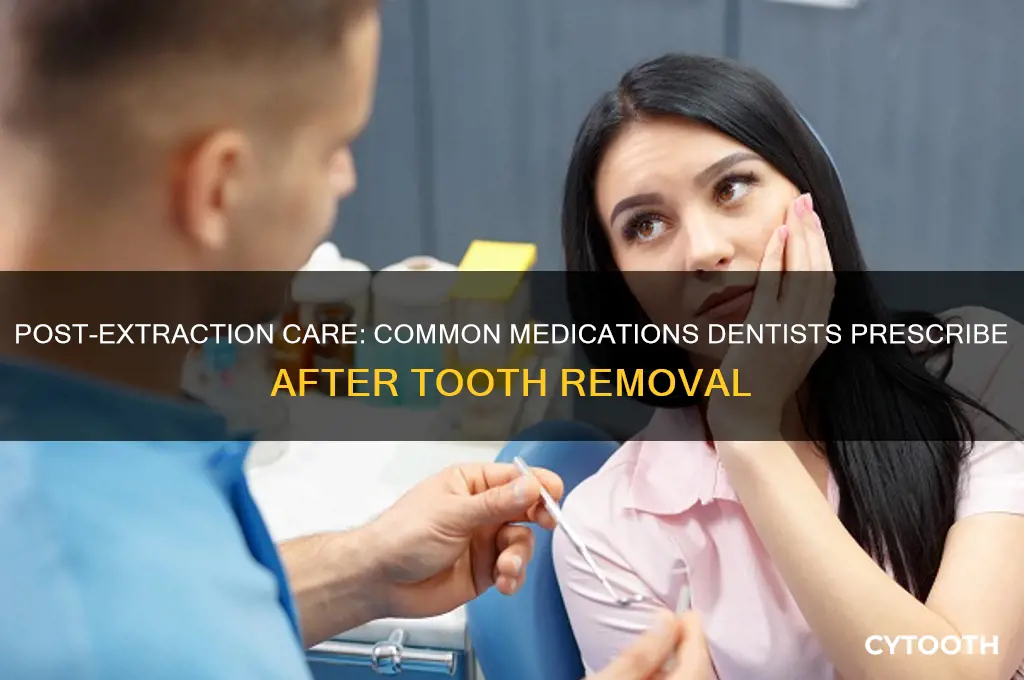
After a tooth extraction, dentists typically prescribe a combination of medications and aftercare instructions to manage pain, prevent infection, and promote healing. Common prescriptions include pain relievers such as ibuprofen or acetaminophen to alleviate discomfort, and in some cases, narcotics like hydrocodone for more severe pain. To prevent infection, dentists often prescribe antibiotics, especially if the patient has a weakened immune system or if the extraction was complex. Additionally, they may recommend antiseptic mouthwashes or rinses to keep the extraction site clean. Patients are also advised to follow specific aftercare guidelines, such as avoiding strenuous activities, applying ice packs to reduce swelling, and eating soft foods to prevent irritation of the extraction site. These measures collectively ensure a smooth recovery and minimize complications.
| Characteristics | Values |
|---|---|
| Pain Relief Medications | Over-the-counter pain relievers (e.g., ibuprofen, acetaminophen) or prescription opioids (e.g., hydrocodone) for severe pain. |
| Antibiotics | Prescribed if there’s a risk of infection (e.g., amoxicillin, clindamycin). |
| Antiseptic Mouthwash | Chlorhexidine gluconate rinse to reduce bacteria and prevent infection. |
| Cold Compress | Recommended for the first 24–48 hours to reduce swelling. |
| Soft Diet | Advised for several days to avoid disturbing the extraction site. |
| Avoid Straws/Smoking | Prevents dry socket by avoiding suction in the mouth. |
| Saltwater Rinses | Starting 24 hours post-extraction to keep the area clean. |
| Bite Guard | Occasionally prescribed if the extraction affects bite alignment. |
| Follow-Up Appointment | Scheduled to monitor healing and remove stitches if necessary. |
| Avoid Strenuous Activity | Recommended for 24–48 hours to minimize bleeding and swelling. |
| Gauze Packs | Provided immediately after extraction to control bleeding. |
What You'll Learn

Pain Management Medications
After a tooth extraction, managing pain effectively is crucial for patient comfort and recovery. Dentists typically prescribe pain management medications tailored to the severity of the procedure and the patient’s medical history. The most common options include nonsteroidal anti-inflammatory drugs (NSAIDs), acetaminophen, and, in more severe cases, opioids. NSAIDs like ibuprofen (e.g., Advil, Motrin) are often the first-line choice due to their dual action in reducing inflammation and pain. A typical adult dose is 400–600 mg every 6 hours, but it’s essential to follow the dentist’s instructions and avoid exceeding the daily maximum of 2400 mg to prevent gastrointestinal side effects.
For patients who cannot tolerate NSAIDs or require additional relief, acetaminophen (Tylenol) is a safe alternative. It effectively manages mild to moderate pain without the anti-inflammatory properties of NSAIDs. Adults can take 650–1000 mg every 4–6 hours, not exceeding 3000 mg daily. Combining acetaminophen with an NSAID can sometimes provide synergistic pain relief, but this should only be done under professional guidance. Children and adolescents under 18 should avoid aspirin-containing medications due to the risk of Reye’s syndrome, making acetaminophen or ibuprofen the preferred choices for this age group.
In cases of significant pain, such as after surgical extractions or multiple tooth removals, dentists may prescribe opioids like hydrocodone or oxycodone. These medications are potent but carry risks of dependence, sedation, and constipation. They are typically prescribed for short durations (3–5 days) and should be taken exactly as directed. Patients should avoid alcohol and driving while on opioids and be aware of potential interactions with other medications. For those concerned about opioid use, discussing alternative pain management strategies with the dentist is advisable.
Practical tips can enhance the effectiveness of pain medications. Taking NSAIDs or acetaminophen before the local anesthesia wears off can preemptively manage pain. Applying a cold compress to the cheek for 20 minutes on, 20 minutes off, can reduce swelling and complement medication effects. Staying hydrated and maintaining a soft diet also aids recovery. Patients should report any severe or persistent pain, as it may indicate complications like dry socket, requiring further intervention.
In summary, pain management after a tooth extraction relies on a combination of NSAIDs, acetaminophen, and, when necessary, opioids. Each medication has specific dosages, precautions, and benefits, making it essential to follow the dentist’s guidance. By understanding these options and incorporating practical measures, patients can navigate the post-extraction period with greater comfort and confidence.
Tools and Techniques Dentists Use for Tooth Extraction Explained
You may want to see also
Antibiotics for Infection Prevention
Dentists often prescribe antibiotics after a tooth extraction to prevent infection, particularly in high-risk cases. This proactive measure is crucial because the mouth is teeming with bacteria, and the open socket left by a pulled tooth can become a breeding ground for harmful microbes. Common antibiotics include amoxicillin, clindamycin, or penicillin, typically prescribed for 3 to 7 days. The choice of antibiotic depends on the patient’s medical history, allergies, and the complexity of the extraction. For instance, amoxicillin is frequently the first choice due to its effectiveness against oral bacteria and minimal side effects, but alternatives like clindamycin are used for patients allergic to penicillin.
While antibiotics are not always necessary after a routine tooth extraction, they become essential in specific scenarios. Patients with weakened immune systems, those undergoing complex surgical extractions, or individuals with pre-existing conditions like heart defects are at higher risk of infection. Dentists may also prescribe antibiotics if there’s evidence of pre-existing infection, such as an abscess, or if the extraction site is contaminated. It’s critical to follow the prescribed dosage and complete the full course of antibiotics, even if symptoms improve, to prevent antibiotic resistance and ensure the infection is fully eradicated.
The timing of antibiotic administration is another key factor. Dentists often recommend starting the medication 1 hour before the procedure or immediately afterward to maximize its preventive effect. For adults, a typical dose of amoxicillin is 500 mg every 8 hours, while children’s dosages are weight-based, usually ranging from 20 to 40 mg per kilogram per day. Patients should also be aware of potential side effects, such as nausea, diarrhea, or allergic reactions, and report any adverse symptoms to their dentist promptly. Combining antibiotics with proper oral hygiene, such as gently rinsing with warm salt water after 24 hours, further reduces infection risk.
A comparative analysis reveals that while antibiotics are effective in preventing infection, they are not a substitute for good post-extraction care. Over-reliance on antibiotics can lead to antibiotic resistance, a growing global health concern. Dentists must balance the benefits of infection prevention with the risks of overuse, often opting for antibiotics only when absolutely necessary. Patients can support this approach by adhering to post-extraction instructions, such as avoiding smoking, refraining from vigorous rinsing, and keeping the extraction site clean. This dual strategy—targeted antibiotic use and diligent aftercare—ensures optimal healing and minimizes complications.
In conclusion, antibiotics play a vital role in preventing infection after a tooth extraction, especially in high-risk cases. By understanding the specific scenarios where antibiotics are necessary, following prescribed dosages, and combining medication with proper aftercare, patients can significantly reduce their risk of complications. Dentists must continue to prescribe antibiotics judiciously, weighing individual patient needs against the broader implications of antibiotic resistance. This balanced approach ensures both immediate and long-term oral health.
How Much Does a Tooth Extraction Cost at the Dentist?
You may want to see also
Anti-inflammatory Drugs for Swelling
After a tooth extraction, swelling is a common and expected side effect as the body's natural response to trauma. To manage this, dentists often prescribe anti-inflammatory medications, which play a crucial role in reducing discomfort and promoting healing. These drugs work by inhibiting the body's inflammatory pathways, thereby minimizing swelling and pain at the extraction site. Commonly, nonsteroidal anti-inflammatory drugs (NSAIDs) like ibuprofen (e.g., Advil, Motrin) are recommended due to their dual action as both an analgesic and an anti-inflammatory agent. For adults, a typical dosage is 400–600 mg every 6 hours, as needed, but it’s essential to follow the dentist’s specific instructions or the medication label.
While NSAIDs are effective, they are not suitable for everyone. Patients with a history of gastrointestinal issues, kidney problems, or allergies to NSAIDs may require alternatives. In such cases, dentists might prescribe acetaminophen (e.g., Tylenol) for pain relief, though it lacks anti-inflammatory properties. For more severe swelling or when NSAIDs are contraindicated, corticosteroids like dexamethasone may be considered, but these are less common due to potential side effects. Always inform your dentist about existing medical conditions or medications to ensure a safe prescription.
The timing of anti-inflammatory medication is critical for optimal results. Dentists often advise starting the medication as soon as possible after the procedure, even before swelling peaks, to stay ahead of the inflammatory response. For example, taking ibuprofen 30 minutes before the local anesthesia wears off can help manage pain and swelling more effectively. It’s also important to take the medication with food to minimize stomach irritation, a common side effect of NSAIDs.
For children and adolescents, anti-inflammatory medications must be dosed carefully based on age and weight. Ibuprofen is generally safe for children over 6 months, with dosages ranging from 5–10 mg per kilogram of body weight every 6–8 hours. However, aspirin should be avoided in children and teenagers due to the risk of Reye’s syndrome. Parents should consult their dentist or pediatrician for precise dosing instructions tailored to their child’s needs.
In addition to medication, combining anti-inflammatory drugs with cold compresses can enhance swelling reduction. Applying ice packs to the affected area in 20-minute intervals during the first 24–48 hours post-extraction can complement the effects of NSAIDs. This dual approach not only alleviates swelling but also reduces bruising and discomfort. Remember, while anti-inflammatory drugs are powerful tools, they are just one part of post-extraction care, which should also include proper oral hygiene and avoiding strenuous activities to ensure a smooth recovery.
Toddler-Friendly Drinks Post-Tooth Extraction: Safe and Soothing Options
You may want to see also
Oral Rinses for Healing
After a tooth extraction, the prescribed oral rinse can significantly influence the healing process, reducing the risk of infection and promoting tissue repair. Chlorhexidine gluconate, a common antiseptic mouthwash, is often recommended due to its broad-spectrum antimicrobial properties. Dentists typically advise patients to rinse with a 0.12% chlorhexidine solution for 30 seconds, twice daily, starting 24 hours after the procedure. This delay ensures the initial blood clot, which is crucial for healing, remains undisturbed. While effective, chlorhexidine can cause temporary staining of teeth and tongue, a trade-off for its therapeutic benefits.
For those seeking a more natural alternative, saline rinses are a gentle yet effective option. Mixing ½ teaspoon of salt in 8 ounces of warm water creates a solution that mimics the body’s natural fluids, reducing inflammation and cleansing the extraction site. Patients are instructed to rinse gently after meals and before bed, starting on the day of the procedure. This method is particularly suitable for children or individuals sensitive to chemical-based rinses. However, its efficacy relies on consistent use and proper technique to ensure thorough cleaning.
In cases of increased infection risk or compromised immune systems, dentists may prescribe antibiotic rinses such as doxycycline hyclate. This 1.5% solution is typically used for 10 to 14 days, with a recommended dosage of 10 mL rinsed around the mouth for 30 seconds, twice daily. Unlike systemic antibiotics, this localized approach minimizes side effects while targeting oral bacteria directly. Patients must avoid eating or drinking for 30 minutes post-rinse to maximize absorption and effectiveness.
A comparative analysis reveals that while chlorhexidine is the gold standard for its antimicrobial potency, saline rinses offer accessibility and safety for all age groups. Antibiotic rinses, though highly effective, are reserved for specific cases due to their cost and potential for bacterial resistance. The choice of rinse ultimately depends on the patient’s health status, the complexity of the extraction, and the dentist’s judgment. Regardless of the type, adherence to the prescribed regimen is critical for optimal healing.
Practical tips can enhance the effectiveness of oral rinses. Patients should avoid vigorous rinsing, especially in the first 24 hours, to prevent dislodging the blood clot. Using a small syringe to gently irrigate the site with saline can aid in debris removal without causing trauma. Additionally, storing chlorhexidine rinses away from direct sunlight preserves their potency. By combining the right rinse with proper technique, patients can actively support their recovery and minimize post-extraction complications.
Soft and Soothing Foods to Eat After a Tooth Extraction
You may want to see also
Post-extraction Care Instructions
After a tooth extraction, the initial 24–48 hours are critical for preventing complications like dry socket or infection. Dentists universally emphasize the importance of protecting the blood clot that forms in the extraction site, as it serves as the foundation for healing. Avoid vigorous rinsing, spitting, or using straws during this period, as these actions can dislodge the clot. Instead, gently rinse with warm salt water (1/2 teaspoon of salt in 8 ounces of water) starting 24 hours post-extraction to keep the area clean without disrupting the clot.
Pain management is another cornerstone of post-extraction care. Dentists typically prescribe nonsteroidal anti-inflammatory drugs (NSAIDs) like ibuprofen (600–800 mg every 6–8 hours) for adults, as they reduce both pain and swelling. For severe pain, opioids such as hydrocodone or codeine may be prescribed, but these are reserved for cases where NSAIDs are insufficient due to their side effects and addiction risks. For children and adolescents, acetaminophen (10–15 mg/kg every 4–6 hours) is often recommended, as NSAIDs can pose risks in this age group. Always follow the dentist’s dosage instructions and avoid exceeding the recommended limits.
Swelling and bruising are common after a tooth extraction, but they can be minimized with simple measures. Applying a cold compress to the cheek near the extraction site for 20 minutes on, followed by 20 minutes off, helps reduce inflammation during the first 24–48 hours. After this period, switching to a warm compress can promote blood flow and aid healing. Keeping the head elevated, even while sleeping, prevents blood from pooling in the face and exacerbating swelling.
Diet plays a pivotal role in post-extraction recovery. Stick to soft, cool foods like yogurt, mashed potatoes, or smoothies for the first few days to avoid irritating the extraction site. Avoid hot, spicy, or crunchy foods that can disrupt healing or become lodged in the socket. Staying hydrated is essential, but opt for water or mild beverages instead of acidic or caffeinated drinks, which can irritate the wound. Gradually reintroduce solid foods as comfort allows, typically after 3–4 days.
Finally, maintaining oral hygiene is crucial, but it requires careful modification after an extraction. Avoid brushing the extraction site directly for the first 24 hours, but continue to gently brush and floss the remaining teeth to prevent infection. After the first day, use a syringe (provided by the dentist) to irrigate the socket with warm salt water, ensuring debris is removed without disturbing the clot. If stitches were placed, they will typically dissolve on their own within 7–10 days, but follow the dentist’s specific instructions for your case.
By adhering to these post-extraction care instructions, patients can significantly reduce discomfort, prevent complications, and ensure a smooth recovery. Always consult your dentist if you experience severe pain, persistent bleeding, or signs of infection, such as fever or pus discharge, as these may require immediate attention.
Post-Extraction Care: Activities to Avoid After a Tooth Extraction
You may want to see also
Frequently asked questions
Dentists commonly prescribe nonsteroidal anti-inflammatory drugs (NSAIDs) like ibuprofen or acetaminophen for pain relief. For more severe pain, they may prescribe stronger medications such as opioids (e.g., hydrocodone or oxycodone), but these are used sparingly due to their potential for addiction.
No, antibiotics are not prescribed after every tooth extraction. They are typically reserved for patients at higher risk of infection, such as those with weakened immune systems, certain medical conditions, or complex extractions. Dentists assess the need on a case-by-case basis.
Dentists may prescribe a medicated dressing or rinse containing ingredients like eugenol or chlorhexidine to prevent or treat dry socket. Pain relievers and proper aftercare instructions are also provided to minimize the risk.
Yes, dentists often recommend or prescribe NSAIDs like ibuprofen to reduce swelling and inflammation. In some cases, corticosteroids (e.g., dexamethasone) may be prescribed for severe swelling, especially after surgical extractions.