Samantha Blake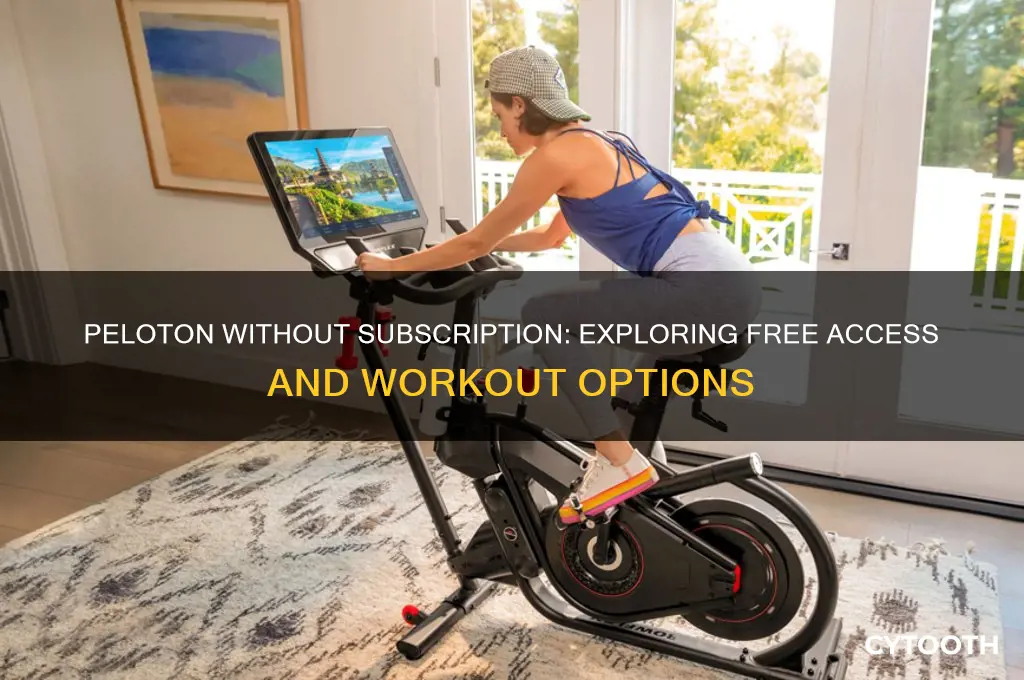
For fitness enthusiasts considering the Peloton bike or treadmill, a common question arises: Can you use Peloton without a subscription? While Peloton’s all-access membership is widely promoted for its live and on-demand classes, the equipment itself can still be used without a subscription, albeit with limited functionality. Without a membership, users can access basic features like manual rides or runs, track metrics such as distance and cadence, and enjoy scenic rides or runs. However, the full suite of classes, personalized programs, and community features require a subscription. This makes the Peloton experience more versatile for those who prefer flexibility or wish to explore the platform before committing to a monthly fee.
What You'll Learn
- Access to Free Classes: Limited free content available without subscription, including trials and select workouts
- Just Ride Feature: Use the bike manually without classes; track metrics like cadence and resistance
- Third-Party Apps: Sync Peloton with apps like Strava or Apple Health for additional tracking
- Offline Workouts: Downloaded classes remain accessible without an active subscription for offline use
- Hardware Functionality: Bike and equipment work fully without subscription, but advanced features are restricted

Access to Free Classes: Limited free content available without subscription, including trials and select workouts
Peloton offers a tantalizing glimpse into its world of fitness through limited free content, even without a subscription. This strategic move serves a dual purpose: it allows potential users to sample the experience, while also keeping current owners engaged during subscription lapses. For instance, new users can access a selection of classes across various disciplines, from cycling to yoga, without committing financially. This approach mirrors the "freemium" model seen in apps like Spotify or Netflix, where basic access is free, but premium features require payment.
To maximize this free content, start by exploring the trial period, typically 30 days for new users. During this time, dive into a variety of workouts to gauge what resonates most with your fitness goals. For example, if you’re a beginner, focus on foundational classes in cycling or strength training. Advanced users might test high-intensity interval training (HIIT) or advanced yoga flows. After the trial, the free content shrinks but doesn’t disappear entirely. Peloton retains a library of select workouts, often updated periodically, to keep users engaged. These include shorter sessions (10–20 minutes) ideal for busy schedules or as add-ons to other routines.
A practical tip for non-subscribers is to leverage the Peloton app’s filtering options to identify free classes. Sort by duration, difficulty, or instructor to tailor your experience. For instance, a 10-minute core workout with Robin Arzon can be a quick yet effective addition to your day. Additionally, Peloton occasionally releases free content on YouTube or social media, particularly during fitness challenges or holidays. Following their channels can provide supplementary workouts without cost.
While the free content is valuable, it’s important to manage expectations. Without a subscription, access is restricted to a fraction of the full library, and features like personalized metrics or progress tracking are unavailable. Think of it as a taste rather than a full meal. For those on the fence about subscribing, this limited access serves as a low-stakes way to evaluate whether Peloton aligns with their fitness needs. Ultimately, the free classes are a smart entry point, but sustained engagement likely requires a subscription for the full experience.
Using FSA Funds for Peloton: Eligibility and Benefits Explained
You may want to see also
Just Ride Feature: Use the bike manually without classes; track metrics like cadence and resistance
Peloton’s Just Ride feature is a hidden gem for those who prefer unstructured workouts or want to escape the pressure of instructor-led classes. This mode allows you to hop on the bike and pedal freely, without any guided routines or playlists. Think of it as your personal cycling sanctuary—no schedules, no expectations, just you and the bike. While it lacks the fanfare of live classes, it’s perfect for days when you want to clear your mind or follow your own rhythm. The bike’s console still tracks essential metrics like cadence (pedal speed) and resistance, so you’re not entirely flying blind.
To access Just Ride, simply tap the feature on the Peloton screen, and you’re off. No subscription required. This makes it an ideal option for non-subscribers or those on a break from classes. Here’s a practical tip: pair it with your own music via Bluetooth or a nearby speaker. The bike’s resistance knob remains fully functional, so you can manually adjust the intensity to match your mood or fitness level. For instance, crank it up for a high-resistance climb or keep it low for a steady recovery ride. The cadence tracker ensures you’re staying within an efficient range—aim for 60–90 RPM for most rides.
Comparatively, while Just Ride lacks the structured motivation of classes, it offers unparalleled flexibility. It’s akin to riding an outdoor bike but with the convenience of indoor metrics. For example, if you’re training for a race, you can simulate intervals by manually adjusting resistance and monitoring cadence. Or, if you’re recovering from an injury, use it for low-impact, self-paced sessions. The absence of a subscription fee makes it a cost-effective way to utilize the bike’s hardware, which is often the most expensive part of the Peloton ecosystem.
One caution: without the guidance of classes, it’s easy to fall into monotony or improper form. To avoid this, set small goals—like maintaining a cadence of 80 RPM for 10 minutes—or vary resistance every few minutes. Also, since there’s no instructor to remind you, focus on posture: keep your core engaged, shoulders back, and hands lightly gripping the handlebars. For added structure, consider using a timer or stopwatch to create intervals or track total ride time.
In conclusion, the Just Ride feature is a versatile tool that maximizes the Peloton bike’s value, subscription or not. It’s ideal for self-starters, budget-conscious users, or anyone craving a break from structured workouts. By leveraging its manual controls and metric tracking, you can tailor rides to your needs, whether it’s a high-intensity sprint or a meditative spin. It’s proof that sometimes, the simplest features offer the most freedom.
Mastering BIKE File Usage: A Comprehensive Step-by-Step Guide
You may want to see also
Third-Party Apps: Sync Peloton with apps like Strava or Apple Health for additional tracking
One of the most compelling reasons to explore third-party apps like Strava or Apple Health with your Peloton is the ability to centralize your fitness data. Without a Peloton subscription, your workout metrics are limited to what’s displayed on the bike or treadmill. By syncing with these apps, you gain access to detailed analytics, such as heart rate trends, calorie burn comparisons, and long-term progress charts. This integration transforms your Peloton from a standalone device into a node in your broader fitness ecosystem, even without a subscription.
To sync your Peloton with Strava, for example, you’ll need a third-party tool like *Tapiriik* or *HealthFit*. These services act as bridges, transferring your Peloton workout data to Strava, where you can track rides alongside other activities like running or swimming. For Apple Health users, the process is simpler: enable Health Sync in your Peloton settings, and your workouts will automatically populate in the Health app. This method is particularly useful for those who want to monitor metrics like resting heart rate or sleep patterns alongside their Peloton activity.
While third-party syncing offers significant benefits, it’s not without limitations. For instance, Strava may categorize Peloton rides as "indoor cycling" without specific power or cadence data unless you use a cadence sensor. Similarly, Apple Health may not capture advanced metrics like output or resistance levels. To maximize accuracy, consider investing in additional sensors or manually logging details post-workout. Despite these caveats, the ability to consolidate data across platforms provides a holistic view of your fitness journey, subscription or not.
For those who thrive on community and competition, syncing Peloton with Strava opens doors to challenges, leaderboards, and social sharing. You can join Strava clubs, compete in monthly mileage goals, or share your Peloton rides with friends. This feature is especially valuable for users who miss the social aspect of a Peloton subscription. By leveraging third-party apps, you retain control over your fitness narrative, blending the convenience of Peloton hardware with the versatility of external platforms.
In conclusion, syncing your Peloton with third-party apps like Strava or Apple Health is a practical workaround for users without a subscription. It enhances data tracking, fosters community engagement, and integrates your workouts into a broader health framework. While minor technical limitations exist, the benefits far outweigh the drawbacks, making this approach a smart choice for budget-conscious fitness enthusiasts.
Easy Biko Recipe: Cooking with Coconut Powder for Perfect Results
You may want to see also
Offline Workouts: Downloaded classes remain accessible without an active subscription for offline use
One of the most common concerns for Peloton users is what happens to their access when their subscription lapses. Surprisingly, the answer isn’t as restrictive as one might think. If you’ve downloaded classes during your active subscription period, these workouts remain accessible for offline use even after your subscription ends. This feature ensures that your investment in the Peloton ecosystem isn’t entirely lost, providing a practical solution for those who need a break from recurring fees but still want to stay active.
To take advantage of this feature, you’ll need to plan ahead. During your active subscription, download classes across various workout types—cycling, strength, yoga, or meditation—to create a diverse offline library. The process is straightforward: simply tap the download icon next to the class you want to save. There’s no limit to the number of classes you can download, though storage capacity on your Peloton device may become a factor. A 30-minute ride, for instance, typically takes up around 1 GB of space, so prioritize classes that align with your fitness goals.
While offline workouts offer flexibility, there are limitations to consider. Downloaded classes lack real-time features like leaderboard access, live metrics tracking, and instructor feedback. They’re also static—once downloaded, you won’t receive updates or new content unless you reactivate your subscription. For users who rely on community engagement or crave fresh workouts, this could feel restrictive. However, for those who prefer consistency and self-paced training, it’s an ideal solution.
Practical tips can maximize your offline experience. Organize your downloaded classes into collections based on duration, intensity, or workout type for easy access. If you’re using a Peloton Bike or Tread, ensure your device is regularly updated to avoid technical glitches. For users with limited storage, periodically delete classes you no longer need to free up space. Finally, treat your offline library as a long-term resource—it’s a cost-effective way to maintain your fitness routine without the pressure of monthly fees.
In comparison to other fitness platforms, Peloton’s offline feature stands out as a user-friendly option. While some competitors require continuous subscriptions for any access, Peloton’s approach acknowledges the value of long-term users. It’s a strategic move that fosters loyalty, allowing users to re-engage with the platform on their own terms. Whether you’re pausing your subscription temporarily or transitioning to a subscription-free model, downloaded classes ensure your Peloton remains a functional tool in your fitness arsenal.
Using Your HSA for Peloton: What You Need to Know
You may want to see also
Hardware Functionality: Bike and equipment work fully without subscription, but advanced features are restricted
The Peloton Bike and its accompanying equipment are designed to function independently of a subscription, ensuring users can still engage in effective workouts without ongoing costs. This is a critical point for those considering the purchase but hesitant about long-term commitments. The bike’s resistance knob, pedals, and seat adjustments operate seamlessly, allowing for manual control over workout intensity. Similarly, the touchscreen displays basic metrics like cadence, resistance, and time, enabling users to track progress without additional fees. This baseline functionality ensures the hardware remains a valuable fitness tool, even without a subscription.
However, the absence of a subscription restricts access to advanced features that elevate the Peloton experience. For instance, the touchscreen’s full potential is unlocked only with a membership, offering access to live and on-demand classes, personalized performance tracking, and social features like leaderboards and challenges. Without a subscription, the screen becomes a glorified timer and metric tracker, limiting its utility. Similarly, the bike’s integration with third-party apps or fitness platforms is unavailable, reducing its versatility for users seeking diverse workout options.
For those weighing the pros and cons, consider this: the bike’s standalone functionality is ideal for self-motivated individuals who prefer structured, self-directed workouts. Pairing the bike with free YouTube cycling videos or personal training plans can compensate for the lack of Peloton’s proprietary content. However, users must be aware that they’ll miss out on the gamified, community-driven aspects that make Peloton unique. This trade-off highlights the importance of aligning hardware capabilities with personal fitness goals and preferences.
Practical tips for maximizing the bike without a subscription include investing in a separate tablet or smartphone mount to stream external content, using a heart rate monitor for additional metrics, and creating a workout calendar to maintain consistency. For families or shared users, the bike’s durability and manual adjustability ensure it remains a versatile piece of equipment for various fitness levels. While the subscription enhances the experience, the hardware’s core functionality ensures it’s not a paperweight without it.
In conclusion, the Peloton Bike’s hardware functionality without a subscription is robust enough for basic use but falls short of delivering the full, immersive experience. Users must decide whether the advanced features justify the subscription cost or if the bike’s standalone capabilities meet their needs. This distinction is crucial for making an informed decision, ensuring the investment aligns with both budget and fitness objectives.
Choosing the Right Bike Size for Your 5-Year-Old Child
You may want to see also
Frequently asked questions
Yes, you can use the Peloton bike without a subscription, but access to features will be limited. You can manually adjust resistance and track basic metrics like cadence, speed, and distance on the touchscreen. However, you won’t have access to live or on-demand classes, instructor-led workouts, or advanced performance tracking.
No, the Peloton app requires an active subscription to access any content, including classes, workouts, and programs. Without a subscription, the app is essentially unusable for workouts.
Similar to the bike, you can use the Peloton Tread without a subscription, but functionality is limited. You can manually control the speed and incline, and the touchscreen will display basic metrics. However, you won’t have access to classes, guided runs, or other subscription-based features.
Yes, you can use the Peloton Bike+ or Peloton Guide without a subscription, but like other Peloton products, features will be restricted. For the Bike+, you’ll lose access to classes and advanced metrics. For the Guide, you won’t be able to use strength, yoga, or other floor-based workouts without a subscription.