Samantha Blake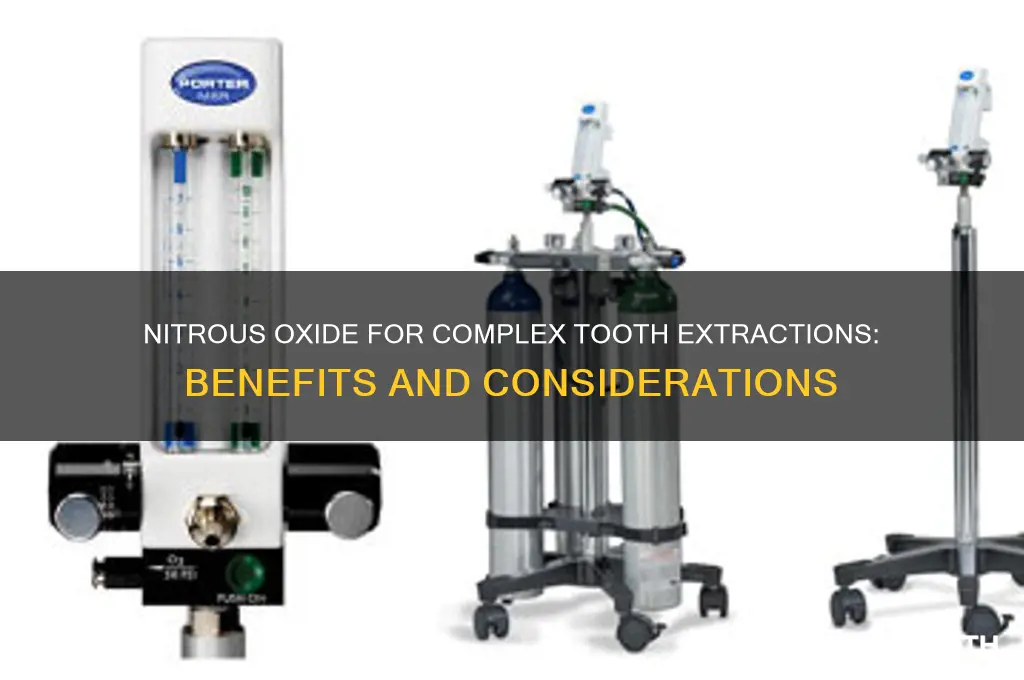
Nitrous oxide, commonly known as laughing gas, has long been utilized in dentistry for its anxiolytic and analgesic properties, making it a valuable tool during various dental procedures. Its application in complex tooth extractions is particularly noteworthy, as these procedures often require a delicate balance of patient comfort and precision. The gas, when administered in controlled amounts, can help alleviate patient anxiety and provide mild sedation, ensuring a more cooperative and relaxed state during the extraction process. Additionally, its analgesic effects can complement local anesthetics, potentially reducing the overall discomfort associated with intricate dental surgeries. However, the use of nitrous oxide in such cases demands careful consideration of patient medical history, dosage, and monitoring to ensure safety and efficacy, making it a topic of interest for dental professionals seeking to optimize patient care during challenging extractions.
What You'll Learn

Nitrous Oxide's Sedative Effects
Nitrous oxide, commonly known as laughing gas, has been a staple in dental procedures for its sedative and analgesic properties. When considering complex tooth extractions, its role becomes particularly intriguing. Administered as a 50/50 mixture with oxygen, nitrous oxide induces a state of relaxation within 3–5 minutes, allowing patients to remain conscious yet detached from anxiety or discomfort. This makes it ideal for procedures requiring patient cooperation, such as positioning for precise extractions or managing sensitive areas like impacted molars.
The sedative effects of nitrous oxide are dose-dependent, typically delivered at concentrations ranging from 30% to 70%. Lower concentrations (30–50%) are sufficient for mild sedation, while higher doses (50–70%) are reserved for more invasive procedures. For complex extractions, dentists often start at 30% and titrate upward based on patient response, monitoring vital signs like heart rate and oxygen saturation. The gas acts rapidly on the central nervous system, reducing pain perception and inducing euphoria, which can significantly ease the psychological burden of intricate dental work.
One of the key advantages of nitrous oxide is its reversibility. Unlike deeper sedation methods, the effects wear off within 3–5 minutes after discontinuation, allowing patients to recover quickly and resume normal activities. This is particularly beneficial for complex extractions, where post-operative care and patient comfort are critical. However, it’s essential to screen patients for contraindications, such as respiratory conditions, pregnancy, or vitamin B12 deficiency, which can interfere with the gas’s metabolism.
Practical tips for using nitrous oxide in complex extractions include ensuring proper patient education to reduce apprehension and maintaining a calm environment to enhance the sedative effect. Dentists should also use a nasal hood for delivery, as it provides a more controlled and comfortable experience compared to a face mask. For pediatric or anxious patients, combining nitrous oxide with local anesthesia can create a synergistic effect, minimizing pain while maximizing relaxation.
In conclusion, nitrous oxide’s sedative effects make it a valuable tool for complex tooth extractions, offering a balance of relaxation and patient responsiveness. Its rapid onset, titratable dosage, and quick recovery time address both the physical and psychological challenges of intricate dental procedures. When used judiciously, it can transform a potentially daunting experience into a manageable one, ensuring better outcomes for both patients and practitioners.
Child’s School Return Post-Tooth Extraction: What Parents Need to Know
You may want to see also
Pain Management During Extraction
Nitrous oxide, commonly known as laughing gas, has been a staple in dental sedation for decades, offering a safe and effective way to manage pain and anxiety during dental procedures, including complex tooth extractions. Its rapid onset and offset make it particularly advantageous for procedures requiring immediate post-operative clarity, such as driving home after treatment. Administered through a nasal mask, the gas is typically mixed with oxygen in a 1:1 ratio, achieving a sedation level that keeps patients relaxed yet responsive. For complex extractions, which often involve deeper tissue manipulation and prolonged chair time, nitrous oxide can be titrated to maintain comfort without compromising the patient’s airway or vital functions.
The effectiveness of nitrous oxide in pain management lies in its ability to modulate pain perception and induce a sense of euphoria, reducing the patient’s focus on discomfort. Studies indicate that a 50% nitrous oxide and 50% oxygen mixture is sufficient for most patients, though this can be adjusted based on individual tolerance and procedure complexity. For pediatric patients or those with high anxiety, starting with a lower concentration (e.g., 30% nitrous oxide) and gradually increasing it ensures a smooth transition into sedation. It’s crucial to monitor vital signs, such as heart rate and oxygen saturation, throughout the procedure to ensure safety, especially in elderly patients or those with respiratory conditions.
One of the key advantages of nitrous oxide is its minimal impact on the patient’s recovery. Unlike deeper sedation methods, which may require hours of post-operative monitoring, patients receiving nitrous oxide can typically resume normal activities shortly after the procedure. This makes it an ideal choice for complex extractions where the patient needs to remain cooperative but may experience heightened anxiety or pain. Dentists often pair nitrous oxide with local anesthetics like lidocaine or articaine to ensure complete pain control during tissue manipulation, creating a synergistic effect that enhances patient comfort.
However, nitrous oxide is not without limitations. Patients with certain medical conditions, such as vitamin B12 deficiency, methylenetetrahydrofolate reductase (MTHFR) mutations, or severe respiratory issues, may not be suitable candidates. Additionally, its effectiveness can vary; some patients may require supplemental sedation or alternative methods like IV sedation for adequate pain management. Dentists must conduct a thorough pre-operative assessment, including medical history and anxiety levels, to determine the appropriateness of nitrous oxide for each case.
In practice, combining nitrous oxide with non-pharmacological techniques, such as guided imagery or music therapy, can further enhance its efficacy. Patients are encouraged to communicate their comfort level throughout the procedure, allowing the dentist to adjust the sedation depth in real time. Post-operatively, patients should avoid heavy meals and strenuous activities for a few hours, though the gas’s quick elimination from the body minimizes prolonged side effects. When used judiciously, nitrous oxide remains a versatile and reliable tool for pain management during complex tooth extractions, balancing patient comfort with procedural efficiency.
Can Dentists Perform Root Canals and Tooth Extractions? Expert Insights
You may want to see also
Anxiety Reduction Benefits
Nitrous oxide, commonly known as laughing gas, has been a staple in dental procedures for decades, offering a unique blend of pain relief and anxiety reduction. Its application in complex tooth extractions is particularly noteworthy, as these procedures often induce significant patient apprehension. The gas, administered through a mask, provides a rapid onset of relaxation, typically within minutes, allowing patients to remain conscious yet calm throughout the extraction process. This immediate effect is crucial for managing anxiety, which can otherwise lead to delayed treatments or increased discomfort.
From an analytical perspective, the efficacy of nitrous oxide in reducing anxiety lies in its ability to modulate the brain’s response to stress. Studies show that a 50/50 mixture of nitrous oxide and oxygen can decrease anxiety levels by up to 70% in dental patients. This is achieved by inhibiting the reuptake of neurotransmitters like serotonin and dopamine, which play key roles in mood regulation. For complex extractions, where the procedure may take longer or involve more invasive techniques, maintaining a steady dosage (usually 30-50% nitrous oxide) ensures patients remain relaxed without losing consciousness. Dentists often adjust the flow rate based on patient response, ensuring a tailored experience.
Instructively, patients considering nitrous oxide for anxiety reduction should follow a few practical steps. First, communicate openly with the dentist about anxiety levels and medical history, as conditions like respiratory issues or vitamin B12 deficiency may affect suitability. Second, arrive well-rested and avoid heavy meals beforehand, as nausea can occasionally occur. During the procedure, focus on slow, deep breathing through the nose to maximize the gas’s effects. Post-procedure, patients should avoid driving for at least an hour, as residual effects may impair coordination. These simple precautions enhance both safety and efficacy.
Comparatively, nitrous oxide stands out against other anxiety-reducing methods in dentistry, such as oral sedatives or IV sedation. Unlike sedatives, which require time to take effect and may cause grogginess, nitrous oxide acts instantly and wears off quickly once the mask is removed. IV sedation, while effective, is more invasive and requires closer monitoring. Nitrous oxide’s minimal side effects and ease of administration make it a preferred choice for patients seeking a non-invasive solution. Its suitability for a wide age range, from adolescents to older adults, further broadens its applicability in complex extractions.
Descriptively, the experience of using nitrous oxide for anxiety reduction is often characterized by a sense of detachment and mild euphoria. Patients frequently report feeling "floaty" or "light," with worries about the procedure fading into the background. This mental state allows dentists to work efficiently, even in complex cases involving impacted teeth or extensive bone manipulation. The patient remains responsive to instructions, ensuring cooperation without the heightened stress that could complicate the extraction. This balance of relaxation and awareness is what makes nitrous oxide invaluable in high-anxiety dental scenarios.
Can an Infected Tooth Be Extracted? Risks, Benefits, and Recovery Explained
You may want to see also
Safety and Dosage Control
Nitrous oxide, commonly known as laughing gas, is a valuable tool in dentistry for managing pain and anxiety during procedures, including complex tooth extractions. However, its effectiveness hinges on precise safety and dosage control. Administering nitrous oxide requires a meticulous approach to ensure patient well-being and procedural success.
Dosage Precision: A Delicate Balance
The standard nitrous oxide-oxygen mixture for dental procedures typically ranges from 30% to 70% nitrous oxide, balanced with oxygen. For complex extractions, starting at a lower concentration (e.g., 30%) and titrating upward based on patient response is critical. Dosage adjustments should occur in 5-10% increments every 2-3 minutes, monitoring vital signs such as heart rate, blood pressure, and oxygen saturation. Pediatric patients, elderly individuals, and those with respiratory conditions may require lower concentrations (e.g., 20-30%) to minimize risks.
Safety Protocols: Non-Negotiable Steps
Before administration, a thorough patient assessment is mandatory. Contraindications include vitamin B12 deficiency, methylenetetrahydrofolate reductase (MTHFR) gene mutations, and pregnancy. During the procedure, continuous monitoring with a pulse oximeter and capnograph is essential to detect hypoxia or hypercapnia early. The scavenging system must be activated to prevent environmental contamination, and the gas flow should be turned off before removing the nasal mask to avoid sudden drops in oxygen levels.
Practical Tips for Clinicians
Always pre-oxygenate the patient for 3-5 minutes before initiating nitrous oxide to ensure adequate oxygen reserves. Educate patients about the sensation of lightheadedness or tingling, reassuring them it is normal. Post-procedure, administer 100% oxygen for 3-5 minutes to flush residual nitrous oxide from the system. For complex extractions, consider having emergency medications like naloxone readily available, though rare, in case of over-sedation.
Comparative Advantage: Nitrous Oxide vs. Alternatives
Compared to deeper sedation methods like IV sedation, nitrous oxide offers a lighter, more controllable option with faster recovery times. However, it lacks amnesic effects, making it less suitable for highly anxious patients. Its safety profile is superior when dosage is meticulously controlled, but it requires more frequent monitoring than local anesthesia alone. For complex extractions, it serves as a bridge between minimal and deep sedation, provided safety protocols are strictly followed.
Takeaway: Mastery Through Vigilance
Effective use of nitrous oxide in complex tooth extractions demands a blend of technical precision and clinical vigilance. By adhering to dosage guidelines, implementing robust safety protocols, and staying attuned to patient responses, clinicians can harness its benefits while minimizing risks. This approach not only ensures patient comfort but also elevates the standard of care in challenging dental procedures.
Immediate Dental Implants: Can You Replace Extracted Teeth Right Away?
You may want to see also
Post-Extraction Recovery Aid
Nitrous oxide, commonly known as laughing gas, has been a staple in dental procedures for its anxiolytic and analgesic properties. While it is frequently used for simple extractions, its role in complex tooth extractions is equally significant, particularly in post-extraction recovery. The gas, administered at a typical concentration of 30-70% mixed with oxygen, helps manage pain and anxiety during the procedure, but its benefits extend beyond the dental chair. Patients who receive nitrous oxide often report a smoother recovery period, characterized by reduced discomfort and a quicker return to normal activities. This is partly due to the gas’s ability to minimize stress responses, which can exacerbate post-extraction pain and swelling.
One of the key advantages of nitrous oxide in complex extractions is its rapid onset and offset. Unlike sedatives that linger in the system, nitrous oxide wears off within minutes after administration is stopped, allowing patients to remain alert and coherent post-procedure. This is particularly beneficial for patients who need to follow specific post-extraction instructions, such as applying ice packs or taking prescribed medications. For instance, adults aged 18-65 are often advised to use cold compresses for 20 minutes on, 20 minutes off during the first 24 hours to reduce swelling, and nitrous oxide ensures they remain compliant by minimizing grogginess and confusion.
However, the use of nitrous oxide as a post-extraction recovery aid is not without considerations. Patients with respiratory conditions, such as chronic obstructive pulmonary disease (COPD), or those who are pregnant, should avoid nitrous oxide due to potential risks. Additionally, while the gas reduces immediate post-extraction pain, it does not replace the need for prescribed pain management medications. Dentists often recommend a combination of ibuprofen (600 mg every 6 hours) and acetaminophen (1000 mg every 8 hours) for the first 48 hours, tailored to the patient’s medical history and pain tolerance. Nitrous oxide complements these measures by creating a foundation of comfort that enhances the effectiveness of other recovery strategies.
Practical tips for maximizing the benefits of nitrous oxide in post-extraction recovery include maintaining a soft diet for the first 48 hours, avoiding strenuous activities, and keeping the extraction site clean. Patients should also stay hydrated, as nitrous oxide can sometimes cause mild dehydration. For pediatric patients (aged 5-17), parental supervision is crucial to ensure adherence to post-extraction care instructions, as children may be more prone to touching or disturbing the extraction site. By integrating nitrous oxide into a comprehensive recovery plan, dental professionals can significantly improve patient outcomes, particularly in complex extractions where discomfort and anxiety are heightened.
Repairing Nerve Damage After Tooth Extraction: Possibilities and Recovery Insights
You may want to see also
Frequently asked questions
Yes, nitrous oxide (laughing gas) can be used for complex tooth extractions. It is a safe and effective sedative that helps patients relax during procedures, reduces anxiety, and provides mild pain relief.
Nitrous oxide is typically used in combination with local anesthesia for complex extractions. While it helps with relaxation and mild pain relief, local anesthesia is still necessary to numb the area for the procedure.
Nitrous oxide is generally safe when administered by a trained professional. Common side effects include nausea, dizziness, or headaches, which usually resolve quickly. It is not recommended for patients with certain medical conditions, such as respiratory issues or vitamin B12 deficiency.