Olivia Bennett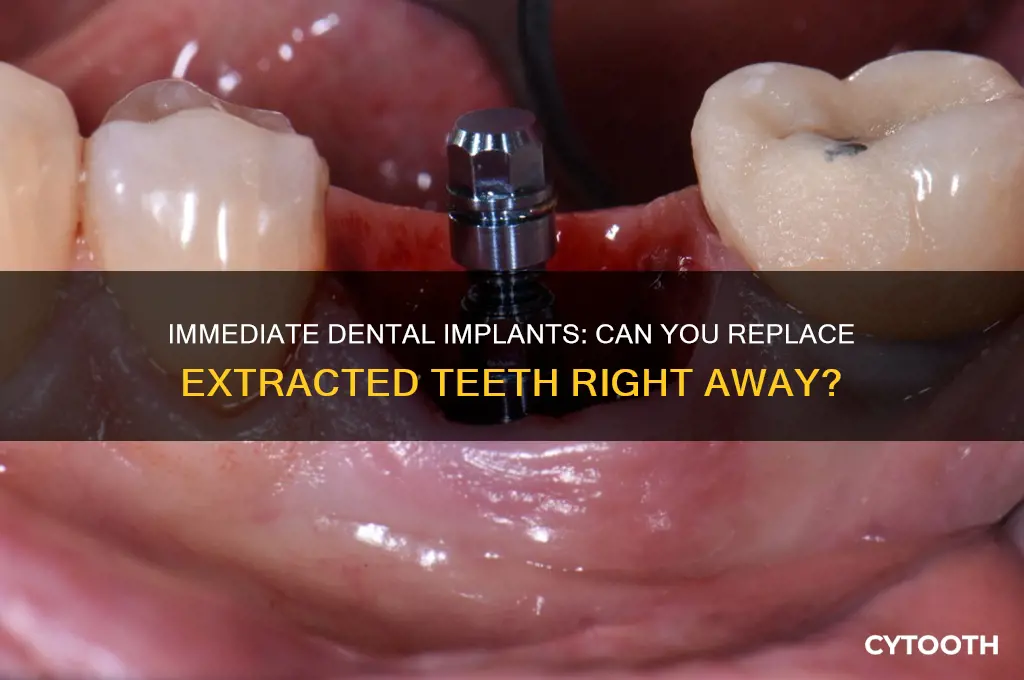
The question of whether an implant can be performed immediately after a tooth extraction is a common concern for patients seeking efficient dental restoration. Immediate implant placement, also known as immediate loading, involves inserting a dental implant directly into the socket of a recently extracted tooth. This procedure offers several potential benefits, including reduced treatment time, preservation of bone structure, and a more aesthetically pleasing outcome. However, its feasibility depends on various factors, such as the patient's oral health, the condition of the extraction site, and the dentist's expertise. While immediate implants can be a convenient solution, careful evaluation and planning are necessary to ensure successful osseointegration and long-term implant stability. This approach may not be suitable for all cases, and dentists often consider individual circumstances to determine the most appropriate treatment plan.
| Characteristics | Values |
|---|---|
| Immediate Implant Placement | Possible in select cases with favorable conditions. |
| Bone and Socket Condition | Requires adequate bone volume, intact socket walls, and no infection. |
| Primary Stability | Essential for immediate implant success; depends on bone density. |
| Healing Time | Reduced overall treatment time compared to delayed implantation. |
| Success Rate | High (85-95%) if criteria are met; lower if conditions are suboptimal. |
| Risk of Infection | Higher if extraction site is infected or contaminated. |
| Patient Suitability | Ideal for patients with good oral health and no systemic contraindications. |
| Cost | Potentially lower due to fewer surgical procedures. |
| Aesthetic Outcome | Better preservation of soft tissue and bone structure. |
| Contraindications | Uncontrolled diabetes, smoking, poor oral hygiene, or insufficient bone. |
| Post-Procedure Care | Strict oral hygiene, soft diet, and regular follow-ups are required. |
| Alternative Approach | Delayed implantation (3-6 months) if immediate placement is not feasible. |
| Technology Influence | Advanced imaging (CBCT) and surgical techniques improve predictability. |
| Long-Term Prognosis | Comparable to delayed implants if proper criteria are followed. |
| Patient Preference | Preferred for quicker restoration and fewer surgical visits. |
What You'll Learn

Immediate Implant Placement Benefits
Immediate implant placement, performed right after tooth extraction, offers a streamlined solution for tooth replacement, significantly reducing the overall treatment time. Traditionally, patients would wait several months for the extraction site to heal before an implant could be placed. This waiting period, often 3 to 6 months, allows for the bone to regenerate and the gums to stabilize. However, advancements in dental techniques and materials now enable immediate placement in suitable cases, cutting down the total treatment duration by half or more. For busy individuals or those seeking a quicker return to normalcy, this is a game-changer.
One of the most compelling benefits of immediate implant placement is the preservation of bone structure. When a tooth is extracted, the alveolar bone that supported it begins to resorb, or shrink, almost immediately. This natural process can lead to a loss of up to 25% of bone width and height within the first year. By placing an implant immediately, the bone is stimulated, which helps maintain its density and volume. This not only supports the implant but also preserves the facial structure, preventing the sunken appearance often associated with tooth loss. For patients concerned about aesthetics and long-term oral health, this is a critical advantage.
Another significant benefit is the reduction in surgical procedures. Traditional implant placement involves at least two surgeries: one for the implant post and another for the abutment and crown after the implant has integrated with the bone. Immediate placement consolidates these steps, often requiring only a single surgical intervention. This minimizes discomfort, reduces the risk of complications, and lowers overall costs. Patients also avoid the need for a temporary denture or bridge during the healing period, which can be uncomfortable and less functional.
However, immediate implant placement is not suitable for everyone. Success depends on several factors, including the health of the extraction site, the quality and quantity of available bone, and the patient’s overall oral hygiene. For instance, infections or significant bone loss at the extraction site may necessitate a delayed approach. Dentists often use cone-beam computed tomography (CBCT) scans to assess bone density and plan the procedure meticulously. Patients must also commit to rigorous post-operative care, including avoiding hard foods and maintaining impeccable oral hygiene to ensure the implant integrates successfully.
In conclusion, immediate implant placement offers a host of benefits, from time savings and bone preservation to reduced surgical interventions. While it requires careful patient selection and precise execution, it represents a significant advancement in dental implantology. For eligible candidates, it provides a faster, more efficient path to restoring a complete and functional smile. Always consult with a qualified dental professional to determine if this approach is right for your specific situation.
Bone Preservation Techniques
Immediate implant placement after tooth extraction is a delicate procedure that hinges on effective bone preservation techniques. The alveolar socket, once occupied by the tooth, is inherently vulnerable to resorption, a natural process where the body reabsorbs bone tissue. Without intervention, this can lead to significant bone loss, compromising the stability and long-term success of an implant. To counteract this, clinicians employ strategies that promote bone regeneration and maintain the socket’s structural integrity. These techniques are not one-size-fits-all; they are tailored to the patient’s anatomy, the extraction site’s condition, and the implant’s requirements.
One widely adopted method is the use of bone grafting materials, which act as scaffolds to support new bone growth. Autogenous bone grafts, harvested from the patient’s own body (e.g., chin or hip), are considered the gold standard due to their osteoconductive, osteoinductive, and osteogenic properties. However, their invasive nature often limits their use. Alternatively, allografts (from a donor) and xenografts (from animals, often bovine) are popular choices, offering osteoconductive benefits without the need for a second surgical site. Synthetic materials, such as hydroxyapatite and beta-tricalcium phosphate, are also utilized for their biocompatibility and resorbable nature. For instance, a 2021 study demonstrated that a 50:50 mix of deproteinized bovine bone mineral and collagen yielded a 95% implant survival rate over five years, highlighting the efficacy of these materials.
Another critical technique is the use of barrier membranes, which shield the grafted site from soft tissue invasion, allowing undisturbed bone regeneration. These membranes can be resorbable (e.g., collagen) or non-resorbable (e.g., titanium-reinforced dPTFE), with the former being preferred for their convenience, as they eliminate the need for a second surgery to remove the membrane. A 2019 clinical trial found that resorbable membranes combined with xenografts preserved 80% of the original ridge width, compared to 60% in sites without membranes, underscoring their role in maintaining dimensional stability.
Beyond grafting and membranes, minimally invasive extraction techniques play a pivotal role in bone preservation. Careful tooth removal, avoiding excessive force or heat, helps preserve the periodontal ligament and alveolar walls, which are vital for socket healing. The concept of "socket shielding" takes this a step further by intentionally leaving a fragment of the tooth root in the socket to act as a natural barrier against resorption. While still experimental, this technique has shown promise in preserving bone height and width in early studies.
Lastly, adjunctive therapies such as platelet-rich fibrin (PRF) are gaining traction for their ability to accelerate healing and enhance bone regeneration. PRF, derived from the patient’s own blood, is rich in growth factors and cytokines that stimulate cellular proliferation and differentiation. When applied to the extraction socket, either alone or in combination with grafts, PRF has been shown to reduce healing time by up to 20%. For optimal results, clinicians often prepare PRF membranes or clots, which are then placed directly into the socket, providing a bioactive environment conducive to bone formation.
In conclusion, bone preservation techniques are multifaceted, requiring a combination of grafting materials, barrier membranes, surgical precision, and adjunctive therapies to ensure the success of immediate implants. Each approach has its merits and limitations, and the choice depends on the patient’s specific needs and the clinician’s expertise. By preserving the alveolar ridge’s architecture, these techniques not only facilitate implant placement but also contribute to aesthetic and functional outcomes, ultimately enhancing the patient’s quality of life.
Healing Time Comparison
The timing of dental implant placement after tooth extraction is a critical factor in the healing process, with immediate and delayed implantation representing two distinct approaches. Immediate implantation, performed within 24 to 48 hours of extraction, aims to preserve alveolar bone and reduce overall treatment time. However, this method requires careful consideration of the patient’s oral health, the condition of the extraction socket, and the primary stability of the implant. Delayed implantation, on the other hand, typically occurs 3 to 6 months post-extraction, allowing the socket to heal fully before implant placement. This approach minimizes the risk of infection and ensures a stable foundation but extends the overall treatment duration. Understanding the healing dynamics of each method is essential for both clinicians and patients to make informed decisions.
From an analytical perspective, the healing time comparison between immediate and delayed implants reveals significant differences in bone remodeling and soft tissue integration. Immediate implants rely on the concept of "socket shield" or "socket preservation," where the blood clot and residual bone provide initial stability. Studies show that this method can reduce healing time by up to 2 months, as it bypasses the need for a separate bone grafting procedure. However, the risk of implant failure is slightly higher (approximately 5-10%) due to potential complications like infection or inadequate primary stability. Delayed implants, while requiring a longer healing period, boast a higher success rate (95-98%) because the socket has matured, and the bone density is optimal for osseointegration. For patients, this trade-off between speed and reliability is a key consideration.
Instructively, patients considering immediate implants should adhere to strict post-operative care protocols to optimize healing. This includes avoiding excessive pressure on the implant site, maintaining impeccable oral hygiene, and following a soft-food diet for at least 6 weeks. Anti-inflammatory medications, such as ibuprofen (600 mg every 6 hours), and antimicrobial mouthwashes (e.g., chlorhexidine 0.12%) are often prescribed to manage pain and prevent infection. For delayed implants, patients must focus on socket preservation during the waiting period, which may involve bone grafting or the use of space-maintaining devices. Regular follow-ups with the dentist are crucial to monitor healing progress and ensure the socket remains viable for implant placement.
Persuasively, the choice between immediate and delayed implantation often hinges on individual patient factors, such as age, bone density, and overall health. Younger patients with robust bone structure and good oral hygiene are typically better candidates for immediate implants, as their bodies heal faster and can tolerate the procedure. Older adults or those with compromised immune systems may benefit more from delayed implantation, as it allows for a more controlled and predictable healing environment. Additionally, financial considerations play a role, as immediate implants can reduce overall treatment costs by eliminating the need for additional surgeries. However, the potential need for revision in case of failure must also be factored into the decision-making process.
Comparatively, the aesthetic outcomes of immediate and delayed implants differ in terms of soft tissue contouring and long-term stability. Immediate implants preserve the natural gum architecture, as the soft tissues heal around the provisional crown placed during the same procedure. This results in a more natural appearance and reduces the risk of gum recession. Delayed implants, while equally effective in the long term, may require additional soft tissue grafting to achieve optimal aesthetics, particularly if significant bone resorption has occurred during the healing period. For patients prioritizing cosmetic results, immediate implantation often presents a more appealing option, provided the initial conditions are favorable.
Practically, patients should engage in open discussions with their dental provider to weigh the pros and cons of each approach. Factors such as smoking, diabetes, or periodontal disease can significantly impact healing times and implant success rates, making personalized treatment planning essential. For instance, smokers are advised to quit at least 2 weeks before and after the procedure, as smoking impairs blood flow and increases infection risk. Similarly, diabetics must maintain stable blood sugar levels (target HbA1c < 7%) to ensure proper healing. By considering these specifics, patients can make an informed choice that aligns with their health needs and lifestyle.
Suitable Candidate Criteria
Immediate implant placement after tooth extraction is not a one-size-fits-all solution. Success hinges on careful patient selection, ensuring both biological and anatomical compatibility. Primary criteria include adequate bone volume and quality at the extraction site. Insufficient bone can compromise osseointegration, the critical fusion between implant and jawbone. A minimum of 1-2 mm of buccal bone thickness is generally recommended to prevent recession and ensure stability. Additionally, the patient’s overall health plays a pivotal role. Conditions like uncontrolled diabetes, smoking, or immunocompromised states significantly elevate the risk of implant failure. These factors must be meticulously evaluated before proceeding with immediate placement.
Anatomical considerations further refine candidate suitability. The extraction socket’s shape and size must align with the implant’s dimensions. A socket that is too narrow or irregular may require grafting or delayed implantation. Similarly, the presence of infection or active periodontal disease in the extraction site is a contraindication. Such conditions necessitate prior treatment to create a healthy environment for implant integration. Radiographic analysis, including cone-beam computed tomography (CBCT), is essential to assess these factors and guide decision-making.
Patient compliance and commitment to post-operative care cannot be overstated. Immediate implants demand strict adherence to oral hygiene protocols and follow-up appointments. Non-compliance increases the risk of peri-implantitis, a destructive inflammatory condition. Patients must also be willing to avoid excessive pressure on the implant site, often requiring a soft-food diet for several weeks. Educating the patient about these responsibilities is as critical as the surgical procedure itself.
Age and systemic health intersect in determining candidacy. While immediate implants are feasible across age groups, older adults may face challenges due to reduced bone density or healing capacity. Conversely, younger patients with robust bone structure and good vascularity often exhibit favorable outcomes. However, age alone is not a disqualifying factor; individual health status remains paramount. For instance, a 70-year-old with excellent bone quality and no comorbidities may be a better candidate than a 40-year-old smoker with osteoporosis.
Finally, the clinician’s expertise and case-specific judgment are indispensable. Immediate implant placement is a technically demanding procedure requiring precision and foresight. A thorough risk-benefit analysis, informed by the patient’s unique circumstances, ensures optimal outcomes. When criteria are meticulously met, immediate implantation can offer significant advantages, including reduced treatment time and preserved alveolar bone. However, when in doubt, a staged approach with delayed implantation remains a safer, more predictable alternative.
Risks and Complications
Immediate implant placement after tooth extraction, while appealing for its time-saving potential, carries inherent risks that demand careful consideration. One of the primary concerns is the potential for compromised osseointegration, the critical process where the implant fuses with the jawbone. The extraction site is inherently inflamed and traumatized, creating an environment less conducive to successful implant integration. Studies indicate that immediate implants have a higher failure rate compared to those placed after a healing period, with some research suggesting a failure rate of up to 15% for immediate implants versus 5-10% for delayed placement.
This heightened risk necessitates meticulous patient selection and surgical technique.
The presence of infection at the extraction site poses another significant threat. Even a minor infection can jeopardize implant success, leading to implant failure or peri-implantitis, a destructive inflammatory condition affecting the tissues surrounding the implant. Patients with a history of periodontal disease or poor oral hygiene are at particularly high risk. Thorough debridement of the extraction socket and, in some cases, antibiotic prophylaxis are crucial steps to mitigate this risk.
Similarly, inadequate bone quality or quantity at the extraction site can compromise implant stability. The extraction process can result in bone loss, leaving insufficient support for the implant. In such cases, bone grafting procedures may be necessary to augment the bone volume and provide a stable foundation for the implant.
Beyond biological risks, immediate implant placement demands exceptional surgical precision. The surgeon must carefully assess the anatomy of the extraction socket, ensuring proper implant positioning and avoiding damage to vital structures like nerves and sinuses. Even a slight deviation in implant placement can lead to complications such as nerve damage, sinus perforation, or implant malposition, requiring corrective surgery or even implant removal.
While immediate implant placement offers the allure of expedited treatment, it is not a one-size-fits-all solution. A thorough evaluation of the patient's oral health, bone quality, and individual risk factors is paramount. Open communication between the patient and dentist is essential to weigh the potential benefits against the heightened risks and make an informed decision regarding the timing of implant placement.
Frequently asked questions
Yes, in some cases, an immediate implant placement can be performed right after a tooth extraction, depending on the patient's bone health, gum condition, and the dentist's assessment.
Immediate implant placement can preserve bone structure, reduce healing time, and minimize the need for additional surgeries, leading to faster restoration of function and aesthetics.
No, eligibility depends on factors like bone density, gum health, infection status, and the reason for extraction. A thorough evaluation by a dentist is necessary to determine suitability.
Risks include implant failure due to insufficient bone support, infection, or improper healing. Proper planning and adherence to post-operative care instructions are crucial to minimize these risks.