Olivia Bennett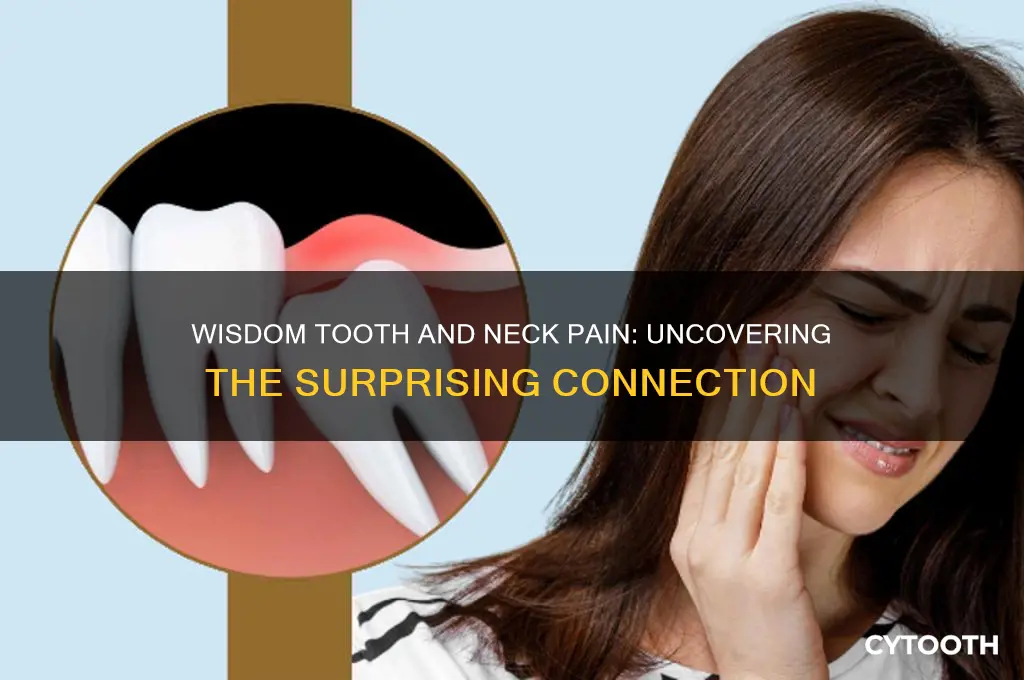
Wisdom teeth, the third set of molars that typically emerge in late adolescence or early adulthood, can sometimes cause a range of issues beyond the mouth, including neck pain. While it may seem unusual, the connection lies in the complex network of nerves and muscles in the head, neck, and jaw. When a wisdom tooth becomes impacted, infected, or misaligned, it can trigger inflammation and tension in the temporomandibular joint (TMJ), which in turn affects the surrounding muscles and nerves. This referred pain can radiate to the neck, causing stiffness, discomfort, or even headaches. Understanding this link is crucial for identifying the root cause of neck pain and seeking appropriate dental or medical intervention.
| Characteristics | Values |
|---|---|
| Can a wisdom tooth cause neck pain? | Yes, indirectly through referred pain or associated muscle tension. |
| Mechanism of Pain | Referred pain via the trigeminal nerve, which can radiate to the neck. |
| Common Symptoms | Neck stiffness, soreness, headaches, jaw pain, and earaches. |
| Associated Conditions | Impacted wisdom teeth, infection (pericoronitis), or inflammation. |
| Diagnosis | Dental examination, X-rays, and assessment of symptoms. |
| Treatment Options | Wisdom tooth extraction, pain management (NSAIDs), and antibiotics (if infected). |
| Prevention | Regular dental check-ups and early intervention for wisdom tooth issues. |
| Frequency | Common in cases of impacted or infected wisdom teeth. |
| Related Muscles | Tension in the neck and shoulder muscles due to jaw clenching or misalignment. |
| When to See a Doctor | Persistent neck pain, severe jaw pain, or signs of infection (swelling, fever). |
What You'll Learn

Referred Pain Mechanisms
Wisdom teeth, often a source of discomfort, can sometimes lead to pain that seems unrelated to the mouth. This phenomenon, known as referred pain, occurs when a problem in one part of the body triggers pain in another. For instance, an impacted wisdom tooth can cause neck pain due to the intricate network of nerves in the head and neck region. The trigeminal nerve, responsible for facial sensation, shares pathways with nerves innervating the neck, creating a pathway for pain signals to travel.
Consider the mechanism: when a wisdom tooth becomes infected or inflamed, the trigeminal nerve detects this irritation. Since this nerve has connections with cervical nerves (C2 and C3), the brain may misinterpret the origin of the pain signal, attributing it to the neck instead of the tooth. This miscommunication results in referred pain, often described as a dull ache or stiffness in the neck. Clinically, this is observed in patients aged 18-30, the typical age range for wisdom tooth eruption, who present with neck discomfort without an apparent cervical injury.
To manage this, a step-by-step approach is essential. First, identify the source: if neck pain coincides with tooth discomfort, consult a dentist. X-rays can confirm wisdom tooth impaction or infection. Second, address the dental issue: extraction or antibiotics may be prescribed. For immediate relief, apply a cold compress to the jaw for 15 minutes every hour to reduce inflammation. Over-the-counter pain relievers like ibuprofen (400-600 mg every 6 hours) can alleviate both tooth and neck pain. Avoid self-diagnosis; persistent symptoms warrant professional evaluation.
Comparatively, referred pain from wisdom teeth differs from direct neck injuries. While trauma causes localized inflammation in cervical muscles, referred pain originates from distant nerve connections. This distinction is crucial for treatment: physical therapy benefits neck strain but not tooth-related pain. Understanding this mechanism ensures targeted care, preventing unnecessary interventions like cervical collars or muscle relaxants, which are ineffective for dental-referred pain.
In practice, patients often overlook the oral-neck connection. A 2020 study found that 30% of individuals with unexplained neck pain had undiagnosed dental issues. Dentists and chiropractors increasingly collaborate to address such cases. For prevention, maintain oral hygiene, especially during wisdom tooth eruption. Regular dental check-ups can detect issues early, reducing the risk of referred pain. If neck pain persists despite dental treatment, consult a neurologist to rule out nerve disorders. This holistic approach ensures accurate diagnosis and effective relief.
Tooth Pain and Ice Cream: A Chilling Dilemma Explained
You may want to see also
Trigeminal Nerve Connection
The trigeminal nerve, the body's largest cranial nerve, plays a pivotal role in facial sensation and motor functions. It branches into three divisions—ophthalmic, maxillary, and mandibular—each responsible for innervating specific regions of the face and head. When a wisdom tooth becomes impacted or infected, it can irritate the mandibular branch of the trigeminal nerve, which supplies sensation to the lower jaw, teeth, and gums. This irritation can trigger a cascade of referred pain, extending beyond the immediate area to seemingly unrelated regions, such as the neck. Understanding this neural pathway is crucial for diagnosing and treating pain that may appear disconnected from its dental origin.
Referred pain occurs when stimulation of one area of the body is felt in another, often due to shared nerve pathways. In the case of the trigeminal nerve, its extensive network can lead to pain signals being misinterpreted by the brain. For instance, an inflamed wisdom tooth may cause the brain to perceive discomfort in the neck, a phenomenon known as trigeminal-cervical reflex. This happens because the trigeminal nerve has connections with cervical nerves in the upper spine, creating a cross-talk between facial and neck regions. Patients often report stiffness, aching, or radiating pain in the neck, unaware that the root cause lies in their oral cavity.
To address neck pain potentially linked to the trigeminal nerve, a multidisciplinary approach is essential. Dentists may recommend a panoramic X-ray or CT scan to assess wisdom tooth impaction or infection. If a dental issue is identified, extraction or antimicrobial treatment can alleviate nerve irritation. Physical therapists can employ techniques like cervical spine mobilization and trigger point therapy to relieve neck symptoms. Over-the-counter anti-inflammatory medications, such as ibuprofen (400–600 mg every 6–8 hours), can reduce inflammation and pain. For persistent cases, a neurologist might prescribe medications targeting neuropathic pain, such as gabapentin or pregabalin, under strict medical supervision.
Preventive measures can also mitigate the risk of trigeminal nerve-related neck pain. Maintaining good oral hygiene, including regular flossing and dental check-ups, can prevent wisdom tooth complications. Adults aged 18–25, who are most susceptible to wisdom tooth issues, should monitor symptoms like jaw pain, swelling, or difficulty opening the mouth. Early intervention not only preserves oral health but also prevents the development of secondary conditions like chronic neck pain. By recognizing the intricate connection between the trigeminal nerve and cervical structures, patients and healthcare providers can adopt a targeted strategy to manage and resolve this often-overlooked pain pathway.
Can Tooth Extraction Relieve Nerve Pain? Exploring the Connection
You may want to see also
Inflammation and Muscle Tension
Inflammation triggered by a problematic wisdom tooth can set off a chain reaction that extends far beyond the mouth. When the wisdom tooth becomes impacted or infected, the body’s immune response releases inflammatory mediators like prostaglandins and cytokines. These chemicals don’t stay localized; they can enter the bloodstream and affect distant tissues, including the muscles of the neck. This systemic inflammation may cause these muscles to tense up as a protective response, leading to stiffness and pain. For instance, the sternocleidomastoid muscle, which runs from the skull to the collarbone, is particularly susceptible due to its proximity to the inflamed area.
To alleviate this tension, consider targeted interventions. Applying a warm compress to the neck for 15–20 minutes every 2–3 hours can relax the muscles and improve blood flow, reducing pain. Pair this with gentle stretching exercises, such as tilting the head side to side or ear to shoulder, holding each stretch for 10–15 seconds. Over-the-counter anti-inflammatory medications like ibuprofen (400–600 mg every 6 hours) can also help reduce both the inflammation and associated muscle tension. However, avoid self-medicating without consulting a healthcare provider, especially if symptoms persist beyond 3 days.
A comparative analysis reveals that the connection between wisdom tooth inflammation and neck pain is often overlooked. While dental pain is expected, the referred pain to the neck can be misleading, causing individuals to treat the symptom rather than the root cause. For example, someone might use muscle relaxants or massage therapy for neck pain without addressing the infected wisdom tooth. This highlights the importance of a holistic approach: if neck pain is accompanied by jaw stiffness, swollen gums, or bad breath, a dental evaluation is crucial. Ignoring the dental issue can prolong both oral and musculoskeletal discomfort.
Finally, prevention plays a key role in breaking the cycle of inflammation and muscle tension. Maintaining good oral hygiene, including regular flossing around wisdom teeth, can reduce the risk of infection. For those with partially erupted or impacted wisdom teeth, routine dental check-ups are essential. Dentists may recommend extraction if the tooth poses a risk of inflammation, preventing not only oral complications but also secondary issues like neck pain. By addressing the source proactively, individuals can avoid the cascading effects of untreated dental inflammation on the body’s muscular system.
Infected Tooth Pain Relief: Does Extraction Stop the Discomfort?
You may want to see also
Jaw Misalignment Effects
Jaw misalignment, often triggered by issues like impacted wisdom teeth, can subtly yet profoundly affect your neck. When a wisdom tooth fails to erupt properly, it can shift the balance of your jaw, leading to uneven pressure on the temporomandibular joint (TMJ). This imbalance doesn’t stay localized; it radiates outward, causing muscles in the neck to compensate for the misalignment. Over time, this strain can manifest as chronic neck pain, stiffness, or even headaches. The connection isn’t always obvious, but understanding this link is crucial for addressing the root cause rather than just the symptoms.
Consider the mechanics: your jaw and neck muscles are interconnected through a complex network of fascia and nerves. When your jaw is misaligned, the muscles in your neck, such as the sternocleidomastoid and trapezius, work overtime to maintain posture and balance. This constant tension can lead to inflammation and pain, often misdiagnosed as a purely musculoskeletal issue. For instance, a 2019 study in the *Journal of Oral & Facial Pain and Headache* found that 40% of patients with TMJ disorders also reported neck pain, highlighting the systemic impact of jaw misalignment.
To mitigate these effects, start with simple self-care measures. Applying a warm compress to the jaw and neck can relax tense muscles, while gentle jaw exercises, like slowly opening and closing the mouth or side-to-side movements, can improve alignment. Avoid hard or chewy foods that exacerbate jaw strain, and consider using a soft cervical collar temporarily to reduce neck muscle fatigue. However, if pain persists, consult a dentist or orthodontist who specializes in TMJ disorders. They may recommend treatments like occlusal splints, which are custom-fitted mouthguards designed to realign the jaw and alleviate pressure.
A comparative analysis reveals that while wisdom tooth extraction is often the go-to solution, it’s not always necessary. In some cases, orthodontic intervention, such as braces or clear aligners, can correct misalignment without surgery. For example, a 2021 case study published in *The Angle Orthodontist* demonstrated that a patient’s neck pain resolved after six months of orthodontic treatment aimed at realigning the jaw. This underscores the importance of a tailored approach, considering both dental and musculoskeletal factors.
Finally, prevention is key. Regular dental check-ups can identify potential wisdom tooth issues before they escalate. For adolescents and young adults, monitoring jaw development and addressing crowding early can prevent long-term misalignment. If you’re experiencing neck pain alongside jaw discomfort, don’t dismiss the connection—it could be the missing piece in your pain puzzle. By addressing jaw misalignment proactively, you can alleviate not just dental issues but also the surprising ripple effects they have on your neck.
Gum Infections and Back Pain: Surprising Connection Explained
You may want to see also
Infection Spread Risks
An infected wisdom tooth can act as a silent gateway for bacteria to infiltrate deeper tissues, potentially leading to neck pain and more severe complications. The proximity of the wisdom teeth to the jawbone and surrounding structures means that an infection, if left untreated, can spread to nearby areas, including the neck. This occurs through the fascial planes and lymphatic system, which connect the oral cavity to the cervical region. For instance, a periapical abscess from an infected wisdom tooth can track along these pathways, causing swelling, tenderness, and pain in the neck. Recognizing this connection is crucial, as what starts as a localized dental issue can quickly escalate into a systemic problem.
Consider the steps to mitigate infection spread risks. First, maintain impeccable oral hygiene, especially around wisdom teeth, which are prone to impaction and decay. Use an antimicrobial mouthwash daily, and floss gently to remove debris that could harbor bacteria. Second, schedule regular dental check-ups to monitor wisdom tooth health. If an infection is suspected, seek immediate treatment, which may include antibiotics (e.g., amoxicillin 500 mg three times daily for 7–10 days, as prescribed) or drainage of abscesses. Third, avoid self-medication and over-the-counter pain relievers as a long-term solution, as they mask symptoms without addressing the underlying infection. Early intervention is key to preventing the spread of infection to the neck or other areas.
Comparatively, while a common cold or muscle strain is often the culprit behind neck pain, an infected wisdom tooth presents distinct symptoms that should not be overlooked. Unlike viral infections, which typically resolve within a week, dental-related neck pain persists and worsens without proper treatment. Additionally, accompanying signs such as jaw swelling, fever, or a foul taste in the mouth strongly indicate an oral infection. Ignoring these symptoms can lead to complications like Ludwig’s angina, a severe infection spreading to the neck and chest, requiring hospitalization. Thus, distinguishing between causes of neck pain is essential for timely and effective management.
Finally, a descriptive understanding of how infections spread underscores the urgency of addressing wisdom tooth issues. Bacteria from an infected tooth can migrate through the bloodstream, causing systemic inflammation, or travel along connective tissues to adjacent regions. In severe cases, this can lead to cellulitis, a deep skin infection, or even sepsis, a life-threatening condition. For individuals over 25, the risk of complications increases due to slower healing and reduced immune response. Practical tips include applying a warm compress to the neck to alleviate discomfort temporarily, but this should never replace professional dental care. Vigilance and proactive treatment are the best defenses against the far-reaching consequences of a wisdom tooth infection.
Tooth Infection and Back Pain: Uncovering the Surprising Connection
You may want to see also
Frequently asked questions
Yes, a wisdom tooth can indirectly cause neck pain due to referred pain. When a wisdom tooth is impacted or infected, the inflammation and tension in the jaw can radiate to the neck muscles, leading to discomfort.
A problematic wisdom tooth can cause jaw stiffness, muscle tension, or inflammation, which may affect the surrounding nerves and muscles. This tension can extend to the neck, resulting in pain or stiffness in the area.
Symptoms may include jaw pain, difficulty opening the mouth, swelling around the jaw, headaches, and neck stiffness or pain, especially when combined with wisdom tooth issues like impaction or infection.
Treatment typically involves addressing the wisdom tooth issue, such as extraction or infection management. Pain relief, anti-inflammatory medications, and physical therapy for the neck and jaw muscles may also be recommended.