Logan Hayes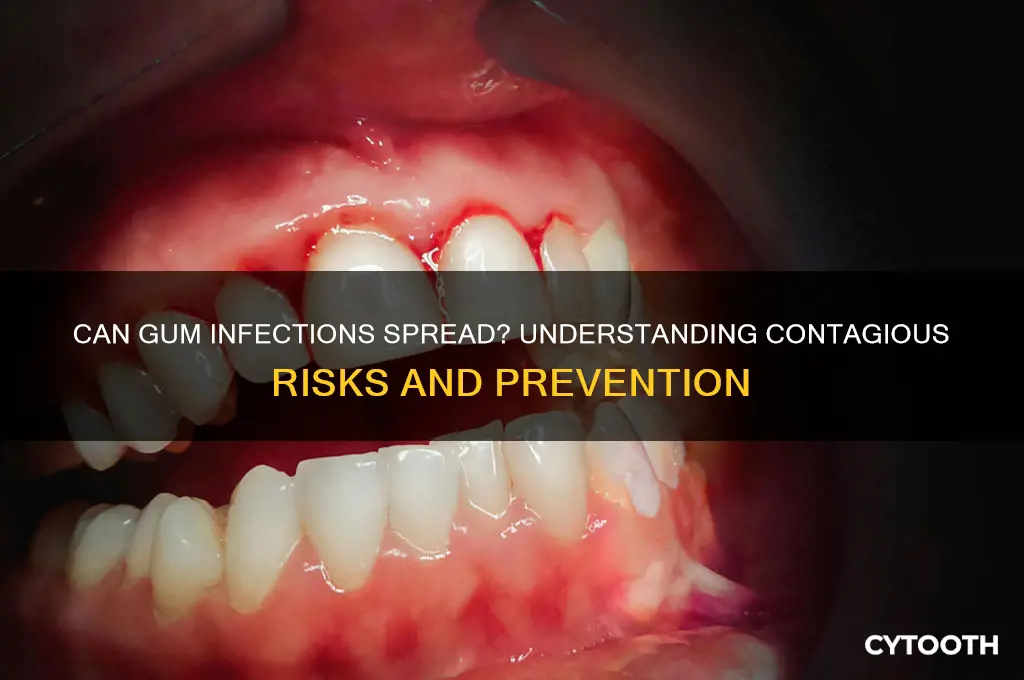
Gum infections, also known as periodontal diseases, are primarily caused by bacterial buildup and poor oral hygiene, but the question of whether they are contagious remains a common concern. While the bacteria responsible for gum infections can be transmitted through saliva, such as sharing utensils or kissing, the development of an infection depends on various factors, including the recipient's immune system and oral health. Therefore, although the bacteria can spread, gum infections themselves are not highly contagious, and maintaining good oral hygiene practices significantly reduces the risk of transmission and infection.
| Characteristics | Values |
|---|---|
| Contagiousness | Gum infections themselves are not directly contagious. However, the bacteria causing the infection (e.g., Porphyromonas gingivalis) can be transmitted through saliva, though this rarely leads to infection in another person. |
| Transmission Routes | Sharing utensils, kissing, or poor oral hygiene practices can spread bacteria, but transmission does not guarantee infection in a healthy individual. |
| Risk Factors for Infection | Weakened immune system, poor oral hygiene, smoking, diabetes, and genetic predisposition increase susceptibility to gum infections, even if exposed to bacteria. |
| Prevention | Maintaining good oral hygiene, regular dental check-ups, and avoiding sharing personal items reduce the risk of bacterial transmission and infection. |
| Type of Infection | Most gum infections (gingivitis, periodontitis) are caused by bacterial buildup and are not viral or fungal, hence not contagious like the common cold. |
| Symptoms | Red, swollen gums, bleeding, bad breath, and receding gums are common symptoms, but these do not indicate contagiousness. |
| Treatment | Non-contagious; treatment focuses on removing bacteria through scaling, root planing, antibiotics, and improved oral care. |
| Public Health Concern | Not considered a public health threat due to non-contagious nature, but proper hygiene is encouraged to prevent bacterial spread. |
What You'll Learn

Direct vs. Indirect Transmission
Gum infections, primarily caused by bacteria, can spread through both direct and indirect transmission, but understanding the nuances between these methods is crucial for prevention. Direct transmission occurs when there is immediate contact between an infected person and a susceptible individual. For instance, sharing utensils, kissing, or even brushing teeth with the same toothbrush can transfer oral bacteria like *Porphyromonas gingivalis* or *Fusobacterium nucleatum*, which are key culprits in periodontal disease. Saliva acts as a vehicle for these pathogens, making intimate or shared activities potential risk factors. To minimize direct transmission, avoid sharing personal items and maintain good oral hygiene, especially if you or someone close to you has symptoms like bleeding gums or persistent bad breath.
Indirect transmission, on the other hand, involves the spread of infection via contaminated objects or environments. Bacteria from an infected person’s mouth can survive on surfaces like doorknobs, toothbrush holders, or even shared lip balm for hours, depending on the material and conditions. For example, a study found that oral bacteria can persist on plastic surfaces for up to 48 hours. This means that touching a contaminated object and then touching your mouth can introduce pathogens into your system. To combat indirect transmission, regularly disinfect shared surfaces, replace toothbrushes every three months, and avoid storing toothbrushes in closed containers where bacteria can thrive.
While direct transmission is more immediate and obvious, indirect transmission often goes unnoticed, making it a silent contributor to the spread of gum infections. For instance, a family member with gum disease might not show symptoms, but their bacteria could linger on a shared bathroom counter, posing a risk to others. Children and the elderly, who may have weaker immune systems, are particularly vulnerable. Practical steps include using alcohol-based wipes on shared items and educating household members about the importance of not sharing oral care products.
Comparing the two, direct transmission is more controllable through behavioral changes, while indirect transmission requires environmental vigilance. For example, a couple can reduce risk by avoiding sharing drinks during an active infection, but they must also ensure their living space minimizes bacterial hotspots. Interestingly, research suggests that indirect transmission may account for up to 30% of gum infection cases in households, highlighting its often-overlooked role. By addressing both pathways, individuals can significantly lower their risk of contracting or spreading gum infections.
In conclusion, while gum infections are not as contagious as the common cold, their transmission through direct and indirect means warrants attention. Direct contact remains the primary route, but indirect transmission poses a stealthy threat, especially in shared living spaces. By adopting targeted preventive measures—such as avoiding shared oral items, disinfecting surfaces, and maintaining personal hygiene—individuals can effectively mitigate the spread of these infections. Awareness and action are key to breaking the chain of transmission, whether it’s through a kiss or a contaminated toothbrush holder.
Are Gum Grafts Painful? What to Expect During Recovery
You may want to see also
Common Causes of Gum Infections
Gum infections, medically known as periodontal diseases, stem from bacterial buildup in the mouth. Poor oral hygiene is the primary culprit, allowing plaque to harden into tartar, which irritates the gums and triggers inflammation. Brushing twice daily with fluoride toothpaste and flossing once daily are essential preventive measures. Electric toothbrushes, particularly those with pressure sensors, can improve cleaning efficiency, especially for individuals with limited dexterity or braces. Ignoring these practices creates an environment where harmful bacteria thrive, leading to gingivitis—the earliest stage of gum disease—which, if untreated, progresses to periodontitis, causing irreversible damage to gum tissue and bone.
Diet and lifestyle choices significantly influence gum health. High sugar intake fuels bacterial growth, accelerating plaque formation. Limiting sugary snacks and beverages, especially between meals, reduces this risk. Smoking and tobacco use are equally detrimental, constricting blood flow to the gums and impairing healing. Studies show smokers are twice as likely to develop periodontitis compared to non-smokers. Alcohol consumption, particularly in excess, dries out the mouth, reducing saliva production—a natural defense against bacteria. Incorporating crunchy fruits and vegetables like apples and carrots into your diet can help mechanically clean teeth while stimulating saliva flow.
Certain medical conditions and medications exacerbate gum infection risks. Diabetes, for instance, weakens the body’s resistance to infection, making diabetic individuals more susceptible to periodontal issues. Hormonal changes during pregnancy, puberty, or menopause can also increase gum sensitivity and inflammation. Medications such as anticonvulsants, calcium channel blockers, and chemotherapy drugs often cause gum overgrowth or reduce saliva production, fostering bacterial growth. Patients on such medications should inform their dentist to tailor preventive care, which may include more frequent cleanings or prescription mouth rinses containing chlorhexidine (0.12% concentration for short-term use).
Genetics play a role in determining susceptibility to gum infections. Approximately 30% of the population may be genetically predisposed to periodontal disease, regardless of oral hygiene practices. If close family members have experienced gum issues, proactive monitoring and early intervention are critical. Regular dental check-ups every six months allow for the detection of early signs, such as gum bleeding or recession, before they escalate. Advanced cases may require deep cleaning procedures like scaling and root planing, performed by a dental professional under local anesthesia to remove tartar below the gum line and smoothen root surfaces.
Environmental factors, including stress and poor nutrition, indirectly contribute to gum infections by weakening the immune system. Chronic stress elevates cortisol levels, impairing the body’s ability to fight off infections, including those in the gums. A diet deficient in vitamin C, vitamin D, and calcium compromises gum tissue health and bone density. Adults should aim for 75–90 mg of vitamin C daily, 600–800 IU of vitamin D, and 1,000–1,200 mg of calcium, adjusting based on age and sex. Combining these nutritional guidelines with stress management techniques, such as mindfulness or regular exercise, fortifies the body’s defenses against gum disease.
Gum Grafts: Understanding Their Necessity for Oral Health and Smile Aesthetics
You may want to see also
Preventive Measures for Spread
Gum infections, primarily caused by bacterial buildup, can indeed spread under certain conditions. While not as contagious as the common cold, the bacteria responsible for gum disease can transfer through saliva, making intimate activities like kissing or sharing utensils potential risk factors. Understanding this transmission pathway is crucial for implementing effective preventive measures.
Daily Oral Hygiene: The First Line of Defense
Consistent oral care is the cornerstone of preventing gum infections and their spread. Brush teeth twice daily with fluoride toothpaste, ensuring each session lasts at least two minutes. Floss daily to remove plaque from areas brushing misses. For added protection, incorporate an antimicrobial mouthwash containing chlorhexidine (0.12% concentration) into your routine, especially if recommended by a dentist. Parents should supervise children under 6 to ensure proper technique and prevent swallowing toothpaste.
Behavioral Adjustments to Minimize Risk
Avoid sharing personal items like toothbrushes, eating utensils, or drinking glasses, as these can harbor bacteria. If someone in your household has a gum infection, this precaution becomes even more critical. Additionally, limit behaviors that introduce foreign bacteria into the mouth, such as nail-biting or chewing on pens. For couples, consider temporarily avoiding deep kissing until the infection is treated, particularly if it involves bleeding gums.
Dietary and Lifestyle Modifications
A diet rich in sugar and carbohydrates fuels bacterial growth, increasing the risk of gum infections. Reduce intake of sugary snacks and beverages, opting instead for fiber-rich fruits, vegetables, and whole grains. Stay hydrated with water, which helps wash away food particles and bacteria. Smoking and tobacco use significantly impair oral health, so quitting or reducing these habits can dramatically lower infection risk. For those struggling to quit, consult a healthcare provider for cessation aids like nicotine patches or gum.
Regular Dental Check-Ups and Early Intervention
Routine dental visits every six months allow for early detection and treatment of gum disease. Dentists can perform deep cleanings (scaling and root planing) to remove plaque and tartar buildup, preventing infections from worsening. If you notice symptoms like bleeding gums, persistent bad breath, or tooth sensitivity, seek professional care promptly. Addressing issues early not only protects your oral health but also reduces the likelihood of spreading infection to others.
Educational Awareness and Community Practices
Promote awareness about gum health in schools, workplaces, and communities. Educate children and adults about the importance of oral hygiene and the risks of sharing personal items. Public health initiatives can provide access to affordable dental care and distribute oral hygiene kits in underserved areas. By fostering a culture of preventive care, we can collectively reduce the prevalence and spread of gum infections.
Symptoms and Risk Factors
Gum infections, medically known as periodontal diseases, manifest through symptoms that are both visible and uncomfortable. Early signs include red, swollen gums that bleed easily, especially during brushing or flossing. As the infection progresses, persistent bad breath, receding gums, and the formation of pockets between teeth and gums become apparent. Advanced stages may lead to loose teeth or changes in bite alignment. These symptoms are not merely localized issues; they can serve as indicators of broader health concerns, such as diabetes or cardiovascular disease, due to the systemic inflammation they trigger. Recognizing these signs early is crucial for preventing irreversible damage.
Certain risk factors significantly increase susceptibility to gum infections, with poor oral hygiene topping the list. Inadequate brushing and flossing allow plaque to harden into tartar, creating a breeding ground for bacteria. Smoking is another major culprit, as it weakens the immune system and impairs blood flow to the gums, slowing healing and increasing infection risk. Age also plays a role, with adults over 30 being more prone to periodontal issues. Genetic predisposition, hormonal changes (e.g., during pregnancy or menopause), and conditions like diabetes further elevate risk. Even stress, which weakens the body’s immune response, can contribute to gum disease progression.
Diet and lifestyle choices are often overlooked but critical in managing gum health. A high-sugar diet fuels bacterial growth, while insufficient intake of vitamins C and D weakens gum tissue. For instance, vitamin C deficiency can lead to scurvy, a condition characterized by gum swelling and bleeding. Conversely, incorporating foods rich in antioxidants, such as berries and leafy greens, can reduce inflammation. Practical tips include using antimicrobial mouthwash daily, replacing toothbrushes every three months, and scheduling biannual dental check-ups. For smokers, quitting is the single most effective step to reduce infection risk.
Comparatively, while gum infections themselves are not contagious, the bacteria causing them can spread through saliva. Sharing utensils, kissing, or engaging in close contact with someone who has poor oral hygiene increases the likelihood of transmitting harmful bacteria. This is particularly concerning for children, whose immune systems are still developing. Parents should model good oral hygiene practices and ensure their children brush twice daily with a fluoride toothpaste, using a pea-sized amount for those under six. By addressing both symptoms and risk factors, individuals can proactively safeguard their gum health and overall well-being.
Treatment and Isolation Tips
Gum infections, primarily caused by bacteria, can spread through direct contact with saliva. While not as contagious as the common cold, sharing utensils, kissing, or poor oral hygiene practices increase transmission risk. Addressing gum infections promptly is crucial, not only for your health but to prevent spreading bacteria to others.
Here’s how to treat and isolate effectively:
Immediate Treatment Steps: Begin with a saltwater rinse (1/2 teaspoon salt in 8 ounces warm water) 2-3 times daily to reduce inflammation. Over-the-counter antimicrobial mouthwashes containing chlorhexidine (0.12% solution) can help control bacterial growth. For pain relief, apply a cold compress externally or use benzocaine-based gels (follow dosage instructions, especially for children under 12). Schedule a dental appointment within 48 hours for professional scaling and antibiotic prescription if necessary. Common antibiotics like amoxicillin (500 mg, 3 times daily for adults) or metronidazole (250 mg, 3 times daily) may be prescribed for severe cases.
Isolation Practices to Prevent Spread: Avoid sharing personal items like toothbrushes, drinking glasses, or cutlery until the infection clears. Refrain from close contact activities like kissing or oral intimacy. If you have children, ensure separate utensils and discourage habits like cleaning pacifiers with your mouth. Wash hands thoroughly after touching your mouth or handling oral care items. Replace your toothbrush after starting treatment to prevent reinfection.
Environmental Considerations: Disinfect frequently touched surfaces like doorknobs, faucets, and countertops with antibacterial wipes or a 1:10 bleach solution. Launder towels and facecloths separately in hot water to kill bacteria. If using a communal bathroom, consider using disposable paper towels instead of shared hand towels.
Long-Term Prevention Strategies: Maintain a rigorous oral hygiene routine: brush twice daily with fluoride toothpaste, floss daily, and use an ADA-approved mouthwash. Schedule dental check-ups every six months or as recommended. Address risk factors like smoking, diabetes, or poor nutrition, which exacerbate gum disease. Educate household members on oral health to minimize cross-contamination risks.
By combining targeted treatment with thoughtful isolation practices, you can manage gum infections effectively while protecting those around you. Consistency in both care and prevention is key to breaking the cycle of bacterial spread.