Ethan Brooks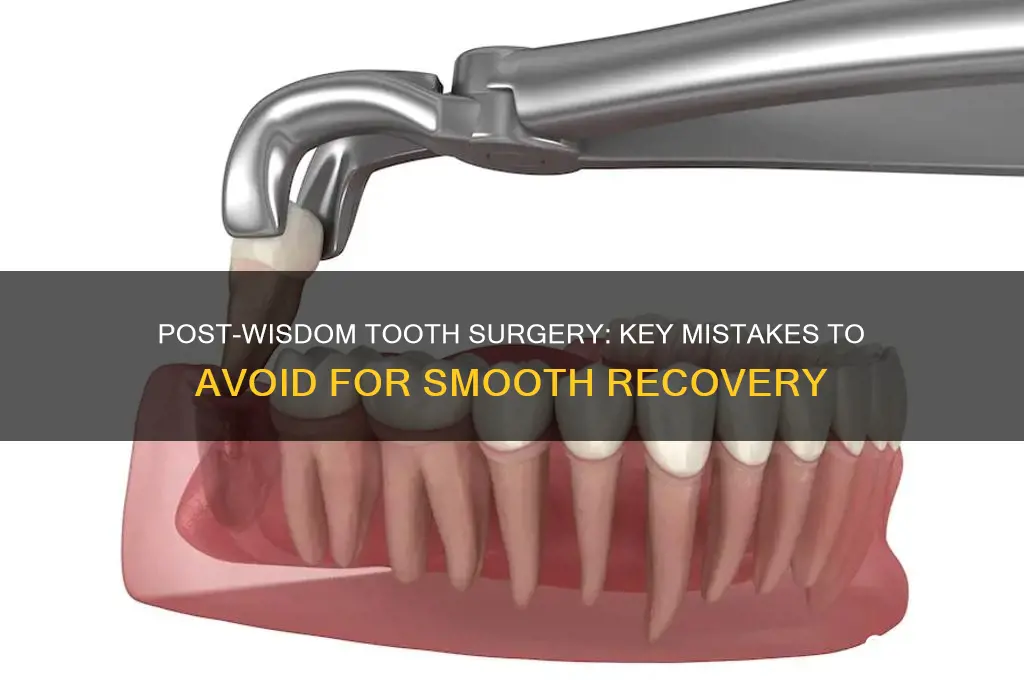
After wisdom tooth surgery, it's crucial to follow specific guidelines to ensure a smooth recovery and minimize complications. Patients should avoid strenuous activities, such as heavy lifting or vigorous exercise, for at least a few days to prevent bleeding and swelling. Consuming hard, crunchy, or sticky foods can irritate the surgical site, so sticking to soft, cool, and easy-to-chew options like yogurt or mashed potatoes is recommended. Smoking and alcohol consumption should be strictly avoided, as they can delay healing and increase the risk of infection. Additionally, using straws or forcefully spitting can dislodge blood clots, leading to a painful condition called dry socket, so these actions should be avoided. Proper care and adherence to these precautions are essential for a successful and comfortable recovery.
| Characteristics | Values |
|---|---|
| Strenuous Activities | Avoid heavy lifting, vigorous exercise, or any activity increasing blood pressure for 24-48 hours. |
| Spitting or Rinsing Vigorously | Do not spit forcefully or use a straw for at least 24 hours to prevent dislodging the blood clot. |
| Hot Foods/Beverages | Avoid hot foods or drinks as they can dissolve the blood clot and delay healing. |
| Alcohol Consumption | Refrain from alcohol for at least 24 hours, as it can interfere with healing and medications. |
| Smoking/Tobacco Use | Avoid smoking or using tobacco products for at least 72 hours, as they impair healing and increase infection risk. |
| Hard, Crunchy, or Chewy Foods | Stay away from hard, crunchy, or chewy foods (e.g., nuts, popcorn, gum) to prevent irritation or damage to the surgical site. |
| Spicy or Acidic Foods | Avoid spicy or acidic foods (e.g., citrus, tomatoes) as they can irritate the wound. |
| Probing the Surgical Site | Do not touch or probe the surgical area with fingers, utensils, or toothbrushes to prevent infection. |
| Excessive Talking or Laughing | Minimize excessive talking or laughing to reduce strain on the surgical site. |
| Poor Oral Hygiene | Avoid neglecting oral hygiene but be gentle around the surgical area when brushing or rinsing. |
| Medications Without Consultation | Do not take medications like aspirin or ibuprofen unless prescribed, as they can increase bleeding risk. |
| Exposing the Wound to Contaminants | Avoid exposing the wound to dirt, dust, or unclean environments to prevent infection. |
What You'll Learn

Avoid strenuous activity
Strenuous activity after wisdom tooth surgery can disrupt the healing process, leading to complications like dry socket or prolonged recovery. Your body needs energy to repair tissues, and diverting resources to physical exertion can delay this critical process.
Understanding the Risks
Engaging in activities like heavy lifting, intense cardio, or contact sports increases blood flow and pressure in the surgical area. This can dislodge blood clots essential for healing, exposing bone and nerves. For instance, a 20-year-old patient who resumed jogging 48 hours post-surgery experienced severe pain and bleeding due to dislodged clots. Such risks are avoidable with proper precautions.
Practical Guidelines
For the first 48–72 hours, limit activity to light walking or gentle stretching. Avoid lifting anything heavier than 10 pounds, as this can strain facial muscles and sutures. If your job involves physical labor, request modified duties or take 3–5 days off. Gradually reintroduce exercise after one week, starting with low-impact activities like yoga or swimming. Always consult your dentist before resuming your regular routine.
Comparing Recovery Timelines
Patients who adhere to activity restrictions typically heal within 7–10 days, while those who ignore guidelines may face complications lasting 2–3 weeks. For example, a 30-year-old who resumed CrossFit after 4 days developed dry socket, requiring additional treatment. Contrast this with a 25-year-old who rested for a week and returned to workouts without issues. The difference highlights the importance of patience.
Long-Term Benefits of Rest
Prioritizing rest not only speeds recovery but also prevents long-term issues like nerve damage or infection. Think of it as an investment in your oral health. By avoiding strenuous activity, you ensure the surgical site heals properly, reducing the need for future interventions. Remember, a few days of inactivity now can save weeks of discomfort later.
Post-Wisdom Tooth Extraction: Foods to Avoid for a Smooth Recovery
You may want to see also
No smoking or alcohol
Smoking and alcohol consumption are two habits that must be temporarily abandoned after wisdom tooth surgery. The reason is simple: both can significantly impair the healing process. Smoking introduces harmful chemicals and reduces blood flow to the surgical site, increasing the risk of infection and dry socket—a painful condition where the blood clot at the extraction site dislodges. Alcohol, on the other hand, dilates blood vessels, leading to increased bleeding and swelling. Together, these substances create a perfect storm for complications, turning a routine recovery into a prolonged ordeal.
Consider the mechanics of smoking: the suction created while inhaling can dislodge the blood clot essential for healing, exposing the bone and nerves. This not only delays recovery but also intensifies pain. For alcohol, its role as a blood thinner cannot be overstated. Even a single drink within the first 24–48 hours post-surgery can cause excessive bleeding, undoing the surgeon’s work. Patients often underestimate these risks, assuming moderation will suffice, but even small amounts can disrupt healing. The rule is clear: abstain completely for at least 72 hours, and ideally, a full week.
From a practical standpoint, avoiding smoking and alcohol requires planning. For smokers, this means setting a quit timeline before surgery and exploring nicotine replacement therapies (like patches or gum) to manage cravings without compromising recovery. However, consult your surgeon first, as some nicotine products can still affect blood flow. For alcohol, social situations pose the biggest challenge. Patients should prepare responses to decline drinks and opt for non-alcoholic alternatives. Remember, this is a temporary sacrifice for long-term oral health.
Comparing the two, smoking poses a greater risk due to its mechanical and chemical impact on the surgical site. Alcohol’s dangers are more immediate but shorter-lived. Both, however, share a common thread: they undermine the body’s natural healing mechanisms. While it may seem inconvenient, adhering to this restriction is non-negotiable. The alternative—prolonged pain, additional procedures, or infection—far outweighs the temporary discomfort of abstaining.
In conclusion, the "no smoking or alcohol" rule is not arbitrary; it’s rooted in biology and backed by clinical experience. Patients who adhere strictly to this guideline typically experience smoother recoveries, with less pain and fewer complications. It’s a small but critical step in ensuring the body can focus on healing. Treat this period as an opportunity to reset habits, knowing that every hour of abstinence brings you closer to a full recovery.
Wisdom Tooth Woes: Essential Steps for Pain Relief and Recovery
You may want to see also
Skip hard, crunchy foods
After wisdom tooth surgery, your mouth is a delicate ecosystem, and hard, crunchy foods are the bull in the china shop. These foods demand aggressive chewing, which can dislodge blood clots, leading to a painful condition called dry socket. Imagine biting into a crisp apple or a handful of nuts – the pressure exerted on the surgical site could be catastrophic.
Consider the mechanics of chewing. Hard foods require forceful jaw movements, which can strain the healing tissues and stitches. Even seemingly innocuous items like toast or chips can pose a risk if they require vigorous chewing. The goal is to minimize any action that could disturb the surgical area, allowing it to heal undisturbed.
To navigate this, adopt a soft diet for at least the first week post-surgery. Opt for foods like mashed potatoes, yogurt, smoothies, and well-cooked vegetables. If you crave something with texture, choose soft, moist options like scrambled eggs or oatmeal. Avoid the temptation to test your healing mouth with crunchy snacks – patience now prevents complications later.
A practical tip: if you’re unsure whether a food is safe, try the “mash test.” If it can’t be easily mashed with a fork, it’s likely too hard. Additionally, cut foods into small pieces to reduce chewing effort. Remember, this isn’t a permanent restriction – it’s a temporary measure to ensure a smooth recovery.
Skipping hard, crunchy foods after wisdom tooth surgery isn’t about deprivation; it’s about protection. By prioritizing soft, gentle options, you safeguard the surgical site, reduce pain, and promote faster healing. Think of it as a short-term investment for long-term oral health.
Healed Wisdom Tooth Appearance: What to Expect After Recovery
You may want to see also
Don’t rinse mouth vigorously
After wisdom tooth extraction, the mouth is particularly vulnerable to complications, and one seemingly harmless action can significantly hinder healing: vigorous mouth rinsing. The first 24 hours post-surgery are critical, as the blood clot forming in the extraction site is delicate. Forceful rinsing can dislodge this clot, leading to a painful condition called dry socket, which delays recovery and requires additional treatment. Even gentle rinsing should be avoided during this initial period to protect the surgical area.
Consider the mechanics of rinsing: the pressure generated by forceful swishing can disrupt the healing process. Oral surgeons often recommend a soft, salt-water rinse starting 24 hours after surgery, but even this should be done with minimal force. Think of it as a gentle bath for the wound, not a vigorous cleaning. For the first day, spitting should also be minimized, as it creates suction that can disturb the clot. Instead, tilt the head slightly and let water passively drain from the mouth.
A comparative perspective highlights the difference between pre- and post-surgery oral care. Before the procedure, vigorous rinsing might be part of a robust dental hygiene routine, but afterward, it becomes a risk. Patients often underestimate this change, assuming their mouth needs aggressive cleaning to prevent infection. However, the surgical site is not like a typical wound; it requires stillness and protection. Over-the-counter mouthwashes, especially those containing alcohol, should be avoided for at least a week, as they can irritate the area and slow healing.
Practical tips can help patients adapt to this temporary restriction. For instance, use a small cup to control the amount of water in the mouth, reducing the urge to swish forcefully. After meals, instead of rinsing, take small sips of water and let it passively clean the mouth. For those who feel anxious about cleanliness, remember that the surgical site is best left undisturbed. If debris is a concern, a clean, damp gauze can be gently pressed against the area to remove particles without risking the clot.
In conclusion, avoiding vigorous mouth rinsing is a small but crucial step in ensuring a smooth recovery after wisdom tooth surgery. By understanding the risks and adopting gentle alternatives, patients can protect the delicate healing process and avoid complications. This simple adjustment, though temporary, plays a significant role in achieving a successful outcome.
Avoid hot foods/drinks
Hot foods and drinks can significantly hinder the healing process after wisdom tooth surgery. The heat increases blood flow to the surgical site, which may dislodge the blood clot essential for healing—a condition known as dry socket. This complication not only delays recovery but also introduces intense pain and potential infection. To avoid this, maintain a lukewarm or cool diet for at least 48 hours post-surgery.
Consider the temperature threshold: anything above 40°C (104°F) poses a risk. Common culprits include freshly brewed coffee, steaming soups, and piping-hot pasta dishes. Even seemingly harmless items like tea or oatmeal can be problematic if consumed immediately after preparation. A practical tip is to test the temperature with a spoon or your wrist—if it feels warm to the touch, it’s too hot for your mouth.
Opt for cooler alternatives to satisfy hunger and hydration without compromising recovery. Smoothies made with yogurt and soft fruits, chilled applesauce, or room-temperature mashed potatoes are excellent choices. Beverages like lukewarm herbal tea (allowed to cool for 10–15 minutes) or water with a splash of fruit juice can provide comfort without risk. Avoid using straws, as the suction can also dislodge blood clots.
The temptation to return to normal eating habits quickly is understandable, but patience is key. Gradually reintroduce warmer foods after the initial 48-hour window, starting with mildly warm items and monitoring for discomfort. Remember, the goal is to protect the surgical site, ensuring a smooth and swift recovery. Prioritize healing over convenience—your mouth will thank you.
Frequently asked questions
No, smoking should be avoided for at least 72 hours post-surgery, as it can delay healing and increase the risk of complications like dry socket.
Avoid alcohol for at least 24–48 hours after surgery, as it can interfere with medications, increase bleeding, and slow the healing process.
No, avoid crunchy, hard, or chewy foods for at least a week, as they can irritate the surgical site and dislodge blood clots, leading to dry socket.
Yes, avoid using straws for at least a week, as the suction can dislodge blood clots and cause dry socket, delaying healing.
Avoid vigorous brushing near the surgical site for the first few days. Gently rinse with warm salt water and brush carefully around the extraction area to prevent infection.