Olivia Bennett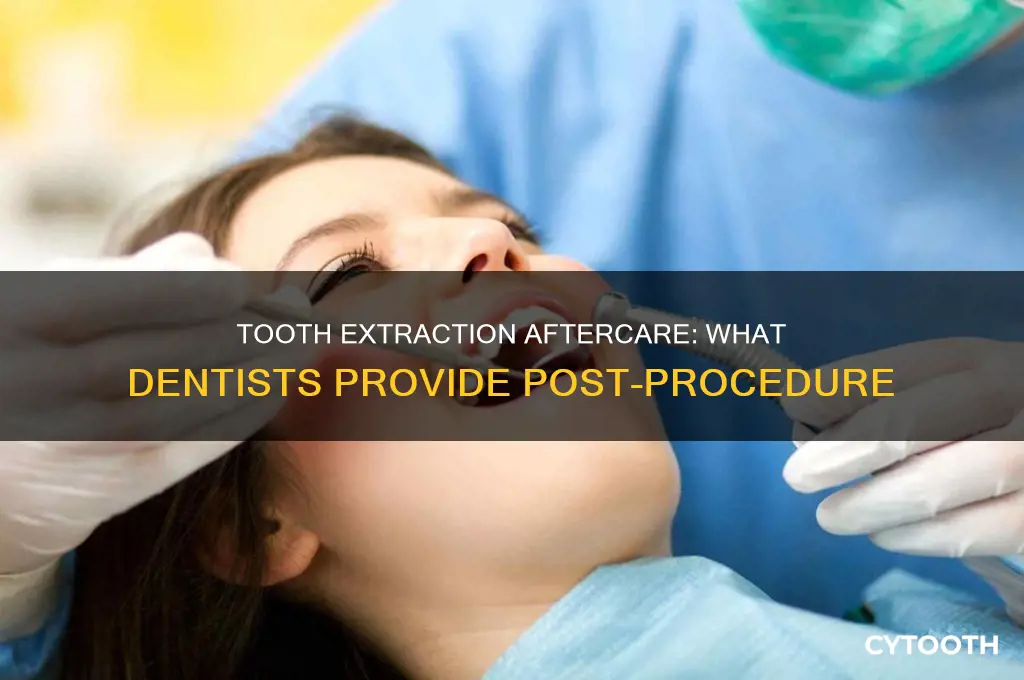
When a dentist extracts a tooth, they typically provide a combination of local anesthesia to numb the area and ensure the procedure is painless. After the tooth is removed, they may place gauze over the extraction site to control bleeding and promote clotting. Additionally, dentists often prescribe or recommend pain relievers, such as ibuprofen or acetaminophen, to manage discomfort. Antibiotics may also be given if there’s a risk of infection. Patients are usually advised to follow post-extraction care instructions, including avoiding strenuous activity, sticking to soft foods, and maintaining oral hygiene to aid healing. In some cases, a follow-up appointment is scheduled to monitor recovery and address any complications.
| Characteristics | Values |
|---|---|
| Pain Relief Medication | Over-the-counter pain relievers (e.g., ibuprofen, acetaminophen) or prescription painkillers (e.g., opioids) if necessary. |
| Antibiotics | Prescribed if there’s a risk of infection or if the patient has a compromised immune system. |
| Local Anesthesia | Administered during the procedure to numb the area (e.g., lidocaine, novocaine). |
| Post-Extraction Instructions | Written or verbal guidelines on caring for the extraction site, including how to manage bleeding, swelling, and pain. |
| Gauze Packs | Provided to bite down on after the extraction to control bleeding and promote clotting. |
| Cold Compress | Recommended for reducing swelling and bruising in the first 24–48 hours. |
| Follow-Up Appointment | Scheduled to monitor healing and remove stitches if non-dissolvable sutures were used. |
| Dietary Recommendations | Soft foods and liquids advised for the first few days to avoid irritating the extraction site. |
| Oral Rinses | Saltwater rinses or prescribed antimicrobial mouthwashes to keep the area clean and prevent infection. |
| Avoidance Instructions | Advice to avoid smoking, drinking through straws, and vigorous rinsing to prevent dry socket. |
| Stitches | Dissolvable or non-dissolvable sutures may be used to close the extraction site, depending on the complexity of the procedure. |
What You'll Learn
- Local Anesthesia: Dentists use numbing agents to ensure pain-free tooth extraction during the procedure
- Sedation Options: Mild sedatives or nitrous oxide may be offered to reduce anxiety
- Post-Extraction Medications: Pain relievers and antibiotics are prescribed to manage discomfort and prevent infection
- Gauze and Care Instructions: Dentists provide gauze for bleeding control and detailed aftercare guidelines for healing
- Follow-Up Appointments: Check-ups are scheduled to monitor healing and address any complications promptly

Local Anesthesia: Dentists use numbing agents to ensure pain-free tooth extraction during the procedure
Local anesthesia is the cornerstone of pain-free tooth extraction, a critical tool in a dentist’s arsenal to ensure patient comfort. Before the procedure begins, dentists administer a numbing agent, typically lidocaine or articaine, directly into the gum tissue surrounding the affected tooth. The dosage varies based on factors like the patient’s age, medical history, and the complexity of the extraction, but a common amount is 1.8–3.6 mL of 2% lidocaine with 1:100,000 epinephrine to reduce bleeding. This injection blocks nerve signals in the area, rendering it insensitive to pain while keeping the patient fully awake and aware.
The process of administering local anesthesia is both precise and strategic. Dentists often use a slow, steady injection technique to minimize discomfort, as the initial prick of the needle is usually the only sensation felt. For children or anxious patients, topical numbing gels like benzocaine may be applied beforehand to desensitize the gum surface. Once injected, the anesthesia takes effect within 1–5 minutes, depending on the agent used, and lasts for 30–90 minutes, ensuring the extraction can be completed without pain.
While local anesthesia is generally safe, dentists must consider contraindications and potential side effects. Patients with allergies to anesthetics, certain heart conditions, or those taking specific medications may require alternative agents or adjustments. Common side effects include temporary numbness in the lips or tongue, which can affect speech or eating immediately after the procedure. Rarely, patients may experience dizziness, rapid heartbeat, or an allergic reaction, emphasizing the importance of a thorough medical history review before administration.
For patients, understanding the role of local anesthesia can alleviate anxiety about tooth extraction. Practical tips include avoiding eating or drinking hot beverages until sensation returns to prevent accidental burns. Dentists often advise patients to schedule the procedure at a time when they can rest afterward, as the numbing effect wears off gradually. By demystifying this essential step, patients can approach the process with confidence, knowing their comfort is prioritized through careful, evidence-based techniques.
Effective Ways to Relieve Pain After a Tooth Extraction
You may want to see also
Sedation Options: Mild sedatives or nitrous oxide may be offered to reduce anxiety
Dental procedures, particularly tooth extractions, can evoke anxiety in even the most stoic individuals. To alleviate this, dentists often offer sedation options such as mild sedatives or nitrous oxide, commonly known as laughing gas. These methods are designed to help patients relax without rendering them unconscious, ensuring they remain responsive while minimizing discomfort. Mild sedatives, typically administered orally in doses ranging from 2.5 to 10 mg depending on the patient’s weight and anxiety level, take effect within 15 to 30 minutes. Nitrous oxide, on the other hand, is inhaled through a mask and works almost instantly, allowing the dentist to adjust the concentration (usually 30-70% mixed with oxygen) in real-time to achieve the desired calming effect.
The choice between mild sedatives and nitrous oxide often depends on the patient’s preference and the complexity of the procedure. Nitrous oxide is particularly advantageous for its rapid onset and offset—patients can drive themselves home shortly after the procedure, as the effects wear off within minutes of discontinuing administration. Mild sedatives, however, may require arranging transportation, as their effects can linger for several hours. Both options are generally safe for adults, though nitrous oxide is sometimes preferred for younger patients or those with mild anxiety due to its non-invasive nature and ease of control.
For those considering sedation, it’s essential to discuss medical history and current medications with the dentist. Certain conditions, such as respiratory issues or pregnancy, may limit the use of nitrous oxide. Mild sedatives, often benzodiazepines like triazolam or diazepam, should be avoided by individuals with a history of substance abuse or specific allergies. Practical tips include fasting for at least 6 hours before taking oral sedatives and wearing comfortable clothing to the appointment to enhance relaxation.
While sedation options significantly reduce anxiety, they do not replace local anesthesia, which is still necessary to numb the extraction site. Patients should expect a combination of techniques tailored to their needs. For instance, nitrous oxide might be used to calm nerves during the initial injection of local anesthetic, ensuring a more comfortable experience overall. The goal is to create a stress-free environment where the patient feels safe and in control, even during a procedure as daunting as a tooth extraction.
Ultimately, the decision to use mild sedatives or nitrous oxide rests on a collaborative discussion between the patient and dentist. Both options offer effective anxiety relief, but their suitability varies based on individual factors. By understanding these choices, patients can approach their dental procedure with confidence, knowing they have tools to manage their comfort and well-being.
Post-Tooth Extraction Beverages: Safe and Soothing Drink Options to Enjoy
You may want to see also
Post-Extraction Medications: Pain relievers and antibiotics are prescribed to manage discomfort and prevent infection
After a tooth extraction, managing pain and preventing infection are paramount for a smooth recovery. Dentists typically prescribe a combination of pain relievers and antibiotics to address these concerns. Pain relievers, such as ibuprofen (400–600 mg every 6–8 hours) or acetaminophen (500–1000 mg every 4–6 hours), are commonly recommended to alleviate discomfort. For more severe pain, opioids like hydrocodone or oxycodone may be prescribed, but these are generally reserved for short-term use due to their potential for dependency. Always follow the dentist’s dosage instructions and avoid exceeding the recommended amounts to minimize side effects like stomach irritation or liver damage.
Antibiotics play a crucial role in preventing infection, especially for high-risk patients, such as those with compromised immune systems or pre-existing conditions like diabetes. Common antibiotics include amoxicillin (500 mg every 8 hours) or clindamycin (300 mg every 6 hours) for those allergic to penicillin. It’s essential to complete the full course of antibiotics, even if symptoms improve, to ensure the infection is fully eradicated. Failure to do so can lead to antibiotic resistance, making future infections harder to treat. Patients should also be aware of potential side effects, such as nausea, diarrhea, or allergic reactions, and report any adverse symptoms to their dentist promptly.
For children and adolescents, pain management often involves age-appropriate dosages of acetaminophen or ibuprofen, calculated based on weight (typically 10–15 mg/kg every 4–6 hours). Antibiotics are prescribed more cautiously in this demographic, as overuse can disrupt the developing microbiome. Dentists may opt for alternatives like rinsing with warm salt water or using topical numbing gels for milder cases. Parents should monitor their child’s recovery closely and ensure medications are administered as directed to avoid complications.
Practical tips can enhance the effectiveness of post-extraction medications. Taking pain relievers with food can reduce stomach upset, while staying hydrated helps the body process antibiotics efficiently. Avoiding alcohol while on antibiotics is critical, as it can interfere with their efficacy and increase side effects. Additionally, patients should maintain good oral hygiene, gently rinsing with salt water after 24 hours to keep the extraction site clean without disrupting the blood clot. Combining medication adherence with these simple practices significantly improves recovery outcomes.
In summary, post-extraction medications are a cornerstone of dental recovery, addressing pain and infection risk effectively. By understanding the purpose, dosage, and potential side effects of prescribed medications, patients can actively participate in their healing process. Following the dentist’s guidance and incorporating practical tips ensures a smoother, more comfortable recovery, allowing individuals to return to their daily routines with minimal disruption.
Who Extracts Teeth? Understanding Which Dentist Pulls a Tooth
You may want to see also
Gauze and Care Instructions: Dentists provide gauze for bleeding control and detailed aftercare guidelines for healing
After a tooth extraction, the first line of defense against excessive bleeding is a simple yet crucial tool: gauze. Dentists provide patients with sterile gauze pads to apply firm pressure on the extraction site, promoting blood clot formation. This initial step is vital, as a stable clot prevents complications like dry socket, a painful condition where the clot dislodges, exposing bone and nerves. The gauze should be bitten down on gently but firmly for 30–45 minutes, allowing the clotting process to begin. If bleeding persists, replace the gauze with a fresh pad, but avoid frequently changing it, as this can disrupt clot formation.
The care instructions provided by dentists are equally critical, serving as a roadmap for a smooth recovery. These guidelines typically include avoiding strenuous activities for 24–48 hours, as increased blood pressure can dislodge the clot. Patients are also advised to stick to a soft diet—think yogurt, mashed potatoes, and smoothies—to minimize pressure on the extraction site. Rinsing the mouth vigorously or using straws is discouraged, as suction can disturb the clot. Pain management is another key aspect; dentists often recommend over-the-counter pain relievers like ibuprofen (600 mg every 6 hours) or acetaminophen (500–1000 mg every 4–6 hours) for adults, adjusted for age and weight in children.
A lesser-known but essential instruction is to avoid smoking or using tobacco products for at least 72 hours post-extraction. Smoking restricts blood flow and introduces harmful chemicals, significantly increasing the risk of infection and dry socket. Alcohol should also be avoided during this period, as it can interfere with healing and interact negatively with pain medications. Keeping the head elevated, even while sleeping, helps reduce swelling and bleeding by minimizing blood flow to the head.
For children and elderly patients, caregivers must ensure strict adherence to these instructions, as their healing processes may be slower or more delicate. Applying a cold compress to the cheek for 20 minutes on, then 20 minutes off, can help reduce swelling and discomfort in the first 24 hours. After this period, switching to a warm compress can aid in soothing the area and promoting circulation. If bleeding, pain, or swelling worsens despite following these guidelines, it’s crucial to contact the dentist immediately, as this could indicate an infection or other complication.
In essence, gauze and care instructions are not just post-extraction formalities—they are the foundation of a successful recovery. By controlling bleeding with gauze and meticulously following aftercare guidelines, patients can significantly reduce the risk of complications and ensure a quicker, more comfortable healing process. These simple yet effective measures highlight the importance of patient compliance and the dentist’s role in educating and empowering individuals to take charge of their oral health.
Soft and Soothing Foods to Eat After a Tooth Extraction
You may want to see also
Follow-Up Appointments: Check-ups are scheduled to monitor healing and address any complications promptly
After a tooth extraction, the initial focus is often on managing pain and preventing infection, but the journey to full recovery doesn’t end there. Follow-up appointments are a critical yet sometimes overlooked component of post-extraction care. These check-ups, typically scheduled 1–2 weeks after the procedure, serve as a safeguard to ensure the extraction site is healing as expected. During this visit, the dentist examines the socket for signs of infection, dry socket, or abnormal tissue growth, addressing issues before they escalate. For patients, this proactive approach not only minimizes discomfort but also reduces the risk of long-term complications like bone loss or chronic pain.
From a practical standpoint, follow-up appointments are structured to assess specific healing milestones. For instance, the blood clot at the extraction site should be intact and transforming into granulation tissue by the first check-up. If the clot is dislodged (a condition known as dry socket), immediate intervention—such as medicated dressings or analgesics like ibuprofen (600–800 mg every 6–8 hours)—can alleviate pain and promote healing. Dentists may also use this opportunity to educate patients on proper oral hygiene, emphasizing gentle rinsing with warm salt water (1/2 teaspoon of salt per cup of water) to avoid disturbing the site. For older adults or patients with compromised immune systems, these appointments are particularly vital, as delayed healing can be more common in these groups.
The value of follow-up appointments extends beyond immediate care—they also serve as a preventive measure. For example, if a patient reports persistent pain or swelling, the dentist can investigate further, potentially identifying an infection that requires antibiotics like amoxicillin (500 mg, 3 times daily for 7 days) or clindamycin (300 mg, 4 times daily for 7 days) if allergic to penicillin. Similarly, if bone fragments are detected, they can be removed to prevent irritation or infection. This proactive monitoring is especially crucial for complex extractions, such as wisdom teeth removals, where the risk of complications is higher. By catching issues early, dentists can often resolve them with minimal intervention, saving patients from more extensive—and costly—treatments down the line.
For patients, understanding the purpose of follow-up appointments can transform them from a perceived inconvenience into a valued part of recovery. It’s not just about the dentist checking a box; it’s about ensuring the body’s natural healing process is on track. Practical tips for maximizing these visits include keeping a symptom journal (noting pain levels, swelling, or unusual discharge) to provide the dentist with detailed feedback. Additionally, patients should adhere to post-extraction instructions, such as avoiding smoking or using straws for at least 72 hours, to reduce the risk of complications that might otherwise be flagged during the check-up. Ultimately, these appointments are a partnership between patient and dentist, designed to optimize healing and restore oral health efficiently.
Pulled Tooth Pus: Causes, Risks, and Prevention Explained
You may want to see also
Frequently asked questions
Dentists usually administer a local anesthetic, such as lidocaine or novocaine, to numb the area around the tooth being extracted, ensuring you don’t feel pain during the procedure.
Yes, dentists often prescribe pain relievers like ibuprofen, acetaminophen, or in some cases, stronger medications like opioids, depending on the complexity of the extraction and your pain level.
Dentists may prescribe antibiotics, such as amoxicillin or clindamycin, to prevent or treat infection, especially if you’re at higher risk due to certain health conditions or a complex extraction.
Yes, dentists typically give you sterile gauze to bite down on after the extraction to control bleeding and promote clotting. They may also provide instructions on how to care for the extraction site.