Matthew Grant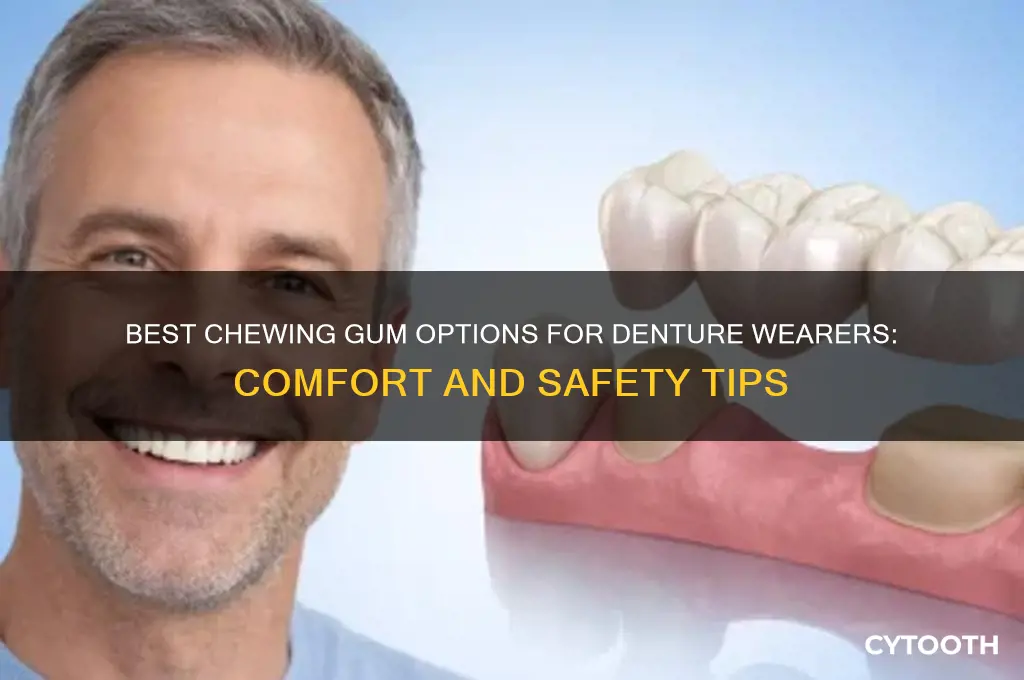
Chewing gum can be a beneficial addition to oral care routines for denture wearers, but it’s essential to choose the right type. Sugar-free gum, particularly those containing xylitol, is ideal as it stimulates saliva production, which helps neutralize acids and reduce the risk of tooth decay in remaining natural teeth. Additionally, the act of chewing can improve blood flow to the gums, promoting overall oral health. However, denture wearers should avoid sticky or hard gums that could damage or dislodge their dentures. Opting for soft, sugar-free varieties specifically designed for sensitive teeth or dentures ensures comfort and safety while reaping the benefits of improved oral hygiene. Always consult a dentist before incorporating gum into your routine to ensure it’s suitable for your specific needs.
| Characteristics | Values |
|---|---|
| Sugar-Free | Essential to prevent tooth decay and gum irritation. Look for gums sweetened with xylitol or sorbitol. |
| Soft Texture | Easy to chew and less likely to damage dentures. Avoid hard or sticky gums. |
| Non-Adhesive | Should not stick to dentures, preventing dislodgement or damage. |
| Neutral pH | Avoid acidic gums that can erode denture material. |
| Low Abrasiveness | Gentle on denture surfaces, preventing scratches or wear. |
| Denture-Safe Ingredients | Free from ingredients that can stain or damage dentures (e.g., strong dyes, harsh chemicals). |
| Flavor | Mild and pleasant, avoiding strong flavors that may linger or irritate gums. |
| Brand Examples | Trident Sugar-Free, Orbit Sugar-Free, Extra Sugar-Free (check for soft varieties) |
What You'll Learn
- Sugar-Free Options: Choose sugar-free gum to avoid cavities and protect both natural teeth and dentures
- Soft Texture: Opt for soft gum to prevent damage to denture materials and ensure comfort
- Fresh Breath: Chewing gum can help maintain fresh breath by stimulating saliva production and reducing odors
- Jaw Exercise: Gentle chewing can strengthen jaw muscles and improve denture stability over time
- Avoid Sticky Gum: Sticky gum can dislodge or damage dentures, so always select non-sticky varieties

Sugar-Free Options: Choose sugar-free gum to avoid cavities and protect both natural teeth and dentures
Chewing gum can be a double-edged sword for denture wearers and those with natural teeth alike. While it stimulates saliva production, aiding in digestion and oral health, the wrong type can lead to dental disasters. Sugar-laden gums are the primary culprits, as they feed oral bacteria, producing acids that erode tooth enamel and denture materials. This acidic environment accelerates decay, leading to cavities in natural teeth and weakening the acrylic resin in dentures. The solution? Opt for sugar-free gum, a simple yet effective way to enjoy the benefits of chewing without the risks.
Sugar-free gum is not just a healthier alternative; it’s a proactive choice for oral care. Brands like Trident, Orbit, and Extra offer sugar-free options sweetened with xylitol or sorbitol, which don’t break down into harmful acids. Xylitol, in particular, has been shown to inhibit bacterial growth and reduce plaque buildup, making it a dentist-recommended choice. For denture wearers, sugar-free gum can help maintain oral hygiene by dislodging food particles and stimulating saliva flow, which naturally cleanses the mouth. However, moderation is key—chewing for 10–15 minutes after meals is sufficient to reap the benefits without overworking the jaw.
The science behind sugar-free gum’s effectiveness lies in its ability to neutralize acids and strengthen teeth. Saliva, stimulated by chewing, acts as a natural buffer, washing away debris and remineralizing tooth surfaces. For those with partial dentures, this process is crucial in protecting remaining natural teeth from decay. Additionally, sugar-free gum can improve denture adhesion by increasing saliva production, which helps create a natural suction between the denture and the gum tissue. This dual benefit makes it an excellent addition to daily oral care routines, especially for older adults who are more prone to dry mouth and tooth decay.
When selecting sugar-free gum, look for the American Dental Association (ADA) seal of approval, ensuring the product meets rigorous safety and efficacy standards. Avoid gums containing sticky or hard additives, as these can dislodge dentures or damage their structure. For denture wearers, start slowly—chew for short periods initially to assess tolerance and avoid jaw discomfort. Pairing sugar-free gum with regular denture care, such as daily cleaning and overnight soaking, maximizes its protective effects. By making this small switch, you safeguard not only your dentures but also your overall oral health, proving that prevention can indeed be as simple as a stick of gum.
Chewing Gum with Braces: Safe Practice or Risky Habit?
You may want to see also
Soft Texture: Opt for soft gum to prevent damage to denture materials and ensure comfort
Chewing gum with dentures requires careful consideration to avoid damage and discomfort. The texture of the gum plays a pivotal role in this context. Soft gum is the ideal choice for denture wearers, as it minimizes the risk of harm to the delicate materials used in dentures. Unlike hard or sticky gums, which can exert excessive pressure or adhere to the denture surface, soft gum provides a gentle chewing experience. This is particularly important for acrylic resins and other materials commonly used in dentures, which can be susceptible to cracks, chips, or warping under stress.
When selecting gum, look for products specifically labeled as "soft" or "gentle." These gums are typically formulated with a lower elasticity and reduced adhesive properties, making them safer for dentures. For instance, sugar-free gums with xylitol are often recommended not only for their dental health benefits but also for their softer texture. It’s advisable to start with small pieces and chew slowly to gauge how your dentures respond. Over time, you’ll develop a sense of which brands and textures work best for your specific denture type.
One practical tip is to test the gum’s softness before committing to a full pack. Gently press the gum between your fingers; it should yield easily without feeling overly sticky or hard. If you’re unsure, consult your dentist or denturist for recommendations tailored to your denture material and fit. Additionally, avoid gums with hard inclusions like nuts or crystals, as these can exacerbate the risk of damage.
The comfort factor cannot be overstated. Soft gum not only protects your dentures but also enhances your chewing experience. It reduces the strain on your jaw muscles and the denture base, preventing soreness or irritation. For older adults or individuals with sensitive gums, this can make a significant difference in daily comfort. Remember, the goal is to enjoy the benefits of chewing gum—such as fresh breath and saliva stimulation—without compromising the integrity of your dentures.
In summary, opting for soft gum is a proactive measure to safeguard your dentures while maintaining oral comfort. By choosing the right texture, you can enjoy chewing gum without the worry of damage or discomfort. Always prioritize products designed to be gentle, and don’t hesitate to seek professional advice for personalized recommendations.
Mastering Mastic Gum: A Step-by-Step Guide to Proper Chewing Techniques
You may want to see also
Fresh Breath: Chewing gum can help maintain fresh breath by stimulating saliva production and reducing odors
Chewing gum isn’t just a habit for those with natural teeth—it can be a game-changer for denture wearers struggling with bad breath. Dry mouth, a common issue for denture users, reduces saliva flow, allowing odor-causing bacteria to thrive. Sugar-free gum, particularly those containing xylitol, stimulates saliva production, which naturally washes away food particles and neutralizes volatile sulfur compounds responsible for foul odors. For best results, chew a single piece for 10–15 minutes after meals, ensuring it’s soft enough not to dislodge dentures.
The science behind this is straightforward: saliva acts as the mouth’s natural cleanser, and its production often decreases with age or denture use. Xylitol, a sugar alcohol found in many sugar-free gums, not only boosts saliva output but also inhibits bacterial growth. Studies show that chewing xylitol gum for 5–10 minutes, three times daily, can reduce oral bacteria by up to 50%. However, avoid gums with sticky textures, as they can adhere to dentures and cause discomfort or misalignment.
While chewing gum offers a quick fix for fresh breath, it’s not a substitute for proper denture hygiene. Always clean dentures daily and soak them overnight to prevent bacterial buildup. For those with sensitive gums or TMJ issues, consult a dentist before incorporating gum into your routine. Additionally, opt for gums approved by dental associations to ensure they’re safe for denture wearers.
A practical tip: keep a small pack of sugar-free gum in your denture care kit for on-the-go freshness. If chewing becomes tiresome, consider saliva substitutes or mouth rinses as alternatives. Remember, fresh breath isn’t just about masking odors—it’s about maintaining oral health, and chewing gum can be a simple, effective tool in that effort.
Sugar-Free Gum: A Sweet Habit for Healthy Teeth or Myth?
You may want to see also
Jaw Exercise: Gentle chewing can strengthen jaw muscles and improve denture stability over time
Chewing gum isn’t just a pastime—it’s a tool for jaw health, especially for denture wearers. Gentle, consistent chewing stimulates blood flow to the jaw muscles and tissues, promoting strength and resilience. Over time, this can enhance denture stability by maintaining the underlying structure of the mouth. But not all gums are created equal; sugar-free, soft varieties are ideal to avoid stickiness and potential damage to dentures.
To incorporate jaw exercise effectively, start with short sessions of 5–10 minutes daily. Chew slowly and deliberately, focusing on engaging the jaw muscles rather than the teeth. For older adults or those new to dentures, begin with softer gums and gradually increase resistance as tolerance improves. Avoid aggressive chewing, which can dislodge dentures or cause discomfort. Consistency is key—think of it as a daily workout for your jaw, not a sporadic activity.
The science behind this practice is straightforward: chewing activates the masseter and temporalis muscles, which support jaw movement and denture retention. Studies suggest that regular, low-impact jaw exercise can slow bone resorption, a common issue for denture wearers. Pairing this routine with proper denture care—like cleaning and regular adjustments—maximizes benefits. It’s a simple, cost-effective way to invest in long-term oral health.
Practical tips can make this routine more effective. Choose gum with xylitol, which has been shown to reduce plaque and promote oral health. Avoid gums with hard particles or excessive flavoring, which can irritate gums. If chewing gum isn’t an option, consider sugar-free candies or even small pieces of soft, denture-safe vegetables like carrots. Always consult a dentist before starting any new oral exercise regimen, especially if you have sensitive gums or TMJ issues.
Incorporating jaw exercise through gentle chewing isn’t just about stability—it’s about confidence. A stronger jaw means better denture fit, less slippage, and improved speech and eating function. It’s a small habit with significant returns, turning a mundane activity into a proactive step toward better oral health. Start today, and let your jaw do the work.
Chewing Gum Post-Brushing: Harmful Habit or Harmless Refreshment?
You may want to see also
Avoid Sticky Gum: Sticky gum can dislodge or damage dentures, so always select non-sticky varieties
Chewing gum can be a tricky territory for denture wearers, and the choice of gum is crucial to avoid any unwanted dental disasters. The key culprit here is sticky gum, which can wreak havoc on your dentures. Imagine a scenario where a piece of gum, instead of providing a refreshing experience, becomes a nuisance, pulling at your dentures with every chew. This is not just an uncomfortable situation but can also lead to more serious issues.
The Problem with Stickiness:
Sticky gum varieties often contain ingredients like latex or certain gums that provide their characteristic chewiness. However, these same ingredients can adhere to dentures, creating a strong bond that is difficult to break. When you chew, the force exerted can cause the gum to pull at the dentures, potentially dislodging them or, worse, damaging the delicate structure. This is especially problematic for partial dentures, where the gum can get stuck between the denture and the natural teeth, leading to discomfort and possible misalignment.
A Simple Solution: Non-Sticky Alternatives
The solution is straightforward: opt for non-sticky chewing gums. These gums are designed to provide a satisfying chew without the adhesive properties that can harm dentures. Look for gums labeled as 'denture-friendly' or those made with natural resins and gums like chicle, which offer a firm yet non-adhesive texture. For instance, brands like Trident and Extra offer sugar-free, non-sticky options that are gentle on dentures.
Practical Tips for Denture Wearers:
- Read Labels: Always check the ingredient list for potential sticky additives. Avoid gums with latex or synthetic adhesives.
- Start Small: When trying a new gum, start with a small piece to test its stickiness and your comfort level.
- Chew with Care: Even with non-sticky gum, be mindful of your chewing force. Gentle chewing reduces the risk of any potential issues.
- Regular Cleaning: Maintain good oral hygiene by cleaning your dentures regularly, especially after chewing gum, to remove any residue.
By being mindful of the gum's texture and choosing non-sticky options, denture wearers can enjoy the benefits of chewing gum without the associated risks. It's a simple adjustment that can make a significant difference in maintaining oral health and comfort. This small change in gum selection ensures that chewing remains a pleasant and safe activity, allowing individuals to confidently enjoy their favorite flavors without worrying about denture-related complications.
Chewing Mastic Gum: Optimal Time for Digestive Health Benefits
You may want to see also
Frequently asked questions
It’s generally not recommended to chew gum with dentures, as it can dislodge or damage them. However, some denture-friendly gums are designed to be softer and less sticky, but always consult your dentist first.
If you must chew gum, opt for sugar-free, soft, and non-sticky varieties specifically labeled as denture-friendly. Avoid hard or sticky gums that can pull at dentures or leave residue.
Chewing gum is not an effective way to improve denture adhesion or comfort. Instead, use denture adhesives as recommended by your dentist and ensure your dentures fit properly for optimal comfort.