Ethan Brooks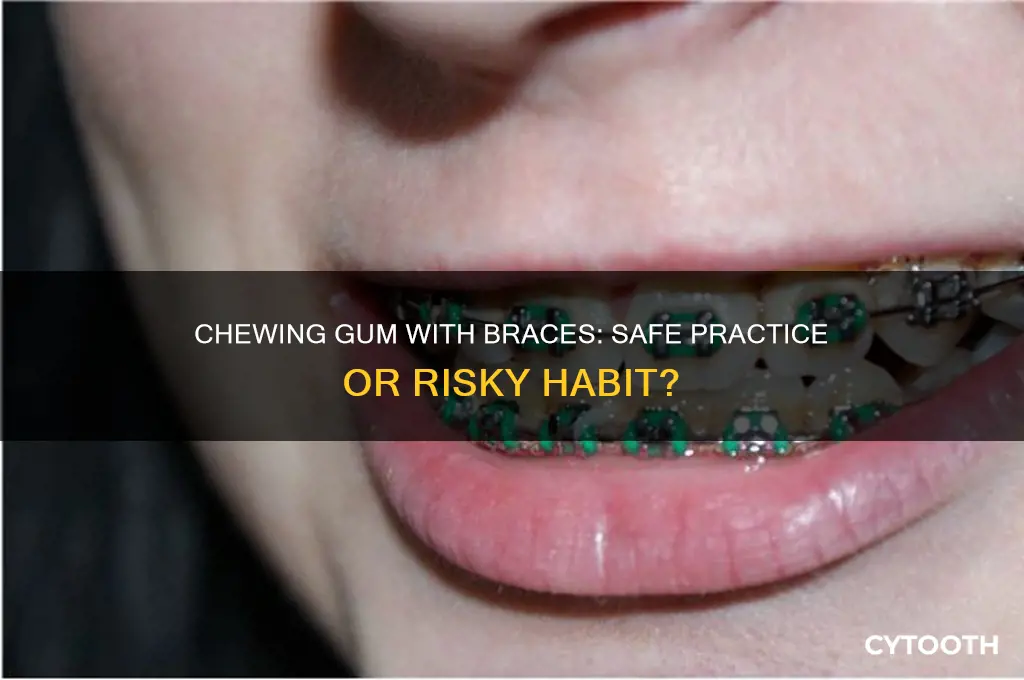
Chewing gum with braces is a common concern for orthodontic patients, as it can potentially damage the brackets, wires, or aligners. While traditional sticky or hard gums are generally discouraged due to their adhesive nature and risk of dislodging components, sugar-free, non-sticky options like orthodontic-friendly gum may be permissible in moderation. However, it’s essential to consult your orthodontist for personalized advice, as individual cases and treatment plans vary. Proper care and adherence to guidelines can help ensure the success of your orthodontic treatment while minimizing the risk of complications.
| Characteristics | Values |
|---|---|
| Can you chew gum with braces? | Generally not recommended, but sugar-free gum may be allowed in some cases. |
| Risks of chewing gum with braces | Can damage braces (bend wires, dislodge brackets), increase tooth decay risk if sugary, and get stuck in braces. |
| Type of gum matters | Sugar-free gum is less harmful than sugary gum. |
| Orthodontist's approval | Always consult your orthodontist before chewing gum with braces. |
| Alternatives to gum | Sugar-free mints, mouthwash, or brushing teeth after meals. |
What You'll Learn

Types of Gum to Avoid
Chewing gum with braces can be a risky endeavor, and not all gums are created equal in terms of their potential impact on your orthodontic treatment. The sticky, chewy nature of gum can pose challenges for braces wearers, and certain types should be approached with caution or avoided altogether. Here's a breakdown of the gum varieties to steer clear of during your braces journey.
Sticky and Chewy Varieties: A Recipe for Disaster
Imagine a scenario where you're enjoying a piece of your favorite gum, only to have it turn into a braces nightmare. Sticky and chewy gums, such as bubble gum or certain fruit-flavored gums, can be particularly problematic. These gums have a tendency to adhere to the brackets and wires of your braces, potentially causing damage or even dislodging components. The force required to chew these gums can also put unnecessary pressure on your teeth and braces, leading to discomfort or even treatment setbacks.
Sugar-Filled Gums: A Cavity-Causing Concern
While sugar-free gums might be a safer option, their sugar-filled counterparts are a different story. Gums packed with sugar can contribute to tooth decay, especially when worn with braces. The sugar can get trapped around the brackets and wires, creating a breeding ground for bacteria. This can lead to cavities, which are not only painful but can also complicate your orthodontic treatment. It's best to avoid these sugary treats altogether or opt for sugar-free alternatives in moderation.
Hard and Crunchy Gum Bases: A Risk to Braces Integrity
Some gums have a harder, crunchier base, which can be tempting to bite into. However, this type of gum can be detrimental to your braces. The hard texture can potentially damage the brackets or wires, leading to emergency repairs. Additionally, the force required to chew these gums can put excessive pressure on your teeth, causing discomfort or even tooth movement in unwanted directions. It's advisable to skip these crunchy gums and choose softer, more braces-friendly options.
A Practical Approach: Reading Labels and Making Informed Choices
Navigating the gum aisle can be tricky when you have braces. A practical tip is to become an avid label reader. Look for gums that are specifically labeled as 'orthodontic-friendly' or 'braces-safe'. These gums are typically sugar-free, less sticky, and designed to minimize the risks associated with chewing gum during orthodontic treatment. Additionally, consider the texture and hardness of the gum. Softer, more pliable gums are generally safer. Remember, moderation is key, and even braces-friendly gums should be enjoyed in limited quantities to maintain optimal oral health.
In summary, while chewing gum with braces is not entirely off-limits, it requires careful consideration. By avoiding sticky, sugary, and hard gums, you can significantly reduce the risks to your braces and overall dental health. Opting for orthodontic-friendly alternatives and practicing moderation will ensure that your gum-chewing habit doesn't interfere with your journey towards a perfect smile.
Risks of Chewing Gum
Chewing gum with braces can compromise the integrity of orthodontic appliances, leading to unnecessary repairs and prolonged treatment time. The sticky nature of gum, even sugar-free varieties, poses a direct threat to the delicate components of braces. Brackets, the small squares bonded to teeth, are particularly vulnerable to dislodgment when subjected to the adhesive force of gum. Similarly, wires can become bent or distorted, disrupting the precise alignment process. A single misplaced bracket or wire can set back progress by weeks, requiring an emergency visit to the orthodontist for reattachment or adjustment.
Consider the mechanics of chewing gum: the repetitive, forceful motion places undue stress on the adhesive bonding brackets to teeth. Over time, this can weaken the bond, causing brackets to detach prematurely. While some modern braces use stronger adhesives, they are not impervious to the persistent pressure exerted by gum chewing. Moreover, the risk extends beyond brackets. The friction generated by gum can wear down the elastic ligatures that hold wires in place, leading to slippage and reduced tension. This not only compromises alignment but may also cause discomfort or irritation to the gums and cheeks.
From a comparative standpoint, the risks of chewing gum with braces far outweigh any perceived benefits. While gum chewing is often touted for its ability to stimulate saliva production and freshen breath, there are safer alternatives for orthodontic patients. Sugar-free mints or mouthwash, for instance, achieve similar results without endangering braces. Even sugar-free gum, which is less likely to cause cavities, retains enough stickiness to pose a risk. Orthodontists universally advise against gum chewing during treatment, emphasizing the potential for costly and time-consuming complications.
Practical tips for managing oral hygiene and breath freshness without gum include carrying a travel-sized toothbrush and fluoride toothpaste for on-the-go cleaning. Flossing with orthodontic-friendly tools, such as threaders or water flossers, ensures debris is removed from hard-to-reach areas. For immediate breath freshening, opt for alcohol-free mouthwash or dissolvable breath strips. Patients should also schedule regular check-ups to monitor progress and address any issues early. By avoiding gum and adopting these alternatives, individuals can safeguard their braces and stay on track with their treatment plan.
Braces-Friendly Gum Alternatives
Chewing gum with braces is generally discouraged due to the risk of damaging wires, brackets, or elastic bands. However, the craving for fresh breath or oral stimulation doesn’t disappear just because you’re in orthodontic treatment. Fortunately, braces-friendly alternatives exist that satisfy these needs without compromising your hardware. Xylitol-based mints, for instance, are a popular choice. Xylitol, a sugar alcohol, not only freshens breath but also inhibits bacterial growth, reducing the risk of cavities—a common concern for braces wearers. Pop one or two mints after meals, ensuring they’re fully dissolved to avoid choking hazards.
For those seeking a longer-lasting solution, sugar-free lozenges or throat drops can provide sustained freshness without the sticky residue of gum. Brands like Ricola or Halls offer orthodontic-safe options, but always check labels to confirm they’re free of sugar and sticky additives. Sucking on these slowly allows the active ingredients to coat the mouth, providing both hydration and a clean feeling. Avoid excessive use, though, as prolonged exposure to acidic flavors (like lemon or cherry) can erode enamel over time.
If you miss the sensory experience of chewing, consider orthodontic-safe wax bites. These small, pliable pieces mimic the texture of gum without the adhesive properties that could dislodge braces. They’re particularly useful for alleviating mouth soreness or redirecting nervous chewing habits. Simply tear off a pea-sized piece and chew gently, discarding it after use. While not flavored, they offer a functional alternative for those who crave oral movement.
Another innovative option is braces-friendly "gum" specifically designed for orthodontic patients. Brands like Trident Ortho-Care produce sugar-free, non-sticky gum that’s clinically proven to be safe for braces. These products are formulated to break down easily, minimizing the risk of damage. Chew one piece for 5–10 minutes after meals to stimulate saliva production, which aids in cleaning food particles from braces. Always follow your orthodontist’s guidance, as some may still advise against even these specialized options.
Finally, natural remedies like fennel or mint leaves can provide a refreshing crunch without the risks of traditional gum. Chew a few leaves sparingly to release their oils, then spit them out. This method is particularly appealing for those seeking organic, chemical-free alternatives. However, be mindful of the fibrous texture—chew gently to avoid putting pressure on braces. While not as convenient as pre-packaged options, it’s a wholesome way to satisfy cravings while supporting oral health.
Impact on Braces Components
Chewing gum with braces can exert forces that compromise the integrity of orthodontic components. Each piece of gum introduces a sticky, elastic tension that tugs at brackets, wires, and bands. This mechanical stress, though minor in isolation, accumulates over time, potentially leading to dislodged brackets or bent wires. For instance, a study in the *Angle Orthodontist* journal found that repeated exposure to such forces increased the risk of bracket failure by 25% in adolescents aged 12–18. Understanding this risk is crucial for patients aiming to avoid emergency repairs or prolonged treatment timelines.
Consider the anatomy of braces: brackets are bonded to teeth with composite resin, while wires are held in place by elastic ligatures or self-ligating clips. Chewing gum can infiltrate these junctions, weakening the adhesive bond or dislodging ligatures. Sugar-free gum, often marketed as "safer," still poses a threat due to its texture and tenacity. Orthodontists recommend avoiding gum altogether, but if patients insist, they should opt for soft, non-sticky alternatives like orthodontic-friendly mastic gum—though even this carries risk. The key is minimizing contact time and force to protect these delicate components.
A comparative analysis reveals why gum is more harmful than other chewy foods. Unlike bread or soft fruits, gum lacks a breaking point; it stretches indefinitely, creating sustained tension on braces. This contrasts with foods like apples, which, when bitten, fracture into manageable pieces. Patients often underestimate this difference, assuming all chewy substances are equally safe. However, gum’s unique properties make it a high-risk choice, particularly for those with ceramic brackets, which are more prone to fracture under stress.
Practical tips can mitigate damage if gum is consumed. First, limit chewing sessions to under 5 minutes and avoid vigorous motion. Second, rinse with water immediately afterward to dislodge any trapped particles. Third, inspect braces for loose components post-chewing and report issues promptly. While these steps reduce risk, they do not eliminate it—the safest approach remains abstaining from gum entirely during orthodontic treatment. Patients should prioritize long-term alignment goals over temporary satisfaction.
Orthodontist Recommendations
Chewing gum with braces is a common concern for orthodontic patients, and the general consensus among orthodontists is clear: traditional gum is a no-go. The sticky nature of most gums poses a significant risk to braces, as it can easily get stuck in the brackets and wires, potentially causing damage or dislodging components. This not only compromises the effectiveness of the treatment but can also lead to additional appointments for repairs. Orthodontists universally advise against chewing gum to avoid these complications and ensure the braces remain intact throughout the treatment period.
However, not all gum is created equal, and some orthodontists acknowledge exceptions. Sugar-free, non-sticky gums, particularly those with the American Dental Association’s Seal of Acceptance, are sometimes recommended in moderation. These gums are less likely to adhere to braces and can even aid in dental health by stimulating saliva production, which helps neutralize acids and reduce plaque. Patients considering this option should consult their orthodontist first and choose gum specifically labeled as safe for braces. Even then, chewing should be limited to a few minutes at a time to minimize risk.
For those who miss the habit of chewing gum, orthodontists often suggest alternatives that are safer for braces. Sugar-free mints or hard candies can provide a similar sensory experience without the risk of damage. Chewing on orthodontic-friendly silicone chewies, typically used to seat aligners or retainers, can also satisfy the urge to chew while being completely safe for braces. These alternatives allow patients to maintain oral habits without compromising their orthodontic treatment.
Ultimately, the decision to chew gum with braces should be guided by professional advice and a clear understanding of the risks. Orthodontists emphasize that the success of braces depends on patient compliance, and avoiding harmful habits is crucial. While the occasional use of braces-safe gum may be permissible, it’s essential to prioritize the longevity and effectiveness of the treatment. Patients should always err on the side of caution and consult their orthodontist before reintroducing gum into their routine.
Frequently asked questions
It is generally not recommended to chew gum with braces, as it can stick to the brackets and wires, potentially causing damage or dislodging components.
Chewing gum with braces can cause the gum to get stuck in the brackets or wires, leading to discomfort, difficulty cleaning, and possible misalignment of your orthodontic treatment.
Sugar-free, non-sticky gum may be less harmful, but it’s still best to avoid chewing gum altogether while wearing braces to prevent any risk of damage or complications.