Olivia Bennett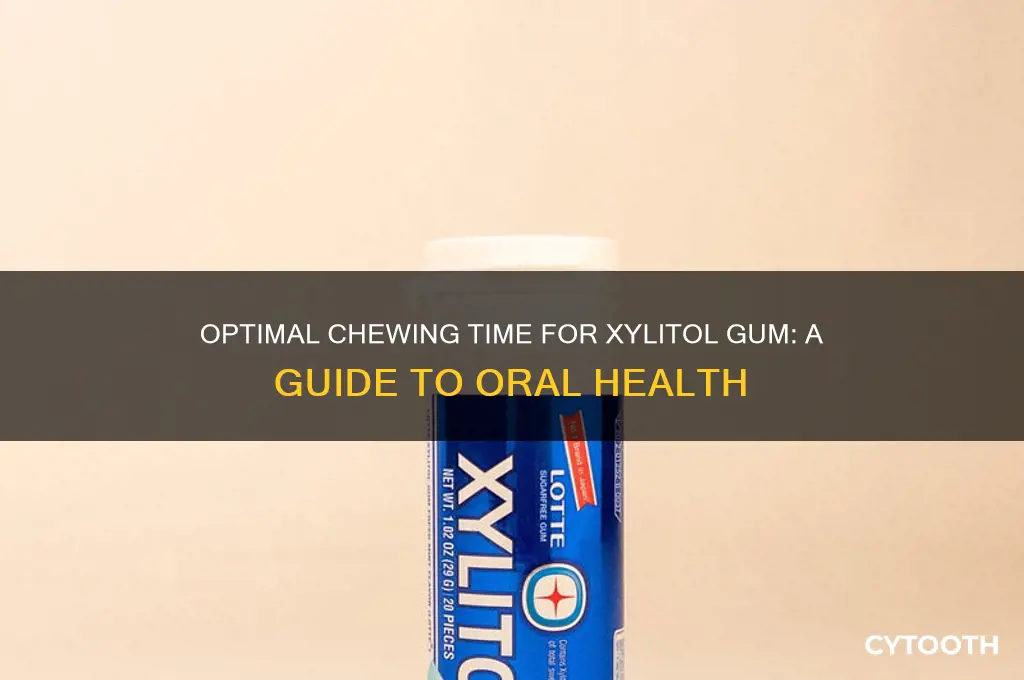
Chewing xylitol gum can be a beneficial addition to your oral care routine, as it helps reduce the risk of cavities by neutralizing acids and inhibiting the growth of harmful bacteria in the mouth. However, the duration of chewing xylitol gum matters to maximize its effectiveness. Generally, it’s recommended to chew xylitol gum for 5 to 10 minutes after meals or snacks, as this allows the xylitol to stimulate saliva production and maintain a neutral pH in the mouth. Prolonged chewing beyond this time may not provide additional benefits and could lead to jaw discomfort. Consistency is key—aim to chew xylitol gum 2 to 3 times daily for optimal oral health results. Always choose sugar-free gum with xylitol as the primary sweetener for the best outcomes.
| Characteristics | Values |
|---|---|
| Recommended Chewing Duration | 5-10 minutes after meals or snacks |
| Frequency of Chewing | 2-3 times per day |
| Purpose of Chewing | To stimulate saliva production and neutralize acids in the mouth |
| Benefits of Xylitol Gum | Reduces the risk of tooth decay, remineralizes tooth enamel, and freshens breath |
| Optimal Xylitol Content per Piece | At least 0.6-1.0 grams of xylitol |
| Maximum Daily Xylitol Intake | 6-10 grams (to avoid potential digestive discomfort) |
| Chewing Technique | Chew slowly and thoroughly to maximize xylitol release |
| Duration for Noticeable Dental Benefits | Consistent use for 3-6 months for significant dental health improvements |
| Safe for Children | Yes, but supervise children under 6 to prevent choking risk |
| Alternative to Chewing Gum | Xylitol mints or lozenges (follow similar duration and frequency guidelines) |
What You'll Learn
- Recommended Chewing Duration: Optimal time to chew xylitol gum for maximum dental benefits
- Frequency of Use: How often to chew xylitol gum daily for best results
- Benefits of Prolonged Chewing: Effects of extended chewing on oral health and cavity prevention
- Chewing After Meals: Ideal duration for chewing xylitol gum post-meals for oral hygiene
- Overuse Risks: Potential side effects of chewing xylitol gum for too long

Recommended Chewing Duration: Optimal time to chew xylitol gum for maximum dental benefits
Chewing xylitol gum for 5–10 minutes after meals is widely recommended to maximize its dental benefits. This duration allows the xylitol to stimulate saliva production, neutralize acids, and inhibit bacterial growth effectively. Saliva acts as a natural cleanser, washing away food particles and buffering acids that erode enamel. Xylitol’s antimicrobial properties require sufficient contact time with oral bacteria to disrupt their ability to adhere to teeth and produce plaque. Shorter chewing sessions may not provide enough exposure, while longer periods offer diminishing returns and can lead to jaw fatigue.
For optimal results, aim to chew one piece of xylitol gum 2–3 times daily, particularly after meals or snacks. This frequency ensures consistent oral exposure to xylitol throughout the day, maintaining a protective environment against cavities. Children under 6 should avoid xylitol gum due to choking risks, but older children and adults can benefit from this routine. Pairing xylitol gum with a low-sugar diet and regular brushing amplifies its protective effects, creating a comprehensive oral care strategy.
Comparing xylitol gum to other sugar-free gums highlights its unique advantages. While sugar-free gums with sorbitol or mannitol also stimulate saliva, xylitol’s proven ability to reduce *Streptococcus mutans*—a primary cause of tooth decay—sets it apart. However, over-chewing xylitol gum can lead to temporary digestive discomfort, such as bloating or diarrhea, due to its mild laxative effect. Limiting intake to 4–6 grams of xylitol per day (roughly 2–3 pieces of gum) avoids these issues while delivering dental benefits.
Practical tips can enhance the effectiveness of your xylitol gum routine. Chew vigorously but comfortably to maximize saliva production and xylitol distribution. Dispose of the gum after 5–10 minutes, as its active ingredients are released within this timeframe. For those with busy schedules, keep xylitol gum handy in a purse, desk, or car to ensure post-meal use. Combining xylitol gum with fluoride toothpaste and regular dental check-ups creates a robust defense against cavities and gum disease.
In summary, chewing xylitol gum for 5–10 minutes, 2–3 times daily, after meals or snacks, is the optimal strategy for maximizing its dental benefits. This approach balances efficacy with practicality, avoiding overconsumption while targeting key moments of acid production and bacterial activity. By integrating this simple habit into your oral care routine, you can harness xylitol’s unique properties to protect your teeth and gums effectively.
Chewing Gum and Dental Health: Myth or Harmful Habit?
You may want to see also
Frequency of Use: How often to chew xylitol gum daily for best results
Chewing xylitol gum 3–5 times a day, for 5 minutes each session, is the sweet spot for most adults seeking its dental benefits. This frequency aligns with research showing that xylitol’s cavity-fighting effects peak when it’s introduced into the mouth consistently throughout the day. For children over 6, limit use to 2–3 times daily, as excessive consumption can lead to digestive discomfort. Always pair gum-chewing with a robust oral hygiene routine—xylitol complements, not replaces, brushing and flossing.
The rationale behind this frequency lies in xylitol’s mechanism of action. Each piece of gum stimulates saliva production, which helps neutralize acids and wash away debris. However, the protective effect lasts only 30–60 minutes post-chewing. Spacing sessions 2–3 hours apart ensures continuous coverage without overloading the system. For instance, chewing after meals and once between them creates a balanced routine. Avoid back-to-back chewing, as it diminishes the gum’s efficacy and increases the risk of bloating or diarrhea.
A persuasive argument for this regimen is its practicality. Unlike fluoride treatments or professional cleanings, xylitol gum requires no special equipment or appointments. It’s a low-effort, high-impact addition to daily habits. Studies show that consistent users experience up to 50% reduction in cavity risk compared to sporadic chewers. For those with high caries risk—such as individuals with dry mouth or frequent snacking habits—this frequency is non-negotiable. Think of it as a dental insurance policy you control.
Comparing xylitol gum to other sugar-free gums highlights its uniqueness. While sorbitol or mannitol gums may offer temporary freshness, xylitol’s frequency-dependent benefits are backed by decades of research. Unlike medicated gums, which often contain harsher ingredients, xylitol is safe for long-term use. However, it’s not a one-size-fits-all solution. Pregnant women, diabetics, and those on low-sugar diets should consult a dentist or physician before adopting this routine.
In practice, integrating this frequency into daily life is simpler than it seems. Keep a pack of xylitol gum in your desk, car, and bag for easy access. Set reminders on your phone if you tend to forget. For families, make it a post-meal ritual, especially after sugary or starchy foods. Remember, the goal isn’t to chew endlessly but to create a consistent, protective rhythm. Done right, this small habit can yield significant oral health dividends over time.
Chewing Gum and Headaches: Unraveling the Surprising Connection
You may want to see also
Benefits of Prolonged Chewing: Effects of extended chewing on oral health and cavity prevention
Chewing xylitol gum for at least 5 minutes after meals can significantly reduce the risk of cavities by neutralizing acids and stimulating saliva production. This simple habit creates an environment less hospitable to harmful bacteria, which are the primary culprits behind tooth decay. For optimal results, aim for 10–15 minutes of continuous chewing, as this duration allows xylitol to fully interact with oral bacteria and remineralize tooth enamel. While shorter chewing sessions still offer benefits, extending the time amplifies the protective effects, making it a small yet impactful addition to your oral care routine.
The mechanism behind prolonged chewing lies in its ability to disrupt the bacterial biofilm on teeth. Xylitol, a sugar alcohol, inhibits the growth of *Streptococcus mutans*, the bacteria responsible for plaque formation. By chewing for an extended period, you ensure that xylitol reaches all areas of the mouth, including hard-to-clean crevices. This thorough distribution helps maintain a balanced oral microbiome, reducing the likelihood of cavities and gum disease. For children and adults alike, incorporating this practice after meals or snacks can be particularly effective, as it counteracts the acid produced by food breakdown.
From a practical standpoint, integrating prolonged chewing into daily life requires minimal effort but yields substantial benefits. Start by choosing a xylitol gum with at least 1 gram of xylitol per piece, as this concentration is proven to be effective. Chew one or two pieces after each meal or snack, focusing on maintaining a steady rhythm for the full duration. For those with busy schedules, setting a timer can help ensure consistency. Parents can encourage children to participate by making it a fun, post-meal activity, fostering good oral hygiene habits early on.
While prolonged chewing is beneficial, it’s essential to balance it with other oral care practices. Over-chewing, especially beyond 20 minutes at a time, can lead to jaw fatigue or temporomandibular joint (TMJ) discomfort. Additionally, xylitol gum should complement, not replace, regular brushing and flossing. For individuals with specific dental concerns or conditions, consulting a dentist is advisable to tailor the approach. When used thoughtfully, extended chewing of xylitol gum becomes a powerful tool in the fight against cavities, enhancing overall oral health with minimal effort.
Chewing Gum and TMJ: Relief or Risk for Jaw Pain?
You may want to see also
Chewing After Meals: Ideal duration for chewing xylitol gum post-meals for oral hygiene
Chewing xylitol gum after meals is a simple yet effective strategy to enhance oral hygiene, but the duration matters. Dental professionals often recommend chewing xylitol gum for 5 to 10 minutes post-meals to maximize its benefits. This timeframe allows the xylitol to stimulate saliva production, neutralize acids, and inhibit bacterial growth, particularly *Streptococcus mutans*, a primary culprit in tooth decay. Chewing for less than 5 minutes may not provide sufficient exposure to xylitol’s protective effects, while exceeding 10 minutes offers diminishing returns and risks overstimulating the jaw.
From a practical standpoint, incorporating this habit into your routine requires minimal effort but yields significant results. For adults and children over 6 years old, chewing one piece of xylitol gum after each meal or snack is sufficient. Parents should supervise younger children to ensure they don’t swallow the gum. Pairing this practice with regular brushing and flossing creates a comprehensive oral care regimen. A tip: keep xylitol gum in visible, accessible places—like your kitchen or desk—to make it a consistent post-meal habit.
Comparing xylitol gum to other post-meal oral care methods highlights its efficiency. While rinsing with water or mouthwash can dilute acids, xylitol gum actively promotes saliva production, which naturally cleanses the mouth and remineralizes teeth. Unlike sugar-free gum, xylitol gum specifically targets harmful bacteria without feeding them. However, it’s not a replacement for brushing—think of it as a supplementary tool for moments when brushing isn’t feasible, such as after lunch at work or a snack on the go.
A cautionary note: while xylitol is safe for humans, it’s toxic to dogs, even in small amounts. Always store xylitol gum out of reach of pets. Additionally, excessive consumption (more than 6–10 pieces per day) can cause digestive discomfort like bloating or diarrhea. Moderation is key—stick to the recommended post-meal chewing duration and quantity to avoid these side effects while reaping the oral health benefits.
In conclusion, chewing xylitol gum for 5 to 10 minutes after meals is a scientifically backed, practical way to bolster oral hygiene. It’s a small, mindful habit that complements traditional dental care, offering protection against cavities and acid erosion. By integrating this simple routine, you can take proactive steps toward maintaining a healthier smile, one piece of gum at a time.
Can Chewing Gum Brighten Your Smile? Teeth Whitening Myths Debunked
You may want to see also
Overuse Risks: Potential side effects of chewing xylitol gum for too long
Chewing xylitol gum offers dental benefits, but overindulgence can lead to gastrointestinal distress. Xylitol, a sugar alcohol, is not fully absorbed in the intestine, and excessive consumption can cause osmotic diarrhea, bloating, and gas. The threshold varies by individual, but generally, more than 30-50 grams per day can trigger these symptoms. For context, a single piece of xylitol gum typically contains 0.5-1 gram of the sweetener. Therefore, moderation is key—limit intake to 5-10 pieces daily, spaced throughout the day, to avoid discomfort.
Children are particularly susceptible to xylitol’s laxative effects due to their smaller body size. Ingesting as little as 0.1-0.2 grams of xylitol per kilogram of body weight can cause digestive issues in kids. For a 20-kilogram child, this equates to just 2-4 grams, or roughly 2-4 pieces of gum. Parents should monitor xylitol intake and opt for child-specific products with lower concentrations. Additionally, xylitol is highly toxic to dogs, so keep gum out of reach to prevent accidental poisoning.
Prolonged, excessive xylitol consumption may disrupt gut microbiota balance. While xylitol does not feed harmful bacteria like traditional sugars, its osmotic effect can alter the intestinal environment, potentially reducing beneficial bacteria populations. This imbalance could indirectly affect immune function and nutrient absorption over time. Studies are limited, but individuals with pre-existing gut conditions, such as irritable bowel syndrome (IBS), should exercise caution and consult a healthcare provider before regular use.
Over-reliance on xylitol gum can also create a false sense of dental security. Chewing gum should complement, not replace, proper oral hygiene practices like brushing and flossing. Xylitol inhibits *Streptococcus mutans*, a primary cause of tooth decay, but it cannot remove plaque or food particles. Extended chewing sessions, especially beyond 20 minutes at a time, may overstimulate jaw muscles, leading to temporomandibular joint (TMJ) discomfort or bruxism. Balance gum use with other dental care habits for optimal oral health.
Finally, while xylitol is calorie-reduced compared to sugar, excessive gum chewing can still contribute to calorie intake if the product contains added sugars or sweeteners. Some brands market "sugar-free" xylitol gum but include other sweeteners like maltitol or sorbitol, which also carry digestive risks. Always read labels and choose products with minimal additives. For those using xylitol gum as part of a weight management strategy, focus on portion control and avoid mindless chewing, which can lead to overconsumption.
In summary, xylitol gum is a valuable tool for dental health when used judiciously. Stick to recommended dosages, monitor intake in children and pets, and integrate it into a holistic oral care routine. By understanding and mitigating overuse risks, you can safely harness its benefits without adverse effects.
Chewing Gum and Cavity Prevention: Fact or Fiction?
You may want to see also
Frequently asked questions
Chew xylitol gum for at least 5–10 minutes after meals to stimulate saliva production and neutralize acids, which helps prevent tooth decay.
It’s best to limit chewing xylitol gum to 2–3 times a day, for 5–10 minutes each time, to avoid potential digestive discomfort from excessive sugar alcohol intake.
Yes, chewing for at least 5 minutes ensures the xylitol can effectively reduce harmful bacteria and promote remineralization of tooth enamel.
While it’s generally safe, chewing longer than 10 minutes may increase the risk of digestive issues like bloating or diarrhea due to the sugar alcohol content.
Wait at least 2–3 hours between chewing sessions to allow the xylitol to work effectively without overloading your system with sugar alcohols.