Hailey Morgan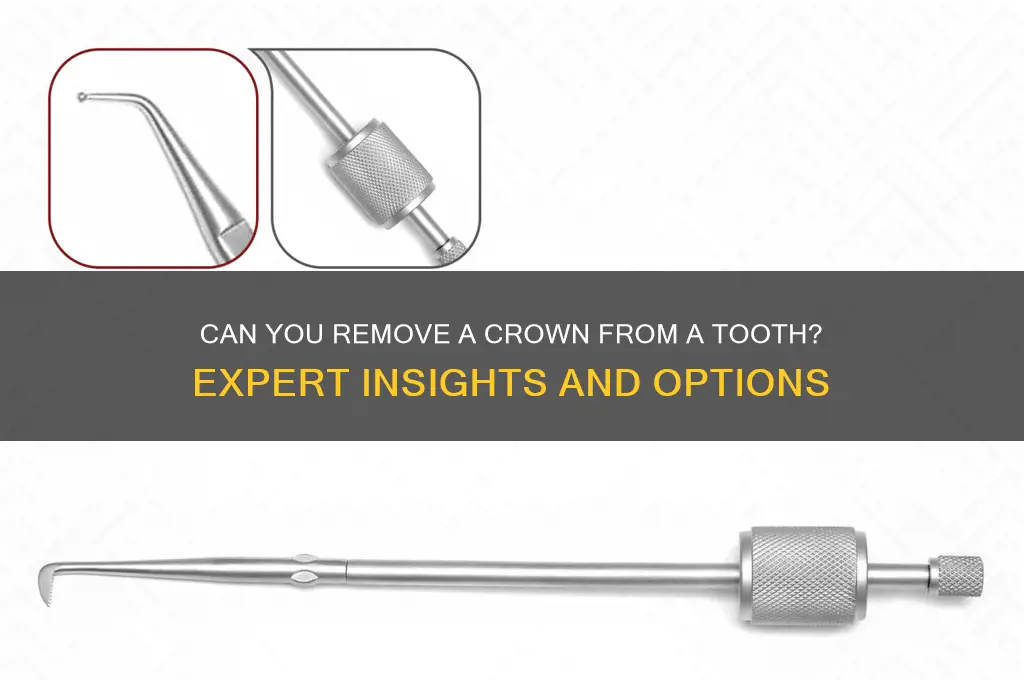
Removing a crown from a tooth is a procedure that may become necessary due to various reasons, such as decay, damage, or the need for further dental work. A crown, also known as a cap, is a custom-made restoration that covers a tooth to restore its shape, size, strength, and appearance. While crowns are designed to be durable and long-lasting, circumstances may arise where their removal is required. This process involves careful assessment by a dentist to determine the best method, which could range from simple extraction to more complex procedures depending on the crown’s condition and the underlying tooth’s health. Understanding the reasons for removal and the steps involved can help patients make informed decisions about their dental care.
| Characteristics | Values |
|---|---|
| Can a crown be removed? | Yes, a dental crown can be removed by a dentist. |
| Removal process | Involves numbing the area, using a dental instrument to loosen the crown, and carefully lifting it off. |
| Reasons for removal | Decay underneath, poor fit, damage to the crown, or need for replacement. |
| Pain during removal | Minimal to none with local anesthesia. |
| Time required | Typically 20-30 minutes, depending on complexity. |
| Post-removal care | Temporary filling or immediate replacement with a new crown may be needed. |
| Risks | Potential damage to the underlying tooth, sensitivity, or need for further treatment. |
| Cost | Varies; removal alone is less expensive than replacement. |
| Reusability of crown | Rarely reusable; usually replaced with a new crown. |
| Alternative options | Root canal treatment or extraction if the tooth is severely damaged. |
What You'll Learn
- Crown Removal Reasons: Decay, damage, or poor fit may necessitate crown removal by a dentist
- Removal Procedure: Dentists use tools to carefully lift and extract the crown from the tooth
- Post-Removal Care: Temporary fillings or new crowns are often needed after removal
- Pain and Discomfort: Local anesthesia minimizes pain during removal; mild soreness may follow
- Cost and Insurance: Removal costs vary; insurance may cover part or all expenses

Crown Removal Reasons: Decay, damage, or poor fit may necessitate crown removal by a dentist
Dental crowns, while durable, aren't invincible. Over time, decay can creep beneath the crown, creating a hidden battleground for bacteria. This often occurs due to poor oral hygiene or a leaky crown margin, allowing plaque and debris to accumulate. Left untreated, the underlying tooth structure weakens, potentially leading to infection or even tooth loss. Think of it as a fortress under siege – the crown, once a protector, becomes a liability if the enemy breaches its walls.
Regular dental checkups are crucial for detecting early signs of decay beneath a crown. X-rays can reveal hidden cavities, allowing for prompt intervention before the damage becomes extensive.
Damage to a crown, whether from trauma or wear and tear, can compromise its integrity. A cracked or chipped crown not only looks unsightly but also exposes the vulnerable tooth beneath. Imagine a suit of armor with a gaping hole – it's no longer providing adequate protection. In such cases, removal and replacement are often necessary to restore both function and aesthetics.
Sports injuries, accidents, or even habitual teeth grinding can lead to crown damage. Wearing a mouthguard during physical activities and addressing bruxism (teeth grinding) can help prevent such incidents.
Sometimes, the issue isn't with the crown itself, but with its fit. A poorly fitting crown can cause discomfort, gum irritation, and even bite problems. It's like wearing a shoe that's too tight – it may look fine, but it's causing constant discomfort. A dentist can assess the fit of a crown and determine if adjustment or replacement is necessary. In some cases, a simple reshaping of the crown's surface can alleviate the issue.
If you experience persistent pain, sensitivity, or difficulty chewing with a crowned tooth, don't ignore it. These could be signs of a poor fit or underlying problems that require professional attention.
Can You Cap a Cracked Tooth? Repair Options and Dental Advice
You may want to see also
Removal Procedure: Dentists use tools to carefully lift and extract the crown from the tooth
Dentists employ specialized tools to remove a crown from a tooth, a procedure requiring precision to avoid damaging the underlying tooth structure. The process begins with an assessment of the crown’s fit and the tooth’s condition. Using a dental explorer, the dentist gently probes the margins of the crown to identify areas where cement or adhesive may have weakened. This step is crucial, as it determines the approach needed for extraction. For instance, a crown cemented with temporary adhesive may require less force than one bonded with permanent cement. Understanding these nuances ensures the procedure is both effective and safe.
Once the assessment is complete, the dentist selects appropriate tools to lift the crown. A common instrument is the crown and bridge remover, which features a hook or claw designed to grip the crown’s edge. The dentist carefully inserts the tool beneath the crown’s margin, applying controlled force to break the seal between the crown and the tooth. In some cases, a dental wedge or elevator may be used to create additional leverage. The goal is to lift the crown uniformly, preventing uneven pressure that could fracture the tooth. This step demands a steady hand and a keen eye, as even minor missteps can lead to complications.
During extraction, the dentist may use a dental handpiece with a low-speed setting to vibrate the crown, loosening the cement further. This technique is particularly useful for stubborn crowns or those with extensive adhesive. Patients may hear a gentle humming sound during this phase, which is normal and indicates the tool is working effectively. Once the crown begins to move, the dentist carefully extracts it, ensuring no debris or cement remnants are left on the tooth. This meticulous process minimizes the risk of infection or discomfort post-procedure.
After the crown is removed, the dentist examines the tooth to ensure it remains intact and free of damage. If the tooth is healthy, the crown can often be recemented or replaced. However, if the tooth is compromised, additional treatments such as a root canal or new restoration may be necessary. Patients are advised to follow post-procedure care instructions, including avoiding hard or sticky foods for 24–48 hours and maintaining good oral hygiene. This ensures the tooth heals properly and remains stable until the next steps are determined.
In summary, the removal of a dental crown is a delicate procedure that relies on specialized tools and techniques. Dentists carefully assess, lift, and extract the crown while safeguarding the underlying tooth. With precision and expertise, this process can be completed efficiently, preserving the patient’s oral health and setting the stage for future restorative work if needed. Understanding these steps can alleviate patient concerns and highlight the importance of professional care in managing dental restorations.
Adding a Tooth to a Partial: What You Need to Know
You may want to see also
Post-Removal Care: Temporary fillings or new crowns are often needed after removal
After a dental crown is removed, the underlying tooth structure is often vulnerable and requires immediate attention. Temporary fillings serve as a quick, protective measure, sealing the exposed area to prevent sensitivity, decay, or further damage. These fillings are typically made from soft, pliable materials like zinc oxide eugenol or glass ionomer cement, which can be easily removed when a permanent solution is ready. Dentists usually place these within minutes after crown removal, ensuring the tooth remains functional and comfortable while long-term plans are finalized.
The decision between a temporary filling and a new crown depends on the condition of the remaining tooth. If the tooth is structurally sound but the crown failed due to poor fit or damage, a new crown may be the best option. However, if the tooth has weakened or decayed beneath the crown, additional treatments like root canals or build-ups might be necessary before a new crown can be placed. Temporary fillings act as a bridge during this interim period, allowing the tooth to heal or be prepared for further restoration.
Patients should be aware that temporary fillings are not a permanent fix and require careful handling. Avoid chewing hard or sticky foods on the treated side, as these can dislodge the filling. Brush gently around the area and use fluoride mouthwash to maintain oral hygiene. If the filling falls out or causes discomfort, contact your dentist immediately to prevent complications. Typically, temporary fillings last a few weeks, but their lifespan depends on the patient’s oral habits and the urgency of the permanent restoration.
In cases where a new crown is planned, the process involves taking impressions or digital scans of the tooth, followed by fabrication in a dental lab or using CAD/CAM technology. Temporary fillings ensure the tooth doesn’t shift or become damaged while the permanent crown is being created, which can take 1–2 weeks. During this time, patients may notice slight sensitivity or changes in bite alignment, which should resolve once the final crown is placed. Proper post-removal care is critical to ensuring the success of both temporary and permanent restorations.
Comparatively, while temporary fillings offer immediate relief, they lack the durability and aesthetics of a permanent crown. New crowns, whether made of porcelain, ceramic, or metal alloys, provide long-term stability and mimic the appearance of natural teeth. Patients should discuss their lifestyle, budget, and aesthetic preferences with their dentist to determine the most suitable post-removal care plan. Ultimately, whether opting for a temporary filling or a new crown, timely intervention and adherence to dental advice are key to preserving oral health after crown removal.
Daily Use of GC Tooth Mousse: Safe or Overdoing It?
You may want to see also
Pain and Discomfort: Local anesthesia minimizes pain during removal; mild soreness may follow
Removing a dental crown is a procedure that, while necessary in certain cases, naturally raises concerns about pain and discomfort. Local anesthesia plays a pivotal role here, acting as a shield against immediate pain during the removal process. Typically, lidocaine or articaine is administered in doses ranging from 1.8 to 3.6 mL, depending on the patient’s age, weight, and medical history. This numbing effect ensures that the procedure itself is virtually painless, allowing the dentist to work efficiently without causing undue stress to the patient.
Post-removal, however, mild soreness is a common experience. This discomfort usually stems from the manipulation of the tooth and surrounding tissues during the procedure. Over-the-counter pain relievers like ibuprofen (200–400 mg every 6–8 hours) or acetaminophen (500–1000 mg every 4–6 hours) can effectively manage this soreness. It’s crucial to follow the recommended dosage and consult a pharmacist or dentist if you’re unsure, especially for elderly patients or those with pre-existing conditions like liver or kidney issues.
Comparatively, the pain associated with crown removal is far less intense than that of a tooth extraction, thanks to the localized nature of the procedure. While an extraction involves removing the entire tooth structure, crown removal primarily focuses on detaching the restoration, which is less invasive. However, patients with sensitive teeth or those who have had previous complications may experience heightened discomfort, making it essential to communicate any concerns with the dentist beforehand.
Practical tips can further alleviate post-procedure soreness. Applying a cold compress to the cheek near the treated area for 15–20 minutes at a time can reduce swelling and numb the pain. Avoiding hard, chewy, or excessively hot foods for the first 24–48 hours allows the tooth and gums to heal without additional stress. Maintaining good oral hygiene, including gentle brushing and rinsing with warm salt water, can also prevent infection and promote faster recovery.
In conclusion, while local anesthesia ensures a pain-free crown removal, mild soreness afterward is normal and manageable. Understanding the role of anesthesia, knowing how to handle post-procedure discomfort, and following practical care tips can significantly improve the experience. By staying informed and prepared, patients can approach the procedure with confidence and minimize any lingering unease.
Can a Bad Tooth Cause Dizziness? Exploring the Surprising Connection
You may want to see also
Cost and Insurance: Removal costs vary; insurance may cover part or all expenses
The cost of removing a dental crown can range widely, from $100 to $500, depending on factors like the complexity of the procedure, the dentist’s location, and whether additional treatments (such as a replacement crown or root canal) are needed. This variability underscores the importance of obtaining a detailed quote from your dentist before proceeding. For instance, a straightforward removal in a rural area might cost significantly less than a complicated extraction in a metropolitan city, where overhead costs are higher.
Insurance coverage for crown removal hinges on the reason for the procedure. If the removal is deemed medically necessary—for example, to address decay, infection, or damage—most dental insurance plans will cover a portion or all of the expense. However, if the removal is elective (e.g., for cosmetic reasons or patient preference), insurance is unlikely to contribute. Always verify coverage by contacting your provider directly, as policies differ. For instance, a PPO plan might offer more flexibility than an HMO, but both may require pre-authorization for certain procedures.
To maximize insurance benefits, schedule a pre-treatment consultation with your dentist to document the necessity of the removal. This step ensures the procedure is coded correctly for insurance purposes. Additionally, inquire about bundling costs if a replacement crown is needed, as some plans may cover both removal and replacement under a single claim. For example, if a crown is removed due to a cracked tooth requiring a root canal, the combined treatment might fall under restorative care, which is often covered at 50–80% after the deductible.
For those without insurance, cost-saving strategies include seeking care at dental schools, where procedures are performed by supervised students at reduced rates, or exploring discount plans that offer 10–60% off dental services. Payment plans through the dentist’s office or third-party financing (e.g., CareCredit) can also make out-of-pocket costs more manageable. For instance, a $400 removal could be split into four monthly payments of $100, easing the financial burden without delaying necessary treatment.
Ultimately, while the cost of crown removal can be unpredictable, proactive steps—such as verifying insurance coverage, obtaining detailed quotes, and exploring payment options—can mitigate financial surprises. Treat this as a two-part process: first, assess the clinical need and potential insurance contribution, then strategize to minimize out-of-pocket expenses. By doing so, you ensure both your dental health and financial well-being are prioritized.
Flying After a Tooth Extraction: What You Need to Know
You may want to see also
Frequently asked questions
Yes, a dental crown can be removed from a tooth, but it requires a professional procedure performed by a dentist.
The process of removing a crown is typically not painful, as the dentist will use local anesthesia to numb the area. However, some discomfort or sensitivity may occur afterward.
In many cases, a tooth can survive after crown removal, but it depends on the condition of the tooth. If the tooth was significantly damaged or weakened before the crown was placed, it may require additional treatment or restoration.